Intro to Chicken Farming


Aug 30th, 2010 | By | Category: Food, Gardening | Print This Article

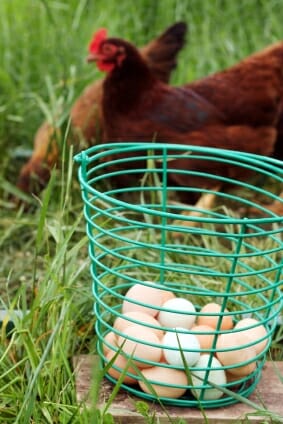
If, as part of your emergency preparedness, you have been considering options for creating a long- term, sustainable food source, chicken farming has proven to be one of the best. As an ongoing source of nutrient-rich eggs and lean meat, raising chickens for food is within the reach of anyone with the space to house them. It’s not without its challenges, however, so it would be wise to understand all that goes into raising chickens for food.

If it were as easy as setting up a coop and then running down to the feed store to scoop up a brood of chicks, then many preppers would be doing it. In addition to knowing which breed is farm friendly, the chicken farmer must be ready to cope with the daily ordeal of feces covered eggs, the unruly behavior of renegade roosters, and unproductive chickens.

The very first mistake to avoid is to purchase “factory” chicks that are bred for mass egg production. If placed in a small farm setting, these chickens will not likely come home to roost. In other words, while they may be great egg layers, they lack the brooding instincts to hatch the eggs.  Commercial egg production farms have their own mechanisms for hatching the eggs, so these chickens are not “engineered” to do so.

The best place to find chickens with natural reproductive instincts are at the smaller farms.  Small chicken farmers often run into an over-capacity situation where their chicken population exceeds the space available.

If you can find the Bantam variety of chickens, you’ll be rewarded with dependable setters that will produce constant flow of eggs.  Bantam chickens are smaller than other varieties of full-sized chickens so, if you’re also looking to raise chickens for meat, you might consider mixing varieties for cross breeding that will result in a larger reproductive brood.

You will also need to plant a couple of roosters. This is where the trials and tribulations begin to occur. We’ve all heard stories about how downright nasty roosters can be.  Again, if you rely upon mass- produced varieties, you’re likely to run into some very unruly roosters. The same small farms that raise domesticated chickens will often have roosters that have been tempered through a nurturing relationship with their mother hens.  If you find that one of your roosters has a bad temperament, you should yank them from the brood immediately, or you’ll end up with more chaos than eggs.

You will need to decide if you want to raise your chickens as “free range” or as cooped chickens. Free range means allowing the chickens to roam your property feeding off of the seeds, seedlings and insects found in your gardens. Free range chickens tend to produce a healthier variety of eggs and lean meat; however, they can also cause chaos in your yard.  If you have an large area that can be devoted to farming free-range chickens without regard to the mess that will ensue, that would be ideal.

There is some training involved, especially if you hope to keep the chicken poop out of the eggs.  The chicken house should be big enough to house both the nesting boxes and a chicken lounge, or rest area. Unless there is a separate, comfortable place where the chickens can hang out, such as a perch, the nesting box may end up as a latrine as well.  Speaking of chicken poop, the manure can be used as a fertilizer for the garden.

By following the tips offered here you can minimize the trial and error and have a 24/7 food source that operates fairly efficiently. Solving for the rooster issues and the poop problem, your primary job becomes egg collection. When everything else goes awry, your chicken farm will be the food source that keeps on giving.

Other articles in this issue:

If you liked this article you may be interested in this product from our sponsor.

Tags: , ,

16 Comments to “Intro to Chicken Farming”

  1. ibquig says:

    As a kid I helped the family tend a flock of 30 chickens, I’ve never seen an unruly rooster. After 40 years I just started my own flock of 25 or so chickens. There’s nothing wrong with chicks from the traditional nurseries. Its the breed that determines how well a hen will brood, not the hatchery that it comes from.

    I never heard of using Bantams for eggs. They’re great for insect control my neighbors used them as an alarm system, but the eggs are small.

    Chickens are a great source of meat and eggs, but its not an overnight process. There’s issues of heat and lighting in the winter, ventilation in summer, lice infestations, etc.

    And once grown our chickens will fly over an 8 ft fence to get out of the coop. Be prepared to either cover the coop or trim wing feathers. I use netting marketed to keep birds out of fruit trees. This is very effective at keeping chickens in and hawks out. Free range chickens will still need a place to roost and nest. Depending on where you live you’ll attract coyotes, cats, dogs,hawks and all manner of competitors.

    Raising chick to produce eggs is a 5-6 month effort before the first egg. Then there’s the regular feeding, etc. Oh, and if you’re looking to raise chickens clandestinely good luck. The rooster will do his best to make the world know he’s there.

    Before you start make sure you know what you’re getting into.

    Just my thoughts.

  2. askelfarm says:

    Great ‘lesson’. We have raised our own for many years. I couldnt have written an article any better than you have written here! I fuss everyone once in a while about gathering eggs. But as of late with 500,000,000,000 (thats half a billion) eggs being recalled around the country, Im more than happy to get our own home grown eggs! A reliable, safe, source of eggs that are controlled right here on our farm. Thanks!!!

  3. keetster says:

    Boy, that recall did bring home the lesson of home egg production. The jury is still out on which hens will sit.
    We have a little hen (that is not a bantam) that is sitting, but has taken so many other hens eggs as her own that I’m not sure that she’ll have any success. We are praying that her efforts are rewarded and that the other hens follow her example.

  4. Hujonwi says:

    I built my nest boxes all about the same sized and separated. When I had a hen setting, would set her up with a full load of eggs and move it to my backyard, it had a chain link fence to keep critters out. When the chicks got big enough would reintroduce them to the flock, at night this is important. Never add a new chicken during the day, wait until they roost.
    My chickens were a combo of coop and free range. Would let them out on the weekends.
    Chicken poop is very hot, high in nitrogen, so use sparingly or you will burn your plants up.
    Also love guineas, they are great watch dogs and tasty. Their eggs are small and have a harder shell but they are good.

  5. 8mm says:

    I want to have chickens but dont know what is required in the way of a hen house design. How large, how to construct, what to use for roosting etc. I live in a rural area. How many chickens would be needed for 2-4 people to keep me supplied with eggs? If they are penned, how large of an area would be adequate ? As a kid in WW2, we had chickens and making the the hen house consisted of a few old metal signs with 1 x 4 frames, about 4′ x 8′ nailed together with a post at each corner. That made a hen house 8 feet wide and 8 feet long and 8 feet high, and pretty much water proof..The hens nest consisted of a bunch of old apple boxes (two holers we called them) stacked and nailed together. There was a bunch of old mop handles for roosting attached to vertical 2 x 4 in the ground, inside the hen house. They dont make wooden apple boxes anymore and I dont want to spend a lot of money for the lack of it. I would appreaciate any ideas you people with with chickens have, that would help me build a good hen house economicly. I thought about using free pallets but they wouldnt offer an real shelter against the weather. I live in high desert country of New Mexico. How amy roosters should I have and are they necessary for non fertal egg production, if there is such a thing ? I think we had rhode Island Red hens if my memory is correct. Is that a good hen by todays standards ?

    • Ben from Texas says:

      Hello 8mm,I think I can help you and others because I have been raising chickens for several years..The coop should be at least 7 foot tall so you don’t have to bend over to collect eggs and clean the floor out..The roof should have a steep slant especially if you have snow fall..It can be made out of tin,wood,and treated posts.If varmants are a possible problem the chickens should be locked in at night .Cats,dogs,possum,hawks,minks,skunks,chicken snakes ,rats,and others will get to your poultry if you don’t protect them with a 1inch chicken wire cage area ,top and sides,and a wooden or tin building for shelter.Bury the wire in the ground 6 inches if possible so nothing will dig under the pen…If you want enough eggs for 4 people you should have15 to 20 hens depending on how many eggs per day you will use..A good hen will lay a egg every other day,some will lay every day..During the summer and fall they will lay less because of molting for new feathers for winter coat of feathers…Good layers like Road Island Hens make good layers and setters..But the Red Island Roosters are sometimes mean and will attack anybody or anything to protect his harem,usually a stick wacked up side his tail a few times ”sometimes” will show him who the boss is..20 hens will require about a 20 by 20 pen to run in..you can make 2 areas out of the 20×20 so you can seperate the setting hens from the laying hens..If you want setting hens ..2 roosters should be keep so if one rooster dies you’ll have a backup unless you raise your own rooster from one of your setting hens..They all will roost on broomsticks,cane poles or just straight limbs from the woods..cedar works best because of less rot..They will nest in anykind of a wooden or metal box as long as you keep hay in them..If you buy baby chicks here’s a trick on how to sex the male from the females..ON MALE chicks the primary and secondary feathers are the same length..on the female chick the primary feathers are longer than the secondary feathers..If you don’t sex them when you buy several you may wind up with several roosters..put golf balls in the nest so when chicken snakes eat your eggs they will swallow the golf balls and they die..If your golf balls disapear a snake has swallowed it..If someone is home during the day let you chickens out to graze on bugs 2 hours before sunset ,then feed them at night in the pen and they will all go in in the pen during the feeding at sunset..If you leave them out all day something will get them..Keep hay under where they roost and a light burning all night this helps them lay more and keeps the critters away..A radio playing music at night will help keep critters away…Questions? sagary@netscape.com

      • 8mm says:

        Ben from Texas. Since you gave me your email address, I sent you an email with a lot of questions that maybe you can share the answers with off the grid here by way of another reply to my original request for help. You had a lot of good info and I appreciate your input as will many others if they are taking this thing as serious as I do….8mm

        • Ben from Texas says:

          Hello 8mm,June bug is right if you think you’ll have a rat problem you’ll need to keep then in a smaller wire cage till they get big enough to fend for themselves especially the new ones you buy..The cage should have one quarter inch mesh wire or similar small wire small enough to keep rats out with the door on the side..Baby chicks need a special ”medicated feed” Its called ”chick starter”..When you build your chicken pen and your coop for them to roost and 3 or 4 separate boxes for laying and sitting boxes,they should be about 2 feet by 2 feet,4or5 feet off the ground,that way when your sitting hen hatches out her babies in 21 days they’ll be able to get out from under her while their little feathers dry,the hen will stay on the rest of the eggs 2 or 3 days after she first hatches her young to hatch the late ones…You’ll need to put water and chick feed in the laying box for the babies the day after they start hatching..The reason you want to keep your sitting hens from the other chickens is the other chickens will sometimes eat the feed and drink their water..The other chickens will also ”sometimes” eat freshly hatched chicks because the smell of the broken eggs and blood juice..NEVER FEED YOUR CHICKENS EGGS OR EGG SHELLS..They will start pecking and eating your freshly laid eggs…Laying pellets will be all they need to eat if you keep them penned up.Your 3 or 4 laying boxes that you build under the coop should be off the ground and you should have a way to lock up the sitting hen where she has her own little area to climb out of the nest with her babies and show her newly hatched babies how to scratch,feed and water on the ground…The babies will need a 2×4 going from the nest that should be 4 or 5 foot off the ground so the chicks can leave the nest and get on the ground..Keep hay in your laying boxes..When you notice your a hen sitting and you want her to hatch babies,put all the days eggs under that hen so she’ll hatch out several..When a hen starts sitting she STOPS laying eggs,thats why you need to put other eggs under her..You can even take 3 or 4 day old eggs that you have put in the ice box under your sitting hen but make sure you let the eggs get to room temperature before you put the other eggs under her..The eggs in the ice box that you have collected should already be fertilized and still good for your sitting hen to hatch..I would not put more than 6 or 8 eggs under a hen for her to hatch…If you don’t separate your chickens when one of them starts sitting,the other hens will get in the same box on top and beside her and lay their eggs,then you’ll have 15 or 20 eggs under her that she cannot hatch them all..Take a magic marker and draw a circle around the first 6 or 8 eggs she’s sitting on,then if some of the other hens lay in the same box you’ll be able to remove the newer eggs because they will not be marked and they be easy to remove when you feed..If your eggs have solf shells they sell oyster shells that are ground up you mix it with your feed,they sell it at the feed store..

  6. June Bug says:

    8mm,

    We built our coop for 10 buff orpingtons out of lumber we found in the trash! I bought the chicken wire, but just about everything else was collected from the trash. Hinges, handles, dowelling, etc.

    Be warned, we lost two birds to rats when they were about 2 months old! I built a 2 x 6 frame under their coop with chicken wire stretched across it. Yes, I found the 2 x 6s in the TRASH :) People throw out absolute treasure!
    We filled the frame with dirt and pushed the coop on top of it. This way the dirt under the cage has direct contact with the earth and can breathe, drain, has access to insects, etc.

  7. 8mm says:

    Hi June bug, That floor idea sounds like the way to go. You are right about what people just throw away. We have a rural dumping facility that dosent allow scavaging but if I talk to the man right he lets me and I have brought home many thing I have put to use in some way. When I see a washing machine or airconditioning unit, or stove in the ben I usually give them a good look for parts. What I need to do now is just camp out at the dump and catch it as it comes in and before it goes into the recycle ben. I had though about collecting one gallon milk bottles, fill them with sand and stack them in a running bond style, like bricks, for the walls using builders glue which is waterproof, cheap and durable, it should be warm in winter and cool in summer, but I havent made my mind up about that one yet. Years ago I remember an article in Mother Earth Mag. about building wall with sand cement sand bags, then wetting them down after stacking them. Still sounds like a good idea if you could get the bags cheap enough and from whome ? Thanks for the ideas survivalist….8mm

  8. gardenmamaof5 says:

    We have found Black Australorps to be a very good breed for egg production as well as meat. They are a duel purpose breed, the kind our grandparents would have. Black Australorps are VERY winter hardy, and have a generally gentle nature. My current hens began laying in a week long winter storm with night temps below 0 degrees. They are great foragers and setters too. But mine never peck me as I gather eggs, so my 6 year old can do it easily. If you live in a colder climate these may be the girls for you. These roosters are generally very tolerable as well.

  9. rockpicker1 says:

    You have it all wrong about the chickens. You can raise rabbits in the same area as chickens. A good doe will have 6 to 8 babies and if you keep her two weeks later she will have 6 to 8 more. Then let her rest for 4 weeks then start over. I know a lot of people will say it will not work that way, but I raised rabbits. When I sold the ranch I had 600 does, 200 bucks and over 8,000 that were ready to butcher at 4.5 lbs. A rabbit will weigh 2.5 pounds at 8 weeks and all you need is a cage to keep then in. Chickens need too much equipment to hatch the eggs and at 8 weeks you have a 3/4 pound chicken.

  10. Very good publish, thank you so much for sharing. Do you happen to have an RSS feed I can subscribe to?

  11. dlm says:

    This article is very inaccurate. Many chicken breeds have hens who are not that broody, and many people raise “factory” birds, meaning hybrids..just fine. This article is really too generic to give anyone any help..so much of chicken raising is trial and error..what is a problem for one person, many not be a problem for another..so when people say DON’T DO THIS, that is really an opinion. There are lots of wonderful breeds out there that lay eggs and provide meat..we have about 12 breeds on our property and they are all wonderful!

  12. Bebe says:

    I have to agree with the author about choosing your breed… I really like the older, non-hybrid breeds. The hens AND roosters just seem to be less prone to being disagreeable. We had friends that raised Red Comets and those things were always picking on each other, frequently until death. I have NEVER had picking problems. I do like having a mixed flock although it’s purely esthetics. They just look nice… and I have a problem with picking just one! Buff Orpingtons were my first love and I will probably always have a few but I also love Ameracaunas (for their colored eggs and gentle dispositions, they are always the first to learn to fly though!). Delawares are lovely, gentle, smart and lay good sized eggs consistently. Bantams are almost invariably good setters and attentive mothers… plus they are just too darn cute. Bantam roosters though seem a bit, how shall we say, inadequate? At least at the job of fertilizing eggs in full sized hens. ;)
    I have to admit that I am a chicken lover and ours is not a cost effective operation over the winter when we have to provide light and often heat to keep any egg production going (because we live in Alaska where light gets scarce and temps drop to sub-zero, sometimes for weeks) but I do it because they bring me joy while providing us with the world’s most expensive eggs. And joy is worth a lot in my book. In a survival environment we would just not eat many eggs during the winter… but I would still keep my chickens!

Leave a Comment