Off The Grid News Better Ideas For Off The Grid Living

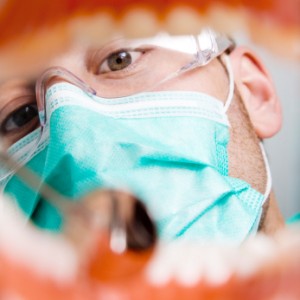 Nobody much likes the idea of going to the dentist, the medical specialty probably most associated with pain. Now, suppose because of remoteness—due either to your general choice of where to locate your home or to hunting or some other task (or pastime) that takes you even further into the wilderness—you need a dentist but don’t have one, or are the only other person present when somebody else has a dental emergency. Doesn’t that dentist’s chair look a little more inviting now?
Prudence
In fact, your preparation for any possible dental emergency probably starts in the dentist’s chair. Before removing yourself to a remote area—for that matter, before going on a long trip—it makes sense to check in on the soundness of your teeth, gums, and jaws, and have any necessary work done or updated (fillings and crowns do not last forever). Among other considerations, moving to a high altitude can stress dental work, particularly fillings, installed closer to sea level.
As you make your decisions about just how much off the grid you’re going to be, you will want to have a strategy for medical and dental emergencies. How far do you want to be from conventional providers? If sufficiently remote, you might want to consider the prudence of being able to arrange discreet dental visits to coincide with whatever periodic or occasional trips you might have to take back into the belly of the beast, or namely, “civilization.”
Choosing or settling into a new location, you may want to sound out your new or prospective neighbors about what services or expertise might already be available in your new community for medical and dental emergencies, much as you would want to know what kind of local firefighting resources have been organized. Perhaps the community could hire part-time services from a sympathetic professional.
Protection
Of course, your primary protection is having strong, sound teeth firmly planted in your jaws, and inflammation-free gums. That means hygiene, hygiene, hygiene:
- Flossing daily
(and additionally as needed, to clear jammed food and avoid gum irritation) - Brushing after each meal, or twice daily
(the most important brushing being after the last meal and before bedtime) - Swishing and rinsing with water after each meal or snack
(if you don’t brush on that occasion)
For a day of work in the field or forest, take enough water for rinsing, or consider chewing a sugarless gum to help clear food particles and keep saliva flowing. For work involving risk of impact, consider a face mask or a mouth-guard.
Preparedness
You probably would not venture into a remote area without a first-aid kit of some sort. Dental first-aid kits are also available commercially, or you can make your own. One advantage to buying a prepared kit is that it will come packed with instructions on the various problems you may need to address.
Essentials would include:
- examining gloves
- eugenol (preferred for its safety and versatility), clove oil, or other oral topical anesthetic
- cotton pellets
- small dental tweezers, a.k.a. cotton pliers
- temporary filling material, e.g. Tempanol or Cavit, or zinc-oxide powder to mix with eugenol
- dental or orthodontic wax (cooled candle wax can be substituted in a pinch)
- gauze pads
- dental floss, toothbrush, toothpaste
You will notice the simple contents and lightweight nature of these kits. That’s because we lay people really are limited in what we can do in a dental emergency.
Alleviating Symptoms
Things you can reasonably expect to be able to do:
- ease pain, using topical anesthetics and Motrin-strength pain relievers
- inspect, clean, and temporarily fill a cavity with a cotton pellet soaked in eugenol or other topical anesthetic, sealed with temporary filling material or dental wax
- (sometimes) cement a fractured tooth to stabilize it against further damage
- replace a crown that has come loose (note: if absence of the crown does not interfere with eating, it is best to keep carefully cleaning it and wait for a professional dental visit for permanent replacement)
- save a still-intact tooth that has been knocked out— or more precisely, keep connective tissue alive so it has a chance of survival—by rinsing it without disturbing or touching the connective tissue attached to the root, and replacing it in its socket within fifteen or twenty minutes, if at all possible
(or if not, packing it in gauzed soaked in milk or the saliva of the knockee)
All of these interventions require professional follow up, some urgently. Even a trained dentist can’t do much in the wild or if the power goes out. Despite being subject to decay, tooth enamel is one of the hardest, naturally occurring substances around, and it really does require a lot of power to do much manipulation of it. There wasn’t much saving of teeth on the frontier. Extractions were a bloody, painful business, and we’re not going to go there. Where we are going to go, after taking any of the steps above, is to a dentist.
A critical thing to remember is that damage or neglect is a gateway for infections such as gingivitis and painful abscesses. Yet more critically, infection is a gateway for further, even lethal damage spread among the teeth, into the jaw, throat, and face—even, we have recently discovered, into the heart. Over and above the physical conditions and professional expertise needed for permanent repairs, infection is the greatest reason to remember that anything dental you do in the boondocks is emergency preparation for investigation and repair by a dentist—and an excellent reason not to forget to thoroughly wash hands and to use examining gloves before any dental first aid.
You can begin treatment of infection with cleaning, salt-water rinses, and even oral antibiotics, but there is never any definitive way of knowing that an infection has cleared just because symptoms have.
Whooooo can tell you that? That’s right, class! The DENTIST!