Off The Grid News Better Ideas For Off The Grid Living

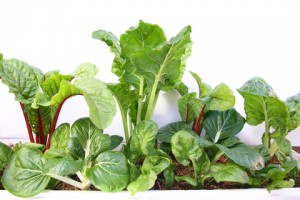 Apartment dwellers and those with limited space for growing a garden should think container gardening! Any area that gets six or more hours of sunlight daily can be used for your gardens. Windowsills, balconies, a doorstep, or a patio will provide nice spaces for a mini-garden.
Other advantages to container gardens are that soil-borne diseases, nematodes, and poor soil conditions are easily overcome. Container gardening makes controlling insects much easier. Containers can be raised to a comfortable height, reducing the need to bend over to tend your plants. It is also a way to introduce children to the pleasures of gardening.
Any vegetable that would grow in your climate zone can be grown in a container. Some are more suited for this type of gardening than others. These include tomatoes, peppers, eggplant, green onions, beans, lettuces, spinach, greens, squash, radishes, and herbs. Vining vegetables can be grown in containers but will require more space. To assist in their vining I have used tomato cages and hemp twine to made temporary “trellises,” training them to grow up instead of along the ground. I placed the tomato cages around the plants while they are still young and small. Around the top of the cage I tied lengths of twine, spaced by the cage sections. I tied the other end of the twine to the bottom of the spindle posts for the balcony railing of the second floor of our apartment building. Another choice is hanging baskets of dwarf or small tomatoes, strawberries, and pole beans work well this way. Hooks can be placed in sunny areas in the overhanging eaves or you can hang planters from the spindle posts of the balconies.
Potting Soils
Whatever you choose for your potting mix, it must provide water, nutrients, physical support, and provide good drainage for your plants to be healthy throughout the growing season. You can buy organic garden soil from your local garden center or nursery that will be free from diseases, weeds, and pests. Or you can build your own planting mix by mixing as follows:
- 1 bushel [8 gallons] composted soil or peat moss
- 1 bushel vermiculite or perlite
- ¼ bushel composted manure – cow, horse, or rabbit are best and can usually be gotten freely from the farmers who raise them. Chicken manure would be too “hot” for your plants, unless used in smaller quantities.
Mix well, adding small amounts of water to help keep dust from rising. If you have allergies or breathing problems, wear a mask over you nose and mouth. Wet the soil thoroughly before adding seedlings or seeds.
Choosing Containers
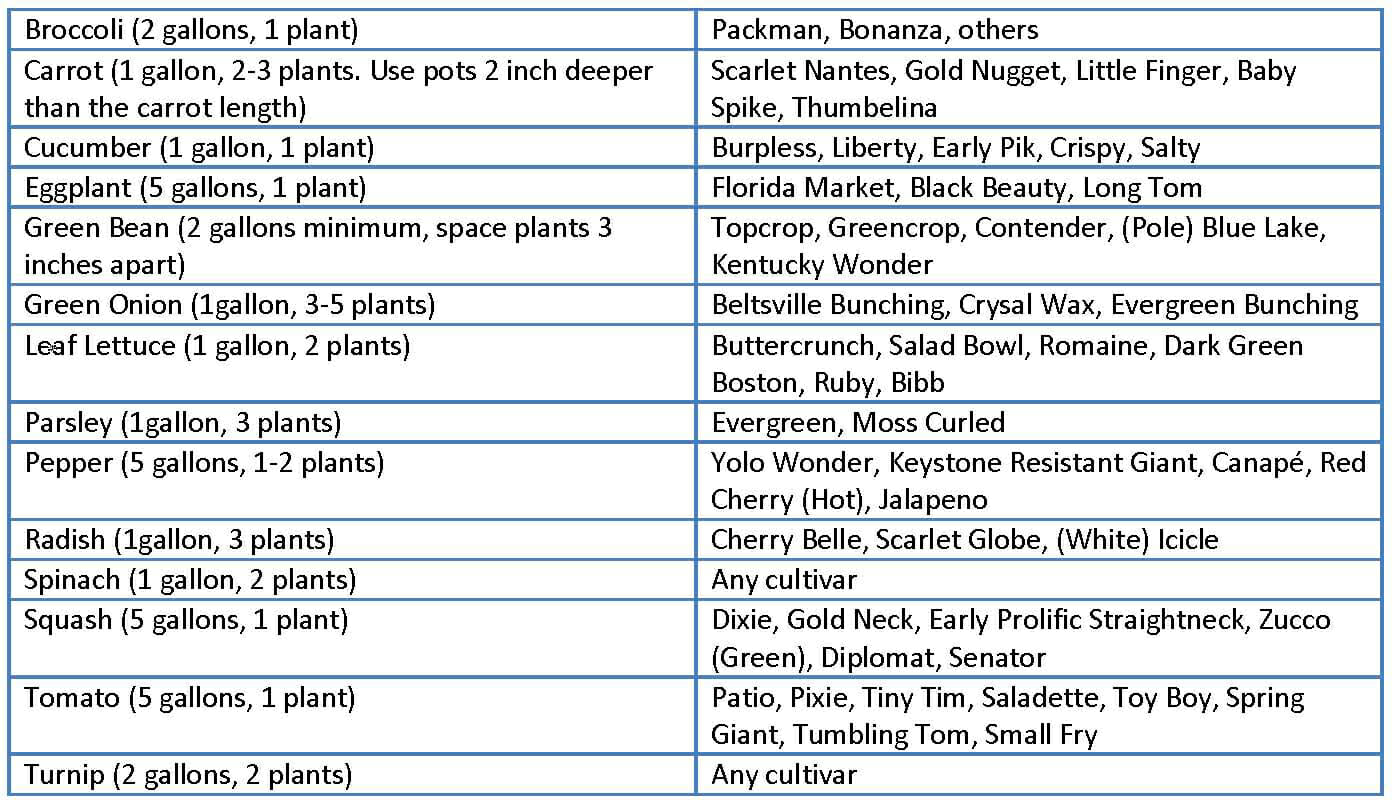
Any container can be used as a planter. The size will determine what will grow best in it [See Chart 1 below]. Six-to-ten-inch pots will work well for parsley, herbs, and green onions. Most of your vegetables – eggplant, tomatoes, and peppers – will require something the size of a five-gallon bucket. Chard and dwarf tomatoes will grow well in one-gallon containers and are easier to move around. You can use an old cake pan for growing radishes, small beets, and green onions. You may find your local thrift store a boon for finding inexpensive containers for your garden. Whatever you choose to grow in it will need to have adequate drainage. Adding drain holes to plastic or metal containers is simple. Punch holes in metal containers with a hammer and a punch, awl or large nails. Add holes to lightweight plastic containers. A drill or Dremel tool can also be used for either type of container. These holes work best if added to the sides of your containers ¼ to ½ inch from the bottom.
Chart 1
Transplanting
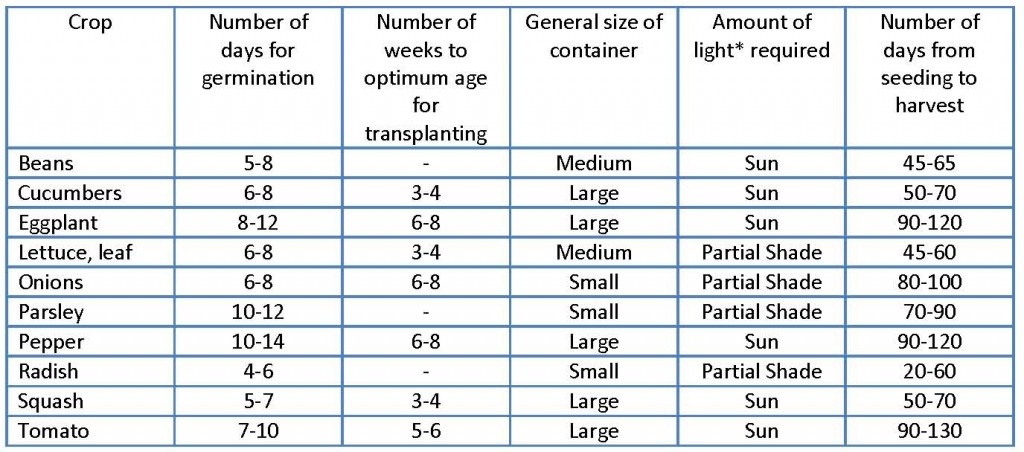
Many vegetables can be easily transplanted; buy them from a garden center or start seeds yourself. Re-purposing empty milk cartons, aluminum or plastic dishes that are 1 ½ to 2 inches deep are economical choices, or you can buy sprouting trays to start your seeds in. Your can use soil mixture or buy peat pellets to put your seeds in. If using soil you fill almost to the top of the containers, water well before adding seed, and cover the seeds with ¼ to ½ inch of soil. When using the peat pellets, place them in the trays filled half full of water and let them come to full height. Drain remaining water before placing your seeds in them. When seeds are planted, place in large, clear plastic bags, or cover with plastic wrap to retain moisture and place in sunny location. When the sprouts appear and first leaves show, remove plastic and water lightly as needed, keeping them warm until they are ready to transplant. Transplant to their final containers in 4-8 weeks. Be careful not to hurt the young roots when transplanting [Check chart 2 below].
Chart 2
Guidelines for Success
Follow the directions above and use the guidelines to have a successful garden.
- Inspect plants daily, and if necessary water, trim, train, or prune.
- Daily remove pests, weeds, and treat diseases.
- Fertilize as needed using prepared organic solutions or compost “tea” – typically once a month until blooms and veggies appear, then more often.
- Continue learning by seeking advice from experienced gardeners.
- Sit down and enjoy the fruits of your labor.
_____________________________________________________________________________________

_____________________________________________________________________________________