Off The Grid News Better Ideas For Off The Grid Living

|
Listen To The Article
|
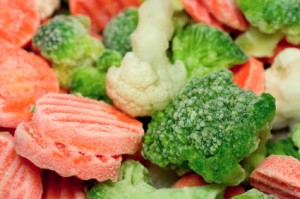 Freezing our bountiful harvest is an easy way of preserving our produce, but the foods will not keep as long. In freezing the organisms that cause spoilage become inactive. However, they don’t die. The bacteria can’t grow as long as the produce remains frozen, but once it is thawed, they will begin growing once again.
You should be aware of some changes in your vegetables before you start freezing. Foods may become mushy when thawed because ice crystals cause damage in the cells of the foods. If you keep foods frozen for too long or if they are frozen in improper containers, it will cause freezer burn. This will cause the color and taste of the foods to be changed for the worse. Such food is still safe to eat in this condition, but it is not be as appealing.
Freezing is a simple process, and not much equipment is required to get started – just your household freezer and containers. The easiest containers are common freezer bags found in your local supermarket. You can also freeze in your canning jars, plastic containers (such as butter or cottage containers), aluminum foil, plastic wrap, and freezer paper. You will need to allow for the food to expand as it freezes, so be sure to leave plenty of space for this process. Not leaving this room for expansion will cause your containers to leak in your freezer and make an icy mess to clean up later.
Freezing Veggies
Freezing Vegetables is much like freezing fruits, only you won’t be adding sugar. Instead you will be blanching them (heating in boiling water for 2 to 3 minutes and then immediately cooling in cold water) before packing into containers and freezing. Blanching kills the enzymes that age vegetables. Blanched foods will taste fresher when taken from the freezer. Submerging in cold water stops the cooking process.
You will need to leave a headspace on some of your vegetables.
Some vegetables darken after they are cut, and to prevent this darkening you will need to use an anti-darkening agent. A natural anti-darkening solution that can be used is a teaspoon of lemon juice to a quart of water. Soaking your veggies for five to ten minutes prior to placing them in the containers for freezing will prevent this. You can also use commercial anti-darkening, such as “Fruit Fresh” by following the instructions on the package. Using either will work with great results.
Veggie Freezing Instructions
- Asparagus: wash and cut off tough stems. Blanch small stalks 2 minutes, large ones for 4 minutes. Cool, drain, and pack into containers, alternating tip and stem ends. No headspace needed.
- Beans, Green and Wax: pick when young and tender (beans with strings are too tough). Remove stems and break into 1-2 inch pieces. Wash. Blanch 3 minutes, dip into cold water to cool. Drain, pack, and freeze. Leave ½ inch headspace.
- Beets: When trimming beets leave 1 inch of their tops to prevent them from bleeding. Not leaving the stems will cause them to bleed out and turn white during cooking. Wash beets and cook for 25 minutes. Cool in cold water. Rub off peels when cool—skins should slip off easily now. Cut into cubes or slices, pack into containers, leave ½ inch headspace, and freeze.
- Broccoli: Wash and peel stalks. To remove insects, soak in a solution of 4-5 teaspoons salt to a gallon of water for half an hour. Blanch three minutes, cool in cold water, drain, pack into containers leaving no headspace, and freeze.
- Brussels Sprouts: Trim and remove outer leaves. Wash and blanch 3 minutes for small heads, 5 minutes for large heads. Cool in cold water, drain, pack into containers leaving no headspace, freeze.
- Cabbage: Remove outer leaves and cut into quartets. Wash. Blanch for 2 minutes. Cool in cold water, drain and pack into containers leaving ½ inch headspace. Once frozen cabbage is only suitable for use as a cooked vegetable, not for coleslaw.
- Carrots: Remove tops, wash, and peel if desired. Leave small carrots whole; slice large ones. Blanch whole carrots 5 minutes, sliced carrots 2 minutes. Cool in cold water and drain. Pack into containers leaving ½ inch headspace, freeze.
- Cauliflower: Break into 1 inch pieces and wash. To remove insects soak in a solution of 4-5 teaspoons salt to a gallon of water for half an hour. Drain and rinse. Blanch three minutes and cool in cold water. Pack into containers leaving no headspace, freeze.
- Corn: Husk and remove silk from ears. Blanch ears five minutes. Cool in cold water and drain. Cut kernels from cob and cover with water, pack into containers leaving 1-inch headspace.
- Corn-on-the-cob: Husk and remove silk from ears. Blanch ears five minutes. Cool in cold water and drain. Wrap each ear in plastic wrap, pack into freezer bags and freeze.
- Mushrooms: wash in cold water. To remove insects soak in a solution of 4-5 teaspoons salt to a gallon of water for several hours or overnight. Rinse well. If mushrooms are larger than 1-inch, slice or quarter them. Soak mushrooms in anti-darkening solution for 5 minutes, drain. Steam for 5 minutes, cool in cold water and pack into containers leaving ½ inch headspace, freeze.
- Okra: Pick young, tender pods. Wash and cut off stem ends, being careful not to open seed cells. Blanch for 4 minutes, cooling promptly in cold water. Leave whole or slice, pack into containers leaving ½ inch headspace, freeze.
- Onions: Wash and peel. Chop and place into containers, leaving NO headspace.
- Peas: Shell peas and wash to remove blossom ends and pod particles. Blanch 2 minutes, cool in cold water. Drain, pack peas into containers leaving ½ inch headspace, freeze.
- Pea pods: Wash. Blanch for 2 minutes. Pack into containers and freeze.
- Peppers: Wash, cut out seeds and chop. Pack into containers leaving no headspace, freeze.
- Pumpkin: Wash and cut into quarters. Cook until soft by baking, steaming or boiling. Press through sieve. Cool, pack into containers leaving ½ inch headspace, freeze.
- Sweet Potatoes: Wash and cook until almost tender. Cool in cold water and peel. Slice, mash, or leave whole. To prevent darkening dip in anti-darkening solution for 5 seconds. If mashed, add 2T lemon juice to each quart of sweet potatoes. Pack into containers leaving ½ inch headspace, and freeze.
- Tomatoes: Wash, remove stems and blanch 3-4 minutes*. Cool in cold water and remove skins. Can quarter, halve, or leave whole. Pack into containers leaving ½ inch headspace and freeze.
- Stewed tomatoes: Wash, remove stems and blanch 3-4 minutes*. Cool in cold water and remove skins. Quarter and cook about 20 minutes or until tender. Place pan into cold water to cool, pack into containers leaving ½ inch headspace and freeze.
____________________________________________________________
New Manual Reveals…
How to Grow Nutrient Dense Foods when All Hell Breaks Loose
____________________________________________________________