Advance Water Storage: The Facts


Sep 12th, 2011 | By | Category: Food, Water | Print This Article

If most people take an honest assessment of their water supplies and their capability to stay self-sufficient in the event of a major catastrophe or prolonged off-the-grid situation, they will become suddenly aware of their planning shortcomings and the room for improvement. A key case in point is water. Water is an essential component to life; it is not a fringe need. As humans, we consume so much of it, yet plan so little for it in the future because of its perceived abundance.

Recently, many Americans have become aware of the shortages of fresh water and the need to prepare for a time when freshwater may be very difficult to obtain, yet many of them still haven’t put that plan into effect. How much will you need? How will you store it? Should you plan on using chemical or mechanical treatments to keep water drinkable and safe? What are the drawbacks of the different methods? This article is about the preparation for your future sustainability with regards to one of the most essential elements to the human body.
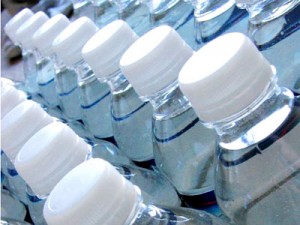
New food-grade plastic or glass containers will work well when storing water for the long term, but even better is a long shelf life, pre-filled, sealed water bottle (think Arrowhead or Crystal Geyser, etc.).  The temptation to re-use milk or soda bottles should be avoided in most cases, as they can transmit bacteria and tastes to the water. If you need them, you can use them as a short-term water solution or for water that will be used often and will be specifically purposed as short-term drinking water. You can also use these used jugs to hold water for pets, plants, and other uses, where public water access would not be acceptable in a major event, but keep in mind the storage space concerns that come into play.

Metal (stainless steel or high-quality food-grade aluminum) containers may also be used, but cannot generally store water that has been or will be treated with chemical treatments while in contact with the container. Container sizing will be an important factor, as well as stackability, structural integrity of the container, and footprint size. These factors will determine the realistic amount that you can store in the space you have. Remember that water is equally important to food and medical emergency supplies, but much more is needed; adjust storage space to reflect this.

Sizing ranges from one-pint bottles to fifty-five-gallon drums, and it’s important for you to look at your needs, space, and type of treatment. You must also take into account water sources, medical needs, and your ability to sustain water need in a variety of situations.

Looking for appropriate containers and other treatment and storage products will seem both easy and vast, but the truth is, it’s more than simply looking for a bottle and turning the tap on. There are many reasons why you should take seriously the proper storage, maintenance, and usage of your water supply, not the least of which is that it will be your lifeline in any scenario. An average human can only be without water for a few days under normal circumstances.

Pick the largest-sized container you are comfortable with moving or accessing water from, as that will be your most efficient storage method usually. Don’t hesitate to throw in some small bottles though, to help with rationing, should the situation dictate that. While many organizations say not to ration water, rationing is simply controlling access and usage of water, when there is no other means of derivation of new water.

Although it will be more expensive, a good basic method for building a water storehouse is to simply buy prepackaged water and then supplement it with larger self-filled containers later. The shelf life and taste of factory-sealed water will almost always be better than non-factory-sealed. Huge storage containers can be pricey, but it is very efficient for your space. Remember one gallon of water is eight pounds, making a fifty-five-gallon plastic drum will be immovable by one person, so you must plan accordingly.

One thing you MUST remember is that even with quality procedures in bottling your own water, it may still get contaminated in some way and may require filtering and removal of tastes and odors.

Charcoal pre-filters and gravity-fed mechanical filters like those made by Katydyn, Pur, and Platypus are excellent choices. The next article in this series will cover filtration and purification of water along with emergency techniques for obtaining water, in case you are subjected to a more extreme scenario.

*Water for thought: You might even want to freeze a couple of bottles of water. This can assist in keeping food spoilage to a minimum in case of power outage. Rule of thumb when placing water bottles in the freezer is to leave at least two to three inches of space as water expands when it freezes.

The shelf-life expectancy of water is indefinite if properly stored. It is highly practical, however, to use water and replace it as needed every six to twelve months. Water rotation is a great way to experiment and check the amount of water stored against the amount of water your household requires. This can also be a system used to check if any viruses or bacteria have invaded your water as a result of not sanitizing one hundred percent.

Water containers can be sanitized after washing by adding a tablespoon of chlorine bleach to a gallon of water and letting the water sit for a couple minutes, then emptying and air drying.

Again, don’t utilize pre-used containers for long-term storage, including anything that has had food, chemicals, or perishable liquids in it, as it increases the risk of dangerous bacterial growth.

Plan to have AT MINIMUM: one gallon of fresh water per day for each person in your group. You SHOULD plan for more like one and a half gallons per person, while also paying a lot of attention to alternate methods of water acquisition and working towards creating a much more substantial store of water than you expect to reasonably use.

Use a rotation system if you are a heavy water drinker, as it will keep the longest dates in your storage and bring water that needs to be replaced into daily usage, so you have relatively no loss present in your water storage plan. Theoretically, water has a use-by date, but it’s rare that sanitized and well-sealed water containers will cause a bacterial problem, or even a taste and odor problem.

Occasionally some plastics will begin to fume when they age, giving an off-putting odor or even a mild flavor to the stored water, but this is usually not an issue if the plastic is food grade. Rest assured that in a survival-type situation, it is safe enough to drink water with a flavor or odor as long as you can ensure that there aren’t harmful bacteria or viral microorganisms in the water. The odor and taste can be reduced by using specific types charcoal to filter them out.

The second part of this two-part article on water will examine in depth the various ways you can access fresh drinking water in a variety of conditions and situations.

Tips for keeping your water supply stable:

  • In the event that a major event happens (and you don’t have toddlers which could drown easily), fill the tubs and sinks with water to extract the maximum amount of water before negative impact on the supply occurs. Also fill up jugs and buckets if you have them to have fresh water available to buoy your total supplies.
  • Check your water heater for extra water (it’s in there) if it gets to that point. Make sure you have shut off the fuel and ignition source for your water heater and that you exercise caution in retrieving the water inside it.
  • Make sure you have water sourced from different places so you don’t end up getting all your water from a source that could be contaminated. Water can sometimes be holding bacteria or chemicals in it, which can react with storage containers and cause illness. If you make a “portfolio” of water and diversify it, so not too much of it comes from any one specific source, it will guard against things like this.

If some parts of this article seem redundant, that’s the point. Water is incredibly important—life sustaining, in fact. If you are not taking your water storage seriously, you are not doing yourself any favors. Be on the lookout for part two to this article to get some excellent tips and reviews on water purification and obtaining water in survival situations. It’s relatively cheap compared to other parts of your preparations for off-the-grid living, and it’s essential to work on your planning and get started as soon as possible.


©2013 Off The Grid News
Tags: , ,

24 Comments to “Advance Water Storage: The Facts”

  1. nvater says:

    Thanks for this useful article. If I got one of those blue water barrels, is there a way to keep water safe in it?

    • Barb says:

      Navter, yes there are water purification tables that keep water safe for up to five years, or you can boil the water, or use a filtered water bottle. They sell the filter water bottles at sports stores, they cost around 30 dollars. The purification tables or liquid drops are good for food grade water containers.
      There are online sources for both water containers and purification.

      • Judy says:

        I have using those heavy plastic vinegar bottles to store extra water. I don’t rinse them because of the purification of vinegar. It may have a little taste but will still quench a thirst if needed. Is there a problem with that?

  2. Barb says:

    We go to a local feed store and they have 300 gallon food grade containers. There a milky color plastic set inside of a cage. I don’t know what farmers use them for but thought these would be great for our use. They could be filled up with fresh water or rain water, I figured by having something like this would save our drinking water by giving us a water source for bathing, washing dishes and clothes.
    I watched a show this week called, After Armageddon. It was very inlighting and scary to watch. It also made me realize my chance to survive something as bad as that would be slim due to me disabilities. I would have to survive in place but without my medications my chances of lasting say a year or so would be left to see what happens if or when it happens.
    But I don’t think of it that way cause we don’t know what is ahead and I also figure that if we did have something hit us like in the show and I passed on all the food and water I have will save others, cause they will no doubt be raiding every home they can hoping to find food and other items.
    As the saying goes, we prepare for the worst and pray for the best.

    • Vindi says:

      BINGO!! Looting will become the biggest threat!! I agree with planning for the worst, and hoping for the best. I also have disabilities, on meds, etc. I learned how to make my own tinctures (have made them in advance) for ANY emergency. Little infections will become deadly, if you have nothing to clean them up with. I broke down & bought a generator for making colodial silver. Really good investment. That stuff is awesome. Use it inside, or outside….that stuff works!!!! Depending upon what meds you take, and for what, I’d suggest learning how to use Hawthorn & Cayene for the heart/BP meds….using Burdock for immune system…colodial silver & elderberry with echinnachea for infections. GOD gave us everything we need…..

      • rbush2 says:

        Wow! I would really like to know what type of generator you purchased to make your own collodial silver and how you do it. I am purchasing collodial silver right now but would love to learn how to make it myself. I have purchased books on how to make my own tinctures but am still a little skitish about it. Have been purchasing them for now. Any help or encouragement you could give would be most helpful!

        • Majesco says:

          I make my own Generators and and have made a couple of extra ones to sell. $70.00 includes shipping and complete information on making and using Colloidal Silver. For more info and photos email your request to me.
          The reason you’ll never find generators at this price is because I sell mine at cost. I am retired and do have time to make more so for anyone interested lets talk.

          Majesco

          • brunobob says:

            Majesco: I, too, would be very interested in learning just how to produce colloidal silever so could you please send me whatever info you have on that process? Thanks much, Bob Stack

          • jecrittenden says:

            Do you still make the Colloidal Silver generators for sale to others? If so, please send info.

            Thanks

          • gummibare says:

            Please send me the info on your generator.

          • Majesco says:

            COLLOIDAL SILVER GENERATORS. I just discovered responses to my information posted Sept. 25, 2011, with reference to COLLOIDAL SILVER GENERATORS. I have continued to produce the generators and found numerous ways to reduce the cost of manufacturing so they are much more affordable. If still interested you may send requests to Majesco at majesco@yahoo.com or go to http://www.majesco.webstore.com complete with photo’s to check them out and even order directly from there.I have several listed there to serve different purposes and prices start at $29.95. I include full details on the making, history and use of Colloidal Silver on CD’s that are part of the package. They are also listed for sale at http://www.yardsellr.com where you can just type in “Colloidal Silver Generators” and find them there as well.
            Sorry to be so late in responding to this forum but promise to read it more regularly.

            Thanks, Majesco

          • Judy says:

            Would love if you would send me this info on making generators & our own colloidal silver as well. We too are disabled & on meds. Have learned to do just about everything on naturals except my seizure meds. Don’t have a clue about that, open to suggestions. Example, last week I burned the top of my hand about the size of a silver dollar or a little larger. It’s at least 2nd degree, at least partly 3rd degree. I have been cleaning off lose skin with soap & water & keeping aloe vera gel on it. It is healing nicely & even shrinking.

          • J Blue says:

            Sir I”m interested in your CS machines could you please forward to me any information available.
            Thank you for you willingness to help those in perperation.

          • Susan says:

            I too would be interested in the generator. On my own with 11 acres and using thick juice (gallon size) to store home filtered (distilled) water. Could use as much advice as possible – moved from city to country and know basically nothing. Thanks.

        • JJM says:

          I purchased 2 CS generators from Independent Living for a total price somewhere around $177. Uses 2 silver rods suspended in a pint of water and electrolysis to create the CS in about an hour. These run off of 9 volt battery the output in operation is 2 VDC at 5 milliamps. Have not checked the current draw from the battery but believe it should be minimal.
          Note also, it is reported that in years past, Silver coins were thrown into water barrels and milk jugs to keep the fluids safe (obviously milk very short time). But never mentioned, how many silver rounds would be required for each 5 gallons of water for long term storage??? I would hope, 1 or less.

  3. genierose says:

    I want to have some rain barrels for collecting water off my roof. besides that fact that water will be in them and could be used in an emergency, I want to use them to water my garden. I suppose that the best way would be to have a spigot low on the barrel and hook a hose to it and let the water flow to the garden. But what woud be a good way to be able to pump water? Are there solar pumps for that purpose? The rain barrels I have seen have the spigots near the top. Is there a tube inside so that you can get water from the bottom of the barrel? I look forward to more article about water storage…

    • JJM says:

      Syphon works good. A 1/2″ hose cut 3 times the height of barrel allows u to insert to bottom, get good syphon going and when thru lift outside end only, until water flow stops and secure in place. Once primed is ready to flow again unless u drain the outside end.

    • cjb says:

      The most reliable way to get water out of your rain barrel is to set it up in such a way that it is higher than your garden. My property is on a mountain slope. The rain captured at the front of the house will water the garden. However, the rain captured at the back of my house won’t travel uphill to the garden. I use these for our animals.
      I have experimented with different rain barrel set ups.
      One I made is up on blocks and has pipe coming out of the “bottom” connected to hose with a valve on it, then more hose. Open the valve and water flows. However, this generally get’s clogged as any debris settles right to the bottom and into that pipe.
      My favorite has a hose spigot mounted on the side, about 6 inches above the floor of the barrel. Attach a hose to the spigot and turn on the water. Debris settles to the bottom, and doesn’t plug anything. When the level get’s low, the barrel is then light enough to tip it to get more water out.
      I use a few Goldfish in my rain barrels to eat any insect larvae that gets past the screens and to add fertilizer for the garden.
      You can set up several barrels in series with connecting hoses hear the top – and when one is full it will overflow into the next rather than onto the ground.

  4. Vindi says:

    Nothing is wrong with washed out milk jugs. Using some MSM or the AdyaClarity added to the water will make it bacteria free, and it tastes great!!! No need to add anything to the stored water for bathing. The big Mylar H20 storage bags are also good to use. Just keep the treated water seperate from the rest. I have the glass jugs filled with filtered water (Berkey) and the milk jug water can be run thru the Berkey as well (if it’s needed for drinking/cooking). Boiling water takes time and uses your precious propane. If you own big stainless steel pots, and have a fireplace, then that’s great!! Boiling is really good. Those Berkeys are excellent to have. They can clean up the nastiest pond/mud puddle water. Just think ahead.

  5. sammiec says:

    I have 2 questions. 1- how many inches of clearence do I need at the top of my 15 gallon blue water containers in case it freezes. I’m storing them in an enclosed trailer with alot of other bug out stuff and it sometimes gets down to -30 here. Also, will that temp. shorten the life of the containers. I can’t lift them when they are full so thats why they are in the trailer.
    #2 I have 5 gallon jugs that need to be rotated. They have had 1 tablespoon of bleach added and are just a year old. Is it safe to pour this on my lawn and/or plants.
    Thank you

  6. Ed scout leader says:

    also water from sump pump can be used for flushing and other non potable usesl sump pump water can be boiled and used as potable. If you live in a higher elevation water boils at a lower temp and will not kill all the bacteria. In that case a pressure cooker will ensure the higher temps needed to kill bacteria.

  7. buck142 says:

    Am I correct in assuming part 2 is yet to be published and is not “Emergency Water Purification”?
    Thanks for the information

  8. uwhoagee says:

    Among other ways, I use 1/2 gal milk jugs filled with treated water to fill any voids in my freezers. It then helps the freezer to work less to keep things frozen in normal circumstances and in the event of a short term outage it helps keep things frozen for a longer period of time. If needed for long term issues, it can also be used for drinking and cooking.

  9. dog says:

    thanks alot for the great idea’s and i am looking into all of them and please keep posting the
    great idea’s on water.

Leave a Comment