Off The Grid News Better Ideas For Off The Grid Living

|
Listen To The Article
|
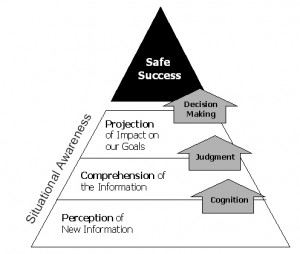 Separating fact from fiction in order to make an appropriate choice during a stressful situation is incredibly important. Situational awareness can be the key component in the decision-making process, and makes it (the stressful situation) infinitely easier to deal with.
Every demographic, area, and community on the planet has a different litmus test for what constitutes a catalyst for action. The specific risks for your area, combined with a number of other factors (including politics, resources, community, personal preparation, and others) are the only tests able to provide the results necessary to make the right decisions in your specific case. However, without accurate and experienced situational awareness, these tests cannot provide their best results.
“Situational awareness” is a concept that, while it has existed for many decades, never entered popular culture or mainstream thought processes until a series of events blurred the lines between mainstream society and military risk. Some say it was the media which ushered in a new era of understanding for the average citizen, as the age of televised conflict and the point-blank viewing capability of global strife set the stage for a more connected individual.
Armies around the world teach rote and ritual actions and reactions, and essentially “brainwash” their soldiers into remembering specific protocols upon which to rely during certain situations. Combining techniques based on these standards, with acute situational awareness (meaning an accurate representation of one’s specific surroundings), gives the average citizen a one-two knockout punch combination for times of unrest, uncertainty, or stress.
One doesn’t have to have a view of the world that is negative, or even buy into the media hype that so often causes panic and confusion but, as is part of the off-the-grid lifestyle, self-sufficiency, reason and understanding can help to separate you from the crowd during intense situations. Knowing what you will do in the event that something compels reaction, and knowing how to identify such situations can only serve to further enhance your ability to make those reactions and exit those situations without excessively negative impacts.
Situational awareness is not simply a buzzword but more of an ongoing and ever changing, adaptive mindset. It is the ability to recognize risk, observe change, factor in prior experience, and exercise reason in identifying reactionary measures and when to implement them.
As stated above, and as is apparent to anyone having experienced high-stress situations for extended periods of time, risk is always relative and always based on individual ideas about threat levels. The difference between people in one region compared to another can be quite large: every person will have their own understanding and pre-programmed reactions to risks. Furthermore, they will quantify risk in vastly different ways.
As the human psyche becomes more exposed to risk without negative impact by that risk, the tolerance for that risk and substantially similar risks is broadened, and protocols put in place to avoid that risk become more lax. An example: people who have survived a fire are perhaps less likely to evacuate early on than those to whom this is a new experience; soldiers used to being shot at but never having been hit are perhaps more likely to make exposed counter fire than those who have never experienced a gun fight. This desensitization can cause otherwise protective and prepared individuals to forget the important protocols they themselves put into place to avoid negative impacts in stressful situations.
The idea of situational awareness utilizes both mindset and resources to identify risk and then design solutions to mitigate it.
Avoiding conditioning or complacency for specific risks while knowing and understanding your surroundings, and having a plan of action is what defines situational awareness. Being able to react in stressful situations because of the way you have prepared, and the experiences that have shaped your awareness, allows a management of resources, reactions, and a situation that is far better than the alternatives.
Beginning to know what risks you face starts with assessing your personal tolerance for risk. Which items do you see as detrimental? What is the reality of those risks occurring? What backup plans do you have in case these situations occur? What is your breaking point? Are you prepared fully to outlive such a risk? Do you have availability of foreknowledge of specific risks? Are you or your family a specific target to such risks? What is the historical opportunity for such a risk to occur to a demographic or region such as you are within?
New Book Reveals… How To Turn Your Home Into A Fortress
Exploring these ideas will help you understand how to quantify relevant risk, and using these answers, you can determine if your normal routine will put you in contact with these risks at any sizable level. Having the answers to these questions and combining them with your standard routine will give you a tangible model with which you can identify concerns and build a real plan to remove as much of that risk as possible. Having these tangible protocols and models will give you a reactionary measure that can be hardwired into your mind and routine. With these items you will have a “checklist” with which you can prepare yourself and your family to act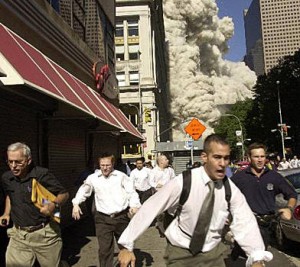 and react in situations beyond your normal scope of tolerance. It is in the trying times that you will want to rely on ingrained philosophies, muscle memory, and trained behaviors so that you can weather the risks you face.
What is your action plan? When do you leave? Under what conditions do you stay? Do you have adequate measures in place to continue your normal routine? Is your family prepared for such an action? Are you at greater risk by staying? Going? What new risks do you face by staying? Going? What can you do to improve your situation for leaving or for staying? Which risks do you face that affect you no matter what your decision is? What contingency plans do you have in place?
Having a physical checklist laid out in order of importance can help you in a time of need, but more importantly is having the mindset and the means to accomplish your specific goals during a stressful time.
Be realistic with your situational awareness. It is incredibly important that you make sure that you have checks and balances in place to keep that situational awareness and those reaction plans from becoming overreactions or under-reactions. There are situations where you will not know how to react, but if you prepare correctly there should never be a situation in which you are not aware of what is happening around you. Remember—knowing is half the battle, regardless of how clichéd it is or where this statement originated. In a time of uncertainty like we live in, knowledge is power and power is safety. Your knowledge plays a pivotal role in your potential safety. Understand your surroundings.
These principles can be applied to any situation, whether it is a natural disaster, and outdoor expedition, a military conflict, or a social issue. Knowing what you may face and how you will react before you actually have to face it can give you an incredible amount of poise, grace, and ability in a time that could otherwise turn into an unmitigated disaster.
©2012 Off the Grid News
______________________________________________

______________________________________________