Off The Grid News Better Ideas For Off The Grid Living

The last winter crops are in from the garden, and in spite of mild weather in some parts, it may still be a little too early to plant anything in your neck of the woods. This slack time can be frustrating for gardeners. It can also be an excellent opportunity to plan how to handle next season’s harvest so you have more of your own produce to eat during the next slack time. Once the harvest is rolling in, you may not have much time to weigh your options.
There are several fairly easy options for food preservation: canning, freezing, drying, and root cellar storage. Which one is right for you? That depends on several factors. What crops do you want to preserve? How much space do you have for food storage? How much time are you willing to spend on food preservation? How much money are you willing to spend on equipment?
Canning
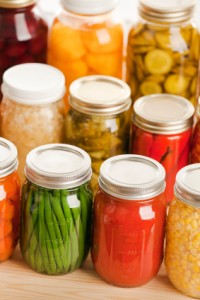 Canned goods can be stored without the energy demands of a freezer, and they’re quick and easy to open and use—no delay for rehydration. You’ll need pint, quart, or half-gallon canning jars; you may be able to pick these up for free from people who no longer garden or get them cheap at auctions. These jars can be reused for decades, unlike freezer bags. You will need to buy new caps each year; these are inexpensive. Low-acid vegetables like asparagus, beans, beets, carrots, corn, onions, peas, peppers, and potatoes (covered with boiling water) should be processed in a pressure canner. Jars of higher-acid produce like tomatoes, applesauce, many fruits, and pickled vegetables can be submerged in boiling water in any large kettle. Either method requires you to spend a lot of time standing over a hot stove messing with lots of boiling water in the hottest part of the summer.
How long do you have to cook things to can them safely? Depends who you ask. More recent food-storage guides seem to favor longer cooking times. If you can, try canning for the first time with someone experienced. If none of your neighbors know how to can or none are willing to teach you, check several different sources and decide what you trust. Fortunately it’s easy to tell whether or not your jars have sealed successfully—if they have, the raised central disk in the caps will be sucked flat by the vacuum. If a jar doesn’t seal, you can either wipe the rim carefully, try a new lid, and re-cook it, or you can stick the jar in the refrigerator and eat the contents within the week.
Canned vegetables and fruit will easily keep for a year if they’re stored in a cool dim place and kept from freezing. A few jars may come unsealed in storage; check before you open them.
Freezing
Freezing requires less hot-stove time and equipment than canning. I also prefer it for corn and peas, since I like these to have some texture when I eat them rather than being reduced to uniform mush. If you’re trying to freeze food for a large family, you’ll need a lot of freezer space, and it will add to your electric bill. Chest freezers tend to be more efficient than uprights, and Energy Star models are often appreciably more efficient than the competition. You can freeze produce in tightly sealed reusable plastic containers or in freezer bags (not generic food-storage bags, and not most glass containers; canning jars will generally stand up to freezing, but other types of glass are likely to shatter).
Asparagus, beans, broccoli, Brussels sprouts, cabbage, corn, greens, parsnips, and peas should be blanched (cooked briefly in steam, boiling water, or the microwave) before freezing. Eggplants, mushrooms, and winter squash require substantial cooking before freezing. Garlic, leeks, onions, peppers, tomatoes and most fruits can be frozen raw. Frozen vegetables should keep for a year.
Easy Techniques for the Freshest Flavors in Preserving Food At Home…
Drying
Drying greatly reduces the volume of vegetables and fruits, allowing you to store a lot in a little space. Dried beans and hot peppers can be threaded on string and hung in a dim room to dry. Unless you live in a very hot, dry climate, you’ll need a food dehydrator for most other crops. There’s less hot-stove time in drying than canning, but you’ll need to keep coming back to check on the dehydrator for many hours, rotating trays (since the bottom tray, closest to the heat source, tends to dry fastest) and removing vegetable or fruit slices when they are firm, dry, and leathery, but still pliable. When you’re ready to use your dried produce, you need to allow extra time for reconstituting it in warm liquid, unless you’re putting it in soup or stew.
Tomatoes (paste tomatoes give the best results), garlic, onions, and sweet peppers can be sliced and dried without blanching. The Rodale Food Center recommends blanching for beets, broccoli, cabbage, carrots, eggplant, green beans, mushrooms, okra, peas, potatoes, pumpkins and fruit. I’ve successfully dried unblanched shiitake mushrooms.
Most dried vegetables will keep for six to twelve months stored in tightly sealed containers in a cool dim space. Many dried fruits will last up to two years. The shelf life of dried food can be substantially extended by vacuum packing, which removes excess air that can hasten spoilage. This requires the purchase of a vacuum sealer and plastic vacuum-packing bags. The bags are fairly cheap. New sealers can be costly, but older machines can be bought for well under $100 and reputedly work at least as well as their newer counterparts.
Root Cellaring
Root cellaring is the easiest and cheapest way of storing certain vegetables, if you have or can build an appropriate space. Modified chest freezers or low-heated sections of house basements are often used for root cellarage; directions are available online and in various books. My family keeps humidity-loving crops in our well house. Carrots, beets, potatoes, and apples will keep for at least six months if stored in a dark humid place slightly above freezing. Potatoes should be brushed free of loose dirt and kept in bags or boxes not more than twelve inches deep in a container with good ventilation. Carrots and beets with their tops trimmed off to a half-inch should be packed with moist sand, sawdust or shavings inside plastic containers. Garlic and onions should be hung in a shaded airy place until their tops dry, after which the tops and roots should be trimmed; they will then keep through the winter in a cool dry space with good air circulation. Pumpkins and winter squash last well in dry conditions at 50 to 60 F.
Whatever method you choose, be sure to harvest your produce before it’s overripe, process it as promptly as possible after picking, and discard blemished material which can spoil a whole batch.
Food preservation is easier and more fun when it’s done cooperatively with neighbors. Several families can share one root cellar or vacuum sealer. Sharing canners or dryers would require more precise coordination and could be challenging at peak harvest times, but it’s still worth a try. The sometimes tedious work of vegetable preparation can be more fun if neighbors come together to share it. Experienced food savers can teach others while getting help with the unskilled work, or groups of novices can learn from one another’s discoveries and mistakes.
You can also learn a lot by reading. Stocking Up by Carol Hupping and the staff of the Rodale Food Center describes how to can, freeze, dry, pickle, or root-cellar preserve a wide variety of crops, as well as giving basic instructions for butter and cheese making and meat processing. Your local cooperative extension may offer information adapted to your region. Online forums such as gardenweb.com can also provide useful feedback, though they’re not a fully adequate substitute for knowledgeable neighbors.
Enjoy the adventure of food preservation! May this time next year find you with a satisfying array of garden vegetables put by.
©2012 Off the Grid News