Choosing The Right Ammo For The Job


Dec 17th, 2012 | By | Category: Guns & Ammo, Self Defense | Print This Article

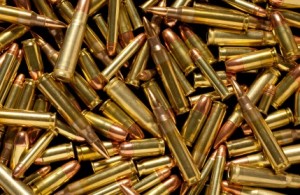
A casual look through your favorite gun supplier’s catalog might send you reeling, as most feature a dozen or more pages of ammunition for sale. How do you choose the right ammo for your handgun or rifle? The very first thing you need to know if you are new to firearms or defensive shooting is that you choose equipment based on the mission. What is your mission? Are you looking for target ammo, defense ammo, or something even more specific than that? Read on.

Some Basic Considerations

The reason there are pages and pages of ammunition types in most sporting goods catalogs is because each manufacturer makes a host of ammunition types for different purposes, and then there are dozens of manufacturers. Usually, the manufacturer itself is not an important consideration when choosing the right ammo. Most reputable manufacturers make great ammo, and you really can’t go wrong with any of them– it all comes down to brand partiality, and that is a personal decision. There are a couple of pitfalls to be aware of, however.

Surplus Ammunition: Surplus ammo is perfectly fine – in most cases. In order to buy with confidence, you need to know where this stuff comes from. The armies of the world usually control state-owned ammunition-manufacturing plants. One example is the Lake City Ammunition Plant, owned by the government. They make much of the M855 penetrator ammunition that is used in our country’s M4 and M16 rifles. Any factory runs best at capacity, and so the plant cranks out tons and tons of ammo every month. Occasionally, their customers (the military) don’t need as much, so they siphon off some production to the civilian populace. This is perfectly good military-spec ammo, and you need not be afraid of buying it. Where it can get a little sketchy is when the ammunition is really old, comes from a just-found cache of ammo somewhere in Eastern Europe, or some other similar circumstance. If you shoot something that takes Russian ammo like a Mosin Nagant or AK clone, you will no doubt be familiar with this situation. It’s buyer beware here – the former Soviet Union manufactured billions of rounds of ammo and stored it away (sometimes improperly). With the breakup of the Union, some of this ammo has made its way to the market over the years, and it’s definitely hit or miss.

Steel-Cased Ammunition: Once the exclusive domain of Russian-chambered weapons, steel-cased ammo is now making its way into other calibers as manufacturers see how well it sells. Recall that the case of most ammunition cartridges is made of brass, which is one of the most expensive parts of the individual round. As metal prices soar, brass soars also, raising the price of ammo. To combat this, manufacturers use a cheap steel case instead. This case costs a tiny fraction of what a brass case would, thus making the ammo cheaper. There’s only one problem – it’s harder on the gun. Steel is much harder than brass, and thus you accelerate wear on the weapon while saving money on ammo. Not a good compromise. Ten years ago, brands like Tula and Silver Bear made steel-case ammo for primarily Russian guns like the AK and SKS. These are primitive and rugged weapons that can take lots of abuse. They ingested the steel case rounds happily. Now, you can get steel-case ammo in lots of other calibers, including common pistol calibers as well. That’s not a good thing. If all the other brands you are looking at are say, $19.99 for a box of fifty rounds, and then you see another brand for $12.99, you can bet they are steel-cased. Don’t use this stuff on high-end weapons.

Mission First

Always load up on the right ammo for the job. Every mission has its own requirements:

  • Target practice, where you will expend hundreds of rounds in your pursuit of perfection, screams for cheap ball ammunition. These are usually bulk packs of low-performance ammunition. They are designed for target practice and usually have low bullet weights and full metal jackets. Again, avoid steel cases.
  • Home defense, where you should have the best, most expensive, highest-performance ammo in your gun. This means hollow points of some form or another, from a reputable manufacturer. You are, in fact, entrusting your life to this ammo.


So what happens if a burglar breaks in when you have the gun loaded with target ball ammo? The short answer is shoot – even target ammo is perfectly capable of killing a person. The performance difference between a hollow point and ball ammunition is simply not that big of a deal. Sure, hollow points create a larger wound channel, have more stopping power, and are less likely to harm people behind the target, but another round or two of ball ammo will usually do the trick. Also remember our brethren in the military shoot people all day long with ball ammo.

Ammo doesn’t have to be confusing if you just ask yourself what you need it for and then shop accordingly. Avoid any ammo that seems suspect, and you should be in good shape.


©2013 Off The Grid News
Tags: , , ,

12 Comments to “Choosing The Right Ammo For The Job”

  1. janey1113 says:

    I had purchased a few thousand rounds of the Russian ammo before I knew the difference. My Mini 14 flat would not shoot them. I just came back from a gun show and I purchased a Russian SKS to shoot the cheap ammo. I have been told the Russian or Chinese guns would work fine with the Wolf brand….

    • Better Informed says:

      Janey1113: Regarding you Ruger Mini “14″ (It’s a Mini-30 if it shoots 7.62×39 like an SKS or AK), it is designed as a semi-automatic firearm and machined to tight tolerances, much UNlike an AK that was designed to fire 650 RPM automatically even when filled with mud and sand. You can’t expect a low-end ammunition like WOLF to cycle well (it WILL fire) in a new, American made semi-auto. Once it is well broken-in, it might cycle Wolf better. Usually American designs favor precision over reliability.

    • Kathy in Ohio says:

      Sorry Janey, I hit the wrong link by mistake. I find nothing at all wrong with your post. Again, I am very sorry.

    • Collinsm says:

      The Ruger mini 14 is a 5.56 mm (a 223 Caliber) the ruger mini 30 is a 7.62 mm (.308 caliber) The russian/chinese barrels are manufactured at anywhere from .304 to .312 hundredths of an inch….. Ruger, an american made weapon, is drilled or bored very consistently for a ..308-.309 that little bit of slop is significant for accuracy. However the Ruger will shoot that ammo,, just not great accuracy. However Ms Janey,,, (I have been in a couple fire fights) if you can hit a man size target (1 foot wide and 2 feet tall) at 100 yards,,, that will actually get the job done. With Russian ammo, the SKS’s and AKs are very accurate out to 400yds, and they pack some punch. The M16 is accurate twice that far, but is only a 22 cal round so it doesnt carry that much wallop when it hits you at 800 yds. However,,,humans are not hard targets at all,,,,, if you hit them, they will go down, go into shock and die. If you dont what the ammo, I will take it from you unless you have already sold it. If you “reload” you can use a bullet size of the .303 enfield which is a .311, it fits tight in the barrel and accuracy improves, but it will never be sub minute of angle (that is three rounds in a target that can be covered by a quarter, the barrel is too short) But if you can hit a pie plate with three consequetive rounds, then you are in the top 10% of assault weapons shooters….. As far as loading and cycling from the magazine to the chamber… you have to jerry rig your magazines a bit. Load the magazine full,,,,, then look at the top round, is it pointing upward towards the chamber? If not, then take a pair of needle nosed pliers and gently bend the front “lip” on both sides of the magazine upward. How you do this is to unload the magazine!!!! The take the needle nose pliers and point them down into the magazine with the needlenose towards the back of the magazine (the tip of the bullet, where it exits the mag is the front) The wide portion of the pliers is placed on the front of the magazine lip, pry it up gently… then do the other side. Then place a round or two in it and see how it sits. If it points upward nicely,, then try to chamber a few rounds and even fire them. If the ends of the magazine lip actually hits the bolt of touches it,,,, you can take a pair of tin snips and snip off small pieces of the front of the magazine lip you bent up. Keep fooling with it and you will get the loading correct. If the magazine will fire some of the rounds and then “jams” at about the halfway mark of the bullets in the magazine then bend the back of the lips up a bit and the feeding will be consitent as the spring gets weaker as it decompresses,,,, it should work. It did for me. Also for accuracy on a mini 30, you can attach two picatinny mounts at both ends of the barrel, and then attach a steel rod and tighten it down, what it does is dampens the sine wave of the barrel, thus reducing the arc of the bullet. But if your ammo is sloppy,,,, that is still going to be a problem. For assault firing though I recommend a red dot scope, and keep both eyes open,,,, when you can hit a man size target at 100yds,,,,, you will win most fire fights…. what more do you need? If higher accuracy is wanted,,,, get a 243 or a 270 with a 3×9 variable scope,,,,,
      The Col

  2. Cooky642 says:

    As a brand new shooter, this article is worth its weight in gold to me! I know so little, and have so much to learn, and all your articles on guns and ammo have been useful in filling in some of the gaps. I have hollow points that I keep for home defense (don’t have my concealed-carry, yet, but will load them exclusively once I do), and some kind of bullet for practice. My husband insists on buying my ammo, so I’m not sure what he’s got. He’s also a beginner at this. With you articles, I can step up and say oh-yes-that’s-great or oh-no-that’s-not-good-choice.

    • Better Informed says:

      Some of the info in this article is better than nothing, but some is irresponsible, dangerous, misleading, and ignorant (certainly not worth any gold). See my post below yours and get some better info. There are a lot of opinions on the internet. I’m an NRA certified firearms instructor, and I’m pointing you towards info by people who test ammunition for a living. I hope you will invest the time to educate yourself beyond this article. I would be happy to help with some recommendations for your specific guns that you can further research and discuss with your husband.

    • collinsm says:

      Wives make me laugh!!! They get so good really quickly that they begin to tell you how to do it!! Cooky you are on the right track. I am laughing a good laugh, cause I like how interested women become when they start shooting!! It is FUN and it realy gets rid of tension,, kind of funny huh?
      The reality of ammo is this,,, hollow points are for killing,, max damage to the target, but they dont go through armor well because of their “frangibility” in other words they expand or break up… thus more damage,,,more shock and more blood loss. That is why they work well on big animals.
      Military ammo is what is called “Ball” ammo,, it has a complete copper jacket. It is not designed to kill it is designed to create casualties or injuries,,,, if injured it takes two other guys off the battlefield to assit the wounded. More troops off the field and you win… However it most assuredly will kill. I have shot deer at 300 yds with ball ammo, and the deer flinched and went back to eating. He didnt realize he was shot. That is why Ball ammo is not good for hunting cause animals dont go into shock like humans. Most hunting ammo is what is called Hollow point or soft point.
      Russian or Chinese ammo has a very hard primer,, (their bolts in their guns have MASSIVE springs) therefore they can make it fire. American ammo is softer because the manufacturers are more specific and closer tolerances, that is why a lot of foreign ammo doesnt work well in american guns. It is cheaper but you can expect a few non-firing rounds per hundred,
      Congrats on starting a Fun Activity,,, just some advice though ( Do not get better than your husband!!! You KNOW we have fragile egos!! :-)
      The Col

  3. Better Informed says:

    The information in this article couldn’t be much worse. The general ideas are fine, but the details carry little truth. Typical internet heresay. Allow me to provide some better info for your thoughtful consideration on a serious topic, because contrary to the writer’s suggestion, you CAN go very wrong. Additionally, your gun may “like” or be designed to work better with certain types of ammo. Practice with what you plan to use to make sure it works in your gun:
    SURPLUS AMMO is found in military calibers only with a non-deforming full-metal-jacket (FMJ) bullet design required by international law. Usually illegal for hunting with, and much less lethal than other designs (unless you manage to score a heart or brain shot, which you should never count on). Usually inexpensive, which makes it economical for lots of practice. Older stuff can be contaminated, causing misfires, hang-fires, and squib loads (can be dangerous).
    STEEL CASED AMMO is not harder on your gun. Using steel as a cartridge case requires that it be very soft mild steel. In order to wear your gun, it would have to be made of a material harder than the metal parts of your gun. This is an internet myth based on the thought that steel is harder than brass, so it must be too hard. The greatest downside of steel cases is that it is very hard to reload and find the Berdan primers for it. If you don’t reload, don’t worry about it. Hornady makes highly effective defense/hunting ammo in military calibers. It is’t junk just because it is steel.
    DEFENSIVE AMMO must be selected carefully if you are to bet your life on it. There are only a handful of modern hollow-point/expanding bullet designs that have proven themselves to be reliable and effective in a laboratory testing environment. Place you money down on only the best (not just the most expensive) as the others are more likely to fail in their mission. Search for “Best choices for self defense ammo” and click on the AR15.com forum link and read for yourself. For example, if you have a short barrelled .38 special revolver, there is ONLY ONE cartridge proven effective for self defense: Speer Gold-Dot 135gr +P. Anything else may fail to get the job done.
    LIES from the author: “The performance difference between a hollow point and ball ammunition is simply not that big of a deal.”

  4. billyspr says:

    There is no opportunity to look for any kind of ammo… there is not a round of .223 in

    my entire metro area or anywhere on the internet .. other selections are what one

    would find in a poor 3rd world country … might as well turn my guns over to who-ever..

  5. bobthebiker says:

    there are some .223 in my little city in Wisconsin but are going fast probably gone by the time this is posted. I was going to buy some little 22lr and went home to get money came back and they were gone. ammo is disappearing fast. Are we expecting a civil war???

  6. hickabilly says:

    No doubt, ammo is tough to find in many places, but is still avaliable if one sniffs it out. Even with minimal care most of it has a real long shelf life. I recently fired a few 30-06 rounds that an uncle had brought home from WWll. Worked just fine and is likely over 70 years old.

  7. FloridaWIll says:

    For a REAL-TIME inventory of ammo supplies from online sources you can check GunBot.net.

    It is free, it updates every minute or so , and you can sort the different available retailers by price per round or newest available.

    The website also has a listing of 30 round AR-15 magazines in real-time.

    Good luck.

    Will

Leave a Comment