 Print
Print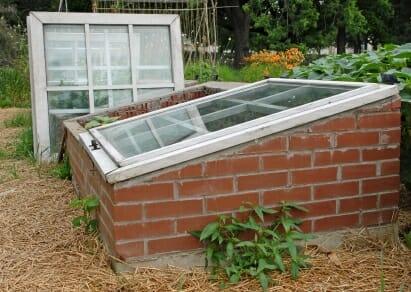
 There are three different, yet similar, shelters that can be used to extend your growing season – cold frames, hot beds and greenhouses. This article will deal with cold frames.
Cold Frames
A cold frame can be inexpensively built and easy to maintain. They are simple structures that provide a favorable environment to start seedlings in early spring before outdoor temperatures are warm enough, or to extend the growing season into early spring and throughout the winter months. This would enable an ambitious gardener to grow greens and cool weather crops year round if the conditions were just right. Some cold frames are elaborate and expensive; others can be a little expensive on the front end, but with proper use, will yield high returns on your initial investment.
Cold frames, or sun boxes, require no electricity. They are kept warm only by the heat of the sun. Ideally a cold frame should be built in a southern or southeastern exposure to the sun, with a slight slope to ensure good drainage. A sheltering fence or hedge on the north will provide protection against winter winds. You can sink the foundation of your cold frame into the ground to use the earth’s natural geo-thermal effects to insulate and provide additional warmth to your young plants.
In order to make using your frame simple, you may want to have a walkway to the front and adequate room behind it to be able to remove the top (or sash). You may also want to use a system of weights to simplify the raising and lowering of your sashes. Some gardeners make their cold frames lightweight so that they can move them around their gardens; others pick a location and make it permanent using the same place year after year. And some may want to use “Dutch light,” which is like a portable greenhouse that is moved around your garden.
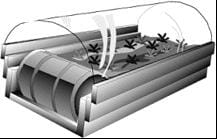
There are many new designs in cold frames, some of which include the use of passive solar energy storage. For example, using a 55-gallon drum painted black and filled with water will cause the water to absorb heat during the day and allow it to release the warmth of that water at night.
Build your frame from scrap wood so the drums will easily fit at the ends, make your frame the length of your wood – usually 8’ to 12’ long – and the height should be two-thirds the height of your barrel placed on its side. Put one black, water-filled drum on its side at each end of your frame, hold each in place with a rock or two. Fill the rest of your frame – between the drums – with your garden soil. Cover with plastic to hold in the heat, similar to the picture below.
Building Your Cold Frame
You can build your frame from many types of materials; however, wood, concrete blocks, and cement are the most common. If you choose to build a wooden box, you will want to choose a wood that will resist decay, like a good grade of cedar or cypress. This kind of cold frame is not hard to build and kits are also available for purchasing and assembling on your desired location.
Size needs to be carefully considered. You will want it small enough for ease in planting, weeding, and harvesting. Three to four feet is usually narrow enough to allow you to easily reach across. If a lady is going to do some of the gardening, you may want to make it 6 to 12 inches narrower. The sash, or top, should slope to the south to allow your plants to get the most exposure to the sun’s warm rays.
In the event that there is a cold spell on the way, you will want to fill gunny sacks (or trash bags) with leaves to pile on the sash of your frame, or surround the frame with bales of hay or straw to provide insulation for your seedlings.
When warmer weather arrives, ventilation will be needed when the temperature rises above 45° F. Partially raising the sash will lower the temperature and avoid extreme temperatures from building up. Lowering the sash while it is still warm enough to retain some of the heat to hold through the night will be necessary. When summer is at its height, the intense heat and sunlight can damage plants. You can avoid this by covering with old bamboo blinds or shading with lath (narrow strips of wood to form a lattice work) over the sash.
Using Your Cold Frame
Your cold frame can be used to “harden off” (get them used to outdoor living) seedlings that were started inside. This period is important so that your plants don’t suffer a setback by being moved directly from a warm house immediately to the garden beds. The cold frame provides a place for their transition for gradual adjustment to outdoor living. It is also possible to start cool weather crops and either grow them to maturity in the frame or transplant them to the garden.
In spring and summer months you can use it for propagating new plants from cuttings off their parent plants. Young seedlings and cuttings can be started in your frame weeks before they can be set into the ground. The soil in a corner of your frame can be replaced with peat moss or any medium suitable for starting your cuttings.
Fall and winter you can continue growing cool weather crops, fresh greens, herbs, and even root crops. Just remember they will still need proper moisture, fertilization, and insulation – if necessary.
Build, fill, plant, harvest and enjoy the fruit of your labors!