 Print
Print
America Needs Stronger Herds… Independent Processors… And Ranchers Who Can Afford To Stay On The Land
Only Rebuilding America’s Herd Will Put Beef Back Within Reach
Every homesteader with a chest freezer full of hard-won beef has probably heard the rumors by now. Some folks online swear the government is slipping wild horse meat into American hamburgers. Others insist the whole story about 300,000 tons of imported beef is nothing but a hoax cooked up to frighten ranchers.
Neither claim gets to the heart of what’s happening.
And honestly, all that noise only distracts us from the real trouble standing out in the pasture. America’s cattle herd has been shrinking, beef prices have been climbing, and Washington is once again looking for a quick way to make the grocery-store numbers behave.
So let’s clear the pasture of nonsense, open the gate, and get down to the dirt.
What Is Actually Coming Into the Country?
First, let’s look at the number everyone keeps tossing around.
Three hundred thousand tons of beef works out to roughly 661 million pounds. That sounds like an enormous mountain of meat—enough hamburger to fill more chest freezers than any of us could count.
But there’s some important context missing.
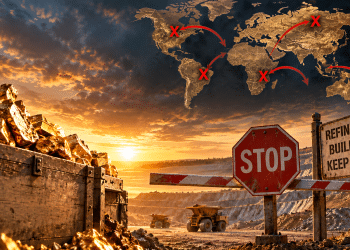
America already imports roughly six billion pounds of beef in a typical year. In other words, this new allowance would amount to around 10 percent of what the country is already importing. It isn’t a brand-new river of foreign beef suddenly pouring across the border. It’s more like opening an existing gate a little wider.
That doesn’t mean homesteaders and ranchers shouldn’t pay attention. They absolutely should.
Questions about residues, animal treatments, inspections, traceability, and country-of-origin standards are fair questions. China, for example, has previously raised concerns about Argentine beef connected to hormone and antibiotic residues. If another country rejects a shipment or tightens its rules, American consumers have every right to ask what standards are being applied to the meat coming here.
But the beef involved in this policy generally isn’t a boatload of ribeyes competing with the steaks at your local butcher shop.
Much of it is lean beef used in hamburger production.
Why America Imports Lean Beef While Raising Millions of Cattle

At first glance, that doesn’t make much sense. America raises a tremendous number of cattle, so why would the world’s largest beef-producing economy need to import beef for hamburgers?
The answer is found in the mixing vat.
American grain-fed cattle tend to produce plenty of fatty trimmings. Meanwhile, older cows and leaner grass-fed cattle provide the lean meat packers need to blend with that fat. Mix the two together, and the processor can produce the familiar ground-beef ratios stacked under plastic wrap in the grocery-store cooler.
Right now, however, American ranchers have good reason to hold back cows and heifers rather than send them to slaughter. The national herd has been worn down by drought, expensive feed, high interest rates, rising equipment costs, and years of tight margins.
A rancher who wants to rebuild needs breeding animals.
That means fewer older cows going to the packing plant and less domestic lean trim entering the hamburger stream. Foreign cattle, particularly cattle raised mostly on grass, tend to be leaner. Their trimmings can be blended with the fattier American beef already available.
From the packer’s point of view, the arithmetic is simple.
The company has fat. It needs lean meat. Imported trimmings fill the gap.
The Wild-Horse Story Sends Everyone Down the Wrong Trail
Now, what about the rumor that wild horses are being ground up and slipped into America’s hamburger supply?
That isn’t what this policy does.
Wild-horse management is a separate and emotionally charged issue, but mixing it into the imported-beef debate only clouds the water. Once people start chasing dramatic rumors, they stop watching the quiet decisions that actually shape food prices and farm production.
That’s a mistake.
The real story isn’t horse meat hiding under a hamburger bun. It’s a dangerously thin American cattle herd, a highly concentrated meatpacking industry, and a political promise that cheaper imports can somehow repair years of lost production.
They can’t.
Imports may fill a temporary hole in the supply chain, but they cannot raise a calf, restore drought-burned pasture, build a new processing plant, or give a young ranching family enough confidence to stay on the land.
The White House Promised More Than the Market Can Deliver
That brings us to President Trump’s handling of the announcement.
The administration’s promise of a 25 percent discount for consumers makes for a fine headline, but that isn’t how a complicated beef market works. Reducing the tariff on one ingredient does not guarantee that the full savings will travel through the packing plant, into the distribution warehouse, across the loading dock, and finally onto the price tag at your local grocery store.
There are too many hands between the ranch and the register.
If cheaper lean trimmings meaningfully increase the available supply of ground beef, shoppers may see some relief. Prices could soften around the edges, particularly for hamburger.
But there is no iron law forcing a giant meatpacker or national retailer to pass every saved dollar along to the family pushing a grocery cart.
A portion of that savings may never leave the corporate ledger.
That’s why the promise of a dramatic consumer discount deserves skepticism. Washington can lower a tariff with the stroke of a pen, but it cannot command every company down the line to surrender its margin.
The price of a hamburger is not set by a single lever in the Oval Office.
Ranchers Need Honest Signals, Not Political Price Games
More troubling than the questionable math is the mentality behind it.
When Washington announces that its goal is to push beef prices down, ranchers hear something very different from what shoppers hear. Consumers may hear, “Relief is coming.” The cattleman standing beside a worn fence hears, “The government may undercut the price you were counting on.”
That matters because rebuilding a cattle herd is not like restocking canned beans on a pantry shelf.
It takes time.
A rancher holds back a heifer. She must be fed, watered, bred, watched through the winter, and carried through calving season. Then the calf needs many more months of grass, hay, minerals, veterinary care, and protection before it comes anywhere close to entering the beef supply.
There is no fast-forward button.
Consequently, ranchers need confidence that this long investment will pay. They need honest market signals telling them that cattle are scarce and rebuilding the herd is worth the risk.
The late economist Gary North spent decades warning about what happens when government meddles with those signals. Price ceilings, price floors, subsidies, penalties, and political jawboning may temporarily hide scarcity, but they cannot make scarcity disappear.
Often, they make the shortage worse.
A rancher needs an honest price about as much as a corn farmer needs an honest weather forecast. Give him bad information and then blame him for making the wrong decision, and you’ve missed the whole point.
Muddy the signal, and fewer people will risk planting.
Muddy the cattle market, and fewer ranchers will risk rebuilding.
Cheap Beef Today Can Mean Less Beef Tomorrow
Every rancher is already carrying a heavy load.
Feed costs remain high. Fertilizer has been brutal. Machinery costs more. Interest on borrowed money bites harder. Pastures need maintenance, fences need repair, water systems break, and one dry summer can turn a carefully planned operation into a desperate search for hay.
Every one of those costs lands on the rancher before a single package of beef reaches the store.
So if Washington begins talking as though strong cattle prices are the enemy, why would a rancher invest more money in breeding stock? Why hold back heifers, expand the herd, lease more ground, or replace worn equipment if the government’s stated goal is to knock the future price down?
That’s the trap.
The country needs ranchers to produce more cattle. Yet political leaders want to promise shoppers lower prices immediately. Those two goals can work together over the long haul, but only if increased production creates the lower prices naturally.
Trying to force the price down before production recovers can discourage the very rebuilding America needs.
One Unexpected Effect Could Help Rebuild the Herd
Still, there may be a quieter side effect worth watching.
Imported lean trim could reduce what packers are willing to pay for older cull cows headed to slaughter. If the slaughter value of those cows falls, some ranchers may decide they are worth more back in the breeding herd than on the sale-barn truck.
That could encourage producers to keep more cows on the farm.
In the long run, that may help herd rebuilding, even if it wasn’t the purpose advertised from the podium. And because cull cows, fed cattle, and calves move through different parts of the beef market, pressure on lean cow beef does not automatically mean the same pressure will land on every calf or finished steer.
Beef is not one single market.
It’s a collection of overlapping markets, each moving to its own rhythm.
The Bigger Trouble Is Hiding Behind the Packing-House Door
Even so, the tariff debate leaves the largest problem mostly untouched.
America’s beef system is built around a small number of enormous packing companies and sprawling plants capable of processing thousands of cattle a day. When that much slaughter capacity is concentrated in so few hands, a fire, closure, labor dispute, disease scare, transportation problem, or corporate decision can rattle the entire country.
Homesteaders understand this instinctively.
You don’t store all your seed in one damp sack. You don’t depend on a single water line without keeping a backup. And you certainly don’t hand the security of the nation’s meat supply to a handful of distant corporations and then act surprised when the system grows fragile.
Yet that is close to what America has done.
Talk to ordinary cattlemen and families buying beef by the quarter or half, and you hear the same desire again and again. They want meat they can trace back to a pasture, a family, and a name.
They want to know who raised it.
Don’t Just Buy Local—Build a Trusted Network
This is where old-fashioned self-reliance offers a better answer.
People often say, “Buy local,” and that’s good advice when a trustworthy rancher is nearby. But the better rule may be, “Buy relational.”
You don’t necessarily need a rancher living two counties over. You need a rancher you trust, whether that operation is 20 miles away or 500. Modern shipping, freezer boxes, farm websites, and social media have made it possible for families to buy beef directly from independent producers across the country.
A box of grass-fed beef can leave a family ranch on Monday and arrive frozen on your porch a few days later. A quarter beef can be reserved months ahead. Friends, relatives, and church families can split a whole animal and fill several freezers at once.
That kind of arrangement steps around much of the anonymous commercial chain.
You know where the animal was raised. You can ask what it ate, how it was treated, and where it was processed. You’re no longer staring at a foam tray wondering which country, feedlot, or packing plant supplied the meat.
It’s trust built across a kitchen table—even when the handshake happens through a phone screen.
America Needs More Small Processors
Of course, direct buying works only when farmers and ranchers can get animals processed.
That is where the real bottleneck appears.
Across the country, many independent processors are booked months in advance. Some USDA-inspected butcher shops have more business than they can handle. Others do not have enough cooler space, skilled labor, inspection access, or capital to add another processing line.
Some aren’t accepting new farm labels at all.
That is the kind of shortage Washington should be working to solve. Expanding small and regional meat-processing capacity would give ranchers more ways to reach customers without handing their cattle to the largest packers.
It would also make the food system harder to break.
Yes, building that capacity takes time. A new processor needs land, equipment, trained workers, inspectors, wastewater systems, cold storage, and customers. It cannot be created before supper by signing an executive order.
But neither can a cattle herd.
Real food security is slow work. It’s built one cow, one fence, one freezer, and one local butcher at a time.
What Homesteaders Should Take Away From the Beef Fight
Ultimately, two things can be true at once.
The imported-trimmings agreement is not a secret scheme to mix wild horse meat into American hamburgers. Lean beef imports already play a major role in the commercial ground-beef market, and additional supplies may ease a genuine shortage created partly by ranchers retaining cows to rebuild their herds.
But Washington’s talk about manipulating prices downward is still dangerous.
Gary North’s warning remains as relevant as ever: distort the signal and producers change their behavior. Undercut the reward for rebuilding, and ranchers will rebuild more slowly. Keep the herd small, and families will face tight supplies and high prices for years.
The answer to expensive beef is not another clever price game.
The answer is more cattle, more ranchers, more grass, more independent processors, and more direct connections between the people raising food and the people eating it.
So here’s the homesteader’s move.
Keep your freezer stocked with beef from ranchers you know by name. Support the independent processor who still answers his own telephone. Split a whole or half beef with family, neighbors, or folks from church. Grow what you can, raise what you can, and build relationships with the people producing what you cannot.
Most of all, don’t let every headline from Washington send you stampeding through the nearest gate.
Politicians can adjust tariffs. Packers can blend trimmings. Retailers can change price tags. But lasting food security is still built the way it always has been—through healthy land, strong herds, skilled hands, and trusted people willing to feed one another.
That answer was never hiding in Washington.
It has been standing out in the pasture all along.