Print

Grandma Kept The Soup Pot Going… Now Scientists Are Studying The Nutrient Your Gut Uses Every Day
An ordinary nutrient called L-glutamine helps fuel your intestinal lining. Here’s what that could mean for homesteaders struggling with digestive trouble—and what the promises leave out.
You can stack firewood to the rafters. Fill the cellar with potatoes. Put enough beans on the shelf to ride out a winter storm.
But when supper leaves you doubled over, that well-stocked pantry offers little comfort. Suddenly, the most troublesome part of the homestead is the one beneath your belt buckle.
Maybe you’ve already tried bone broth, collagen powder, and every friendly suggestion from somebody who “used to have the same thing.” Yet your stomach still swells like an overfilled feed sack.
So where do you turn next? One possible answer begins with a nutrient your body already makes.
The Fuel Behind Your Gut’s Fence

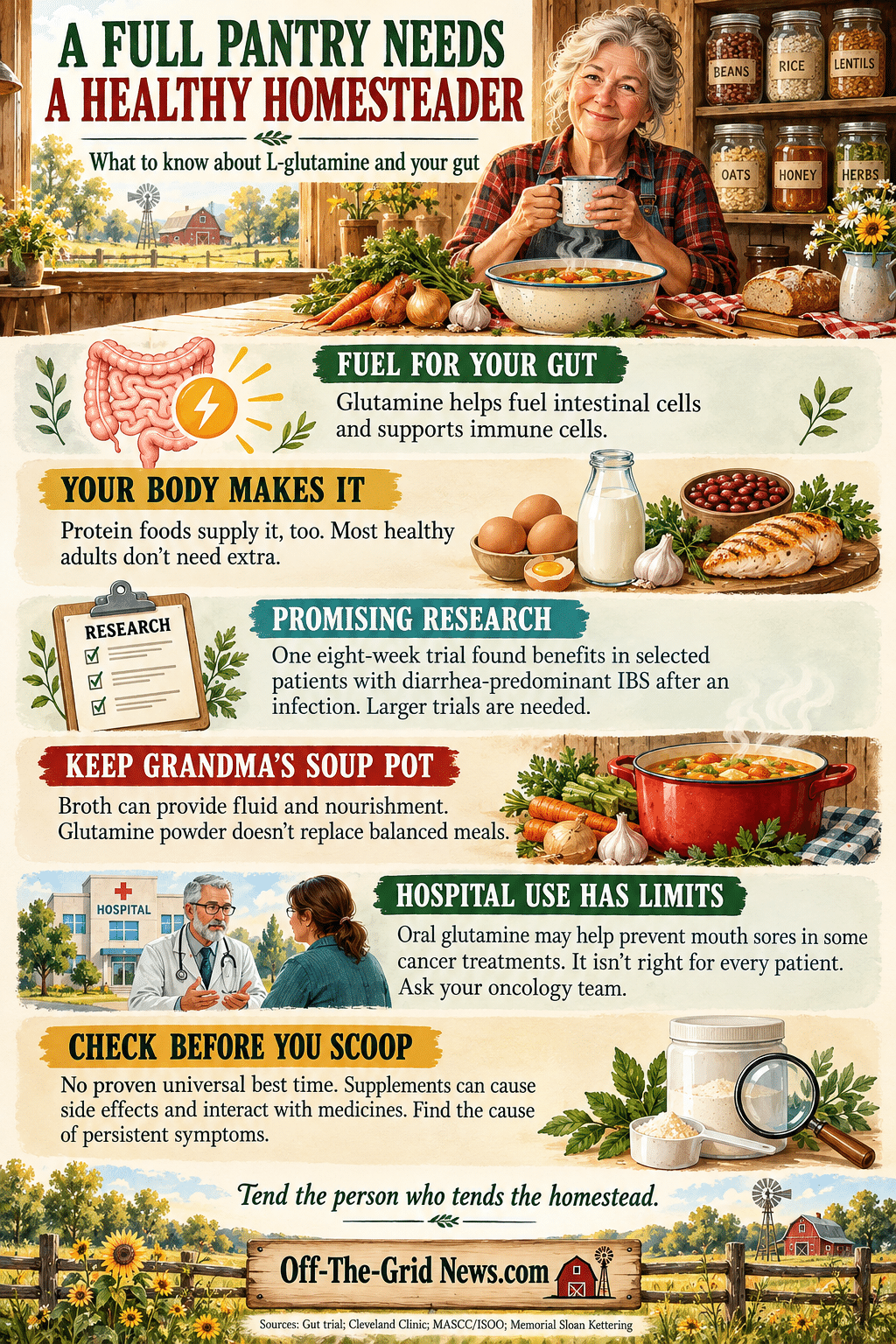
L-glutamine is an amino acid. That’s one of the building blocks your body uses to make proteins. It also supplies fuel for cells in your intestines and immune system.
Think of your intestinal lining as a carefully maintained farm fence. It allows nutrients and water through while helping keep bacteria and unwanted material where they belong. Glutamine helps support the cells doing that work. my.clevelandclinic.org
However, supporting a fence isn’t the same as fixing every problem in the pasture. A useful nutrient can become an exaggerated promise when somebody starts selling it as the answer to all digestive trouble.
Before buying that promise, it helps to understand where glutamine comes from.
Your Kitchen Already Supplies Some
Your body normally makes glutamine. You also get it from protein-containing foods, including eggs, milk, meat, and beans. Most healthy adults already have enough without adding a supplement. my.clevelandclinic.org
In other words, that breakfast egg and bowl of beans contribute more than a full stomach. They supply materials your body uses to maintain itself.
Still, illness and injury can change the picture. During serious physical stress, your body may use more glutamine than it can produce. That’s why researchers describe it as “conditionally essential.” my.clevelandclinic.org
But a hard afternoon splitting oak doesn’t automatically mean you need a scoop of powder. The question is whether your particular health problem might benefit from extra glutamine—and that takes more than guessing.
When The Research Gets Interesting
One clinical trial studied adults who developed diarrhea-predominant irritable bowel syndrome after an intestinal infection. These patients also had increased intestinal permeability, meaning their intestinal barrier allowed more material through than expected.
For eight weeks, participants received either glutamine or a placebo. Those taking glutamine received five grams three times daily.
Among the people who completed treatment, roughly eighty percent in the glutamine group met the study’s threshold for symptom improvement. About six percent in the placebo group did. Bowel frequency, stool consistency, and intestinal permeability also improved. PMC
That’s encouraging. Anyone planning chores around the nearest bathroom can understand why those results matter.
However, this was a particular group with a particular problem. It doesn’t prove glutamine fixes every case of bloating, constipation, food intolerance, or abdominal pain. The researchers called for larger trials, which brings us to a phrase that often muddies the water.
What “Leaky Gut” Actually Means
Online, “leaky gut” gets blamed for almost everything from fatigue to a bad mood. Sometimes the explanation sounds like your intestines have sprung a hole like a rusted stock tank.
Actual increased intestinal permeability is different. It concerns how well the intestinal barrier controls what passes through it. It can occur with conditions such as celiac disease and inflammatory bowel disease.
Meanwhile, the broad label “leaky gut syndrome” isn’t an established medical diagnosis that explains everyone’s symptoms. my.clevelandclinic.org
Nor does bloating prove you’re full of poisonous ammonia gas. A swollen belly needs a sensible investigation, rather than a frightening label followed by a shopping link.
Finding the cause matters because even promising repair materials won’t solve every kind of damage.
Keep Grandma’s Soup Pot
Now, what about bone broth and collagen? Must you push Grandma’s soup pot aside because glutamine comes in a convenient powder?
There’s no good reason to declare that ordinary broth dehydrates everyone or that collagen is useless. These foods and supplements have different nutritional roles. None deserves to become a universal cure.
A bowl of homemade chicken soup can provide fluid, nourishment, and comfort when you don’t feel like eating much. That’s worthwhile without claiming it seals a damaged intestine.
Likewise, isolated glutamine supplies one amino acid. It doesn’t replace the broader nourishment your body needs.
So keep the soup pot. Just leave room beside it for questions about what your digestive trouble actually requires.
Is Bedtime The Secret?
Some supplement advice insists glutamine must be taken before meals. Other advice says bedtime is the magic window, when your gut supposedly clocks in for repairs.
That sounds tidy. But neither claim establishes a universal best time.
The encouraging IBS trial used divided doses throughout the day. It didn’t prove that bedtime works better, that breakfast blocks absorption, or that everyone needs an empty stomach. PMC
Your body maintains tissue throughout the day and night. Getting enough sleep matters, but a convincing bedtime story isn’t the same as clinical evidence.
If a clinician recommends glutamine, follow the plan for your condition and product. Don’t borrow a stranger’s dose merely because their video sounds confident—especially when hospital treatment enters the conversation.
Why Hospitals Sometimes Use It
Glutamine has been studied to help manage certain side effects of cancer treatment. Guidelines suggest oral glutamine for preventing mouth sores in some patients receiving combined radiation and chemotherapy for head and neck cancer.
However, those same guidelines recommend against intravenous glutamine for preventing mouth sores in patients undergoing stem-cell transplantation. The setting and method matter. PMC
Furthermore, a large trial involving critically ill patients with multiple organ failure found increased mortality associated with glutamine supplementation. That treatment differed a bit from an ordinary outpatient supplement, but it shows why “hospitals use it.” PubMed
If you’re receiving cancer treatment, your oncology team should guide this decision. Hospital use doesn’t settle every question about tumors, treatment interactions, or your individual risks.
And cancer care isn’t the only reason to slow down before reaching for another scoop.
Listen When Your Body Objects
Glutamine supplements can cause unwanted effects, including nausea, vomiting, and headaches. They can also interact with medications. Memorial Sloan Kettering advises discussing supplements with a healthcare provider because they supply higher amounts than food does. Memorial Sloan Kettering Cancer Center
If a product makes you feel worse, don’t force yourself through it because somebody calls the reaction “healing.” Get advice before continuing.
Also, glutamine isn’t MSG. And calling MSG a proven brain poison goes beyond the evidence; the FDA considers it generally recognized as safe for food use. FDA
Claims that glutamine clears mercury or calcium deposits from the brain deserve some skepticism, too. Supporting normal cell function doesn’t always establish a detox treatment.
That distinction leaves us with a more useful approach.
Tend The Homesteader First
Start with regular meals, adequate nourishment, and attention to foods that trigger symptoms. If you’re adding fiber, increase it gradually. Too much at once can worsen gas and bloating. NIDDK
Meanwhile, persistent trouble deserves evaluation. Blood in your stool, black stools, or unexplained weight loss shouldn’t wait for another supplement experiment. Health
Glutamine may have a place in that conversation. It simply needs the right reason.
After all, you wouldn’t repair a tractor by pouring something into the tank before checking what’s wrong. Give your body that same common sense.
The pantry matters. So does the person who planted, harvested, and filled it.