Print
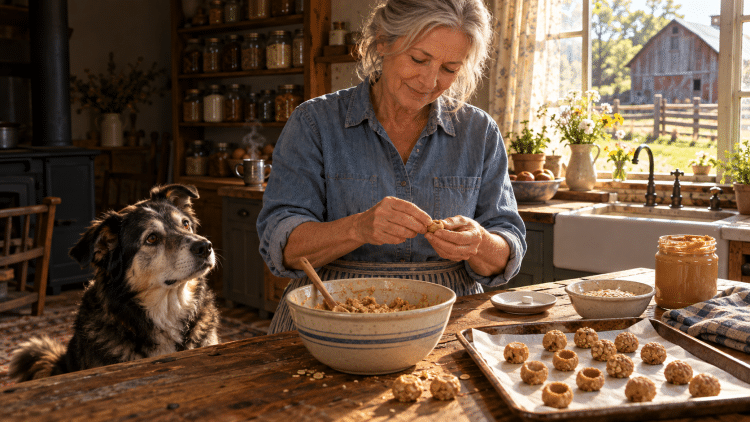
Whip Up A Small Batch With Ingredients You Already Have In The Pantry
Your Farm Dog Gets His Medicine… You Keep The Feed Money
Every dog owner knows this little barnyard comedy. You tuck a pill into a chunk of cheese, toss it to the dog, and walk away feeling clever. Ten minutes later, there sits the tablet on the porch floor, licked clean and slick as a creek stone.
Meanwhile, the cheese is long gone.
Your dog may chase his own tail, but don’t mistake that for a lack of talent. When it comes to finding medicine inside supper, some dogs could scour a load of cargo at the county line. They’ll swallow something dreadful behind the chicken coop, then dodge one little tablet like you’ve offered them a roofing nail.
That’s why pill pockets sell. Those soft little pouches let you tuck the medicine inside, pinch the opening shut, and hope the whole package goes down without a committee meeting.
Here’s the good part: you don’t have to buy every handy thing in a shiny bag. With a little peanut butter, some finely ground oats, and about fifteen minutes at the kitchen counter, you can make your own pill wrappers from scratch for pennies. First, though, make sure your dog’s medicine can be given with food and that the ingredients suit his health and diet.
What You Shell Out for That Little Wrapper
For starters, take a look at the ingredient panel on a commercial chicken flavored pill pocket. You’ll find chicken, glycerin, wheat flour, wheat gluten, vegetable oil, dried corn syrup, flavorings, and preservatives, among other ingredients. Formulas can change, so the package in your hand gets the final say.
Now, let’s clear away the fog. A long ingredient list doesn’t automatically make a product bad. Glycerin helps hold moisture, and preservatives help a moist treat last on the shelf. Store bought pockets are convenient, and that convenience may be worth paying for.
But if your dog takes medicine every day, you’re shelling out for that convenience year after year. At an illustrative 35 cents per pocket, one daily wrapper costs about $128 a year. Two a day runs about $256, before you’ve bought the first pill.
That’s cold cash for something you might be able to stir together beside the coffee pot.
Put This Peanut Butter Workhorse to Work
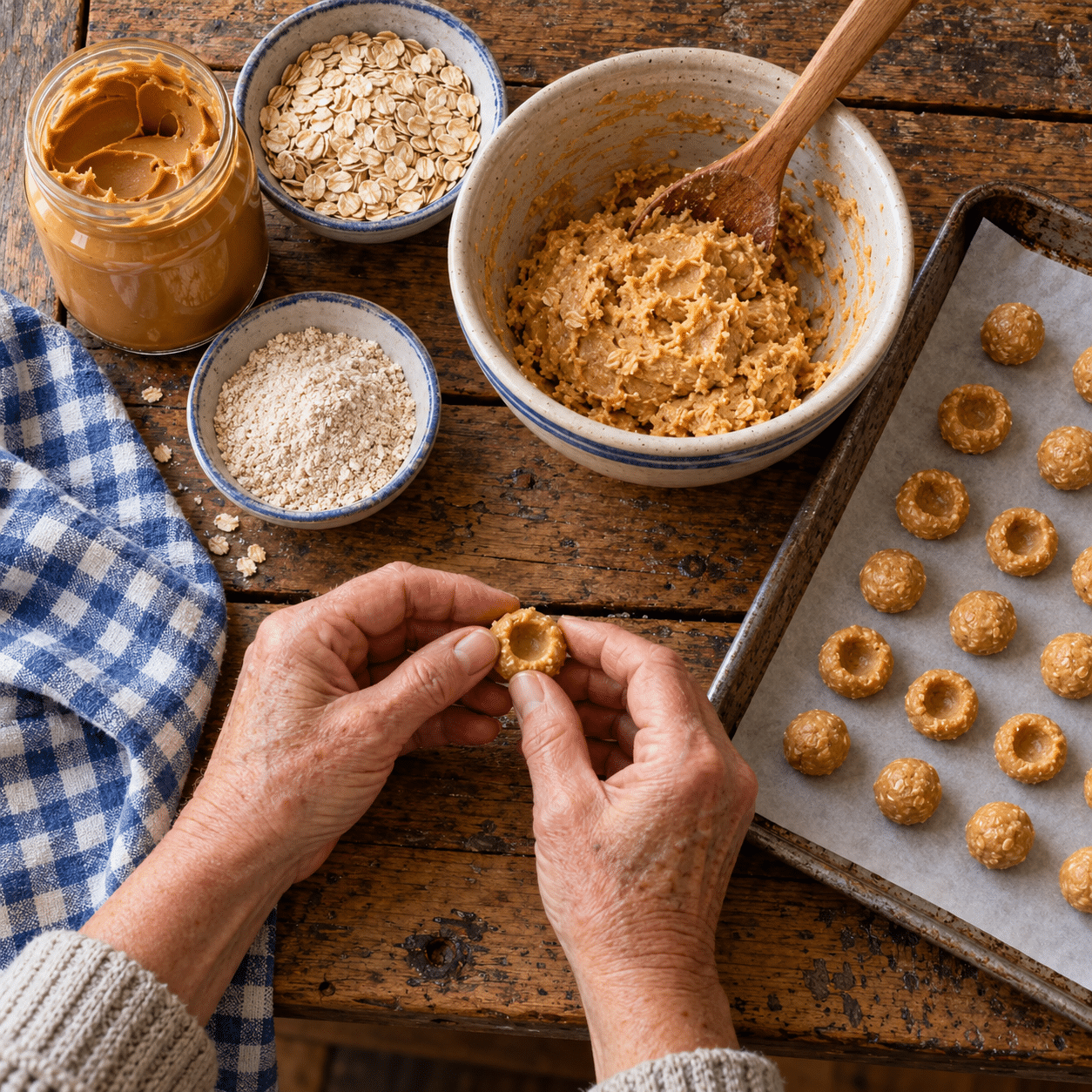
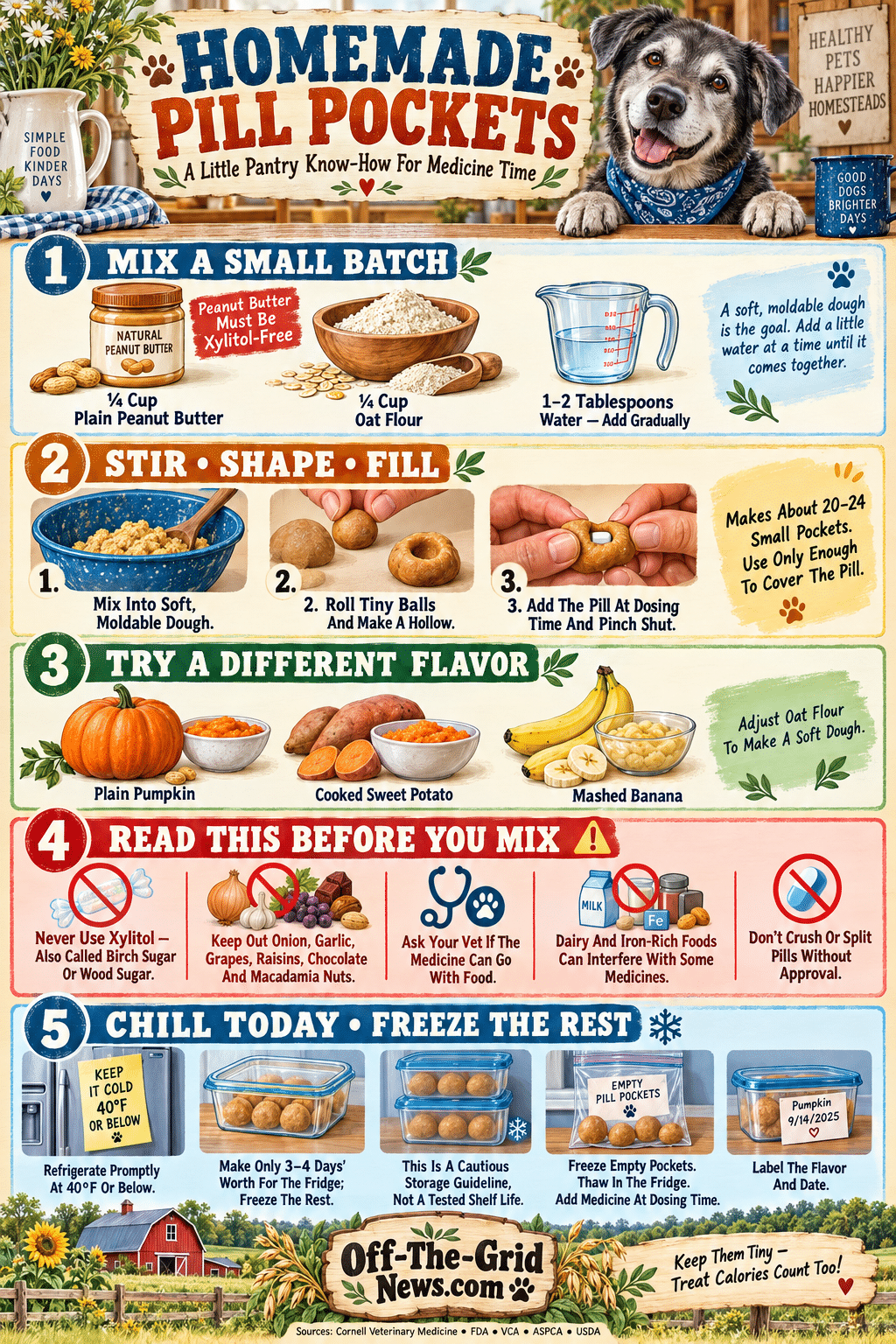
For a basic batch, measure out ¼ cup of smooth, xylitol-free peanut butter and ¼ cup of oat flour. Then have 1 to 2 tablespoons of water ready, adding it a little at a time rather than dumping it all in. Plain water is the simplest starting point; unseasoned, dog-safe broth can work when it suits the prescription and your dog’s diet.
To make the oat flour, run plain rolled oats through a blender until they’re finely ground. Use plain oats, not a flavored breakfast packet with a surprise ingredient list of its own.
Next, stir the peanut butter and oat flour together. Add just enough water to make a soft, moldable dough, something like Play-Doh. Peanut butter brands vary, so let the dough tell you what it needs.
If it sticks to your fingers like wet biscuit dough, work in a little more oat flour. If it cracks and crumbles, add water a few drops at a time. You’re making a pill wrapper, not laying mortar.
Then roll small balls and press the clean end of a chopstick into each one to make a hollow. Aim for roughly 20 to 24 small pockets, although the yield depends on the pill size and how much dough you use.
At medicine time, tuck the pill inside and pinch the dough completely shut. Keep the outside free of pill powder, and wash your hands after handling the medicine so you don’t smear its taste onto the wrapper. Store the pockets empty; add each dose only when you’re ready to give it.
Read the Jar Before You Feed the Dog
Listen up: here’s the one ingredient check you can’t skip. Some peanut and nut butters contain xylitol, a sweetener that can be deadly to dogs. A cheerful label saying “natural,” “keto,” or “low sugar” is no substitute for reading the small print.
According to Cornell’s veterinary college, xylitol poisoning can cause dangerously low blood sugar and liver injury. The FDA also warns that xylitol may appear under names such as birch sugar or wood sugar. Look carefully every time you buy a jar, because familiar brands can change their recipes.
Plain peanut butter made from peanuts alone is an easy choice. Avoid added sweeteners, chocolate, and fancy flavor combinations. If you think your dog has eaten xylitol, contact your veterinarian or an emergency animal hospital immediately; don’t wait for symptoms to settle the question.
That jar belongs on the reading list before it belongs in the mixing bowl.
Coax a Suspicious Nose With a New Flavor
Once you’ve learned the basic dough, you can change flavors without opening a laboratory. Start with tiny amounts of a food your dog already tolerates, and keep any allergy, prescription diet, or history of pancreatitis in mind. A rich wrapper isn’t a bargain if it upsets the dog.
For pumpkin pockets, replace the peanut butter with plain canned pumpkin and add oat flour until the mixture holds its shape. Skip the pumpkin pie filling with its sugar and spices. Pumpkin brings more moisture than peanut butter, so expect to adjust the flour and leave out the added water at first.
For sweet potato pockets, bake a plain sweet potato until soft, let it cool, and mash about ¼ cup. Work in enough oat flour to make a soft dough. Leave the butter, brown sugar, and Thanksgiving marshmallows for somebody else’s plate.
For the shrewd little bandit who can detect a pill through a barn door, cooked chicken liver may provide a stronger smelling wrapper. Cook it thoroughly without seasoning, cool it, mash a small amount, and mix with oat flour. If you raise chickens, this gives a little of the harvest another job, but keep portions small and check that liver suits the medication.
On the other hand, a little plain cream cheese can make a soft pocket when dairy is allowed. Start with 2 tablespoons and add oat flour until it handles easily. Plain soft goat cheese is another possibility, but goat milk doesn’t make it free of calcium, fat, or the potential to cause digestive trouble.
For a fish loving dog, mash a small amount of plain, water packed sardines with oat flour. Choose a product without added salt when possible, and avoid sauces or seasoning. Finally, a little mashed ripe banana and oat flour can make a soft, sweet wrapper, although some dogs would rather negotiate for the sardines.
Ask About the Medicine Before You Pick the Flavor
Here’s a crucial detail: even an ingenious kitchen shortcut needs a little veterinary common sense. Some medicines need to be given on an empty stomach, and certain foods can interfere with others. Check the prescription’s food instructions before you let your dog’s enthusiasm pick the wrapper.
For example, VCA Animal Hospitals advises giving doxycycline with food but avoiding dairy and iron containing foods because they can interfere with its effectiveness. That means cheese isn’t the automatic answer, and iron rich liver isn’t an automatic substitute either. Ask your vet which ingredients and timing are appropriate for that particular drug.
Also, don’t crush, split, or open a pill or capsule just to squeeze it into your homemade pocket unless the vet or pharmacist approves. Some formulations need to stay intact. For doxycycline in particular, follow the veterinarian’s instructions about food or water afterward rather than assuming one tiny pocket finishes the job.
If your dog spits out a dose or you’re unsure how much he swallowed, call for instructions before giving more. Guessing can turn one missed pill into an accidental double dose.
Keep the Soup Pot Seasonings Out of This Bowl
Of course, homemade gives you control. The catch is remembering what to leave out. The ASPCA warns that onions, garlic, and chives can damage red blood cells. Not sure of all the details on that, but certainly worth noting. Check broth labels carefully, including powdered broth and bouillon, because those ingredients turn up in plenty of kitchen staples.
If you make your own broth, use plain bones and water without seasonings, strain it thoroughly, discard every bone, and skim excess fat after chilling. Don’t let familiar ingredients give you false confidence. Last night’s soup broth doesn’t automatically qualify just because it came off your stove.
Likewise, keep grapes, raisins, chocolate, and macadamia nuts out of the recipe; they’re also on the ASPCA’s list of foods to avoid. And stick with oat flour for this version rather than swapping in raw wheat flour. These pockets aren’t baked, so use clean equipment and ingredients intended to be eaten without further cooking.
Make a Small Batch and Let the Freezer Earn Its Keep
Your homemade dough doesn’t come with a tested commercial shelf life. Once you’ve stirred in water, pumpkin, fish, liver, or cheese, treat it as perishable food. Refrigerate promptly in a clean, sealed container at 40°F or below.
As a cautious household approach, make only three or four days’ worth for the refrigerator and freeze the rest right away. That isn’t a laboratory tested shelf life for every recipe; it’s a practical limit, consistent with the USDA’s three to four day guidance for cooked meat and seafood leftovers. Here’s the catch: an ingredient already near the end of its safe storage time doesn’t get a fresh clock because you mixed it into dough.
For freezing, arrange empty pockets on a parchment lined tray. Once firm, move them into a sealed freezer bag, label the flavor and date, and aim to use them within a couple of months for quality. Thaw only a small supply in the refrigerator and let each pocket soften enough to mold around the pill before using it.
Discard anything moldy, slimy, or questionable, but remember that food can be unsafe without smelling bad. If the power goes out, judge the batch by its temperature and time, just as you would other perishable food. A generator running out by the shed doesn’t help the pockets if nobody has checked the freezer.
Wrap the Pill Without Feeding a Second Supper
A pill pocket is a wrapper, not a meatball. Peanut butter is calorie dense, and a generous homemade lump can turn medicine time into a sneaky extra meal, especially for a little dog taking several doses a day.
So use only enough dough to cover the pill completely. Count the empty “decoy” treats too, and ask your vet how these extras fit the daily food allowance if weight is becoming a problem. Dogs with food allergies, diabetes, kidney disease, pancreatitis, or a prescription diet may need a different approach altogether.
After all, the goal is getting the medicine down, not getting the dog shaped like the feed barrel.
Run the Numbers and Pocket the Difference
Now, let’s put the numbers on the kitchen table. Your exact savings depend on local prices and pocket size. As an example, if the peanut butter and oats for a batch cost 75 cents and yield 24 pockets, each wrapper costs just over 3 cents. Compared with a 35 cent commercial pocket, that’s about $116 saved over a year of one daily dose.
Of course, extra decoys and pricier ingredients change the arithmetic. But the larger point still holds: a spoonful of pantry ingredients can stretch a long way. Before you shell out again, check the current commercial price and package count, then run the numbers with what you actually pay at the grocery store.
Finish With the Three Treat Shuffle
Finally, give the three treat shuffle a trial run. Offer a tiny empty pocket, then the loaded one, then another empty one. Some dogs get interested enough in the next bite to swallow the medicated treat without performing their usual inspection. Keep the pace comfortable, let the dog swallow, and make sure the pill actually went down.
If your determined four-legged inspector still finds it, don’t turn the kitchen into a wrestling ring. Ask your vet about another approved food, a different formulation, or a better way to give that medicine.
That’s homestead thinking at its best. Tap into what you’ve already got in the pantry, mind the details, and put your own kitchen to work. With a little luck, the pill goes down, the porch stays tablet free, and more of your money stays right where it belongs.
In your pocket.