 Print
Print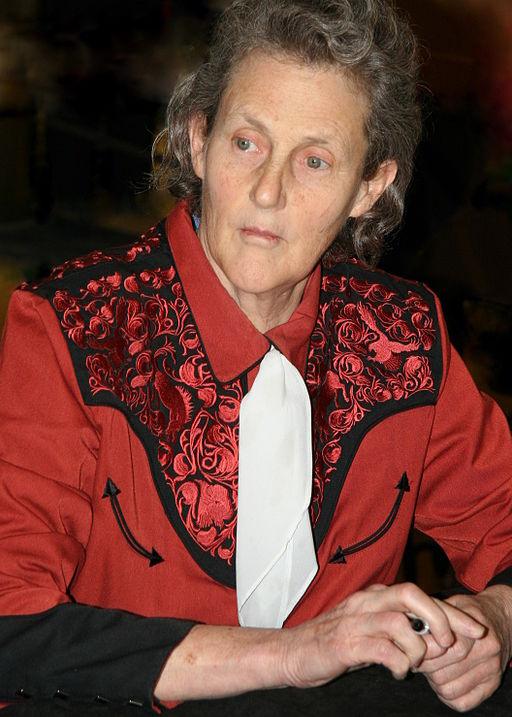
As a homesteader, small farmer, or someone who dreams of becoming one, you understand the importance of animals on the farm and the roles they play in providing companionship, food, and income. No one understands better the value and the necessity of animals than small farmers and homesteaders who care for them personally and on a daily basis.
Over the last century, as small family farms dwindled and factory farms became the norm, the treatment of animals has been under scrutiny and debate by those who care about their welfare. Factory farms raise huge numbers of animals, and their treatment often comes last with production and money being more important. Advocates for animal rights work tirelessly to improve the conditions for these animals, and few have done more for the cause than Dr. Temple Grandin. She is responsible for making important changes in meat processing that have made the process much more humane.
Her Life
 Dr. Temple Grandin was born in Boston in 1947 and by the age of three was diagnosed with autism. She did not begin talking until she was four years old. Her parents were encouraged to send her to an institution, but thankfully, Grandin’s mother pushed for her inclusion in a traditional school. Although she felt she always had good role models, good teachers, and plenty of support from her mother, Grandin struggled constantly to fit in with other children. Because she was different, she was often teased, taunted, and bullied.
By high school, Grandin’s intellectual abilities were realized, and she attended a boarding school for gifted students in New Hampshire. After graduating, she attended Franklin Pierce College and earned a degree in psychology. Because she always loved animals and felt a deep connection to them, she went on to pursue graduate work in animal science. Grandin received her master’s degree and doctoral degree in the subject from Arizona State University and the University of Illinois at Urbana-Champaign. She also holds honorary degrees from the Ontario Veterinary College at the University of Guelph and Duke University.
Know About Vaccines And What Is Really In Them…
Her Work
Grandin had a love for animals early on in life. She took up horseback riding as a child and found there an escape from the difficulties of being autistic. She appreciated the fact that the horses did not judge her nor view her as being different from others. In working with horses, she also found a way to connect with other people. As someone with autism, Grandin struggled to construct emotional relationships with others and as a result, people found her different and unusual. What she discovered by working with horses was that she could connect with people through common interests. Among other horse lovers, she was no longer different; she was simply another horse person.
It was not just her love for animals that led Grandin to work in animal science. She also felt that her autistic brain, which worked differently than other people’s brains, was better able to understand the needs of animals and better able to see the world from their perspective. With this ability, she worked towards the improvement of care for animals to be slaughtered. Her interests in this type of work, sprung from her belief that animals, because they can feel pain, must be protected from pain inflicted by humans. She believes that proper care, respect, and humane treatment of animals, even those to be killed for consumption, is the responsibility of people. In one of her many papers on the subject, “Animals are Not Things,” Grandin makes a comparison between a screwdriver and a cow. She says that while both are considered property, only the cow can feel fear and pain. For that reason, animals warrant the moral and legal protection that other items of property do not. Furthermore, when animals are used for food, they must be treated humanely to avoid the feelings of fear and pain.
From her beliefs about animal welfare came Grandin’s most important work. She has developed equipment to be used in handling animals that minimizes their fear and pain. She designed ramps and corrals to be used at slaughterhouses that make use of cows’ natural instincts and keep them calm and unafraid. In addition to making the slaughtering process more humane, these systems have made it more efficient because calm animals are much easier to handle. Approximately half of all beef cattle in the U.S. today are handled using equipment designed by Grandin. It is also used extensively in the United Kingdom, Canada, and Mexico. In addition to equipment, Grandin developed auditing systems to ensure slaughterhouses use humane practices.
Today, Dr. Grandin is a professor of animal science at Colorado State University. She lectures and publishes papers on her subject and tirelessly advocates for animal rights. In addition to her academic work, Grandin acts as a consultant for multiple businesses involved in the meat processing industry including McDonald’s, Kentucky Fried Chicken, and Wendy’s. She has also written several books on animal behavior and autism and advocates for autism education and early intervention for autistic children.
Her Influence and Importance
Temple Grandin’s life and work has influenced many and has left a lasting impact on the world of meat processing and animal handling. She has perhaps been the single most influential figure in farm animal welfare. With her consulting and equipment design, she has impacted the majority of beef cattle as well as many other animals in the U.S., and her work continues to be noticed around the world. As an expert on animal care and handling, she has also been an extremely important proponent of the idea of treating animals humanely and with respect. While her work helps slaughterhouses and meat processors to work more efficiently, her main goal has always been the welfare of the animals. And because she continues to be outspoken about her belief in animal rights, she has influenced many people.
For her work and her influence, Grandin has been the recipient of many awards and honors. In 2010, Time magazine listed her as one of 100 people who most affect our world because of both her work with animals and her advocacy regarding autism. She has received the Humane Award of the American Veterinary Medical Association, the Joseph Wood Krutch Medal from the Humane Society of the United States, the Founders Award from the American Society for the Prevention of Cruelty to Animals, and an award from People for the Ethical Treatment of Animals. She has been the subject of documentaries on her life and on autism as well as a dramatized account of her life made by HBO.
Those who consume the meat that comes from slaughterhouses in the U.S. should be aware of how the animals are treated. As human beings, we have a responsibility to respect and care for animals, an idea that, thanks to Dr. Grandin, is much more widespread today than it ever has been in the past. If you raise animals on your homestead, you can surely appreciate her feelings towards animals and the work she has done to improve their lives.
©2012 Off the Grid News