 Print
Print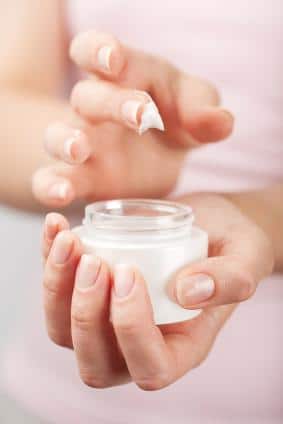
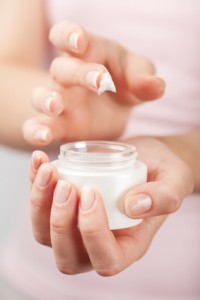 Making your own lotion is simple and involves fairly common household items. It’s so easy, you’ll wonder why you never heard about it before! Not only is making your own lotion a fun new hobby to try, but homemade lotion can be a great gift, a cottage industry, or a special way to pamper your skin.
What Is Lotion?
You’ll be surprised that lotion is comprised of just three things: water, oil, and an emulsifier (something that binds water and oil together). Some people also like to add a thickener, natural scents, and colorants, and a non-toxic preservative. Don’t be fooled by the big words though—it’s pretty simple to make what would cost you $8 at the store for less than a buck.
Beginner Lotion Recipe
The first thing you’ll need is a good beginner lotion recipe. Once you master the basics, a digital scale that measures down to the 1/8 of an ounce, a candy thermometer (must be able to go over 100 degrees), and a hand-held stick blender can be helpful. To start, a whisk and measuring cups will do.
One easy recipe to start with calls for half a cup of olive oil and two tablespoons of beeswax (your emulsifier) in a microwave-safe container. Heat the mixture up in your microwave in short bursts until it’s fully melted. Then whisk or blend in 5 ¾ cups of distilled water. Let the mixture cool and put it into a jar or bottle. Voila!
Sprucing Up Your Lotion Base
You can spruce up this starter recipe in a number of ways. Go to your local health food store and see what kind of exotic oils they may have. In addition to olive oil, you might try grapeseed oil, jojoba oil, wheat germ oil, almond oil, or avocado oil. Cocoa or shea butter can also be used in combination with other oils.
You can also play with your “water” base by using water in combination with witch hazel, fruit or vegetable juices (toss a cucumber in your juicer for a soothing lotion base), aloe vera gel, glycerin, or floral waters. Another great additive is the contents of some vitamin E capsules, which not only moisturize skin but also help extend the shelf life of your handmade lotion. If you use essential oils, use two drops per cup of lotion.
Experimenting
Unlike with soap making, where saponification values must be tediously calculated, you are really free to experiment with whatever amounts of oil, liquid, and emulsifier you want when it comes to lotion. Keep in mind that lotions tend to be 2/3 water and 1/3 oil, whereas creams are 1/3 water and 2/3 oil. Your emulsifier will need to be about 10 percent of the mixture in order to do its job. Be sure to always add your chosen preservatives to the water (not the oil) before it is emulsified. Remember that both your liquid and oil need to be the same temperature when you combine them. You can then add scents or colors to the finished product (after emulsification). Always allow your latest concoction to cool down to room temperature before you put it in a container for storage. Finally, make sure to write down the recipes you are trying and measure what you use in case you end up with the perfect lotion and want to replicate it.
175 Homemade Herbal Formulas for Glowing Skin & A Vibrant Self
Natural Lotion Emulsifiers?
This is a hotly debated topic, as the definition of “natural” is so open to interpretation. Using the most “pure” definition, beeswax is the only real natural emulsifier. In the past, borax, a mineral, was used to emulsify lotion; however, today borax has been determined to be unsafe. This point is also hotly contested as many lotion makers continue to use it in small amounts.
Nevertheless, the most popular emulsifier used today is known simply as “emulsifying wax,” which obviously didn’t grow on a tree anywhere. The ingredients in emulsifying wax, while chemically processed, are naturally derived for the most part. E-wax, as it is called, is made a little differently by each company that produces it. Generally though, it contains things like steareth-20 (derived from fats and oils), cetearyl alcohol (a thickener), and polysorbate-60 (rated as food safe). The very strict Environmental Working Group, a organization dedicated to policing and promoting natural cosmetics and toiletries, rates “vegetable e-wax” as a zero risk. You can buy vegetable e-wax from From Nature With Love or Mountain Rose Herbs.
If you are interested in a “natural” lotion thickener, xanthum gum is recommended. Xanthum gum is a natural polysaccharide commonly used in cosmetics and toiletries. It is also known for hydrating the skin. Keep the xanthum gum to less than 1 percent of your mixture. You can buy xanthum gum for use in lotion making from BulkActives.com.
Preserving Homemade Lotion
Because homemade lotion does not contain all of the chemicals that store-bought lotion does, it must be kept in the refrigerator. Keep that in mind when deciding which container to store your new natural lotion in and the quantity you plan to make. Note that even when refrigerated, homemade lotion will not have an indefinite shelf life like the store-bought equivalent. A recipe like this one with no natural preservatives will last a few weeks only, even if refrigerated.
Because your homemade lotion is food-grade (and therefore edible) it must be treated like fresh food. You have a few different choices to extend its shelf life other than just refrigeration though. If you want to use a chemical preservative in your lotion, LotionCrafter.com sells a number you can chose from like Germaben II, Optiphen, and Phenonip. Be careful to avoid any preservatives that contain cancer-causing parabens. Your lotion won’t be as natural this way, but it will be more practical. For example, any homemade lotions you’re planning to sell or give as gifts will no doubt need to contain one of the above preservatives.
Some other tips to extend the shelf life of your lotion include washing your hands thoroughly before working with or touching any of your lotion-making ingredients. Storing your lotion in dark-colored containers also inhibits bacterial growth. Definitely keep them away from direct sunlight! Also, make sure to use airtight containers and keep those lids on snugly. Again, vitamin E (a.k.a. tocopherol) is one of the best natural lotion preservatives, so dump a few capsules into each batch.
Not only is making your own lotion fairly simple and affordable, but it puts you in control of what you’re putting on your largest organ—your skin. Happy lotion making!