 Print
Print
Whether you stockpile food in your pantry, basement, root cellar or your bug-out bag, the biggest problem is that some or most of it will go bad at some point. Plus, the bigger the stockpile, the harder it is to manage, and this only increases the chances of you having to throw food away.
Let’s assume you’re rotating your food at least twice a year. The only thing left to do is to look for signs of spoilage.
Spoilage is caused by microorganisms such as bacteria, mold (microscopic fungi) and yeast, if and when they have the right conditions to thrive and multiply. The list of issues is not that big: oxygen, light, humidity and temperature can cause a variety of bacteria and fungi to develop.
Always ask three questions when checking whether food is good to eat:
What Does it Smell Like?
Smelling is a good way to determine whether meat and dairy are spoiled. If it smells rancid or sour, you might as well throw it away.
Just 30 Grams Of This Survival Superfood Provides More Nutrition Than An Entire Meal!
The smell test, though, only works for some foods (such as milk, meats and cooking oils). Just keep in mind that not all bacteria smell bad. Which leads us to our next test …
What Does it Look Like?
If it smells OK, then examine it carefully. Look for discoloration or mold forming anywhere on the surface.
Yeast and molds are more likely to form on fruits, veggies and other acidic foots that have been stored improperly or for long periods of time.
Bread, cheese, fruit and vegetables all can be affected by mold, which could look like grey fur, white dots or a white dust. Keep in mind that the mold also gets inside the food, not just on the surface. Although the right thing to do would be to throw the entire piece of fruit or veggie away, many people have reported that throwing away only the infected part worked well for them. Still, I recommend the first option.
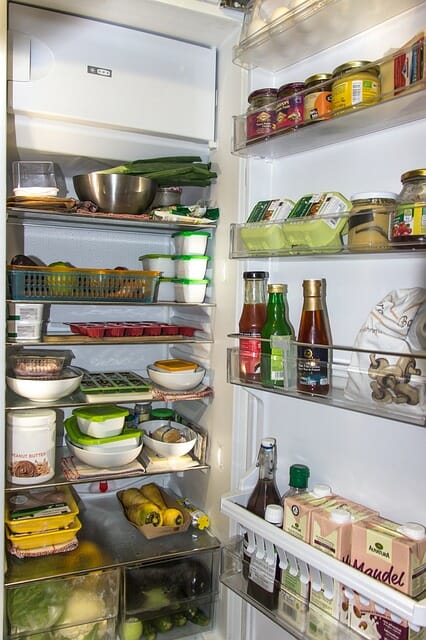
Besides mold, you should also be on the lookout for yeast (false yeast to be precise, because true yeast is the kind used for fermentation). It can develop on high acidic foods or foods high in sugars. Expect to see it in fruit juice bottles, fruit yogurts, and so on. Yeast can be easily identifiable under close examination, but just because it looks good, don’t expect it to taste good.
Speaking of visual cues, you should be extra careful with canned food. If the lid is dented, bulged, cracked or if there are bubbles around it, you should immediately throw away the can. In fact, you should make sure not even your pet would be able to eat it. It’s most likely infected with a toxin called botulism. Bacteria from botulism are nearly impossible to spot because they’re so small, yet they’re more dangerous than yeast and mold.
Also, keep in mind that discolored food inside food also is a sign of spoilage. Plus, in the case of store-bought canned food, always check the expiration date and use an organizer for your #10 cans or even make one yourself. Although the shelf life can range between two and five years, I would strongly recommend you eat and replace them after a year.
What Does it Taste Like?
If food tastes bad, you’ll know right away. But don’t use the taste test for canned food and meat. If they’re infected with bacteria, the danger is greater, so taste-tasting is a bad idea.
Of course, just because food tastes bad, it doesn’t mean it’ll make you sick – at least, not according to the director of the Center for Food Safety from the University of Georgia in Griffin, Ga., quoted by ABC News — but you probably don’t want to take that chance. As the article suggests, one way to ensure proper food storage in your fridge is to keep it a 40 degrees Fahrenheit and, of course, to eat it in a timely manner.
Though it would take a sample and a lab to be absolutely sure a food is safe to eat, for preparedness purposes you just have to follow the above advice and the No. 1 rule: When in doubt, throw it out!
What is your advice on checking the edibility of food? Share your tips in the section below: