 Print
Print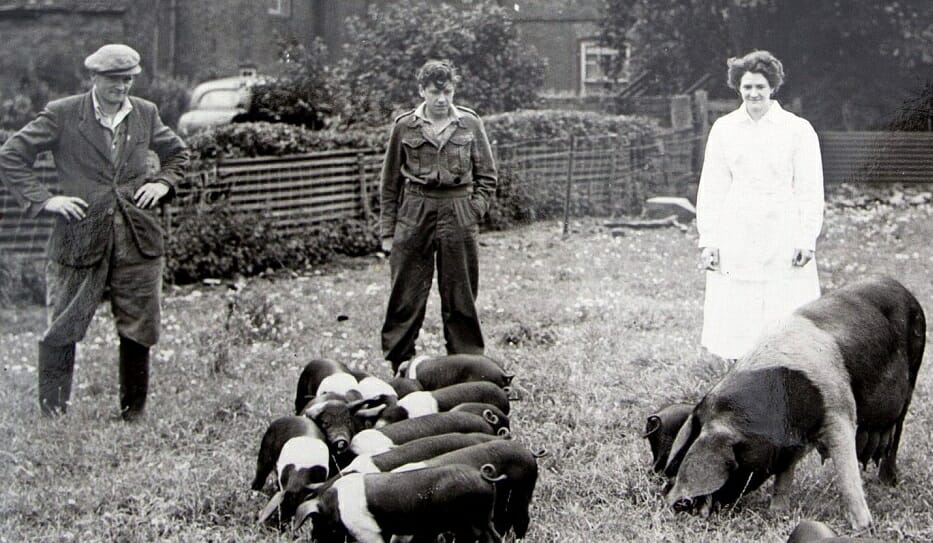
Is your new farm filled with dead or dying trees? Or, perhaps, are you interested in converting old forest into new pasture for cattle? Silvopasturing may be the way to go.
The concept of silvopasturing is not new. It dates back to the colonial days, when nearly every family owned and raised hogs. Pigs were primarily fed scraps from the family farm, and in the fall, right before slaughter, they were run up into the forest. Once there, they were left to their own devices, foraging for food to fatten them up for the butcher. They targeted (as they still do, if given access) soft and hard mass crops. Soft crops might include acorns, hickory nuts, pecans, and walnuts, while soft typically consisted of wild apples, hawthorns and paw paws.
When the rise of factory farming came about, people moved away from family farms. Pigs were raised primarily in confinement. Now, however, with the rise of the homesteading movement, people are starting to get their pigs back on pasture.
How to Get Started
That’s were silvopasture comes in. Tree lots can—and should—be viewed as more than just providers of summer shade. They provide diversity to a grazing diet, and conversely, grazing livestock can improve the quality of the trees by controlling undesirable weeds and brush.
It involves sectioning off parcels of woodlands in order to create a symbiotic relationship between animals and forest. Pigs gain a food benefit as well as shade and shelter from the elements. The forest benefits as the pig naturally fertilizes the soil as it goes and becomes part of the decomposition process by clearing old stumps and brush.
Discover More Than 1,000 Secrets To Off-Grid Living!
Silvopasturing requires appropriate attention and management so that livestock and trees can both see benefits. The key problem with unsuccessful silvopasturing is that a pig’s natural instinct to root can be very destructive. In a grassland setting, a pig’s rutting may not allow an ecosystem to come back around for months or even years. This is especially true if the pig is able to expose the earth to bare dirt. In a woodland setting, trees—even mature species—can become damaged or shocked as a result of the pig’s digging and nosing around near the roots. This could set a tree back a few years or kill it altogether.
Before you make the decision to silvopasture, decide what your goal is for your woodlot. If you want to run your pigs in a colonial fashion so that your pigs can benefit from the forest’s nutrition and the trees also will flourish, then be careful how many pigs and for how long you allow them to remain in a specific area. If your goal is to clear brushy undergrowth that is not a productive forest, then the pigs may remain for a longer period of time and ultimately destroy the trees.
Good silvopasturing allows the forest to see equal benefit. If you have a large section of woods that you are trying to maintain with pigs, you should divide it into several paddocks. Paddocks will allow you to rotate the pigs frequently to minimize the damage and maximize the beneficial effects of the pigs. Trees don’t need nearly as much fertilization from the pigs as a grassland habitat might; this necessitates more frequent rotations.
The Benefits to Homesteaders and Farmers
By silvopasturing successfully, a farmer can spend less money on feed. Nuts and other hard mass have a high caloric value—and pigs love them! In many cases, they will prefer them over grain. In the springtime, pigs also can forage for grubs and other creepy crawlies. As an added bonus, the pigs will be granted natural shade in the summer months and protection from the elements throughout the winter. An overheated pig, in particular, won’t develop properly or eat as much, causing a drop in weight gain and feed conversion rates.
Pigs are also skilled at clearing land. Before the advent of the tractor, farmers had to rely on livestock to clear new pasture. Pigs remove the brush (even stumps) through their natural rooting process. Although pigs can be detrimental to a forest ecosystem, pulling bark off trees or rooting up valued tree species, they can successfully convert an ecosystem with proper care.
Place pigs in a paddock for several weeks, then throw down a perennial such as ryegrass. Leave the pigs for another week or so to cultivate the new growth. Then, rotate them out to another paddock while the new seeds take hold. Try not to paddock pigs where there are multiple young saplings of the desired type. Pigs—and tree growth—is better suited when trees are larger and have more developed roots. Depending on how much brush remains in an area, a pig can have a woodlot cleared so that very little remains besides trees in just a small amount of time.
This process allows you either to convert the woodlot you have into usable pasture, or improve the tree quality of a certain forested area. When given proper attention and cultivation, it serves the purpose of properly managing trees and livestock so that optimal production is achieved. Silvopasturing may not always be the right choice for your small family farm or homestead, but it’s certainly proving to be a viable, hot-button option for many local farmers.
Have you silvopastured? What advice would you add? Share your thoughts in the section below: