 Print
Print
The Soft “Power Outage” No One Warned You About—And Why Fixed Incomes Feel It First
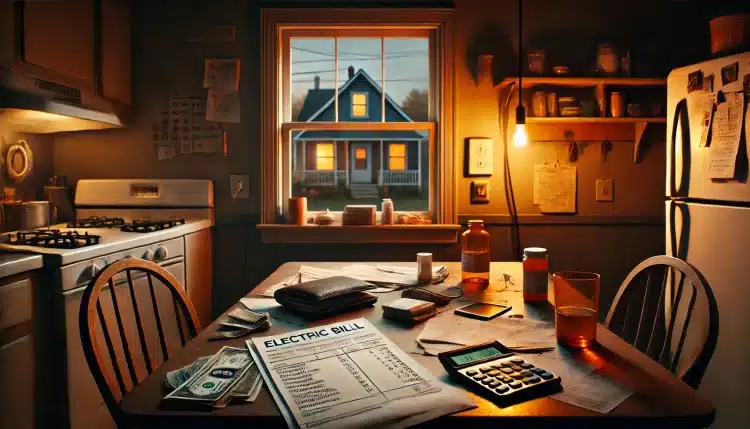
At first, nothing looks wrong. The lights come on. The coffee maker hums. The furnace kicks in like it always has. But then the bill arrives, and it’s a little higher than last time. Not enough to scream about. Just enough to make you pause.
And that’s how it works. Not with a bang or a blackout, but with a slow tightening that most people don’t notice until the breathing room is gone.
And once you start paying attention, the pattern snaps into focus. This isn’t about weather. It’s not about using too much electricity or forgetting to turn off a light. It’s about decisions made in quiet rooms, written in technical language, and approved without a single vote from the people footing the bill.
For households on fixed incomes, that realization lands hard—because when the cost of keeping the lights on rises without your consent, the outage isn’t electrical anymore. It’s financial.
How State Energy Policies Are Turning Monthly Power Bills Into a Shadow Tax Most Households Never Voted For

Across the country, state governments and utility regulators are quietly approving policies that make electricity more expensive for ordinary households. Often, it happens with little more than a technical filing, a sparsely attended public hearing, and a unanimous vote most people never knew was coming.
So yes—the lights stay on. The fridge hums. The furnace kicks in.
But the bill? The bill becomes a slow, gnawing source of anxiety.
For seniors and families on fixed incomes, this feels like a soft outage. Not a blackout—just a steady dimming of financial breathing room.
First Illinois. Then Michigan. Then Wisconsin.
Start with Illinois. Why not? That’s where I live.
Under the new Clean and Reliable Grid Affordability Act, customers will see a future statewide line-item charge added to their electric bills. The money is earmarked for multi-billion-dollar battery storage projects—on top of energy assistance fees that already appear on monthly statements.
Supporters call it an “investment in reliability.”
Critics call it what it looks like: an involuntary surcharge that ratepayers never voted on.
Meanwhile, in Michigan, a sweeping clean-energy law has given regulators a structured pathway to recover the cost of new generation and grid upgrades directly from customers. Approved “transfer prices” roll quietly into rates, even as older fossil plants shut down.
Consumer advocates there are already warning that whatever long-term savings might exist on paper are being swallowed by near-term bill increases—especially for households trapped with a monopoly utility and no realistic alternatives.
Then there’s Wisconsin.
Regulators approved a new round of rate hikes slated for 2026, raising average electric bills by as much as $13 per month for some utilities. The increases are driven by infrastructure and generation costs, but local reporting tells a simpler story: families who were already stretched thin are now bracing for higher power bills on top of rising food, rent, and medical costs.
This Isn’t Isolated. It’s Everywhere.
Zoom out, and the pattern becomes impossible to ignore.
Recent tracking shows residents in at least 41 states and Washington, D.C. are facing recent or proposed electric and gas rate increases scheduled for 2025 and 2026. The justifications vary—fuel costs, grid hardening, clean-energy mandates—but from the kitchen-table perspective, they all blur together:
The bill is going up again, and nobody at home had a say.
Another analysis found that electricity bills have risen in 47 states over recent years. Politicians argue over whose policies deserve the blame, but for customers, the partisan crossfire changes nothing. Utilities file rate cases. Commissions approve them. The higher charge arrives right on schedule.
States like Colorado, Connecticut, Delaware, Kansas, Missouri, and others have introduced new tariffs or rate classes aimed at large loads and advanced energy projects. On paper, these changes often claim to protect small customers. In practice, they quietly reshape who pays what—and when.
Each tweak looks technical. Each one sounds boring.
Yet together, they inch ordinary household bills upward in ways almost no non-expert can track.
How It Hits the Average Household
For most residential customers, the pain doesn’t arrive all at once. It stacks.
A new system charge here.
A rider or tracker there.
A modest percentage increase every few years.
Utilities may point to a one-time fuel credit or a trimmed line item, but the cumulative reality is unavoidable: bills are higher than they were just a few years ago—and far less predictable.
Households coming of age in this moment are expected to absorb hundreds of dollars a year in additional energy costs as climate extremes, infrastructure spending, and policy shifts all filter down to the meter.
For families already choosing between groceries and prescriptions, another $10–$30 a month isn’t theoretical. It’s lost margin. Lost flexibility. Lost sleep.
Fixed Incomes Feel It First—and Worst
No group feels this more sharply than fixed-income households.
When your monthly check doesn’t grow but your utility bill does, electricity starts consuming a larger and larger slice of what little you have. In some communities, low-income households already spend 6–10 percent of their income on electricity and heat—well above what experts consider affordable.
At that point, the power bill isn’t just a bill.
It’s a stressor.
A constant calculation.
A quiet threat.
Where Did Consent Go?
This may be the most unsettling part of the story.
Billions in grid and generation costs are being shifted onto ratepayers through commission orders and omnibus legislation—without a single direct vote from the people paying the bill.
Public hearings are often held during work hours. The filings run hundreds of pages. The language is thick with phrases like adjustment mechanisms and cost recovery. But translated into plain English, it means one thing:
Your bill is going up.
For seniors on Social Security, disabled residents, and low-wage workers, that lack of voice deepens a sense of powerlessness. Utility service is essential. You can’t opt out. Yet the terms are being rewritten without you at the table.
Some states are experimenting with income-based caps to limit how much of a household’s income can be swallowed by utility costs. But for now, those protections are the exception—not the rule.
The Power Bill as a Shadow Tax
Put it all together, and the picture sharpens.
State-level decisions in places like Illinois, Michigan, Wisconsin, and dozens of others are quietly transforming the monthly power bill into a kind of shadow tax—one families cannot avoid, cannot vote on, and cannot meaningfully challenge.
For households on fixed incomes, that isn’t an abstract policy debate.
It’s a slow, unvoted outage of financial security.
Solar as Insulation, Not a Statement
Against this backdrop, home solar starts to look different.
Not as a political statement.
Not as a luxury gadget.
But as insulation.
Every kilowatt-hour produced and used behind the meter is one less purchased under a pricing system households can’t control. Even a modest rooftop array or small balcony system can shave the most expensive power—the peak-time usage where rate hikes bite hardest.
It won’t erase the bill.
But it can flatten the curve.
Solar Generators: Quiet Tools for Daily Relief
Solar generators are usually sold as emergency backups. Storm gear. Blackout insurance.
But in an era of creeping surcharges, they can play a quieter, daily role.
Used strategically, they can power essential loads—refrigeration, medical devices, phone charging—during peak-rate windows. In effect, they let households sidestep the utility’s most expensive hours.
Unlike gas generators, they do this without fuel costs, noise, or storage risks. For seniors and low-income households, that matters. Over time, avoided peak charges, spoiled food, and outage anxiety add up to real savings—and real peace of mind.
Insurance Against the Next “Soft Outage”
Seen clearly, distributed solar and battery systems become a form of personal insurance—not just against storms, but against policy-driven price risk.
Households can’t stop regulators from approving new riders.
They can’t halt omnibus energy bills.
But they can reduce how exposed they are.
For people on fixed incomes, that ownership doesn’t erase the injustice. But it blunts the impact. It turns a soft outage into something survivable.
And in a system where consent keeps slipping away, every watt you produce for yourself is a small, stubborn act of taking control back.