Print
Guess What? The Potato Isn’t The Problem
Few things feel more satisfying than digging into a bumper crop of potatoes.
You spend months tending the garden, hilling the rows, and pulling weeds in the summer heat. Then autumn arrives and buckets of fresh potatoes come rolling out of the soil. It’s the kind of harvest that reminds you why people have relied on this crop for generations.
Potatoes store beautifully in a root cellar, produce heavily in a small space, and provide reliable calories when other crops struggle. In many ways, they’re one of the ultimate self-sufficiency foods, capable of feeding a family through long winters when the garden has gone dormant.
Yet new research suggests there may be an important distinction every gardener and homesteader needs to understand. The potato itself may not be the problem at all.
The French fry might be.
And according to a major study, that difference could have significant consequences for long-term health.
Forty Years Of Data Tell A Different Story

For years, potatoes have been lumped into the same category as sugary junk food. Nutrition experts often warned people to avoid them because they’re high in carbohydrates, while low-carb diets treated potatoes as nutritional villains hiding in the pantry.
However, a major study published in The BMJ is challenging that simplistic view. Researchers followed more than 205,000 Americans for nearly four decades, creating one of the largest and longest examinations of potato consumption ever conducted.
The project combined data from three major health studies that tracked participants from 1984 through 2021. Every four years, participants completed detailed dietary questionnaires, giving researchers an unusually clear picture of how eating habits influenced health outcomes over time.
At the beginning of the study, none of the participants had diabetes, heart disease, or cancer. By the end of the follow-up period, 22,299 people had developed type 2 diabetes.
That’s a sobering number.
Yet when researchers adjusted for exercise habits, lifestyle factors, and other dietary patterns, one food consistently stood out.
French fries.
The findings showed that eating three servings of French fries per week was associated with a 20% higher risk of developing type 2 diabetes. Meanwhile, consuming similar amounts of baked, boiled, or mashed potatoes showed little to no statistically significant increase in risk.
That’s not a small difference.
That’s an entirely different story.
Same Potato, Different Outcome
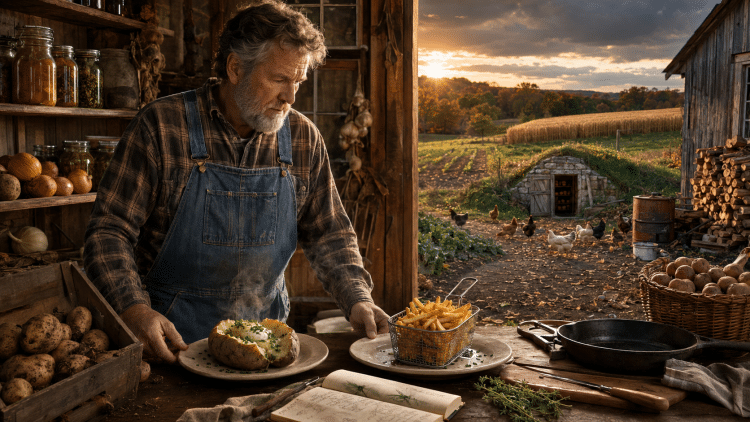
Imagine two supper plates sitting side by side on a farmhouse table. One holds a steaming baked potato fresh from the root cellar, skin intact, topped with a pat of butter and a handful of herbs from the garden.
The other holds a pile of crispy French fries.
Both started as potatoes. Yet according to the research, your body may respond to them in dramatically different ways.
For years, many nutrition discussions have treated potatoes as one giant category. But homesteaders understand something many experts overlook: how food is prepared often matters just as much as the food itself.
The difference between fresh apple cider and soda matters. The difference between sourdough bread and factory bread matters. And apparently, the difference between a baked potato and a French fry matters too.
The lesson isn’t simply about ingredients.
It’s about process.
What Happens Inside The Fryer
To understand the findings, it helps to think about what happens when a potato enters a commercial fryer. A fresh potato contains fiber, vitamin C, potassium, magnesium, and a variety of beneficial plant compounds that have sustained entire populations throughout history.
Then comes the fryer.
The potato is submerged in extremely hot oil, often refined vegetable oils that have been repeatedly heated and reused. High temperatures alter both the oil and the food itself, changing the starch structure while dramatically increasing calorie density.
At the same time, compounds associated with oxidative stress begin to form. In many commercial settings, additional coatings, preservatives, and flavor enhancers are added to improve texture, appearance, and shelf life.
What emerges from the fryer may still resemble a potato.
Nutritionally, it’s a very different food.
Many researchers believe this transformation helps explain why French fries produce a substantially different metabolic response than boiled or baked potatoes. For homesteaders who spend months growing clean food from healthy soil, that distinction should sound familiar.
Nature grows food.
Industry often redesigns it.
The Diabetes Connection
The study revealed another important pattern. When researchers looked at total potato consumption, every additional three servings per week increased diabetes risk by roughly 5%.
That’s worth paying attention to.
However, when French fries were separated from the rest of the potato category, the increase jumped dramatically to 20%. In contrast, baked, boiled, and mashed potatoes barely moved the needle.
The implication is difficult to ignore. The cooking method may matter far more than the potato itself.
For families trying to protect their long-term health while maintaining food independence, that finding offers a practical path forward. Instead of abandoning potatoes altogether, it may be wiser to focus on how they’re prepared and what they’re paired with on the plate.
In other words, the answer isn’t fear.
It’s wisdom.
The Replacement Food Surprise
Perhaps the most useful part of the study wasn’t about potatoes at all. Researchers also examined what happened when people replaced potatoes with other foods.
The results were fascinating.
When participants swapped three weekly servings of potatoes for whole grains, their risk of developing type 2 diabetes dropped by roughly 8%. Even more striking, replacing French fries with whole grains reduced diabetes risk by approximately 19%.
Those aren’t tiny statistical blips. They’re meaningful numbers that can influence health outcomes over decades.
The story became even more interesting when researchers looked at white rice. Many people assume white rice is automatically a healthier alternative, but the findings suggested otherwise.
Whether participants reduced their intake of fries or baked potatoes, replacing them with white rice generally increased diabetes risk. In other words, not all carbohydrate sources provide the same metabolic outcome.
Some support health better than others.
Why Whole Grains Belong On The Homestead
This is where the research intersects beautifully with traditional homestead living. For centuries, families grew both potatoes and grains, understanding that a resilient food system depended on diversity rather than dietary extremes.
They harvested oats, rye, wheat, and barley. They stored grain through the winter, milled flour when needed, and baked bread that nourished entire households.
These foods weren’t competitors.
They worked together.
Today, many homesteaders are rediscovering heritage grains such as einkorn, spelt, emmer, and traditional wheat varieties. These grains offer fiber, minerals, and nutritional complexity often missing from highly refined modern products.
A loaf of freshly baked whole-grain bread made from homegrown grain isn’t simply a nostalgic hobby. According to the research, it may also represent a healthier alternative to many highly processed foods that dominate modern diets.
Sometimes the old ways endure for a reason.
Potatoes Still Belong In The Garden
None of this means it’s time to rip out your potato patch. In fact, potatoes remain one of the most practical and productive crops a homesteader can grow.
They produce enormous amounts of food in relatively small spaces, store exceptionally well, and provide valuable nutrients throughout the winter months. Few crops offer the same combination of productivity, versatility, and storage potential.
The researchers themselves were careful not to demonize potatoes. An accompanying editorial emphasized that baked, boiled, and mashed potatoes can absolutely fit into a healthy diet.
That’s good news for anyone with a root cellar full of potatoes waiting for winter.
The key is preparation.
Roast them in tallow. Boil them with the skins on. Mash them with real butter. Bake them slowly in a wood-fired oven until the skins crisp and the centers turn fluffy and sweet.
These aren’t merely tastier options.
They’re healthier ones too.
The Bigger Lesson Hidden In The Research
In many ways, this study isn’t really about potatoes. It’s about something much larger that applies to nearly every corner of the modern food system.
Too often, nutrition discussions focus on calories, carbohydrates, and percentages while overlooking the degree of processing. Yet this research highlights a truth many rural families have understood for generations.
Whole foods and industrial foods are not the same thing.
A potato pulled from garden soil is one thing. A heavily processed French fry is something else entirely.
The farther food travels from its natural state, the greater the chance that something valuable gets lost along the way. That lesson extends beyond potatoes to bread, meat, oils, and countless products lining grocery store shelves.
What Your Grandparents Already Knew
Long before scientific journals and statistical models existed, farm families learned through observation. They paid attention to what helped people stay healthy, work hard, and thrive through difficult seasons.
They understood that food grown close to home and prepared simply was usually the safest bet. What they learned through experience, modern science is increasingly confirming through data.
The potato isn’t the enemy.
The fryer might be.
So keep tending those potato hills. Fill the root cellar in the fall, and pull those potatoes out on a cold January evening when the wood stove is glowing and snow is piling up outside.
Bake them. Boil them. Roast them. Share them around a family table.
Just think twice before dropping them into a vat of hot oil.
Sometimes the difference between real food and industrial food is only a few minutes in the fryer.
And according to nearly forty years of research, those few minutes may matter far more than most people realize.