Print

Within the complex biological systems operating inside the human body, enzymes play an essential role in enabling and maintaining proper functioning. Many of the crucial biochemical reactions that occur inside the human organism would not be able take place at all without the mediating actions of enzymes, which catalyze processes both inside and outside cells that would not otherwise be possible.
About 3,000 different enzymes have been discovered in the bodies of human beings so far, and medical experts estimate that 50,000 or more of these biochemical enablers may be performing essential tasks inside every one of us at each moment of the day. These amino acid- based assemblages are assisted in their work by vitamins and minerals known as co-enzymes – without the valuable service of enzymes and their associated nutrients, none of the vital biological processes that produce energy, drive immune resistance, or allow for the detailed coordination of all the body’s critical systems would be possible.
 Sources of Enzymes and the Problem of Chronic Deficits
There are primarily two types of enzymes used in the human body – digestive enzymes, which help the body break down food and absorb vital nutrients, and metabolic enzymes, which operate inside cells and are critically important in helping those cells produce the biochemical energy they need to function and survive. Enzymes are produced naturally in the body to some extent, but not in large enough quantities to meet all of our biological needs. This is because the diets that humans consume in the natural world should contain abundant amounts of food-based enzymes, allowing the body to save energy in producing them by relying on outside sources to constantly replenish supplies.
But of course, the modern American diet is a mockery of what human beings are supposed to eat. Processed foods filled with preservatives, sodium, and sugar; they are stripped of all their natural nutrients and therefore not surprisingly largely empty of enzymes. To top it off, our habits of cooking even ostensibly healthy food to death contributes to diets lacking in these amino acid compounds as well, since most enzymes are rendered useless when heated to temperatures beyond 116 degrees Fahrenheit. Dietary sources should ideally provide about 75% of all digestive enzymes, and the average American diet is far from this ideal.
 When food sources of enzymes are not sufficient to meet the needs of the digestive system, the body will divert naturally produced enzymes away from metabolic activities to compensate, thereby causing premature cellular damage and deterioration of function. Many medical experts who have studied enzyme activity have come to the conclusion that chronic enzyme deficits are responsible for the development of many of the diseases normally associated with aging that are known to shorten life span, such as heart disease, diabetes, high blood pressure, cancer, arthritis, and so on.
But even digestion is compromised by a lack of enzymes in the diet; the body simply cannot keep up with the demand for digestive enzymes when chronic deficits develop, resulting in poor digestion and nutrient absorption. Immune system activity also takes place in the stomach and small intestines, and when food-based enzymes are deficient, the body’s immune responses are then compromised. Making the situation worse is the fact that the body’s ability to produce enzymes naturally start declining at about the age of twenty, and by the time a person reaches the age of seventy, their natural enzyme levels are usually about 30% of what they were before this decline began.
Symptoms of chronic enzyme deficit include constipation, excess gas, bloating, unexplained stomach pains, and ailments of all varieties. When the body is not receiving adequate supplies of enzymes, it will protest loudly in order to get attention, and it is in the stomach where this clamoring for attention first takes place.
Fixing Enzyme Deficits
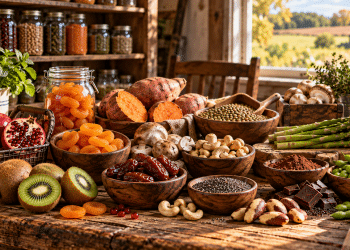
A diet designed to boost enzyme levels should be centered on raw foods. In fact, raw foods should ideally make up about 75% of all calories consumed, since enzyme levels are generally reduced dramatically by the process of cooking. The foods that are richest in enzymes – and also contain abundant amounts of co-enzymes and the amino acids that help the body produce enzymes naturally – include:
- Sprouts
- Legumes
- Fruits, especially mango, grapes, kiwi, papaya, and pineapple
- Bee pollen and raw honey
- Olive oil
- Coconut oil
- Avocado
- Raw dairy products
For most Americans, eating mostly raw foods may involve a significant adjustment in dietary habits. But if the idea is to maximize nutritional impact, including enzyme levels, there is no question that raw is the way to go.
Besides being nutritionally empty, the average American diet is much too high in calories, and the more food that is consumed, the harder the stomach has to work to digest it all. This is why calorie reduction in general is also a good strategy for increasing enzyme levels, since it lessens the burden on the digestive system and helps decrease the need for enzyme diversion from the cells to the stomach and intestines. Healthy foods are lower in calories in most instances, so shifts in diet such as the movement to raw will inevitably help reduce the number of calories consumed. Another way to help reduce the strain on the digestive system is to chew thoroughly, since saliva helps break food down into a more manageable form before it is sent on its way to the stomach. Needless to say, deliberate eating is not common to most Americans, who routinely wolf down their food as rapidly as possible because they are worried about being late for something.
There are two types of supplements available that can help people boost enzyme levels – digestive enzyme supplements, which can be taken with meals, and systemic enzyme supplements, which should be taken on an empty stomach so they can be absorbed into the blood stream for metabolic use. These could be a good option for anyone who finds it difficult to eat raw foods in the recommended amounts.
Facilitating the Facilitators
The absurd, unhealthy lifestyles practiced by most people in this day and age compromise physical health in an astounding number of ways. In reality, there are dozens of good reasons for making significant dietary changes if one has become over reliant on the processed, empty junk that so many consume by the shovelful on a daily basis. Elevating enzyme levels is one of those reasons, and it is one of the most important. Enzymes play an absolutely irreplaceable role in facilitating healthy biological functioning, and low enzyme levels may be one of the key factors responsible for the overall poor state of health of the American people. Fortunately this situation is reversible, and it can be changed relying on entirely natural solutions.
©2011 Off the Grid News