 Print
Print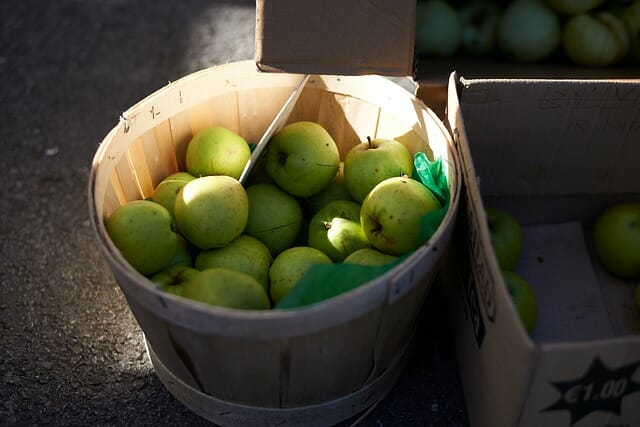
Root cellaring is a time-honored tradition for keeping food fresh all winter long. Most people these days think of a root cellar as a complicated and costly endeavor that involves a separate building somewhere on their property. The reality is that anyone can root cellar (even in an apartment) with little to no investment.
In a nutshell, root cellaring involves keeping produce cool without electricity. While a root cellar dug into the ground is one way to do that, there are a lot of other options that work just as well, depending on your climate.
For warmer climates, a cool shaded place under the porch is enough to keep vegetables fresh through the cooler months. In colder climates, an unheated basement or a closet along the north wall tends to work well.
Depending on where you live, you may also be able to construct a makeshift root cellar just inside a north-facing window. The main idea is to trap the cool outside air around the produce, but keep it warm enough that it doesn’t freeze. A box placed against an apartment window, with the window slightly cracked all winter, might be just enough.
Discover More Than 1,100 Homesteading Tips And Tricks!
Get creative. How you construct your makeshift root cellar will largely depend on your climate and how cold or warm it is in the winter months. For example, in the north country, a back closet in my house far from the wood stove stays between 40 and 50 degrees all winter. In warmer climates, even an open window in December might not be sufficient to keep things cool. You’ll have to adjust based on your particular situation.
Temperature and Moisture
The ideal temperature of you root cellar depends on what you’re trying to store. Some fruits, like apples, want a cold root cellar, kept just above freezing. Other things, like tomatoes, will spoil rapidly if kept too cold. Tomatoes need to be kept above 50 degrees.
Moisture is also a big variable. Root crops like carrots and beets need to be kept very most, at 90 to 95 percent humidity to avoid drying out. Other crops like dry beans and garlic need to be kept dry at 60-70 percent humidity to prevent mold and spoilage.
Be sure to check the requirements for the specific vegetables or fruits you’re planning to store before designing your root cellaring space.
Ventilation and Cross Contamination
Some fruits, such as apples, give off ethylene gas to promote ripening. That’s why they always say to stick an apple in a bag with a banana to ripen your bananas faster. In a closed space without proper ventilation, ethylene gas will build up and spoil your food.
Some foods, such as potatoes, are very susceptible to ethylene and should not be kept near apples. Many people even suggest keeping potatoes and apples in completely different spaces, but very few people have the option of two good root cellar spaces, so most suggest separating them as best you can. Ethylene gas descends, so keeping potatoes above apples in space is also a good option.
Other things, like cabbage, can give off flavors to other vegetables stored nearby. For this reason, some people choose not to store cabbage at all, to prevent it from flavoring the other items in the cellar over time.
Proper ventilation also helps prevent mold issues.
The best ventilation setup will depend on your particular setup, but as a general rule try to set it up to take in cold air and vent warm air. Basement root cellars have an air intake on the north side of the house that descends in a pipe to the bottom of the root cellar so that cold air can naturally move down the pipe and into the cellar. Another vent at the top of the cellar helps to passively move warm air out.
Items Not to Root Cellar
Some produce doesn’t belong in the root cellar at all. Pumpkins and squash do best at relatively warm (50 to 60 degrees) and must be kept in dry conditions to prevent spoilage. Warm and dry are the opposite of most root cellared vegetables, so these will store best in a closet or neatly tucked away under a bed of a cool room for months.
Pests and Rodents
Obviously, you’ll need to take care to keep pests and rodents out of your food, just as you do with any food in your home. Dry items, like dried beans, are best kept in sealed rodent-proof containers like Mason jars. Any air vents should be sealed with rodent-proof galvanized hardware cloth. Cool temperatures tend to deter pests, so be sure and check your produce carefully to avoid bringing any unwanted pests into your food storage.
What advice would you add on making a DIY root cellar? Share your thoughts in the section below: