 Print
Print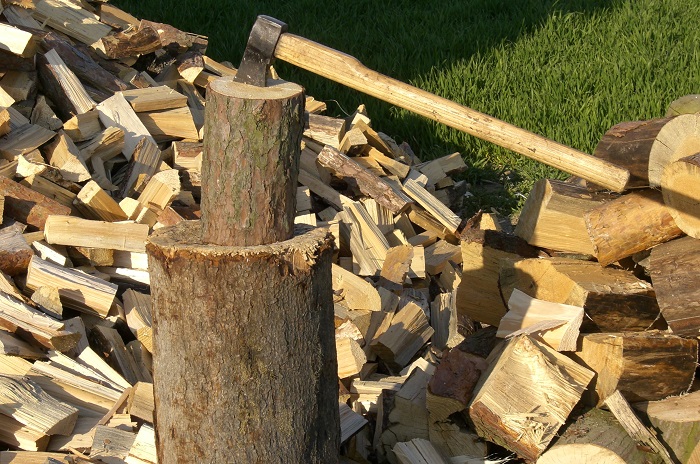
 With the arrival of cooler months, cutting and storing wood for winter burning is once more brought to the forefront. While there may be no “wrong” way to go about selecting and splitting wood, some options are easier and faster than others. As always, safety is important when working with sharp tools like chainsaws, axes and mauls.
Selecting
Choosing wood can be as simple as walking out on your property and evaluating downed limbs and trees. Or you may be offered the chance to clean up a neighbor or friend’s fallen tree. Maybe you plan on purchasing your wood. Knowing what to look for is important.
Preferably, wood will have had at least six months of drying time prior to burning. This minimizes smoking and leads to overall better burned log-to-heat ratios. Dead trees are good options if you are gathering wood from your own property. If you are purchasing your wood, be sure to ask if the wood is ready to burn and properly seasoned (i.e. been drying for six months). It’s often cheaper to purchase wood during the off-season, as many vendors up their prices during the cooler months due to the increased demand. So plan ahead. Soft woods like pine, fir, spruce and redwood tend to give a quick hot burn while harder woods like oak, beech and birch provide a steadier, longer-lasting burn. The harder woods also tend to leave less creosote residue behind. It depends on your preferences and stove construction. Either kind of wood can work well, depending on your needs and the wood availability.
Splitting
Splitting wood takes muscle, and the more of it you can find the better. Consider holding a fall work day, renting a wood splitter and inviting friends and family over to help out. Have hot apple cider and pumpkin pie available — and people just may be asking when the next work day is.
If you aren’t able to schedule a work day, plan on devoting several weekends to stockpiling wood, depending on your needs. Renting or borrowing a log splitter can spare you extra physical work and save time, but it isn’t necessary.
Harness The Power Of The Sun When The Electricity Goes Out…
Make sure you have a clear area to swing your axe and set up your chopping block on a flat level spot. Use a log that is sturdy, large, flat bottomed, and no higher than your knee. Make sure your axe, maul and your chainsaw are sharpened, and have a wedge or two ready. Also, double check that your axe head and maul head are firmly attached to the handle. Too many accidents have occurred due to loose heads.
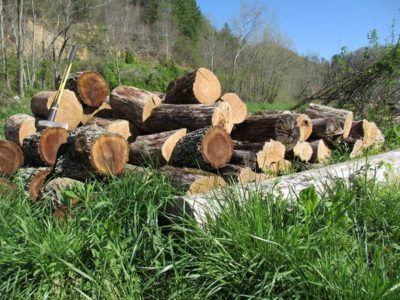 First, you’ll need to measure and cut your logs. Check your stove’s width to determine log length. There is nothing more frustrating than having cut wood ready to burn, a house that is cold, and logs that won’t fit in the stove. Cut with care. Optimally, you should be wearing goggles, gloves, steel-toed boots and chainsaw chaps for protection. Don’t be afraid to reposition a log rather than risking an unsafe cut. Be sure to maintain good footing at all times and remind others, especially children, to stay at a safe distance.
Once you have your logs cut, it’s time to pick up your axe or splitting maul and move to the chopping block. Keep your gloves on (unless your hands are very callused) so you don’t get blisters. Position your log on the block, the grain vertical to you, so that it stands firmly and preferably as far away from you as possible. That way, if you miss the log, you’ll hit the chopping block rather than your leg. Measure out the distance you need to stand from the log, by stretching your maul in front of you and letting it rest in the center of the log while you grip the end of the handle with your hands.
If you’re using a splitting maul, the easiest way is to toss the head of the maul up into the air just above your head while moving your hands near the end of the handle. Then let the weight of the maul bring the head crashing down on the log. Keep your arms straight as you swing, your feet shoulder-width apart. The key here is to let the tool do as much of the work as possible. Sometimes logs don’t split on the first blow, so be prepared to give a couple to get it started.
Collect the two halves and split them again until you have pieces that fit well into your stove. Having wood pieces fairly uniform in size makes it easier to stack, so pick a size and stick with it. Often, pieces will fly off from the impact, so keep small pets and children away from the area. If a log doesn’t split completely through, you can try lifting it up if it’s still stuck to your maul or axe, and bring it crashing down on your chopping block again. If that doesn’t work or your axe isn’t stuck in it, place a wedge in the divide and pound with the reverse side of your axe (called the poll or butt). Knots in the wood can be particularly troublesome, but with perseverance, you should be able to break them down into manageable pieces. It may take a little to get the hang of splitting wood, but keep at it and pretty soon your muscle memory will take over and you’ll feel like splitting wood is an old habit.
Your hard work this far has paid off. You now have piles of wood ready to be stacked and stored for the winter months. Take a break. You have earned it!
What other firewood tips do you have? Leave them in the section below:
Sign up for Off The Grid News’ weekly email and stay informed about the issues important to you