 Print
Print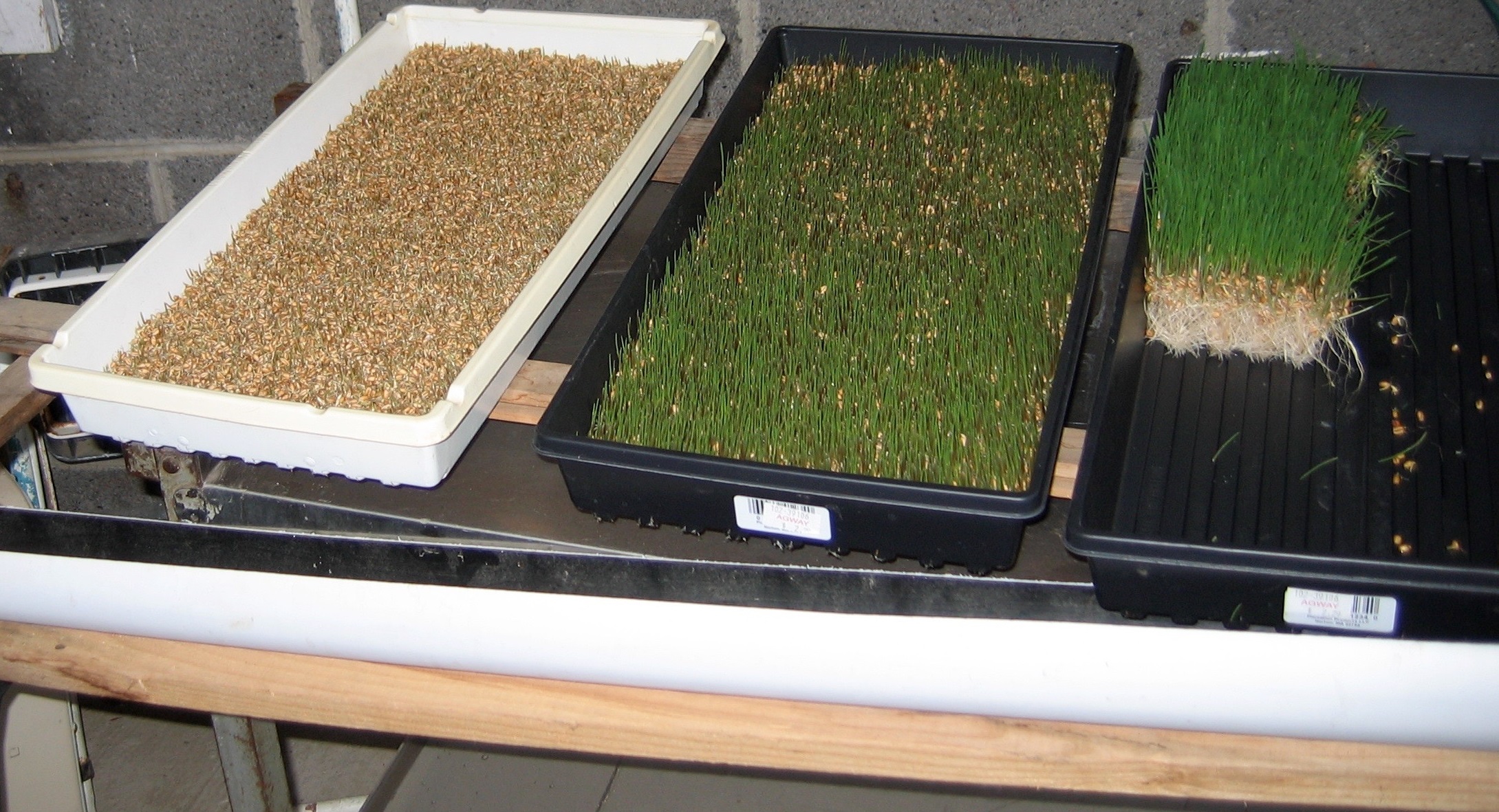
During the growing season it’s easy to pasture livestock, offering them a healthy and varied diet. When the snow flies, though, things get harder.
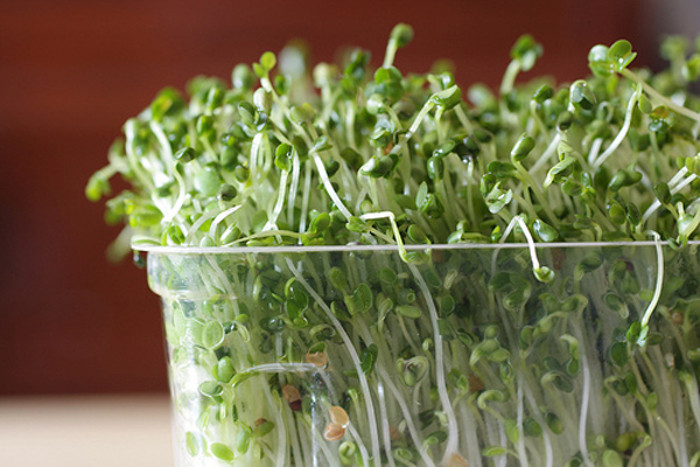
But even in a Northern winter you can offer your animals fresh greens by sprouting grains indoors. This sprouted grain grass is often called “fodder” — a slightly confusing term since it’s also used generically to mean animal feed.
Many types of animals can benefit from fodder. My family’s meat rabbits live mainly on fodder and root crops through the winter. We’ve also given fodder to our chickens and goats, usually as a supplement rather than the main feed. I’ve read about other farmers who give fodder to their horses, cows, sheep and pigs.
You can buy an expensive ready-to-go fodder system in order to enjoy these benefits. Or you can spend a little bit of time and a very little bit of money and create a fodder system of your own.
What You Need
Seeds
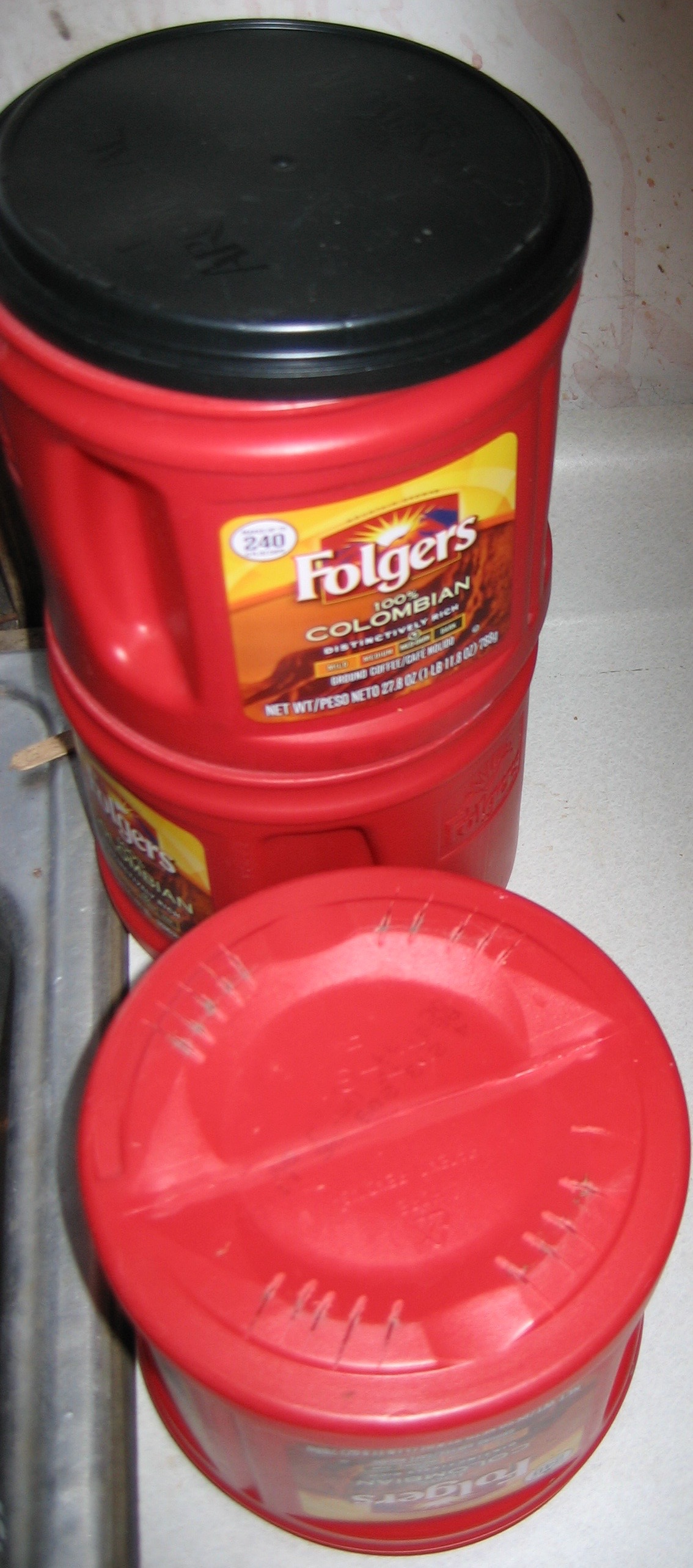
Photo by Joanna Hoyt
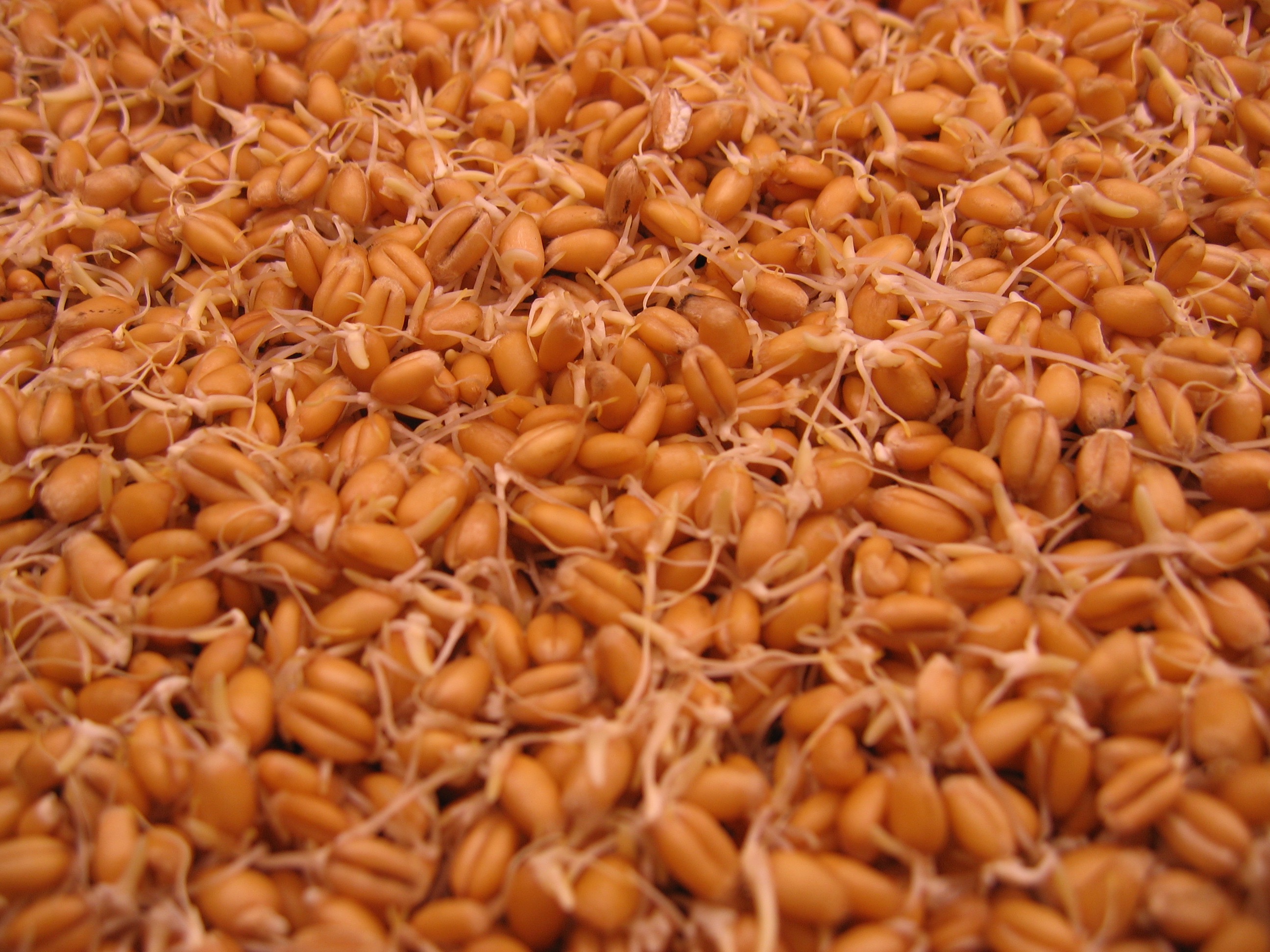
In theory you could sprout any kind of grain or nutritious seed. In practice, some are easier than others.
Wheat and barley are the most common fodder crops. They’re GMO-free. They also germinate quickly and easily. Speed matters — the faster your fodder grows, the less likely it is to be colonized by mold. We grow wheat because it’s available from our feed mill and because it thrives in our cool, 50-60 degree (Fahrenheit) greenhouse temperatures. I’ve read that barley grows best at around 70 degrees.
Sprouting Setup:
For the early stages of sprouting you’ll need watertight containers that are easy to clean and rust-free. We use plastic coffee cans. Cut small slits in the bottoms of nearly half the cans; you’ll need one more solid than slotted cans.

For the later stages you’ll need trays or pans where you can spread your sprouts out in a thin layer and water them. We use 10-inch-x-20-inch plastic nursery trays. These also need notches cut in one end to let the water drain out.
You’ll need some kind of frame or table on which you can spread your trays. Prop the un-slotted ends up slightly so the water will wash through slowly and drain out the slotted ends. Put some kind of gutter (rain gutter or split PVC pipe work well) under the slotted ends; slope it and run it into a bucket.
Growing Fodder
Winnowing
Feed-store grain may contain a lot of chaff and dust which increase the chances that your fodder will turn moldy unless you take time to winnow your seed before soaking it. Take two large mixing bowls or cooking pots. Put a manageable amount of grain in one. (I find 3 quarts is the most I can winnow effectively at one time by the easy method described below.) Stand outside in a breezy place, or inside in front of a fan. (In the latter case, spread out a tarp or blanket to catch the chaff.) Hold the full bowl at shoulder height and pour its contents slowly into the other bowl. Wipe the dust out of the newly empty bowl, switch the bowls and repeat the process until no more dust and chaff blow out.
Soaking and Rinsing
Soak one day’s worth of grain in room-temperature water inside one of your solid cans. Let it stand for about 12 hours. Then pour it into one of the slotted cans, and set atop a solid can to catch the drips. Start soaking another batch in your solid can. Keep all cans loosely lidded.
Rinse the seeds in your slotted cans twice daily with room-temperature water. In two or three days, when seeds have visibly sprouted, they’ll be ready for spreading.
Spreading and Watering
Gently pour the sprouts out into trays and spread them evenly. (Three cups of dry seed will make enough sprouts to nicely fill a 10-inch-x-20-inch tray.) Set them under grow lights or in a sunny window to encourage quicker growth. Water gently with room-temperature water twice daily until you decide your fodder is grown enough to harvest. We usually feed wheatgrass to our rabbits at day seven or eight. The chickens will eat it at this stage, but they’re also are happy with less-developed fodder that still looks more like sprouted grain than grass.
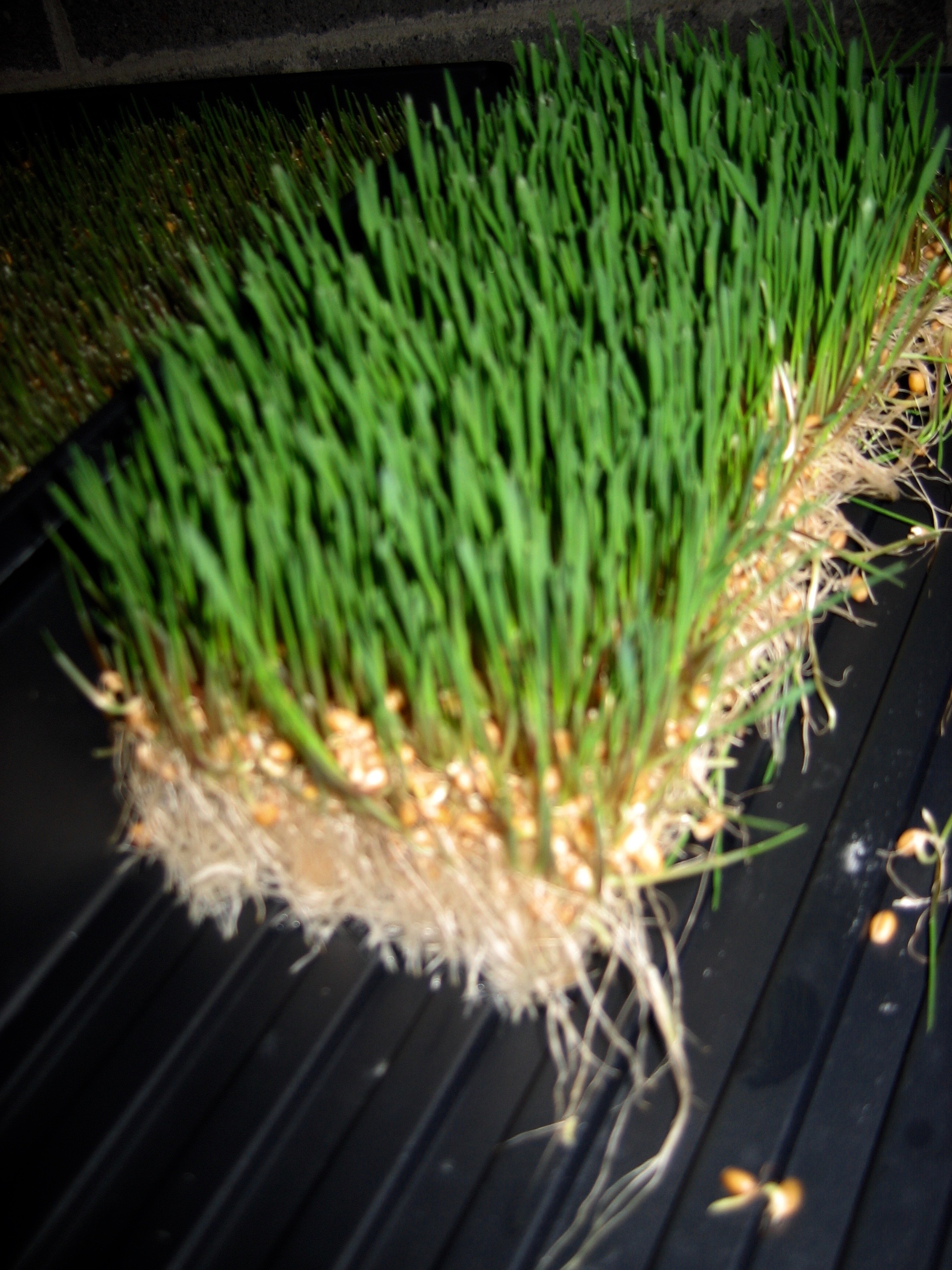
Feed the whole plant — root, shoot and seed.
Troubleshooting
Mold is the main threat to fodder systems. Scrub all cans and trays with soap, hot water and bleach between batches of fodder. You also can add a very small splash of bleach to the water in which you soak your seeds for their first 12 hours. Temperature is important. We don’t try to grow fodder during the warm season, and we don’t rinse or water seed with warm water.
We still check each batch before feeding it, looking at the tops and the roots and smelling the whole thing. I’ve read that moldy feed can be fatal to livestock, so be careful.
Have you ever grown fodder? What advice would you add? Share it in the section below: