 Print
Print
Feeding your chickens can be a mundane chore, but it shouldn’t break the bank. Raising your own chickens is meant to save money and to produce the healthiest, tastiest meat and eggs possible. Check out our list of low cost chicken feeds — all of which can be made right at home.
Fodder And Other Fermented Grains
Fodder sounds complicated, but it’s nothing more than soaked seeds. It is inexpensive and easy to make, costing less than $8 for around 400 pounds of feed. To make fodder, soak wheat seeds in a watertight container for about 12 to 15 hours. Then, place them in a tub with drainage holes. Leave them there for about seven days, watering each day. The seeds will sprout and be ready for consumption within a week.
Fodder is a handy alternative to store-bought chicken feed because it is high in nutrients and you can grow it anywhere. Most people produce fodder indoors, in a bathtub or even a basement.
Fermented grains can also be a good source of food. An easy way to ferment grains is to purchase grain seeds (such as wheat) in bulk and then soak them overnight. This process is less involved than making fodder and is equally as productive. While scratch grain is a good treat for chickens, they end up wasting a lot of it. The process of fermenting makes it less challenging for your chickens to spread it all about the coop. These grains are also inexpensive, costing only about a dollar for 25 pounds.
Kitchen And Garden Scraps
Chickens love all kinds of kitchen scraps and can be fed just about any leftovers. They prefer hearty greens and root vegetables, such as turnip greens, kale, Swiss chard or leaf lettuce. Consider placing a bucket in the kitchen to fill with tasty scraps or even grow a few windowsill containers of leafy greens to feed them for a boost of nutrients during the winter months.
They can also be fed leftovers from the garden or vegetables and fruits that aren’t altogether table-ready. Feed them squished tomatoes or soggy zucchini, or even entire plants at the end of the season.
Rid Your Home And Garden Of Unwanted Insects And Bugs… Without Dangerous Chemicals.
Corn
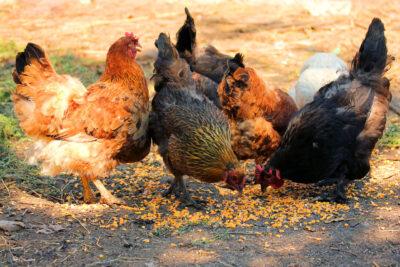
While you can feed chickens corn fresh from the garden (even corn cobs — they’ll nibble at these until they’re completely bare), you can also buy bulk corn inexpensively if you look for it at the right time. Deer corn, for example, can be purchased for less than a dollar for 10 pounds. While you should feed corn to a chicken in moderation (it can cause rapid and undesirable weight gain), it is an inexpensive supplement. If you’re feeding whole corn, just make sure you supply your chickens with plenty of grit.
Eggshells And Eggs
Consider adding eggshells to any feed to add a boost of calcium. Chickens need calcium to produce healthy eggs and shells. Grind up used shells and mix them with some apple cider vinegar or garlic for a nutritious supplement.
Homemade Suet
If you also raise pigs, rendering lard is an easy way to recycle a byproduct and enhance your chickens’ diet. Suet should be fed in small quantities, as it is high in calories, but you can make straightforward suet from lard, sunflower seeds, and scratch grain. Some people are also successful at adding cooked organ meats from recently butchered livestock or game. These cakes store well at temperatures slightly below room temperature (or even down to freezing temps) and provide a necessary dose of fats and vitamins during the winter months where forage is scarce.
Worms
You should regard worms as treats only, but this is a potentially free source of food that many people often overlook. While you can buy commercially harvested and grown mealworms, growing them in a basement or similar setting is far less complicated. Buy a small set of starter worms and place them in a three-tiered plastic shelving system. They’ll reproduce if given small quantities of food and provide you with an almost infinite supply of high-protein low cost chicken feed.
Weeds And Lawn Clippings
While you might not have easy access to lawn clippings during the cold winter months, these make an excellent treat for chickens during the summer. When you mow your lawn, save the clippings and feed them to your chickens. You can also utilize weeds from the garden as chicken feed. Although these aren’t incredibly dense with nutrition, they can be a helpful supplement to other types of feed.
Flaxseed Meal
If you want to add fiber and fat to your chickens’ diets, consider adding flaxseed meal. Purchase flaxseeds, grind them in a food processor and sprinkle them in your chickens’ feed to help mimic the effect provided by layer feed supplements.
Lupine Meal And Seeds
If you have acidic soil, consider growing lupines to help add extra protein to your chickens’ diets. In traditional agriculture, farmers fed lupine plants whole to livestock such as pigs and chickens because they were easy to grow, inexpensive, and nutritionally dense. Chickens will eat the plants whole but derive particular benefit from the seeds of these beautiful flowers. You can grind the plants up into meal or feed them out whole.
Sunflowers
Sunflowers and sunflower seeds are both delicious and nutritious for developing birds. They can be sprouted and used as fodder, or fed directly to the birds. If you grow sunflowers, cut the heads off when they’re fully developed and drooping, and then let them dry for a few days in the sun. The chickens will have fun pecking out the seeds, and they’re a terrific source of healthy fats for your birds to feast upon.
Chickens are versatile little garbage disposals, and while they won’t — and shouldn’t — eat everything, there are multiple creative tweaks you can make to save money and time in feeding them. Consider adding all or some of the above items to their diets, or combine a few for unique, nutritious feeds.