 Print
Print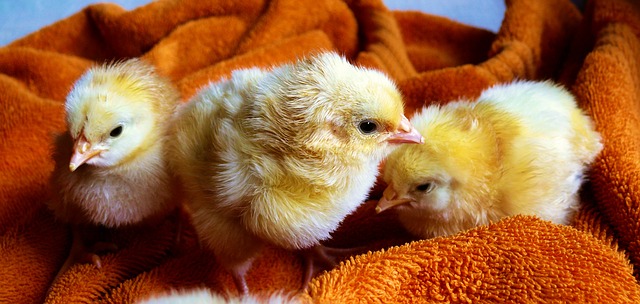
The standard advice about raising chicks is to keep them under heat lamps, feed them chick starter, and give them coccidiostats. The first time my family bought hatchery chicks we followed this advice and ended up with healthy birds. But this approach was completely dependent on purchased inputs, and it may not have been the best start in life for what would later be pastured poultry.
There is another approach to chick raising for homesteaders, one that doesn’t require a power source or constant feed-store inputs. We tried this approach the second time we bought hatchery chicks. The result: hardy and precocious birds who foraged efficiently, started laying early, and weathered temperature extremes well.
Housing
Housing for chicks is fairly similar whether you’re using the commercial model or the alternative one. For their first 3 weeks or so, before their feathers grow in, chicks need protection from drafts and chill. Homesteaders in the cold North should keep their chicks’ brooder boxes inside. Make the box sides at least 12 inches high, and cover the top with a wire lid that will keep chicks in and rodents out while allowing air to circulate. We bedded the floor with wood shavings from our planer. Shavings, grass clippings, chopped leaves and straw are all acceptable bedding materials. Don’t use cedar shavings—some sources report that the essential oils in cedar are harmful to chicks.
Diatomaceous Earth: The All-Natural Livestock De-Wormer!
Standard advice says that young chicks can be raised with as little as half a square foot of floor space per bird, but if you want to raise pastured chickens it’s wise to start with a larger box. This gives chicks more room to explore, and allows you to add branches on which they can practice climbing and roosting. Less-crowded birds with more to explore are less likely to peck at each other. A larger box also allows you to add hot water bottles and sod chunks, as described below.
Heating
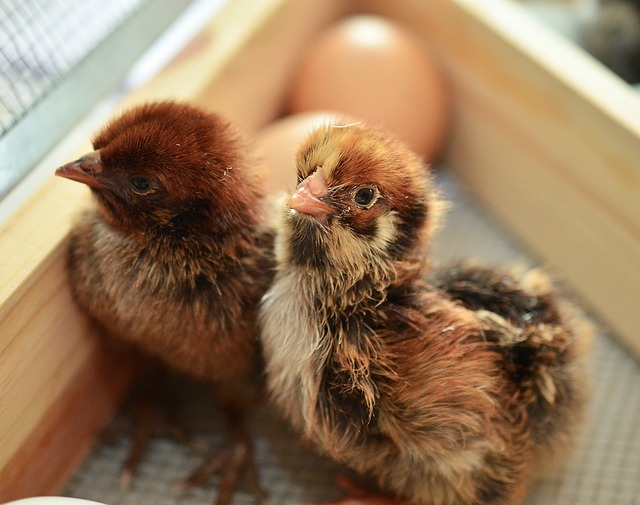
Young chicks don’t need a heat lamp, which tends to keep the whole box very warm. Instead, offer them hot-water bottles to snuggle against when they’re cold. During the day we filled a gallon milk jug with hot tap water and draped it with loose flaps of polar fleece. The chicks crept under the flaps to warm up at intervals and then ran off to explore the cooler portions of their box. At night we put a smaller cardboard box, lined with Mylar and fleece, into the starter box. In the middle of this box was a syrup tin, which we filled with boiling water just before we went to bed. The tin was wrapped in fleece and set in a cardboard compartment so the chicks couldn’t scald themselves against it. Most of the chicks would run into the warm box at night; we shooed the stragglers in and shut the door. It’s important to round off the corners of the night box. We lost two chicks who got wedged too tightly into square corners.
Once the chicks are basically covered with feathers instead of fluff they’re ready to be put outside unless you’re still in the dead of winter. (Chicks raised in cooler temperatures tend to feather out faster; this is another advantage of not using a heat lamp.) In late April, when the weather was still unsettled, we put our three-week-old chicks outside in a small well-insulated coop with access to a pasture run and a compost pile. We continued to offer them a hot-water bottle at night. In their fourth week the highs dropped to the 30s and the lows to below freezing. The chicks thrived.
Feeding
If you want your chickens to eat a wide variety of natural foods as adults, it makes sense to feed your chicks a natural and diverse diet. For the first few days the chicks need soft or finely ground foods. Offering a variety of foods provides a good mix of vitamins and minerals. It’s important to include high-calorie foods and high-protein foods. We started by offering our chicks mashed potatoes and whole-grain flour (for calories), scrambled eggs (for protein) and dried stinging nettle (for protein and vitamins). As they grew we switched the grain portion from flour to rolled oats. Then we offered whole seeds (oats, wheat, sunflower seed, millet and milo) soaked in water or — for extra protein — whey. Later, they were able to handle dry whole seeds. We also put a sod block into their brooder box as a source of both grit and fresh greens. We continued feeding seeds, eggs, nettle and potato after they moved outside. These chicks were more precocious and enthusiastic foragers than the batch we’d raised on chick starter.
We found some helpful suggestions for natural feeding on Facebook’s Poultry Natural Living and Herbal Care group. The Permies forum also contains many discussions of home-grown and alternative chicken feeds.
The alternative method of chick raising hasn’t been standardized and publicized like the commercial approach, and we’re still learning how to do it better. If you’ve experimented with alternative methods, please share what you’ve learned in the section below:
Discover The Secret To Saving Thousands At The Grocery Store. Read More Here.