 Print
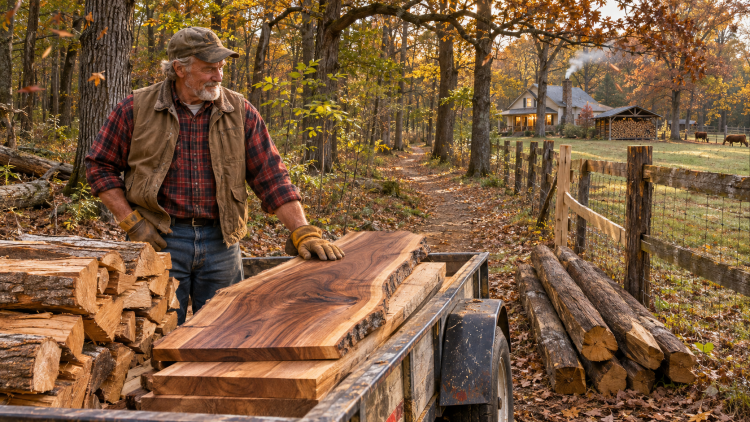
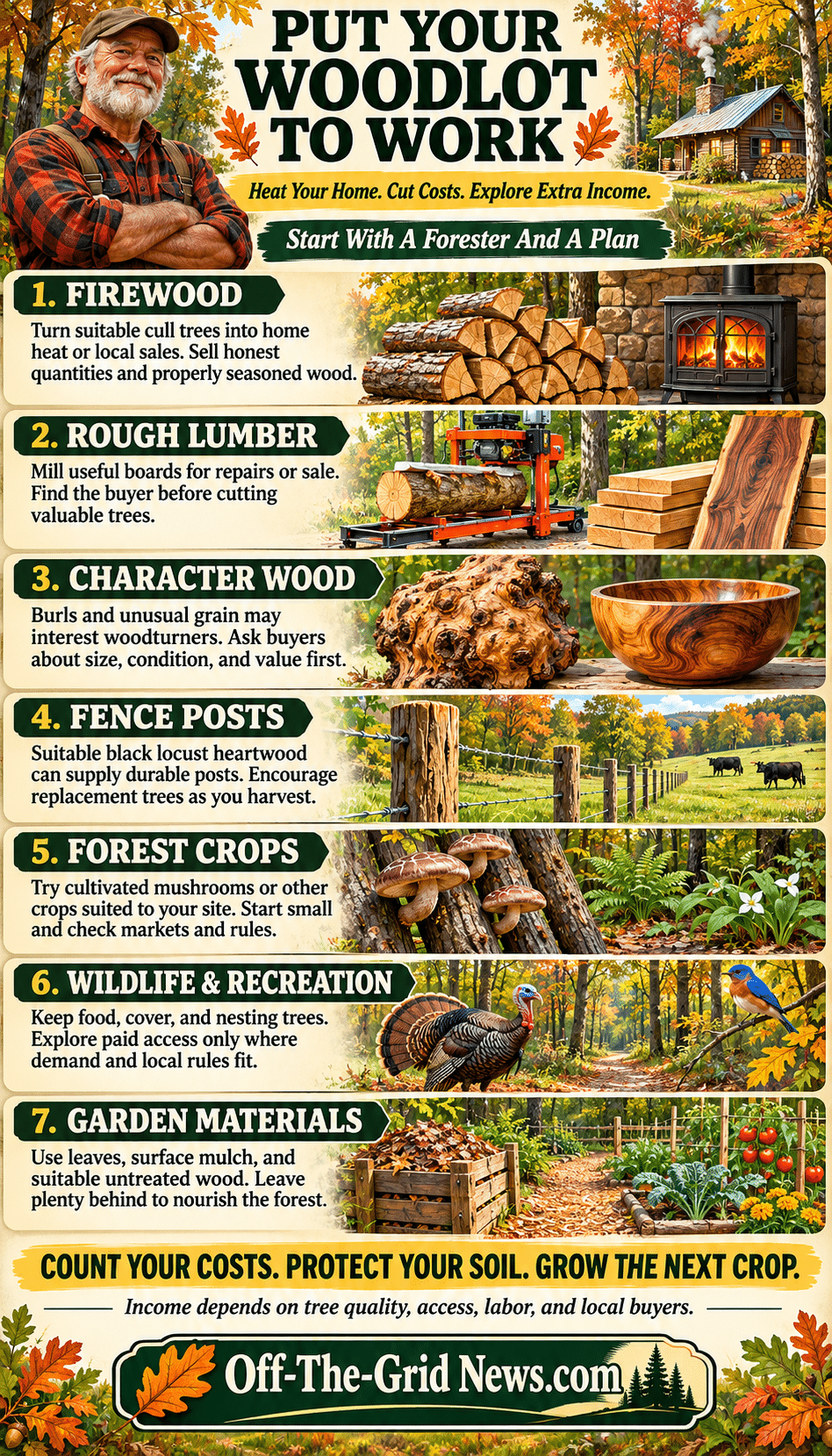
Your Woods Could Be Heating Your House… Fixing Your Fence… And Paying A Few Bills
From Firewood To Furniture Wood… Your Back Forty Could Hold A Few Surprises
Discover the overlooked resources that can heat your home, slash farm expenses, and put extra money in your pocket.
You know that patch of woods behind the pasture? The one you walk through during deer season, promise to clean up someday, and mostly ignore the rest of the year? You could be walking past an untapped resource every time you head for the deer stand.
Those trees can supply firewood, rough lumber, fence posts, and materials somebody else would gladly buy. Meanwhile, the same acres can shelter wildlife, protect soil, and give your family a place to breathe without hearing another engine running.
Now, can a few wooded acres replace a full-time paycheck? Usually, that’s a tall order. But they can help you pocket more money and shrink your bills if you match what’s growing with what nearby customers want.
The trick is learning what’s growing before you start cutting.
Discover What You Own Before You Cut It Down
First, clear away the guesswork. Give yourself an afternoon to explore. Take a notebook, mark your boundaries, and notice the tree species, access trails, slopes, wet spots, and young trees coming along underneath the older ones.
Better yet, invite a professional forester to walk with you and help you pinpoint what’s worth keeping. A good management plan helps you decide what to harvest, what to encourage, and what to leave alone, so this year’s income doesn’t come at the expense of the next generation’s woods.
That matters because the biggest tree isn’t automatically the one to cut. Sometimes it’s your best seed producer, your most promising future sawlog, or the oak that feeds half the wildlife on the place. Penn State’s forest stewardship guidance explains why the trees you leave deserve as much thought as the ones you sell.
Turn Overlooked Trees Into Cold Weather Cash
For many homesteaders, firewood is the easiest place to begin. A crooked trunk that won’t make a decent board may still make a fine stove load, and carefully chosen thinning can coax better growth from the trees you keep.
Here’s the catch: don’t confuse a working woodlot with a swept kitchen floor. Some dead trees, hollow trunks, and fallen logs belong in a healthy forest, where they provide shelter, recycle nutrients, and help protect the ground.
You’re growing a woodland, so leave it something to work with. Iowa State’s guide to wood for fuel describes how firewood cutting can fit into woodland improvement. Think of it as making room for tomorrow’s crop while taking home something useful today.
Sell Useful Heat and Deliver the Goods
Now, figure out who’s buying. One family wants a winter supply delivered to the driveway; another wants a small load for a fireplace. Campers may want tidy bundles they can pick up without bringing a trailer.
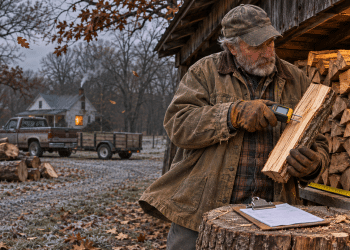
Before promising dry wood, check it. The EPA’s wood-burning guidance recommends moisture below 20 percent, and a meter beats judging a split by its weathered ends. Be clear about species, quantity, delivery, and whether you’re selling green or seasoned wood.
Finally, count the fuel, equipment, handling, and hours. A full truck can look like a payday until you discover you’ve paid yourself mostly in sawdust. Check local firewood transport restrictions, too, before hauling a load across county or state lines.
Avoid the Lumber Trap and Find Your Buyer First
Next comes lumber, and it doesn’t all have to wind up in a dining room. Rough boards have practical jobs waiting on farms: outbuilding siding, gates, fence repairs, and other projects where sound material matters more than a showroom finish.
A portable sawmill operator may be able to turn suitable logs into boards without your buying a mill. Still, talk through log size, species, access, milling charges, and intended use before dropping a tree. Lumber for structural construction may need to meet grading requirements and local building rules.
Then there’s the craft market. Depending on your region and stand, walnut, cherry, oak, maple, or other woods may interest furniture builders and small shops.
Here’s where folks can get carried away. A walnut tree isn’t a jackpot just because it has walnuts under it. Log quality, usable dimensions, defects, drying, transport, and buyer demand all affect what it’s worth. A promising tree standing a quarter-mile down a steep hollow comes with its own subtraction problem.
So make a few calls first. Ask local sawyers and woodworkers what they buy, what dimensions they need, and whether they want logs, green slabs, or dried lumber. Those answers can save you from building a handsome pile nobody wants.
That Gnarled Old Tree Could Hold a Sought After Prize
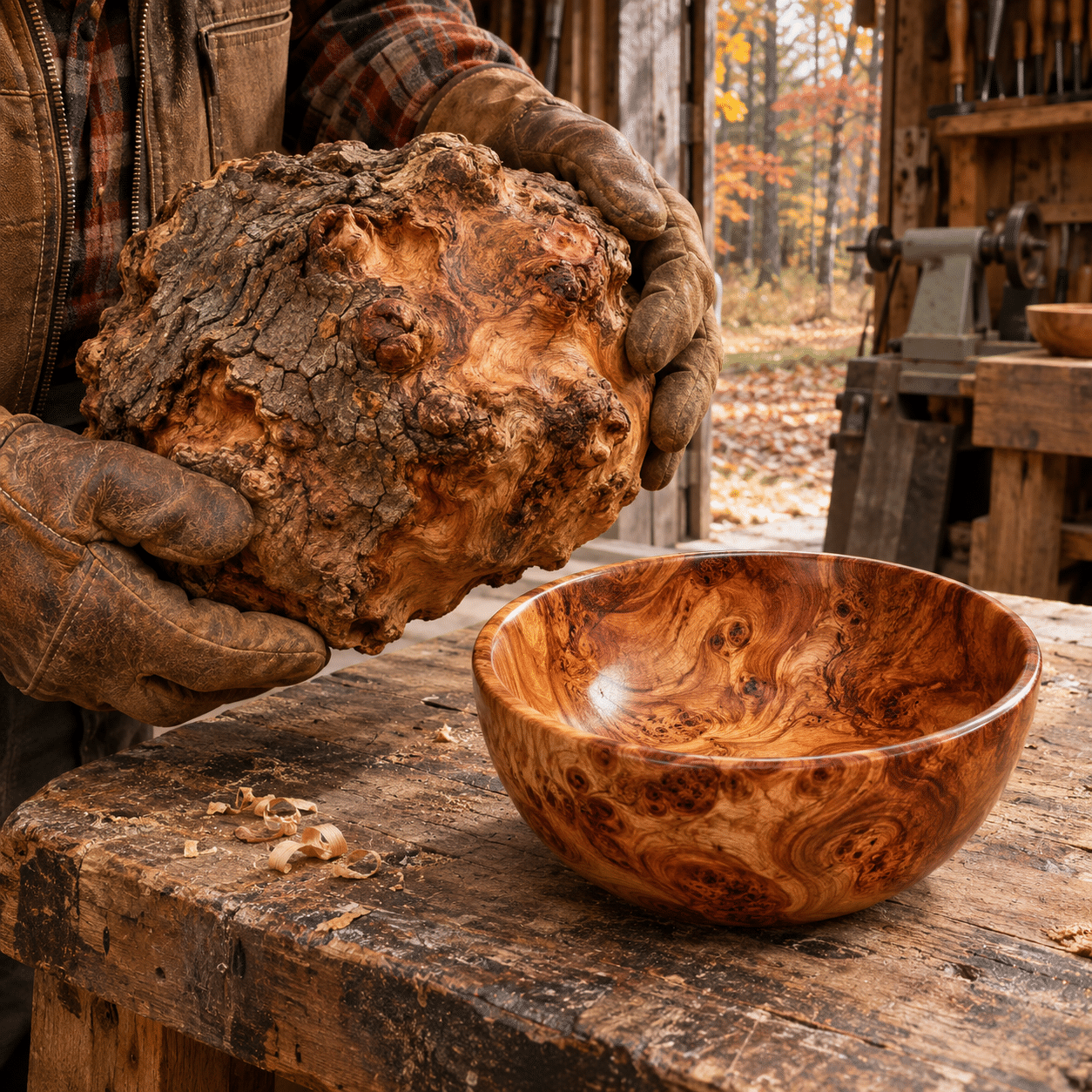
Then there’s character wood, where the things a production mill dislikes may be the very things an artist wants. Burls, unusual grain, old wounds, and odd shapes can interest woodturners, carvers, and makers of small specialty pieces.
Picture a bowl with grain swirling like creek water around a rock. That pattern may have started in a tree most folks walked past without a second glance.
Still, don’t let an odd-looking knot empty your wallet before you’ve found a buyer. Unusual doesn’t automatically mean valuable. Decay, cracks, hidden metal, size, and how the piece is cut and stored can make or break a sale. Send photographs and measurements to a potential buyer before sawing an interesting chunk into firewood.
Also, understand what previous harvests may have left behind. High-grading, which removes the best trees and leaves poorer ones, can damage a woodland’s future prospects. Finding a market for a few unusual pieces is useful; repeating that harvest pattern isn’t a management plan.
Tap Into Income With the Trees Still Standing
Of course, you’ve only scratched the surface if you’re thinking strictly about cutting trees. A mix of tree species, ages, openings, and cover can support wildlife while giving your family a better place to hunt, walk, and watch the seasons turn.
An oak dropping acorns, a brushy corner sheltering rabbits, and a standing cavity tree each do different jobs. Managing for wildlife means learning which groceries and shelter your local animals need, then keeping those needs in mind when you work.
In the right location, hunting access, guided nature walks, or a carefully planned camping experience may bring in income. However, demand, access, insurance, and local rules decide whether an idea belongs in your business plan or just sounds good beside the stove.
And some returns never arrive as a check. A grandchild finding a feather under a hundred-year-old oak is getting something worth having, even if the accountant can’t find a line for it.
Protect the Quiet Work Going On Under Your Boots
Meanwhile, the woods are doing quieter work. Roots help hold soil, fallen leaves cushion the ground, and wooded stream edges help protect water from sediment washing downhill.
But trees use water, too. Their roots draw it up, and their leaves release much of it into the air. That’s transpiration, one part of what scientists call forest evapotranspiration.
That helps explain why a creek may behave differently after the growing season ends. When trees that shed their leaves settle down for winter, their water use drops. Depending on conditions, that can leave more moisture available for the soil, groundwater, and creek. Whether a particular creek rises still depends on rainfall, stored water, geology, and local conditions.
It isn’t a case of autumn sap draining out of the trees and refilling the creek. The real water story is more interesting, and it gives you another reason to protect stream banks and avoid chewing up wet ground with equipment.
Grow Your Next Fence Instead of Buying Every Post
For a homestead with suitable trees, fence materials can be another practical return. Black locust has long been valued for durable heartwood posts, and a well-managed supply can keep part of your fencing budget growing close to home.
Where locust already fits your property, favor sound young stems in sunny areas and think ahead to replacement posts. Keep an eye on spreading shoots, though; a tree you welcome along one fence may be a nuisance in the next field.
The best part? You can harvest something useful while encouraging the next crop. Every post you don’t have to buy keeps a little more money in your pocket.
Discover What You Can Grow in the Shade
Then look below the branches. Forest farming can include woodland crops such as cultivated mushrooms, ginseng, and other specialty products where the site and market fit.
Start small. A few inoculated mushroom logs make a more manageable learning project than a woods full of promises, while ginseng can require years of patience and careful attention to harvesting and sales rules. Know the crop, know the buyer, and know the rules before spending much money.
For instance, before you inoculate a batch of logs, ask a few nearby restaurants or market growers what they’d actually buy. A little word of mouth and a small test run can reveal more than a stack of rosy income projections.
Get the Cold Hard Facts Before You Spread Charcoal
Wood also stores carbon, and some woody leftovers may have uses beyond the stove. Biochar is one possibility, but it deserves a little homework before you start scattering black chunks across the garden.
As University of Maine Extension explains in its comparison of charcoal and biochar, stove charcoal and biochar made for soil use can have different properties. Soil benefits depend on the material and the soil; blackened wood isn’t automatically a miracle amendment.
Likewise, furnace leftovers shouldn’t automatically become cooking fuel. Treated wood, contaminants, and the way a material was produced matter, and ordinary charcoal isn’t a routine cure-all for livestock. Talk with your veterinarian about animal health. The ash bucket isn’t a medicine cabinet.
Let Pigs Harvest Some Feed Without Wrecking the Place
Historically, pigs and nut-bearing woodlands have made a useful combination. Acorns and other seasonal foods can contribute to a feeding program, and managed woodland access may fit some farms well.
Still, the word “managed” is carrying a heavy load there. Hogs can root up soil, damage young trees, and disturb stream edges if they stay too long or are crowded into a small area.
Extension guidance on pig damage to forests shows why roots, seedlings, and the next generation of trees need protection. For your own hogs, that means secure fencing, controlled access, suitable feed, and moving them often enough to let the land recover. Fallen nuts are a seasonal contribution, not a complete ration or a reason to turn pigs loose indefinitely.
Put Woodland Leftovers to Work in Your Garden
Finally, your woods can supply materials for the vegetable patch. Leaves can become leaf mold or compost, suitable untreated wood can become bed edging, and chips can cover paths and serve as surface mulch.
Keep fresh woody material out of the soil where you’re trying to grow hungry vegetables, unless you understand how its decomposition will affect available nitrogen. And leave plenty of organic matter in the woods; stripping every leaf and branch would rob the place you’re trying to improve.
You can also try garden mounds built over buried wood, often called hugelkultur beds. How well they work depends on the wood, soil, climate, and how you build them. Try a small bed first and see how it behaves through your own wet spells and dry stretches.
Really, that’s a good way to tackle the whole woodlot. Discover what’s there, give one useful project a trial run, track your costs, and watch how the land responds.
You don’t have to turn every acre into a big business. But those woods deserve a place in your homestead plans alongside the garden, pasture, and orchard. The trees are already growing. Go discover what you’ve been walking past.