 Print
Print
As you explore different ways of creating and maintaining a sustainable lifestyle, you may want to experiment with the art of natural dyeing. Native peoples for millennia have used plants to create colorful dyes for decorating their clothing, their homes and even their bodies.
The great news is that you can find what you need for dyes right in your own backyard. You can use roots, nuts, berries and flowers to create a wide variety of colors and color combinations for dyeing your clothing items. As you get the hang of the dyeing process, you will enjoy experimenting with many different shades.
For best results, blossoms should be in full bloom. Berries should be ripe, and nuts should be mature. In order not to threaten the health of a plant, do not gather or harvest more than two-thirds of a stand of a plant.
Here are some common plants and the colors they produce:
- Blackberries, iris root, walnut hulls – purple, dark purple, gray.
-
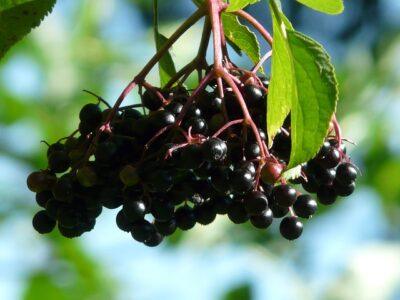
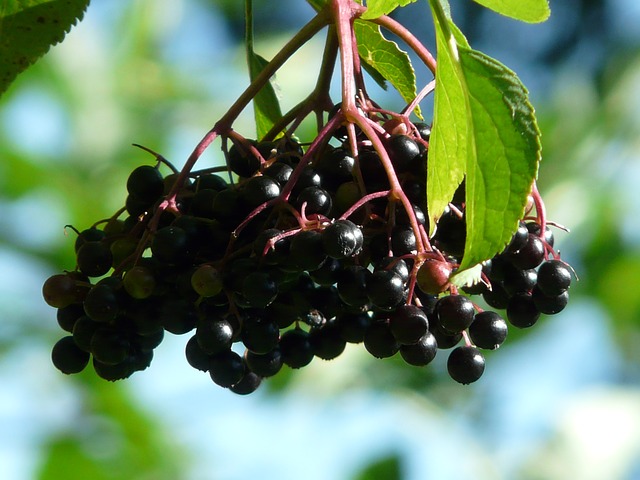
Elderberries. Image source: Pixabay.com Raspberries, cherries, strawberries, beetroot, plum skin, red and pink roses — red/pink.
- Pomegranates, beets, bamboo, reddish hibiscus, bloodroot – red/brown.
- Red sumac berries, basil leaves, day lilies, pokeweed berries, huckleberries — red-purple.
- Blueberries, red cabbage, purple grapes, elderberries, red mulberries – blue.
- Onion skin – yellow/brown.
- Turmeric — yellow/orange.
- Carrots, gold lichen – orange.
- Bay leaves, sunflower petals, marigolds, St John’s Wort, paprika, turmeric, dandelion flowers, celery leaves, Queen Anne’s lace roots, lilac twigs, barberry roots, mahonia roots, yellow dock roots – yellow.
- Dandelion roots, oak bark, walnut hulls, tea, coffee, acorns, coffee, tea – brown.
- Spinach, artichokes, Savoy cabbage, peppermint leaves, sorrel roots, snapdragons, grass, plantain, lilacs, nettles, peach leaves – green.
After you have gathered your plant material, it is time to consider your fabric. As you might expect, natural fabrics, such as cotton, silk, linen and wool, will absorb the natural dyes with the best results.
Discover How To Make Just About Anything … From Scratch!
You may dye synthetic fabrics with plants, but the colors will be less vibrant.
It is a good idea to use a scrap of fabric to test the color and to gauge the color saturation before you begin the dyeing process.
Your next step is to prepare the fabric for dyeing by soaking it in a color fixative. This step helps the fabric absorb the color more readily.
For berries, you will use salt as the fixative, and for other plants, you will use vinegar. Dissolve a half cup of salt in eight cups of cold water, or combine one part white vinegar with four parts cold water.
Next, place your damp fabric in the correct fixative solution for about an hour. Rinse with cool water and then wring out extra water.
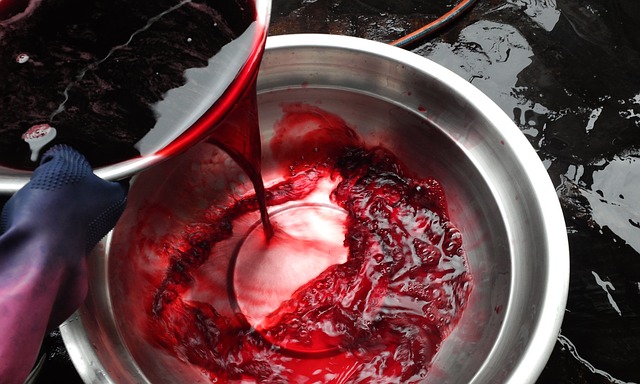
Now you are ready to make your dye solution. Chop your desired plant material into small pieces and place them in a large non-reactive pot (glass or stainless steel work well). Cover with twice as much water as plant material. Bring solution to a boil, and then let it simmer for about an hour.
Next, strain out the plant material and add your fabric to the solution. Depending on the plant you are using, you could get the desired shade in as little as 15 minutes. The longer the fabric stays in the dye, the deeper the color. For a very strong shade, you can allow your fabric to soak in the dye overnight.
Beet Powder: The Ancient Secret To Renewed Energy And Stamina
Rinse the fabric well until the water runs clear. Then hang it up to dry. Continue to wash dyed items separately from other items in your laundry, as the color many run until all excess dye is removed.
How does the dyeing process work?
Fruit and vegetables contain colorful chemicals called polyphenols. These polyphenols are the reason your clothing, tablecloth or carpet gets stained when you spill certain food or drink. They attach to fabric and dye it.
Salt and vinegar help the polyphenols stay attached to the fabric. Without them, the dye would fade each time you wash the fabric.
The best part about using natural dyes is the satisfying aspect of it. As you experiment with different colors and color combinations, you will marvel at the beauty of natural fabric enhanced with natural dyes.
Here’s a final tip: Make sure you dye only what you want to dye. Cover your counter top and the clothes you are wearing while you work. And wear rubber gloves to keep the dye from staining your hands.
Do you use natural dyes? What advice would you add? Share your tips in the section below:
Discover The Secret To Saving Thousands At The Grocery Store. Read More Here.