 Print
Print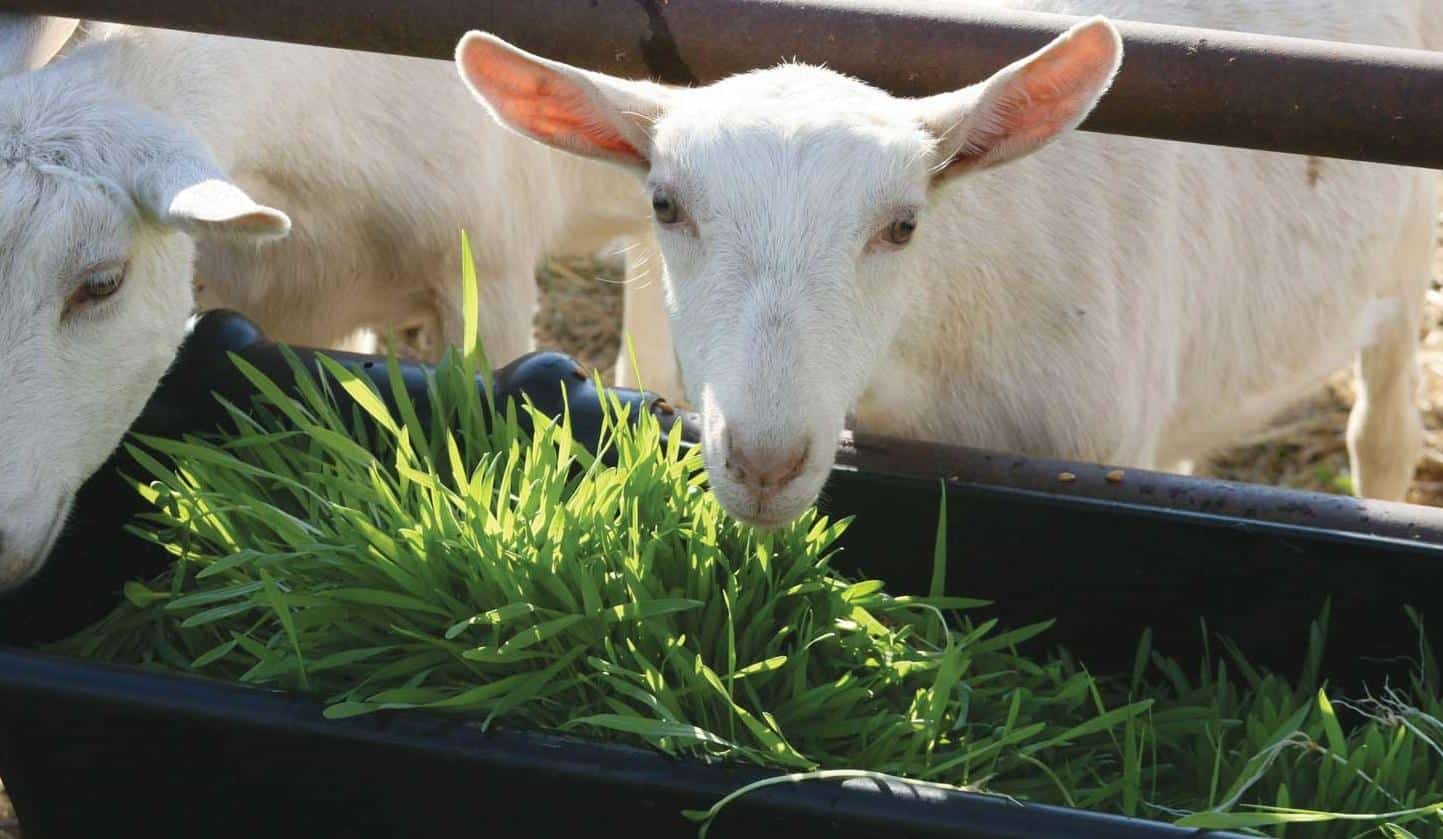
Livestock feed can quickly get expensive. If you crunch some numbers, you may find that buying grain and other such commercial diets from a feed store ends up costing so much that raising your own meat, eggs or dairy doesn’t really save you any money compared to store-bought. Sometimes it’ll even cost more to raise your own livestock.
Of course, there are other advantages to raising your own livestock – knowing everything about what you are eating and having healthy organic food on your property among them. But generally, the cost of feed is the biggest obstacle — even more so for those who want to raise their stock eating organic, GMO-free feed.
Thankfully, there is an alternative to commercial feeds that not only saves money but is healthier for stock, as well.
Fodder, or more specifically sprouted fodder, is essentially a sprouted grain allowed to grow a few days until it resembles grass. It is very similar to the wheat grass people grow for juicing. The growth process is hydroponically grown, so no soil is used. After the fodder reaches the appropriate age, the entire tray or “biscuit” is fed to the livestock: the grass, the seed hulls and the roots.
There are different types of fodder, but for the livestock feed you’re generally going to use either barley or wheat. Both of these are great options, although barley has a higher protein content and is nutritionally superior. Depending on where you live you might only have wheat easily available, which is fine. You could also do a mix of both.
Order your 2015 Heirloom Solutions seed catalog and get $20 in your account!
Many fodder growers will add some additional seeds or grains into their growing trays for added nutrition and variety. Popular “extras” include:
- BOSS or Black Oil Sunflower Seeds
- Alfalfa
- Mung Beans
- Lupin
- Oats
- Corn
- Various Herbs Safe for the Stock You’re Feeding
What Livestock Can Be Fed Fodder?
Virtually any livestock that is herbivorous or omnivorous in nature can be solely fed fodder or supplemented with fodder. Fodder can be a staple diet for the majority of common livestock.
Some of the livestock include:
- Poultry and Waterfowl
- Cattle and Yaks
- Pigs
- Equines
- Rabbits
- Goats and Sheep
- Llamas and Alpacas
- Deer
Certain types of livestock will still need access to hay, although they will eat far less of it and the hay can be lower quality. Don’t forget that offering proper minerals to fodder-fed livestock is extremely important. Commercial diets are complete with minerals, whereas fodder is not.
How Do I Start Growing Fodder?
Growing fodder is surprisingly inexpensive for the small homestead or urban/suburban backyard “farm.” It doesn’t take a lot of space and can be done right inside the average home. All you truly need is space, a shelving unit, plastic trays, water and your fodder seeds. You can simplify this even further by using buckets instead of trays and shelves.
New Survival Seed Bank™ Lets You Plant A Full Acre Crisis Garden!
Using a shelving unit is more technical, but more organized and easier to work with. It also saves space since you are making use of vertical space.
Using a Shelving Unit for Fodder: You can find shelving units inexpensively at larger stores (Walmart), online at Amazon, and in home improvement stores. You can find them in plastic or metal. Also, if you’re handy with tools and have scrap lumber you can just build a shelf yourself. The size of the shelf will depend on how many trays you’re going to need.
As for the trays, there are plastic trays made specifically for fodder. They can be a bit more expensive, so instead you could use Sterilite-type shallow plastic tubs, large Tupperware, concrete mixing tubs, or really any other sturdy tray that you can drill holes into the end of for drainage.
Each tray should be tilted to allow for the water to drain out. Barley and wheat love water — but not standing water. This will cause mold. Since the trays need to drain you’ll need a water catching system such as a large plastic tote in which the shelving unit can sit. If you’re only using a few trays you can get by with just filling them in your sink, letting them drain and placing them back on the shelf.
The Bucket System: The bucket system is super simple to set up but does get a bit cumbersome. I think it would work well if you only need a very small amount of fodder or are just testing out some fodder mixes. Five-gallon buckets work best. You will need drainage holes in them as well, and the bucket is used just like a tray.
Regardless of the system you use, keep your layer of seeds at about half an inch. The seeds will need to soak in water for about 12 hours before you spread them onto the trays to promote germination. In about one week your fodder will be ready to feed to your livestock! It is important to stagger your trays so you’ll have a continual supply of fodder throughout the week.
I’ve already experimented with growing fodder for my meat rabbit and chickens. It was a success and I plan on building a shelving system in the spring.
If you have any tips or comments about growing fodder, please share them in the comment section below:
Get $600 Worth Of Survival Blueprints … Absolutely Free!