 Print
Print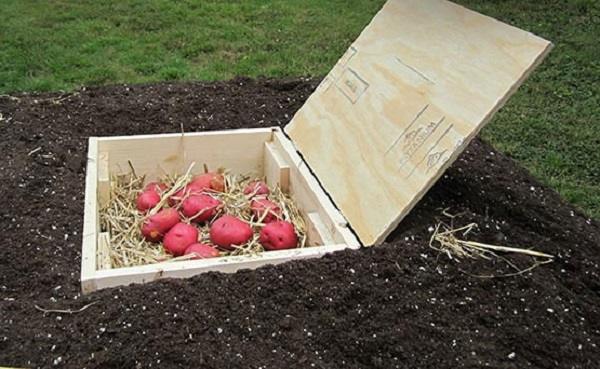
During the summer there is nothing better than picking fruits and vegetables from your garden and then enjoying them at your dinner table that evening. The taste, freshness and convenience cannot be beat.
But how can you continue to enjoy fresh homegrown produce when they’re not in season? One way is with a root cellar.
It is with the use of root cellars that our ancestors provided nutritious food to their families all year round. Long before refrigerators were in every kitchen, most homes included some sort of root cellar that was designed to preserve nature’s bounty.
Root cellars today can take many forms, from very basic to more complicated. But all of them provide a cool, ventilated, humid and dark space to store fresh food. Foods that do well in a root cellar environment include apples, pears, oranges, potatoes, carrots, beets, onions, garlic, winter squash and nuts.
Without A Doubt The Best Kept Secret In Indoor Self-Reliance Gardening…
Establishing a root cellar will save you time and energy compared to canning, dehydration or freezing your harvest. Here are the basic components every root cellar needs:
- Cool temperatures. The optimal range is 32 to 40 degrees Fahrenheit.
- Optimal range is 85 to 95 percent.
- Good drainage.
- Minimal sunshine, such as a north-sloping hill or other shaded area
- Insulation (such as soil or straw) to help maintain a cool temperature but to avoid freezing.
- Little to no light.
- An accessible location.
You probably associate a root cellar with being underground, and there is a good reason for that. The cooler air and higher humidity in most basements helps keep food fresh.
If you have an existing basement or below ground crawlspace, you may want to consider converting part of it into a food storage area. Select a cool spot away from water heaters, furnaces or other appliances. Although a dirt floor is your best bet for maintaining proper conditions, a concrete floor also will work.
Your cold storage area does not have to be huge. For example, you may be able to create ample space by cutting a hole in your basement wall to access space under a staircase or porch.
However, if your home does not have a basement or if you live in area that has a high water table, a basement location may not be an option. Here are a few alternatives:
1. Spring House. Do you have a spring on your property? Springhouses are small structures built for food storage at the mouth of a spring. The running water keeps the one-room house cool and with high humidity. You can place shelves or benches in the structure to store fruits and vegetables.
2. A hole below the frost line. Try digging a hole that is about four feet deep and as wide as you need for your food. Choose a shady spot that is away from tree roots. Line the hole with hardware cloth to keep out rodents and then add a layer of straw. Place your potatoes, carrots and other root veggies on the straw and then cover with another layer of straw. Next, cover your hole with soil and mound up another layer of straw. For added protection, cover the mound with a tarp that you anchor with rocks or logs.
3. Metal garbage can. Purchase or repurpose a stainless steel garbage can as your alternative root cellar. Now dig a hole that is large enough to bury the can so that only three or four inches of the top of the can are visible above ground. Next, dig a small ditch a few inches around the top of the can to divert rainwater or snowmelt.
The Best Source For Non-GMO Heirloom Seeds Is Right Here!
Place a layer of straw at the bottom and then add your vegetables. Use perforated bags with handles or even small baskets to make retrieving your food easier.
Place the lid on the can securely and then cover the lid with straw. Cover the straw mound with a tarp and secure the tarp.
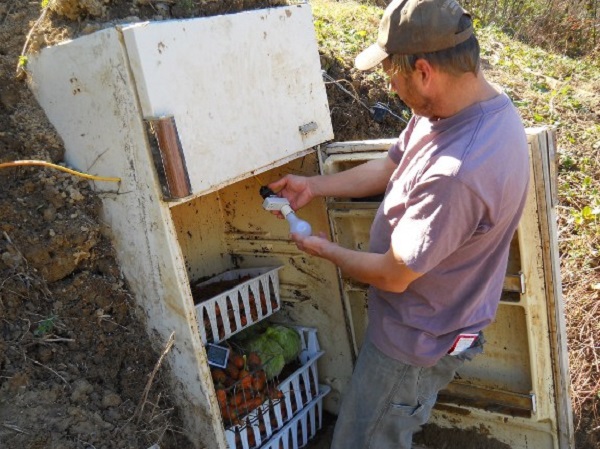
4. Old refrigerator. Another idea is to bury an old refrigerator to use as a root cellar. First, remove the motor and the shelves and drawers. Also, disable the latch to prevent anyone from being trapped inside.
Dig a hole that is one foot larger on all sides than the appliance is. Line the hole with gravel or rocks. The depth of the hole should allow the refrigerator to rest on its back so that it will open as it if were a chest.
Run a small pipe into the refrigerator to allow for ventilation. Cover the top with straw and a secured tarp and then with more straw to insulate the makeshift cellar.
5. Wood box. Build or find a wooden box about 2 feet x 2 feet x 4 feet in size. Line the box with hardware cloth to prevent rodents from getting to your food.
Then place a layer of straw or moss on top of the hardware cloth before adding your vegetables. Place additional straw on top of the vegetables and then line the lid with more hardware cloth before closing the box securely. Place more straw on top of the closed box and cover with an anchored tarp.
Root cellaring is a surprisingly easy and inexpensive way to keep your food fresh throughout the fall and winter.
What advice would you add? What other root cellar alternatives have you tried? Share your tips in the section below:
Do You Know The Trick To Keep Food Cool When The Power’s Out? Read More Here.