Print
What Did Korean Families Know About Winter Food That We’ve Been Missing?
An Old Harvest Tradition Brings Fresh Possibilities To Your Table
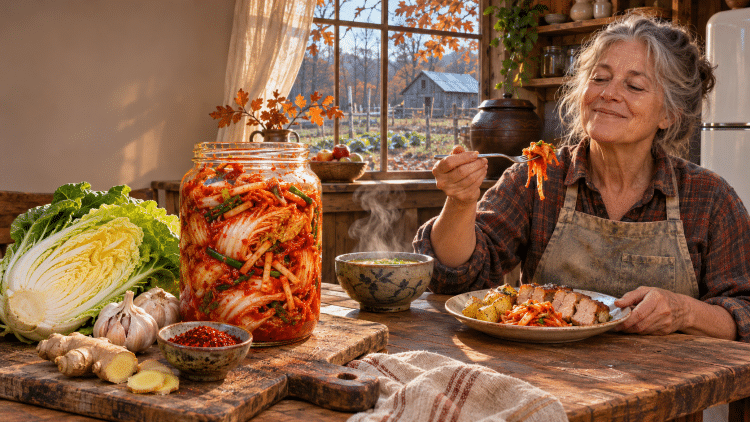
Long before refrigerators hummed beside the kitchen stove, keeping a family fed meant figuring out how to survive the lean months after the garden went bare. There were potatoes tucked into the cellar, hams hanging in the smokehouse, and crocks of sauerkraut quietly working their magic downstairs.
Meanwhile, halfway around the world, Korean families were putting vegetables through a familiar kind of farmyard alchemy. They took a harvest that wouldn’t keep forever and turned it into kimchi: crisp, tangy, seasoned vegetables with enough personality to wake up a plate of leftovers.
If you’ve got cabbage in the garden and a little curiosity in your bones, this old tradition is an untapped resource worth discovering. It offers another way to use the harvest, stretch ordinary meals, and learn a food skill your household can actually use.
And brother, it beats watching your hard work shrivel in the crisper.
Old Farm Wisdom With a Korean Accent
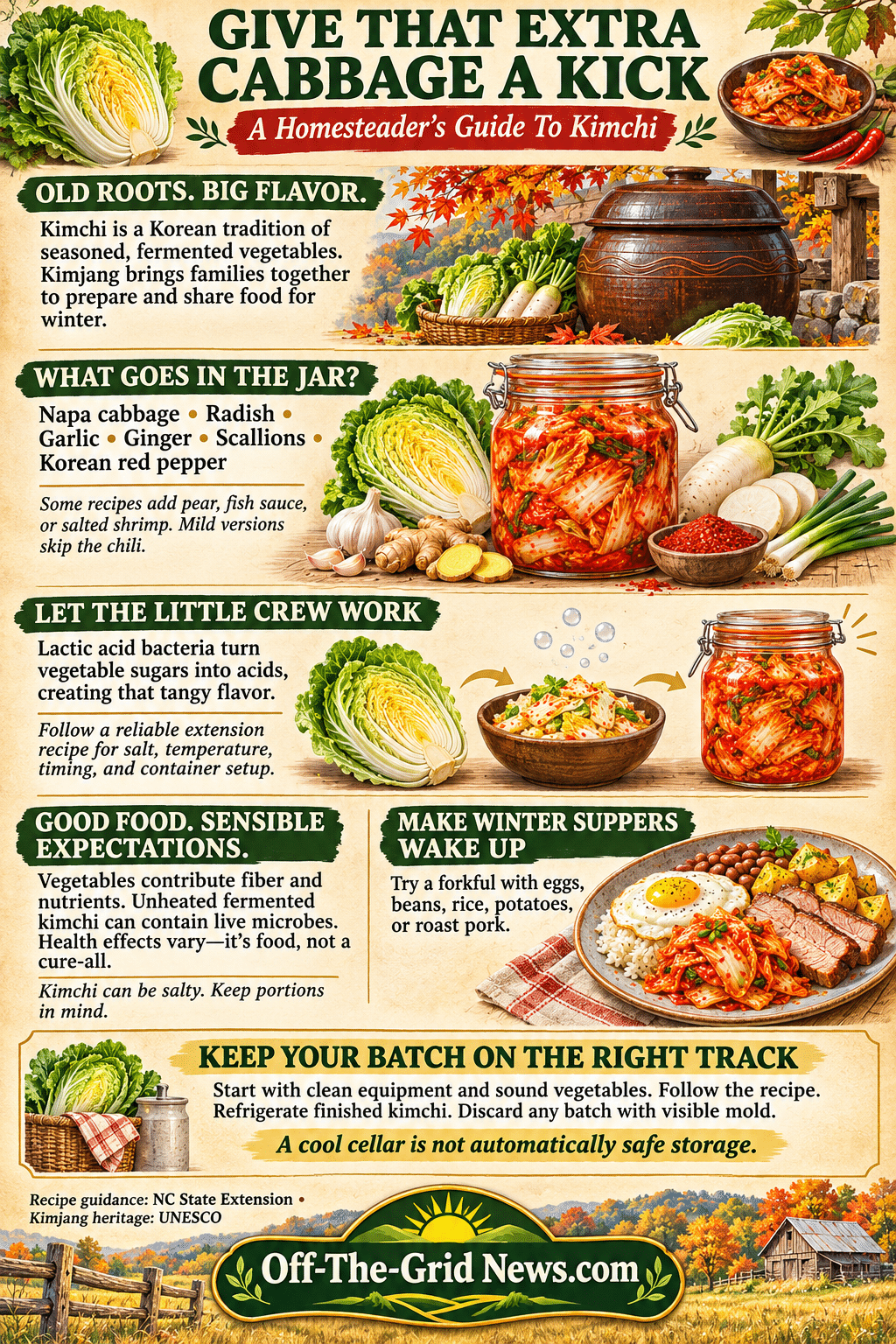
First, let’s clear away the fog. Forget the idea that kimchi is one fiery red recipe with a fancy name and a load of mumbo-jumbo attached. Kimchi is a whole family of Korean vegetable preparations, with ingredients and methods shaped by the season, the region, and the cook doing the mixing.
The familiar cabbage version is baechu kimchi, usually made with Napa cabbage. But there’s also mild white kimchi, called baek kimchi, and crunchy cubed-radish kimchi, called kkakdugi. Cucumber kimchi brings another texture to the table, while dongchimi is a refreshing radish-water kimchi.
In other words, you don’t have to set your eyebrows on fire to enjoy it. A mild version can be a fine doorway for a household that thinks black pepper is already getting adventurous.
The tradition has deep roots, but the red cabbage kimchi familiar today developed over time. We don’t need to nail a modern recipe to an ancient date to appreciate what it represents: generations of people learning how to make vegetables last and taste good doing it.
When the Neighborhood Put Up Winter Together
Then there’s kimjang, the seasonal tradition of making and sharing large amounts of kimchi. Picture the fellowship of a church kitchen crossed with the busiest canning day of the year, with everybody and his brother pitching in: vegetables everywhere, practiced hands moving, and enough conversation to carry clear across the yard.
As UNESCO’s account of kimjang explains, the work follows the seasons and brings households together to prepare for winter. Families pass down their methods, compare results, and share what they make.
That ought to sound familiar to anybody who’s ever traded sweet corn for tomatoes or carried a casserole down a gravel road. Food security has always had a neighborly side.
Traditionally, earthenware jars called onggi were used to store kimchi, sometimes partly buried to help moderate temperature. It’s an ingenious way to let the earth help with the work, just as a well-built root cellar uses the ground to steady its climate.
Here’s the crucial detail: a buried pot isn’t a guarantee of safe, year-round storage. Soil temperature, weather, preparation, and the particular recipe all matter. For a modern home batch, plan on refrigerated storage rather than assuming any cool cellar corner will do.
The Little Crew Working Inside the Jar
So what turns cabbage into something that makes your mouth water? Lactic acid bacteria get to work on sugars in the vegetables, producing acids that give fermented kimchi its bright, tangy flavor.
It’s the same broad kind of fermentation behind sauerkraut. Think of it as putting a tiny crew to work after you’ve finished chopping: you set up the right conditions, and the microbes take the next shift.
But here’s the catch: that crew needs proper management. Salt, temperature, cleanliness, and the recipe’s method matter; fermentation doesn’t make every jar automatically safe. Pepper flakes are seasoning, not a substitute for sound food handling.
Start with a reliable extension recipe, then follow its proportions and directions. There’s no need to muddle along in the dark. This is one kitchen job where “Grandpa always eyeballed it” isn’t the best instruction sheet for a beginner.
Also, fermentation makes gas. Give the vegetables the space and container setup your recipe calls for, and expect some bubbling or overflow. A tray underneath can save you from scrubbing cabbage juice out of the counter seams.
Good Cabbage and a Handful of Flavor
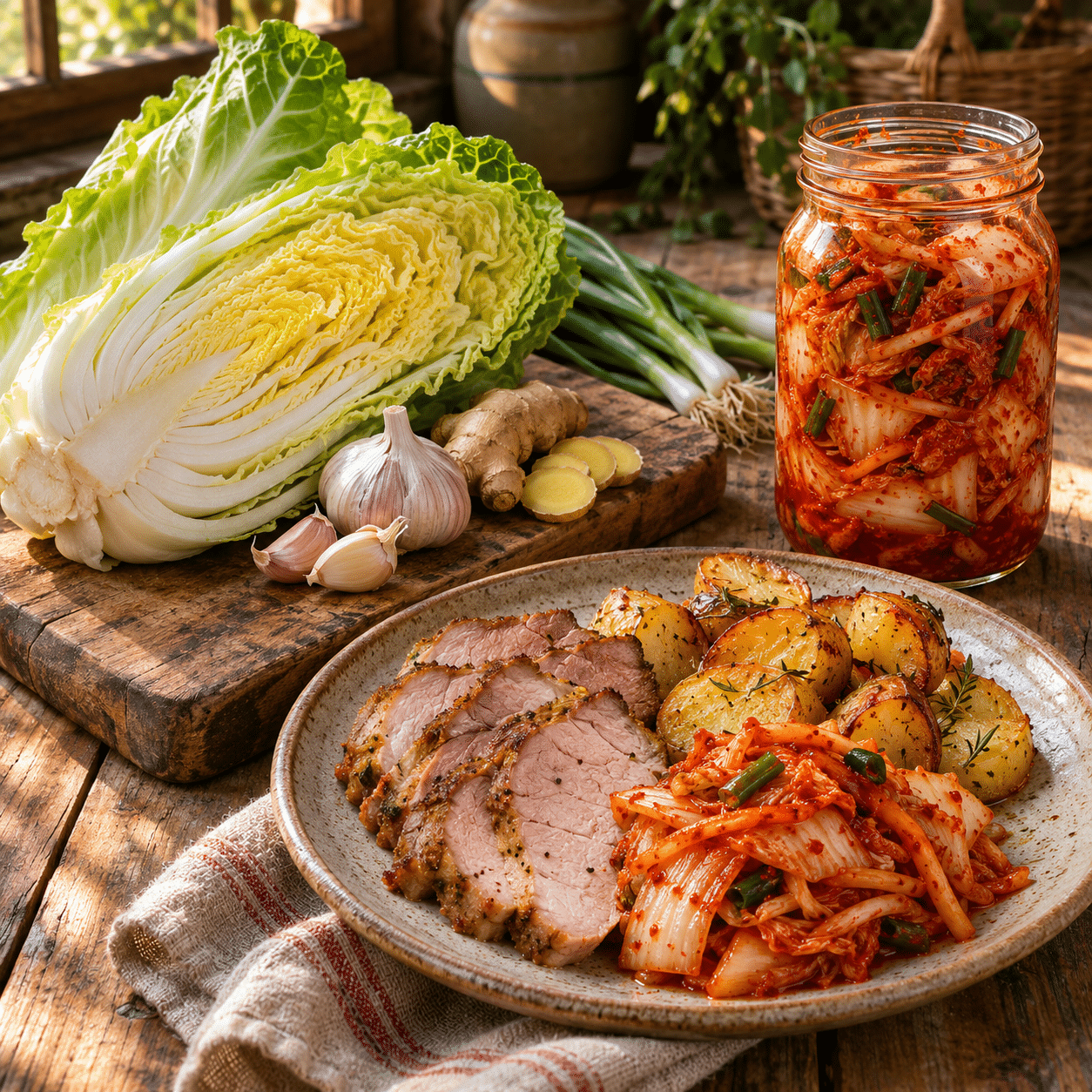
Now for the fun part: building that homemade flavor from scratch. Depending on the recipe, the cast may include Napa cabbage, Korean radish or daikon, scallions, garlic, ginger, and gochugaru, the Korean red pepper flakes or powder that supply that familiar red color and warmth.
Some versions include Asian pear, fish sauce, salted shrimp, or a cooked rice-flour paste. Others leave out seafood entirely. Choose a recipe that suits your household, and check ingredients carefully if someone has a fish or shellfish allergy.
Best part, much of that list will look right at home beside your garden basket. Specialty seasonings may take a trip to an Asian grocery or an online order, but you’re still working with recognizable ingredients and ordinary kitchen equipment.
Meanwhile, start with sound vegetables. Fermentation is a useful way to handle a generous harvest; it isn’t a rescue operation for rotten produce. A clean jar and good cabbage are a better beginning than a bargain nobody should have brought home.
Give Your Nose a Minute to Catch Up
Let’s come clean: kimchi announces itself. Open a container and the garlic, cabbage, seasonings, and fermented tang may arrive before you’ve found a fork.
If your family wrinkles its nose, give it a test drive with a small spoonful alongside something familiar. Rice, eggs, potatoes, and beans make friendly introductions. Nobody has to start by eating a bowlful before breakfast.
Even so, don’t confuse a strong aroma with proof of a health benefit. A pungent jar doesn’t demonstrate that your liver is “detoxing,” and your nose can’t certify that a ferment is safe.
Follow the recipe and storage instructions, and discard kimchi with visible mold. Don’t taste a questionable batch to settle an argument with yourself. There will be other cabbages.
A Useful Food Without the Medicine Show
Nutritionally, kimchi has plenty going for it without being sold as a cure in a crock. Vegetable-based versions are generally low in calories and contribute fiber, with vitamins and minerals varying according to the vegetables, recipe, and serving size.
Cabbage, radishes, garlic, and peppers also contain plant compounds scientists study for possible health effects. That’s interesting, but finding a promising compound in an ingredient doesn’t prove a spoonful of kimchi prevents cancer, relieves pain, or turns back the clock.
In plain English, think of it as a useful part of a varied diet. It can make vegetables more appealing and give an inexpensive meal enough zip that folks come back for seconds.
Before you dive in, there’s one practical catch: kimchi can contain a fair amount of sodium. If you’ve been told to limit salt, consider portions and the rest of the meal, and ask your clinician how it fits your needs. Don’t simply cut the salt in a fermentation recipe and assume the process will behave the same way.
Feed the Garden Inside Your Gut
Meanwhile, let’s take an up-close look at the live-microbe story. Fermented kimchi that hasn’t been heat-treated can contain living microorganisms, but their types and numbers change with preparation and storage.
According to the National Institutes of Health’s explanation of probiotics, probiotic benefits depend on particular organisms and the evidence behind them. Calling every homemade ferment a proven probiotic treatment gets ahead of what we know.
Still, research gives fermented foods a reasonable seat at the table. In a small Stanford dietary trial, a diet rich in assorted fermented foods increased gut-microbe diversity and reduced several markers of inflammation.
That study included foods such as yogurt and kefir along with fermented vegetables. It didn’t establish that kimchi alone produces those results, or that eating it guarantees protection from illness.
For a homesteader, the useful picture is familiar: a garden thrives under steady care. Your gut deserves that same patient approach, with a variety of plant foods rather than one jar expected to do all the work.
Make Supper Better for Pennies a Spoonful
Of course, the real test comes when you put it on the table. A little kimchi can bring crunch and tang to a plate of eggs, give a plain bean bowl an unexpected kick, or make yesterday’s rice worth looking forward to.
Try it beside roast pork or tucked into a sandwich. Stir some into fried rice, or serve it cold alongside a steaming baked potato. Start with a forkful and let your taste buds negotiate the next serving.
As it grows more sour, you may prefer it in cooked dishes. Heating reduces live microbes, but the flavor can still earn its keep in soup, a skillet meal, or a savory pancake.
Now that’s the kind of thrift a working kitchen understands. You’re finding another enjoyable use for food you’ve already paid for—or already weeded, watered, and hauled in from the garden.
Start Small and Give That Cabbage a Job
Ready for a trial run? Begin with a modest batch and the complete kimchi recipe from NC State Extension, which includes ingredient amounts, preparation steps, fermentation options, and storage directions. Read it through before you start chopping.
First, wash your hands, clean your equipment, and make room in the refrigerator. Follow that recipe’s instructions for salting, packing, temperature, and timing rather than treating a sour taste as your only safety check.
Once it’s ready, keep the finished kimchi refrigerated as directed. Label the container with its date so it doesn’t become another mysterious jar hiding behind the mustard.
Finally, put a little on the supper table. Let the family discover what a cabbage can do when you give it some seasoning, a sound method, and a little time.
Year after year, self-reliance grows through skills you practice until they become ordinary. A batch of kimchi is one more of those skills—and a mighty good excuse to plant another row of cabbage next spring.