 Print
Print

The three centuries which followed the Macedonian conquest of Asia,
from the death of Alexander the Great to the fall of the Ptolemaic kingdom of Egypt,
are perhaps the most thrilling of all periods of ancient history.
—Peter Thonemann, The Hellenistic Age (2016)
The Hellenistic Age
Alexander’s conquests had merged the Hellenic world with the decaying Persian Empire, expanding it and giving it new life. The Greek language, Greek literature, philosophy, and Greek political order spread all over the known world. Polis gave way to kosmos–polis, a universal city-state or “empire” in terms of which all men could find definition and meaning. But Alexander died at 33, and his generals ripped the empire into four parts. The Hellenistic Age began.
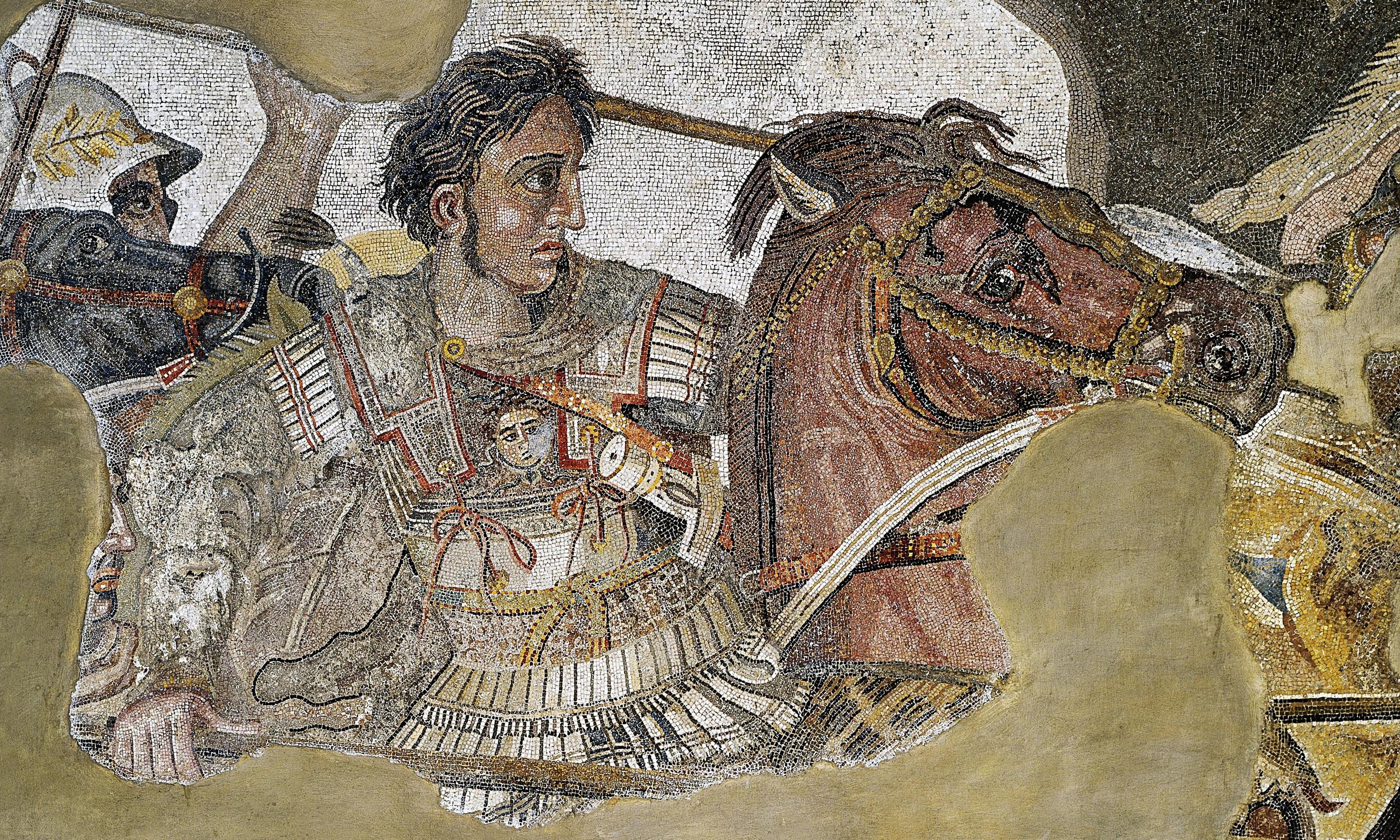
The intellectual hub of all of this was Alexandria in Egypt. There, a fully staffed library and museum gave mathematicians and natural philosophers funding as well as room to record, expand, and apply the learning of the ancients. Alexandria was also the birthplace of the Septuagint, the Greek translation of the Old Testament.
The philosophies that dominated this age quickly proved hopeless dead ends. The Cynics spoke of virtue as mere self-sufficiency, possessions, and social ties. The Epicureans sought comfort in inner serenity and turned their backs on whatever gods the others had. The Skeptics completely gave up on epistemology. They argued that we can’t know anything that lies behind sense experience. The Stoics, a bit more hopeful, confessed a universe wholly determined by the Reason (Logos). Here, at least, was some hope for a universal or natural law accessible to all reasonable men. But in the end, it, too, proved hopeless, lacking clarity and codification.
The mindset and culture that existed within this political and philosophical framework struggled with both disillusionment and apathy, often veering wildly into the irrational. Belief in an all-controlling Fortune was common. So was belief in astrology. Many turned to magic as if it were one of the more practical sciences. Finally, many sought salvation through the myriad of mystery cults. Intellectually and spiritually, the Hellenistic Age was bankrupt … very much like our own.
Waiting For The Messiah
Throughout the Hellenistic world, however, there was a scattered people who were eagerly awaiting a whole new world. The Jewish people were waiting for their Messiah. They were waiting for the Kingdom of God and the outpouring of His Spirit. As the years passed, they searched their sacred scrolls and watched the prophetic clock tick away its hours. Isaiah had talked about a Persian named Cyrus 170 years before he conquered Babylon (Isa. 44:28; 45:1). Zechariah had charted the course of Alexander’s conquests (Zech. 9). And Daniel’s prophecies, though a bit fuzzy, were at least easy enough to follow in their broad outlines.
The prophecy of the “Metal Man” in Daniel 2 set the timeline for the Messiah in terms of the rise and fall of four world-kingdoms: Golden Babylon, Argent Persian, Brazen Greece, and Iron Rome … followed at last by the Kingdom God. The prophecy of the 70 Weeks in Daniel 9 marked out that same timeline in weeks of years: 70 “weeks” or 490 years from the decree to rebuild Jerusalem. And the detailed prophecies of Daniel 11-12 spelled out the details of the political and military rivalries that would engulf Judea and Jerusalem, from Alexander’s death until the coming of Israel’s King.
Specifically, Daniel 11 describes the latter days of the Old Covenant in terms of the ongoing conflict between the kingdoms to the north and south of Judea. The Seleucid kingdom of Syria and Ptolemaic kingdom of Egypt. The kings of both dynasties are well-known to secular history, and over the centuries this familiarity has led unbelievers to condemn “Daniel” as a pseudo-prophet writing after the fact. How else, they ask, could his descriptions of political and military history be so exact? Such accuracy would require divine omniscience, after all!
The Abomination That Desolates
There are two periods within the Hellenistic Age to which Daniel’s prophecies give special attention. The first is the reign of Antiochus Epiphanes and the second is the battle of Actium and rise of the Herodian dynasty. Both culminated in times of great tribulation for the Jewish people.
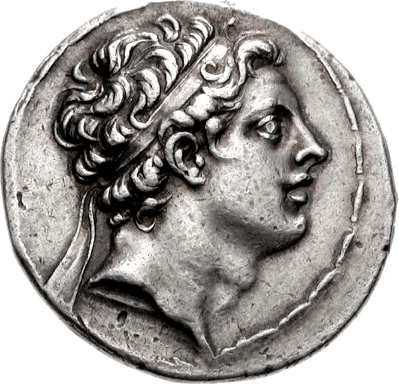
Antiochus IV (215-164 BC) was the eighth of the Seleucid kings. He called himself “Epiphanes”or “God manifest.” His enemies called him “Epimanes” or “the Mad One.”
In 170 BC, after a successful campaign against Egypt, he seized Jerusalem, “made a great massacre,” and plundered the Temple of all its treasures. Two years later, after Roman intervention prevented another move on Egypt, Antiochus turned his wrath more fully against the Jewish people (Daniel 11:29-30). Again his armies occupied Jerusalem and slaughtered its inhabitants. Antiochus even set up an idol-altar in the Temple and sacrificed to Zeus, the culmination of what Daniel calls “the abomination that makes desolate” (Daniel 11:31). He put an end to the Temple ritual and forbade the Jews to observe the Mosaic Law. He made circumcision and sabbath observance capital crimes. He ordered the Jewish people to surrender all copies of Scripture to be burned.
Antiochus’s tyranny eventually provoked opposition. Mattathias the priest and his sons, latter called the Maccabees, eventually led a successful revolt against Syria (Dan. 11:32-35). This Maccabean Revolt recovered religious and civil liberty for the Jewish people, though in stages. Judas Maccabeus recovered Jerusalem and rededicated the Temple (165 BC). This rededication is still commemorated today in the Jewish festival of Hanukkah. Political independence came 23 years later, and the Jewish people were able to maintain it for some 70 years.
The Willful King
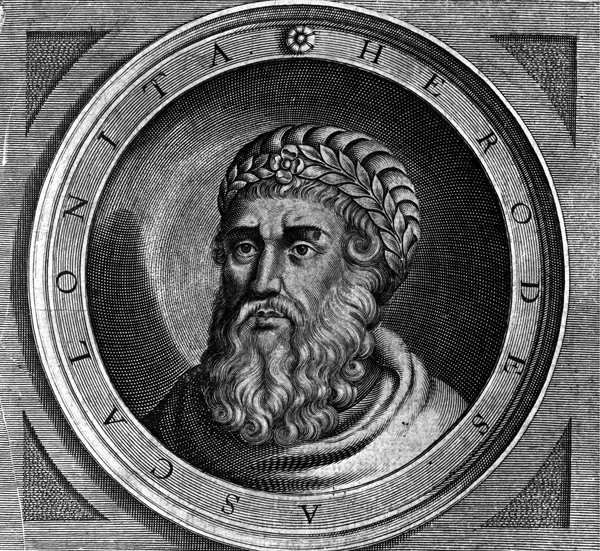
The secular histories tell us that Rome gained control of Judea when two feuding Maccabean princes, brothers, invited Pompey to settle their quarrel. The Roman armies came and stayed, and Judea became a Roman province. A few years later, the Roman Senate, at the insistence of Marc Antony, declared Herod (the son of Antipater the Idumean) king of Judea. This is where Daniel’s prophecy picks up … with a king “who shall do according to his will” and “speak marvelous things against the God of gods” (Dan. 11:36). Scholar Alfred Edersheim describes Herod with these words:
Cunning, ambitious, bold, and energetic, he was equally hated and feared by his subjects. The two distinguishing features of his character and government were the most unrelenting cruelty, which sacrificed even those nearest to him to the slightest suspicion, and a magnificence which induced him everywhere to raise lasting monuments to himself.
The backdrop for Herod’s rise to power was the struggle for control of Rome that followed the assassination of Julius Caesar. Octavian and Marc Antony divided the emerging Roman Empire between themselves: Octavian took the west, Antony the east. Antony allied himself with Caesar’s former mistress, Cleopatra, the last of the Ptolemaic dynasty. What began as reciprocal distrust and a propaganda war quickly exploded into military conflict. The key battle was fought off the coast of Actium (31 BC). When things got hot, Cleopatra withdrew and Antony followed—all the way back to Egypt. Octavian pursued, moving his forces by land through Palestine (Dan. 11:40-41).
Herod eventually met Octavian, even though he had originally sided with Marc Antony against Octavian. But Herod, always the master politician, was able to ingratiate himself to Octavian and gain his political support depite the fact he was previously fighting against him. Octavian continued into Egypt, only to find both Antony and Cleopatra already dead by their own hands (Dan. 11:42-43). Octavian took control of Egypt, returned to Rome, and there declared himself Caesar Augustus. The Roman Empire had come of age. With Octavian’s blessing, Herod the Great was now on the throne of Judea (Dan. 11:45).
The advent of the Messiah was less than 30 years away.