 Print
Print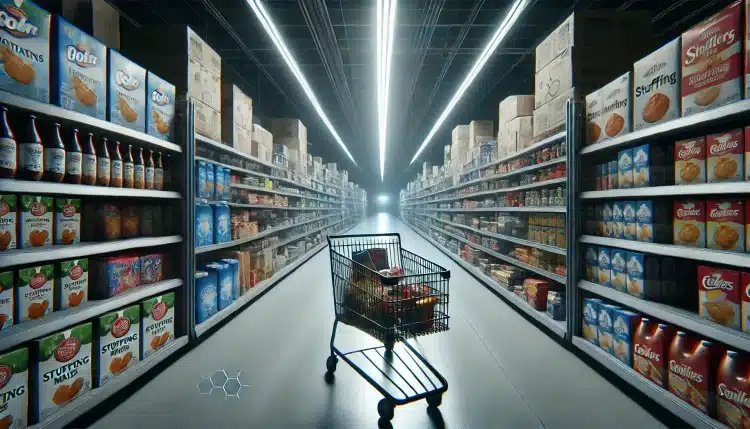
Read This Before Your Next Walmart Trip (Especially If You Have Kids)
At first glance, nothing feels wrong. The aisle is bright. The packaging is cheerful. The words are soothing—“easy,” “classic,” “family favorite.” But that surface calm hides a different story.
Because some of what’s sealed inside these boxes has already been judged unsafe elsewhere. Not after disaster. Not after headlines. But after regulators quietly reviewed the data and decided the risk wasn’t worth it. No recalls. No warnings here. Just business as usual. And the only way you’d ever know is if you stopped, turned the box over, and actually read.
So before we get into policy gaps and chemical names, let’s begin with something almost invisible in its normalcy—something millions of families serve without a second thought. Let’s start with instant mashed potatoes.
Sometimes It Isn’t Panic That Wakes Us Up. It’s Clarity

The kind that hits when you flip a package over, squint at the fine print, and realize the ingredient list reads more like a chemistry worksheet than food.
Take BHA, for example. Back in 1958, the FDA stamped it “generally recognized as safe” and let it into the American food supply. Decades later, Europe took another look and labeled that same preservative a suspected endocrine disruptor. The U.S. National Toxicology Program now says it’s “reasonably anticipated to be a human carcinogen.”
That’s not a small disagreement. That’s two entirely different philosophies staring at the same evidence.
After digging through ingredient panels, FDA rulings, and European Food Safety Authority files, one thing becomes painfully clear: many additives that are perfectly legal in the U.S. are restricted, flagged, or outright banned overseas.
So let’s slow-walk through six everyday Walmart foods and see how differently they’re treated on opposite sides of the Atlantic.
And no, this isn’t about fear. It’s about clarity, competence, and reading labels like someone who plans to be around for a while.
Instant Mashed Potatoes: Built for Shelf Life, Not the Human Body
At first glance, instant mashed potatoes seem harmless. Dried spuds. Hot water. Done.
But then you flip the box.
Suddenly you’re staring at sodium bisulfite and sodium acid pyrophosphate—chemicals added to preserve color and texture long after real potatoes would have given up. In Europe, sulfites are tightly regulated and heavily labeled, even at trace levels. In the U.S., they slide through quietly.
Dig deeper and you’ll often find BHA lurking in similar dehydrated potato products, used to slow rancidity. Europe banned BHA in food after linking it to hormone disruption and reproductive concerns. The U.S.? Still allows it—thanks to that 1958 ruling that never quite aged well.
If you’re stocking a pantry for the long haul, especially off-grid, this is the wrong kind of convenience. Real food stores just fine on its own. Plain dehydrated potatoes, salt, and a bit of powdered milk will outlast the box—and your conscience will sleep better too.
Beef: The Chemical You’ll Never See Listed
Next, let’s move to the centerpiece of the plate: beef.
Here’s the part most shoppers never hear about. In U.S. cattle production, a feed additive called ractopamine is commonly used to promote leaner meat. It doesn’t show up on the label. It doesn’t trigger warnings. And “no added hormones” doesn’t exclude it—because technically, it isn’t one.
Europe saw the data and banned ractopamine outright. So did China, Russia, and more than 150 other countries.
In the U.S., it remains legal.
That means yes—your beef could absolutely come from ractopamine-fed cattle without you ever knowing. If that gives you pause, trust the instinct. Local ranchers, small producers, and brands that certify “no ractopamine” offer something rare in modern food: transparency.
When you live closer to the land, you learn quickly that trust matters more than marketing.
Boxed Stuffing: Holiday Comfort with a Chemical Aftertaste
Then there’s stuffing—the cozy, nostalgic box that promises “home-style” flavor.
But read the label, and you’ll often spot TBHQ, a petroleum-derived preservative banned in the EU. Toss in artificial flavors, MSG, and autolyzed yeast extract, and suddenly your holiday side dish looks less like grandma’s kitchen and more like an industrial experiment.
Europe cracked down on flavor enhancers years ago. American brands doubled down.
The irony? Stuffing might be the easiest thing on the table to make from scratch. Stale bread, herbs from the garden, butter, broth. That’s it. No lab shortcuts. No chemical echoes. Just real food that tastes like food is supposed to.
Snack Cakes: Bright Colors, Quiet Warnings
Those shiny snack cakes in the bakery aisle don’t just scream sugar—they glow.
That glow often comes from Red 40 and Yellow 5, synthetic dyes Europe either bans outright or requires warning labels for. Since 2010, European packaging must state that these dyes “may affect activity and attention in children.”
In the U.S.? Silence.
Pile on the legacy of partially hydrogenated oils—trans fats Europe banned long before America did—and a pattern emerges. Convenience first. Consequences later.
If you’re packing treats for kids, the solution isn’t deprivation. It’s substitution. Shorter shelf life, simpler ingredients, and a lot fewer artificial colors go a long way toward peace of mind.
Skittles: Same Brand, Different Rules
Candy makes the contrast impossible to ignore.
Skittles get their glossy sheen from titanium dioxide, also known as E171. In 2021, the European Food Safety Authority said it could no longer consider it safe due to potential DNA damage. By 2022, Europe banned it outright.
The U.S. version? Still uses it.
Same brand. Same logo. Two different standards.
Europe chose caution. America chose consistency—for manufacturers.
If you’re making sweets at home, natural colors like beet powder, turmeric, or spirulina do the job without leaving you wondering whether heavy metals belong in dessert.
Soda: Neon Yellow, No Questions Asked
Finally, let’s crack open the bottle.
Sundrop soda gets its sunny color from tartrazine, better known as Yellow 5. Europe allows it only with mandatory warning labels about behavioral effects in children. After those warnings took effect, many European brands quietly removed it altogether.
In the U.S., the dye stays—and the warnings don’t.
For anyone living off-grid or trying to reclaim food skills, soda is the easiest swap of all. Homemade syrups, fermented drinks, or simple fruit spritzers hit the same craving without the lab glow.
Closing the Label Gap
So step back and look at what we just covered: instant potatoes, beef, stuffing, snack cakes, candy, and soda. Six everyday foods. Six different examples of additives Europe chose to restrict, warn against, or ban—while the U.S. kept them legal.
This isn’t a Walmart problem. It’s a system problem.
Europe tends to act on potential risk. The U.S. waits for undeniable damage. And in the gap between those approaches, shoppers are left to fend for themselves.
The kicker? These same manufacturers already make cleaner versions of these foods for Europe. The formulas exist. The knowledge exists. The transparency doesn’t.
Clean food isn’t a fad. It’s a foundation. Read labels. Support producers who tell the truth. And feed yourself like your independence depends on it—because over time, it probably does.