Print
COVID Supposedly Left Us Years Ago… So Why Does Supper Still Taste Like Cardboard?
Before You Blame The Cook For Another Tasteless Supper… Read This New COVID Study
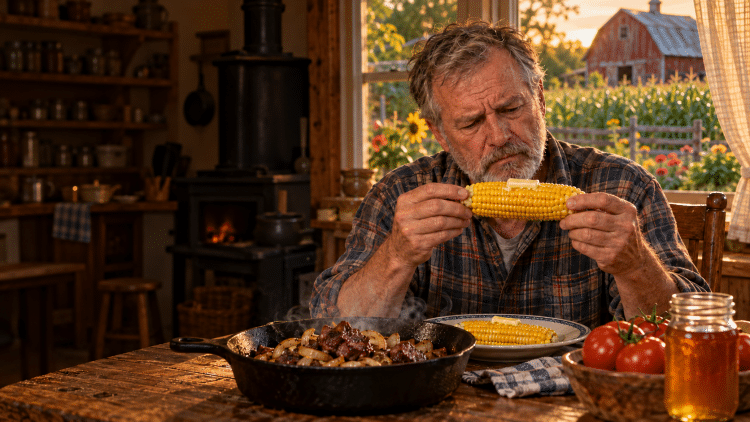
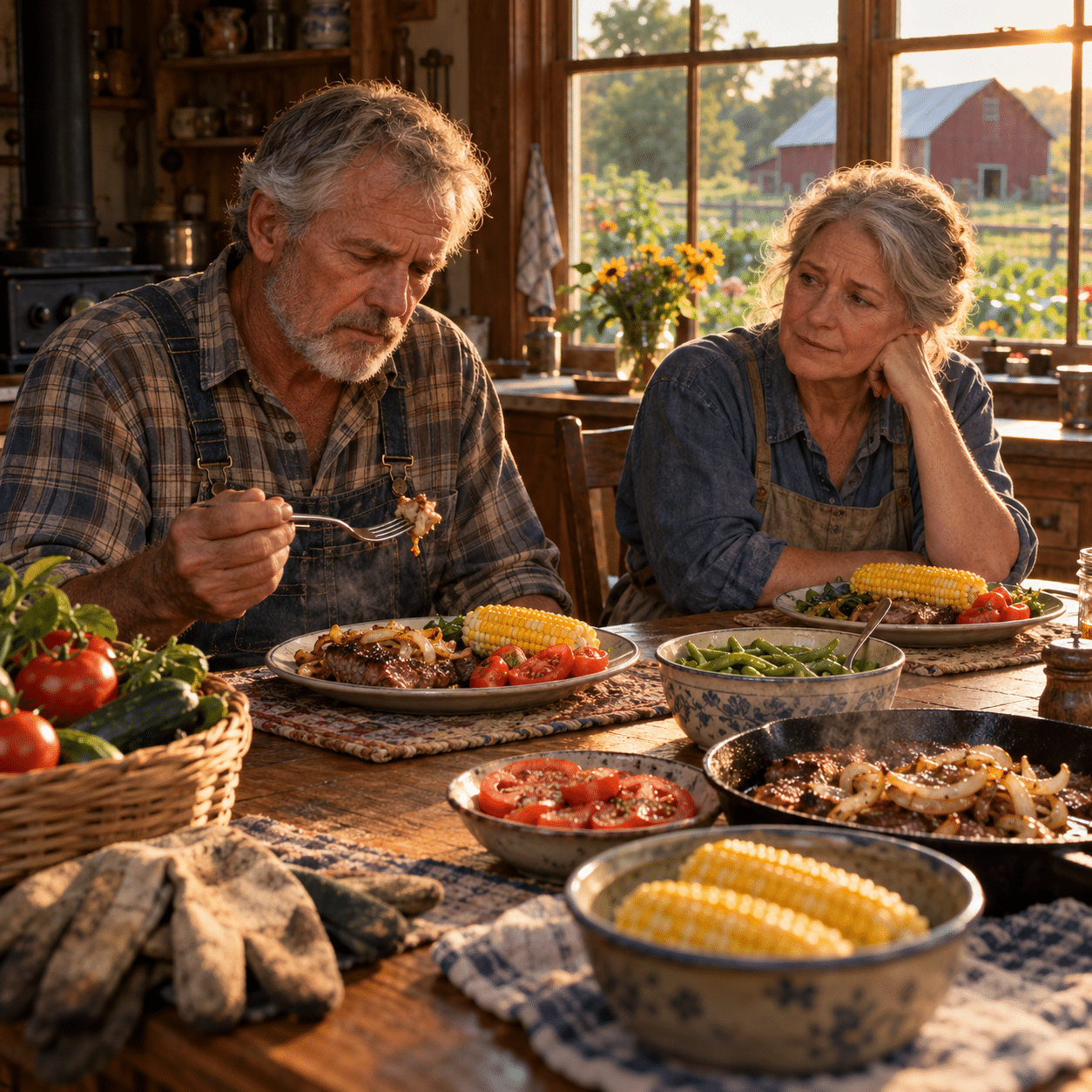
Picture a plate of August sweet corn, picked twenty minutes ago from your own patch. Butter runs between the kernels. You take that first bite, ready for the sweetness you waited all summer to enjoy.
And almost nothing shows up.
The corn is warm. The kernels have texture. But that sweet taste you remember has gone missing, like somebody slipped into the kitchen and stole part of supper.
For some people, that disappointment has lasted more than a year after COVID. Now a new October 2026 study has turned up a clue inside the taste buds themselves, where part of the machinery that helps register sweet, bitter, and savory tastes appears to be running poorly.
In other words, the trouble may reach all the way down to the little chemical switches on your tongue. And for folks tired of wondering why good homegrown food still tastes wrong, that is news worth pulling up a chair for.
New Research Looks Under the Hood
The study, Taste dysfunction in long COVID, appeared online in Chemical Senses on January 29, 2026, with its corrected and typeset version dated March 2. Researchers from Colorado and Sweden examined people whose taste troubles had hung around for more than twelve months after infection.
What makes this research especially interesting is where they looked. They went beyond asking whether supper tasted funny and examined tiny samples of tissue from the tongue, searching for measurable changes in the taste machinery.
Think of the difference between telling a mechanic your tractor sputters and finally lifting the hood. A complaint describes the trouble. Looking at the machinery can begin to explain it.
Here, the researchers found evidence linking certain taste losses with changes in molecular markers inside taste cells. They also spotted occasional problems with the way taste buds were organized, although much of the tissue and its nerve supply remained intact.
That last point matters. This was not a picture of everybody’s taste buds being flattened like a cornfield after a straight-line wind.
These Folks Were Never Hospitalized
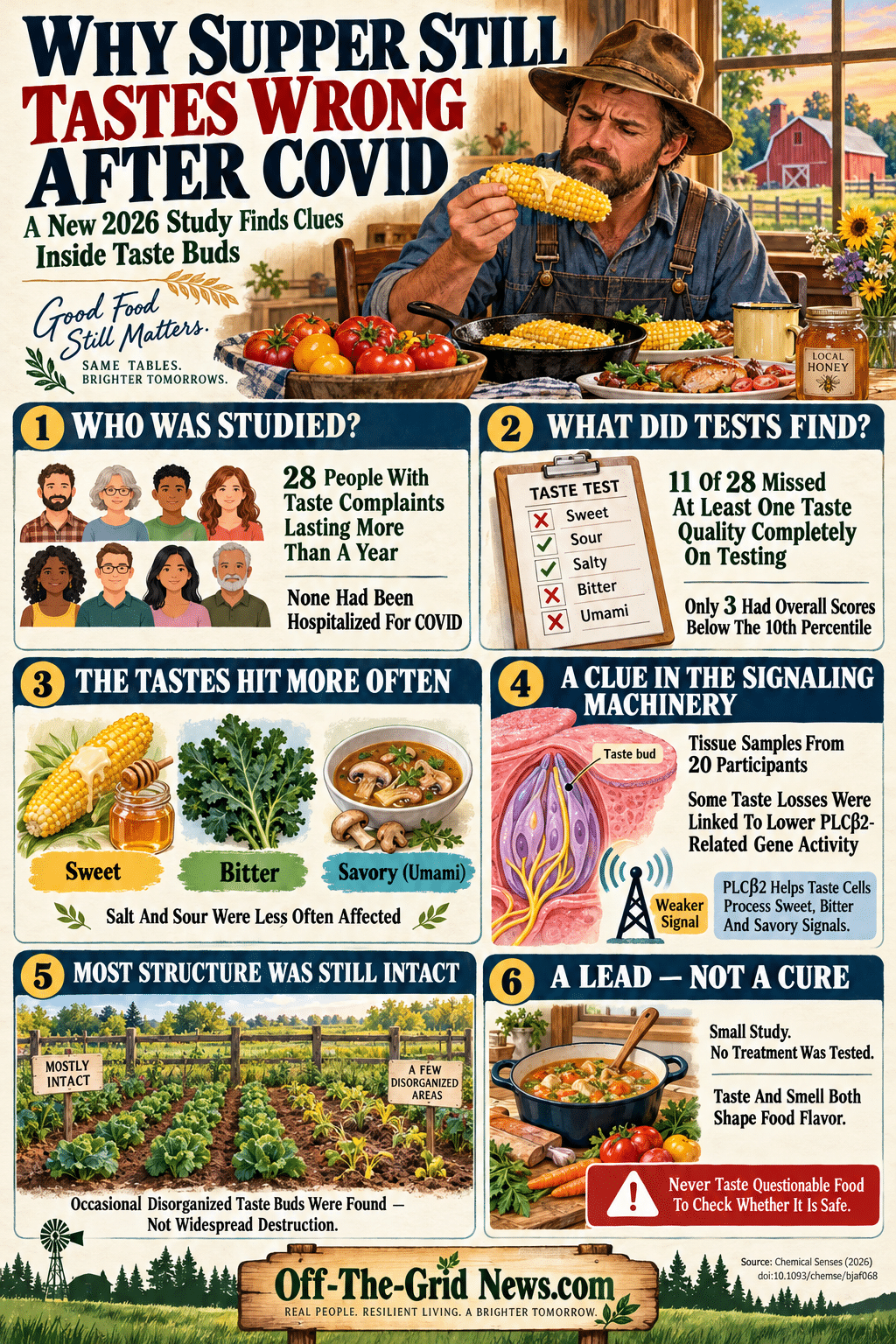
First, consider who took part. The team studied 28 people who reported lasting taste disturbances after COVID, and none had been hospitalized for the infection.
These were people who had weathered the illness outside the hospital. The study is a reminder that you do not have to spend weeks in a hospital bed to wind up with a stubborn problem afterward.
Then came the taste tests, which measured the ability to recognize sweet, sour, salty, bitter, and umami. The results were more complicated than a simple verdict that all 28 people had lost their sense of taste.
In the paper’s abstract, only three scored below the tenth percentile overall when compared with age- and sex-adjusted norms. Yet eleven showed a complete loss of at least one taste quality on the test.
That distinction is worth keeping. Someone can do reasonably well on a combined score while still missing an important part of what makes dinner satisfying, much as a farmhouse can have working lights in four rooms and a dead circuit in the kitchen.
Sweet and Savory Took the Harder Hit
Interestingly, the missing tastes did not fall at random. Sweet, bitter, and umami were more commonly affected than the other qualities.
Umami is the savory taste. Think of the satisfying depth in broth, cooked meat, or mushrooms, though the full flavor of those foods also depends on smell and other sensations.
Now bring that pattern home to your own table. Imagine the sweetness of honey fading, the bitter edge of greens becoming hard to detect, or the savory side of supper losing its punch.
Meanwhile, saltiness or sourness might still come through better. That does not mean every participant could taste every pickle perfectly or that every spoonful of honey went completely blank; those are kitchen examples of the pattern, not a menu the scientists tested.
Still, the pattern gave the researchers something useful to follow. Those three more vulnerable tastes share part of the same signaling machinery.
When the Tongue Cannot Turn Up the Volume
Next, the scientists collected small samples from the tongue’s mushroom-shaped taste papillae in 20 participants. These little structures can house taste buds, and the samples let the team examine both tissue organization and molecular activity.
One important finding involved messenger RNA, or mRNA, associated with a protein called PLCβ2. The researchers linked losses in the sweet, bitter, and umami group with reduced expression of PLCβ2 mRNA and another taste-related marker, Tas1R3 mRNA.
Those names look like something printed on a replacement part at the machinery dealership. But the basic idea is manageable: taste cells need a chain of chemical steps to turn contact with food into a signal the nervous system can use.
PLCβ2 helps that chain work for sweet, bitter, and umami. If this signaling system is underperforming, those tastes may not register normally.
Think of an old farm radio with a weak amplifier. The broadcast is still out there, but turning the knob does not bring back the sound you remember.
That is an illustration, of course, rather than a complete wiring diagram of the tongue. The study measured molecular markers; it did not demonstrate that one broken amplifier explains every person’s symptoms.
Even so, shared wiring helps explain why those three tastes could suffer together while sour and salty follow a different pattern. The food can be perfectly good while the system receiving its taste signals has trouble doing its job.
A Few Garden Rows Were Out of Line
Meanwhile, the microscope revealed another piece of the puzzle. Some samples contained disorganized taste buds or unusually isolated cells carrying the PLCβ2 marker.
Picture a garden where most rows are still standing, but a few sections have been trampled. You would want to know what happened in those patches without declaring the entire garden ruined.
That is closer to what the paper describes than a wholesale wreck. Taste-bud structure and nerve supply were generally preserved, with occasional abnormalities mixed in.
Together, the findings suggest that lingering taste trouble may involve both the chemical activity inside cells and, in some cases, the arrangement of the cells themselves. The balance may differ from one person to the next.
Naturally, that makes the problem harder to solve. A repair that helps one part of the system may not address every reason someone’s supper tastes wrong.
Why Fresh Cells May Not Mean a Fresh Start
Now comes a question anybody who has watched a garden grow back would ask. If taste cells keep renewing, why does the trouble hang on?
Taste buds normally replace cells over time. Yet these participants were still reporting problems more than years after infection, which means ordinary renewal had not necessarily restored the experience they remembered.
It is tempting to say the new cells must be getting bad instructions. That makes a handy farm analogy, like planting fresh seed in a field where the growing conditions are still wrong, but this study does not establish exactly what keeps the process off track.
The researchers identified clues, not the complete chain of cause and effect. They did not show that active virus was still sitting in every affected taste bud, nor did they settle why recovery differs so much between people.
That is where the next round of work begins.
Taste and Smell Share the Supper Table
Before we go farther, there is another wrinkle. What we casually call “taste” often includes a generous helping of smell.
Sweetness is a basic taste. The familiar aroma of roasting corn, simmering onions, or fresh bread involves smell, and together those sensations help create the flavor we recognize.
That is why this study’s direct taste testing matters. It helps researchers look at taste itself rather than assuming every complaint about bland food comes from the same source.
For the person eating it, the distinction may seem academic. But finding the right repair starts with figuring out which part of the system needs attention.
Your Pantry Needs Better Protection Than a Taste Test
Out on the homestead, this reaches beyond restaurant pleasure. You planted that corn, hauled those buckets, weeded those rows, and stood over that stove; enjoying the meal is part of the reward.
When food stops tasting right, some of the pleasure drains out of all that work. These findings offer a biological explanation worth investigating, especially for people whose symptoms have been difficult to describe.
Still, one kitchen rule deserves a firm place beside the cutting board: never use taste to decide whether questionable food is safe. Even a perfectly working tongue cannot reliably detect dangerous contamination.
For home canning, follow tested preservation guidance from the National Center for Home Food Preservation. Do not sample a suspect jar to find out whether something went wrong, and do not use bitterness or its absence to identify an edible wild plant or mushroom.
A dulled sense of taste makes reliable methods more valuable. But those methods belong in every homestead kitchen, whether supper tastes wonderful or not.
A Real Clue and More Work Ahead
Finally, keep the size of this study in view. Twenty-eight participants, with tissue samples from twenty, can provide useful leads; they cannot tell us how common this exact problem is across everyone who has had COVID or has had the shot.
Nor did the researchers test a treatment that brings taste back. The findings point toward possible targets for future work, including the signaling machinery involved in sweet, bitter, and savory tastes.
If symptoms persist, a clinician can help sort out taste loss, smell loss, and other possible contributors. The National Institute on Deafness and Other Communication Disorders explains how taste disorders are evaluated and why identifying the cause matters.
For now, this new 2026 research gives us something better than another vague promise to wait. It offers measurable clues inside the cells that help turn food into taste.
And if you are still waiting for homegrown sweet corn to taste like summer again, that is a worthwhile place to start digging.