 Print
Print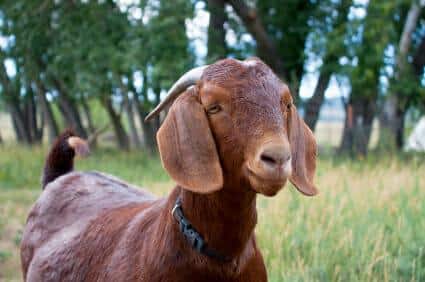
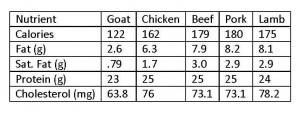
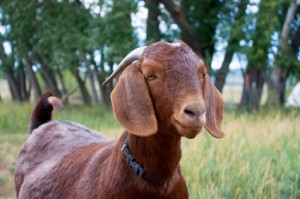 Goat meat is a very mild, tender red meat. It is a healthier alternative to beef due to its much lower fat and cholesterol content. In fact, the nutritional value of goat meat is very comparable to chicken while giving you beef-like consistency and flavor.
Just about any goat can be used for meat. Goat owners who raise goats for milk production often have kids born each year that they can’t keep, in order to control the size of their herds, and they can either sell them or use them as a meat source. Dairy goats are popular because the meat is typically even softer and milder than the common meat goat breeds. In fact, many meat goat herds incorporate dairy goats into a crossbreeding program to promote more tender meat, while maintaining the size and growth speed of the meat breeds. Nubians are a popular choice with those who prefer crossbreds, and in many cases the Nubian/meat breed cross also does well on the dairy side of the equation for homesteaders who want both milk and meat production.
The following chart from the USDA Nutrient Database showcases just how valuable goat meat is from a nutritional standpoint.
For purebred meat production, or as a base for the dairy/meat cross, there are three standout breeds that are easy to find in the American market.
Boers
Boers are the king of the goat meat breeds. They are large, very muscular, and fast growing. They are mild tempered and easy to raise, plus their unique color markings make them an extremely attractive animal. Boers are true “double-muscled” animals, which gives them their great bulk. The extra layer of muscling is what gives Boers the advantage of such high meat to bone ratio. Boers are a horned breed, but the backward sweep of the horn makes it a little less dangerous than a forward protruding horn. All goats with horns, especially the males, should be handled with caution as even accidents can be painful, but the Boer’s mellow, easy-going temperament helps make them especially manageable.
 Kiko
Kiko
Kiko, another popular meat goat, is close to the Boer in meat to bone production ratio but is not a double-muscled breed. And while it has the same fast maturity of the Boer, it will yield slightly less than its more-famous cousin at the time of slaughter. Kikos have a slight disadvantage in personality as well. The bucks are known to be fairly aggressive and, because they are such large animals with long twisting horns, they can be quite dangerous when not handled with extreme caution. Modern breeding practices have mellowed the Kiko to some degree, but they require skilled handling.
Tennessee Meat Goat
The Tennessee Meat Goat is especially popular with the homestead crowd for two reasons: it is a little smaller than the other meat breeds, and while that means less meat per animal, it also means they require less space and are easier to manage. The Tennessee Meat Goat has a very pleasant personality and is colorful, but the most unique quality that this breed possesses is a tendency to “faint.” The Tennessee Meat Goat is a breed that was developed from the smaller but heavily muscled Fainting Goat. The Fainting Goat is a myotonic breed, which means that its muscles get stiff when it is scared. Often, they will fall over if spooked. The “fainting” is a characteristic that remained to some degree in the development of the TMG (Tennessee Meat Goat), and breed aficionados find the habit endearing. It is a comical sight to see a herd of goats fall over in a field when something startles them.
Herd Size
For homesteaders only concerned with putting meat in their own freezers, a few goats per year is probably all that is needed. Since the average doe (female) produces two kids at a time (although one is not unheard of, and three to four can happen), two females of breeding age can produce enough goat meat for an average family of four for a year when used with other meats. Each animal will result in about 40 to 50 pounds of meat if raised to full market age. Some cultures prefer younger animals for religious celebrations, and size and amount will vary between breeds as well. Two does producing four to five kids (offspring) per year will result in roughly 160 to 250 pounds of meat for the freezer.
It is easier for many homesteaders with just a few does to have them artificially inseminated by their local veterinarian or, if they practice and become skilled enough, by themselves, than it is to keep a buck (male). However, if you live in a remote area or find it difficult to obtain semen and the services of a skilled technician, you will need to house a male to breed your females every year.
____________________________________________________________
Prepare now for surging food costs and empty grocery store shelves…
New Book Reveals How to Survive The Coming Food Shortage!
________________________________________________________