Food Storage Containers: The Right And Wrong Way To Store Food
Sep 24th, 2012 | By Esther | Category: Food, Storage, Top Headline | Print This Article
I’ve been interested in food storage for about twenty-five years. My husband and I started our food storage as newlyweds. On our meager budget, we worked slowly to build the basic staples—wheat, oil, honey, and beans—followed by canned goods, baking supplies, and dried foods. Initially, I didn’t think too much about the containers I stored the food in. I bought powdered milk at the store and kept it in the original box. Ditto for a twenty-five pound bag of flour.
I soon realized, though, that this is a foolish way to approach food storage. All the effort and money we spent on procuring food storage went right out the window when foods weren’t properly stored. The bag of flour I laid on our basement floor was lumpy because moisture had infiltrated it. I’ve also learned recently that chemicals in the cement can leach into bags stored this way. Mice had a party nibbling on my boxes of cereal, crackers, and powdered milk. Insect infestations were another common problem.
In recent years, I’ve taken more of an interest in not only which foods to store, but how to store them. Read on for a discussion of the common food storage methods and their potential benefits and drawbacks.
Mason Jars
Mason jars were first invented in the late 1800s, and modern science hasn’t been able to improve them much. Used properly, they’re a great way to preserve fruits, vegetables, sauces, meats, and main dishes. But how about dried grains, legumes, and powdered milk? I store large amounts of dried beans and grains in my basement food storage room, but I keep smaller quantities in mason jars in my pantry for easy access.
Gallon or half-gallon size mason jars are harder to find, but they’re great for storing canned juice, as well as powdered milk, sugar, and brown sugar. They don’t give an off-flavor to food and they can be used over and over again. To use mason jars for storing dry goods, add an oxygen absorber packet (more about these later) to the top of the jar. Use new lids and heat them in simmering water to soften the rubber gasket. As the oxygen absorber draws oxygen from the air, it creates a vacuum effect and the jar seals partially or fully.
Mason jars are clear so they absorb light. Store them in a cool, dark location because light causes food to deteriorate. Don’t stack them, and keep them on a sturdy, protected shelf. You might even want to add a low board to the front of the shelf so jars can’t tip and break.
Survive the coming food shortage with these Food Storage Secrets!
#10 Cans
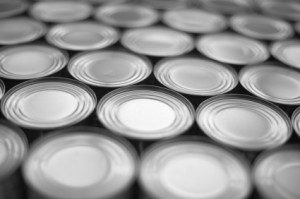
These large, sturdy cans are one of the best ways to store dry foods for long-term storage. They’re impervious to rodents, light, air, and moisture and are almost indestructible. They can be stacked, and since food is stored in small amounts, you only use what you need.
I’ve got cans of wheat that I’ve had for over twenty years—still perfectly fine. The two downsides to using cans are the potential for off-tastes to develop and the cost of the sealing equipment. Many years ago, I canned flour in cans. When I used the flour, it had a slightly tinny taste that didn’t go away. I haven’t noticed this problem with beans, wheat, or sugar, but it’s something to think about.
The cost of the sealing equipment for these cans is prohibitive for most families, but here’s a thought: why not go in with like-minded families or your church group and buy the equipment to share? Another option is to visit LDS Home Storage Centers. Owned and operated by the LDS Church, these centers have all the equipment you need. You don’t have to be a member of the LDS church to use the equipment, but you must schedule your visit ahead of time. The centers don’t take credit cards, so bring a check and make sure you clean up after yourself. You can also buy bulk goods like dried beans, sugar, and wheat here for very reasonable prices.
Food-Safe Buckets
I love food-safe buckets for storing food that I know I’ll use within six months to one year. They’re stackable and easy to access, and they keep moisture and rodents out so food stays safe. Use them for storing staples like flour, sugar, pasta, rice and oats.
Lots of online preparedness stores sell food-grade buckets, but my local bakery gives them away for free. These buckets previously contained icing, so I wash them out really well with lots of soapy water. I don’t want the oils in the icing to remain in the bucket since they can cause foods to go rancid. These buckets have easy-to-seal lids, but you can also order lids online.
Use only buckets labeled for food use though. Those cheap buckets at Home Depot won’t do. They may have dyes or chemicals in them that make them unsafe. Additionally, once you’ve used a bucket for paint or other chemicals, don’t store food in it. The plastic is porous, and small amounts of chemicals remain even after you’ve washed the bucket.
If you want to use food-safe buckets to store food for longer than a few months, put the food in a Mylar bag inside the bucket. Seal the Mylar bag and lay an oxygen absorber packet on top of the sealed bag. Close the lid tightly. As the O2 absorber draws the oxygen out of the bucket, the lid compresses slightly to seal.
Mylar Bags
Many people use Mylar bags alone for storage, but I prefer to use them inside a food-safe bucket. The Mylar bags keep food dry and fresh, but they’re easily punctured or damaged by rodents. Think of them as extra insurance when you’re storing food long-term in a plastic bucket. Mylar bags are also a good option for storing food in the freezer.
Oxygen Absorbers and Desiccants
You may have seen oxygen absorber and desiccant packets promoted on the Internet, but it’s important to know the difference between these two. Desiccants usually contain some form of silica, which draws moisture out of food to prevent decay and mold. They work reasonably well in number-ten cans, but you’d have to use an awfully lot of them to remove moisture from a large bucket of food.
For most purposes, oxygen absorbers are more efficient at preserving food quality. These packets contain iron powder, which oxidizes when exposed to air. These packets got hot as they’re working and actually create a vacuum seal when used in Mason jars or sealed buckets by removing the oxygen from the container.
Final Notes
So, which preservation method should you choose? I prefer a combination of all of the above-described methods. I keep staples close at hand in mason jars. I store wheat, beans, rice, and sugar for long-term use in #10 cans. And, I store large amounts of foods that I know I’ll use soon in plastic buckets. This versatility works well for my cooking habits and ensures that if one method fails, I’ll have a backup plan.
©2013 Off The Grid News


Where can I get #10 cans? I would appreciate sources for these and mason jars.
Fred, I don’t know about the #10 cans, but you can pick up Mason canning jars or Kerr’s canning jars at almost every grocergy store, hadrware store, etc. I live in Michigan and I get all my canning jars, lids, rings, etc, at Meijer’s. They also have stores in Indina and Ohio. Otherwise, keep your eyes peeled when you go to garage sales, etc. You can usually pick them for a few cents a piece.
Good luck.
Hi & Good Morning, It’s encouraging to see another Michigander on this site! Although we don’t have a Meijer’s “up North”, I’ve found all the Kerr products at a Wal Mart.
I’m uncomfortable as I realize how many people are still asleep……….
Take Care.
The best prices I found online is mylarbagsdirect.com They also carry 1 gal sizes and 1 quart sizes. On eBay he has the #10 cans w/lids for $14.99. Do a search. His personal website is cheaper due to eBay fees. eBay wven charges fess on shipping prices!
You can probably get #10 cans at the LDS food storage facility, or take your products to the facility and can them there.
https://www.lds.org/topics/food-storage?lang=eng
You’ll find what you need here.
I am not a Mormon but I have friends who are and they are INCREDIBLY helpful and generous about sharing their time, knowledge and resources about storing up. They took me to one of their canning centers recently and I was able to use their #10 cans plus buy some extras and while I was there buy and can from their supplies of food. Call your nearest LDS church and ask for help. Storing up is one of the tenets of their faith and along with that, helping others.
If Mitt Romney gets elected, he could be a latter day Joseph and help get this country prepared for what is coming toward us like a freight train.
I have a best buddy who is a Mormon and she (showed me the ropes) so I too- was able to get prepared for my family. Mormons love doing this– as an outreach for their local wards to help the local population they live within—to get prepared. Because if the SHTF scenario came up–everyone knows they “the Mormons have food” but if they provide outreach–not many citizens would be without– so there will be less starving citizens close to them and less roving bands of criminals looking for food. Its good business practices. These Bishop Store houses co-op (food supply’s) have –in BULK — items like ((oxygen absorbers, Mylar bags, Cans & lids, flour, wheat berries, dried beans, dried refried beans, rolled oats, quick oats, sugar, rice, dried gravy mixtures, and “prepackaged foods” in BULK– at great prices. So whatever you’re looking for– can be found there of the staple foods. Also if you’re a member of Costco they sometimes have better prices on the Sugar, rice & Beans so you can get them at Costco and package them at the Bishop Stores houses co-op for even less money. It’s a win-win.
I do not know about the cans but I buy my 12 gallon mason jars at the local farm and ranch store, I know you can go online and order them from ball/mason and you can order them from ace hardware to be delivered to your nearest store with no shipping fees you go pick them up and pay for them.
I meant 1/2 gallon jars not 12 gallon jars sorry about that.
Do a search on Google. I found 10 sites.
We store lots of food using vacuum bags as well, things like dry beans, whole oats, wheat berries etc. We’ve found pasta will not work as the sharp edges pierce the bags…
We love canning as well….
Keith
http://www.harvesteating.com
Regarding vacuum bags and pasta (and other sharp-edged dried foods): When I see sharp edges on some of my dry foods I line the plastic bag with waxed paper and then seal it. It seems to work pretty well–haven’t had any failures yet.
I read online that buckets with the number 2 in the triangle on the bottom were best, I think HDPE. So we purchased some at the local menards. However these don’t say food grade anywhere. Are they still ok to use?
#2 (in the triangle) buckets are food grade.
#’s 2, 3, and 5 are supposedly food safe and not filled with the BPA. i do not use plastic. it just is not as good as clean glass.
If you live in an earthquake area–plastic bags in sealed boxes, plastic buckets & canned food will save you (every time) over glass containers. Glass jars can be broken (so easily) by heavy shaking, high winds even in flooding waters rushing thru your home. So I guess it depends on (where you live) and what your natural disasters mostly are–for what you put your food Inside of- for long term & short term storage. So use your best choices for your local area. Maybe– a little of (all) so as to cover your options. lol
To ensure the removal of oxygen in the Mylar bag inside a 5 gal bucket, I purge the product with nitrogen, place a o2 absorber half way up in the product as I fill the bag, then place another o2 absorber on top of the product before sealing.
When I store grains and beans in food grade 6 gallon plastic pails I purge the grains and beans with nitrogen. I use a plastic tube to force nitrogen thru the grains and beans then I shut the lids down after a few days hoping the nitrogen forces out the O and then I top off the product with a little more N before I put the lid on. Is this good practice and Thank You for your help. Dallas
I bought jars from dollar type stores and also Walmart. They are an off brand. My experience is the jars seem to be fine but the lids are inferior. Some have bent during the heat processing. They then don’t seal. I have never had that problem with Kerr lids. I have been canning since I was a child in my moms kitchen – 60 years. Also I have found reusable lids are very good. A little expensive for initial investment put the payout is being able to reuse them. The only reusable brand I have found is Tattler. Always appreciate you articles
I can see how the Tattler lids are reusable as long as they aren’t damaged when a sealed jar is opened, isn’t that a problem? Are the rubber seals reusable multiple times or do they flatten out and stiffen?
The Tattler rubber rings are reusable, as well as the plastic flats. The only failures that I’ve had when canning with them have been on the occasional jar that has a rough spot on the lip of the jar. Those jars are the ones that I use for other things, not canning.
I also used a box of Wal Mart store brand jars this summer. Two of them broke in my pressure canner and only 2 sealed out of 7. I have only had one jar in 50 some years of canning break in the canner. I will use the remaining jars for water or steam canning only in the future. The remaining lids went in the trash. I have jars that are 40 to 50 years old still being used. Some nicks and cracks can occur through time so I carefully store and check my jars . My husband is afraid to sit still too long during canning season because he is sure he will end up in a jar.
http://www.dehydrate2store.com is a fantastic site.
I recently purchased some of the “Tattler” re-useable canning lids thinking that for preppers, they would
be fantastic, but have been disappointed in the results. Some of the jars were not sealing while the
old fashioned metal lids seal perfectly. I read online that the technique is slightly different in that you
screw the Tattler ring down more after removing from the pressure canner, while the metal lids are not
touched. That helped but still didn’t get 100% sealing. I do think that the Tattler lids are perfect for
dry storage of beans, grains, salt, etc in mason jars or any old mayonaise type jar that cannot be used
in a canner and if I was to run out of metal lids, I could make the Tattler lids work somehow…..Dan
ball is making canning lids without the BPA lining . i use these as they are what my mother and grandmother used. just regular lids w/o bpa. ball has gone back to the older and safer way. of course they also make the ones With bpa for those who do not care about the horrendous affects of BPA.
Check and see if they’re BPB free though. Most likely they are NOT. And 99% of the time the only way you can find out is the MSDS.
I learnt a lot of tghins about the Ancient Egypt. The most intresting thing was that they make paper out of reeds and they put them under a rock to dry them out and to make them stick.
i would not use the cans, as they are lined with BPA. go the old way-glass, drying, smoking, brining, etc. the old ways were cleaner and not health damaging. and always eat real organic foods. organic-wild meat is also nnot filled with the crap of modern life as is store bought meats. (unless organic and if appropriate-grass fed)
FYI, just because it says “BPA-Free” doesn’t mean it’s save. Most of these products use BPB anyway, some BPA free is irrelevant. and BPB is at least as bad.
Isn’t manipulative and false advertising nice.
Sorry, bad typing skills there. A quick link from my first click on a Google search. Do your own research and make your own decisions, but BPB, BPS, and the likes just don’t get the media hype BPA does.
http://civileats.com/2012/07/31/bpa-free-baby-bottles-now-law-but-we%E2%80%99re-not-in-the-clear/
I stored quite a bit of “dried” type items, pasta, beans, rice, flour, sugar, salt, pepper, seasonings, dried fruit and veggies with my dehydrator, etc… I used plastic sealer bags, put the food item in the plastic bags, air removal sealed them, then put the item inside a mylar bag with a oxygen absorber before sealing closed. I also put a large piece of bay leaf in the “quart size mylar bag (# 8 or 10)” before sealing IF the item bagged in plastic was a grain type product. This keeps weevils and such out. Then all the mylar bags are inside opaque buckets with lids to keep the mice out. Items that you can’t airseal in plastic are delicate items after dried, like brocolli, raspberries and such….I put in mason jars with a oxy absorber packet. Reason for this as you will find out, is the air removal in plastic bags will literally crush the delicate items into powder… hence the mason jars for storage. Also I put the jars back inside the original mason jar box to protect from light. I haven’t been doing this for too long, maybe 3 years for long term storage, but hope it works. Did my homework before deciding the best way to approach this food storage idea. Another helpful hint is before you seal the .mylar bags, put your seasonings needed for the item, INSIDE the mylar bag before sealing. Then when you cook the beans or whatever, your seasonings are already there…along with a bayleaf.
I need some guidance on the oxygen absorbers, I have 100 and 300 cc sizes.How many of these do I need,say in a quart mason jars. I can find no info on size vs container.
thanks,annie
I read somewhere that when storing flour (or other drygoods) to put about 25% in the bottom of a mylar lined bucket and then put a layer of dry ice and then finish filling. Wait about 15 minutes for the dry ice to “evaporate” (as it does not melt) and then put on lid. This is supposed to push all the oxygen out (and kill bugs or eggs). Is this anything you have heard? Is it as easy as it sounds?
Yes dry ice is a good way to get the o2 out of the container, I use a palm sized piece on the bottom layer , fill the bag inside the bucket to within about 1~2 inches from the top and add another palm sized piece of the dry ice to the bucket. I’ll partially seal the bag and leave an opening in the top about 1 1/2 inch. I’ll then pinch the hole closed so the bag acts like a balloon, but not sealed tight it has to vent. Before I seal the vent I’ll let the dry ice sublimate until it is gone on the top. when you get ready to seal the top point the vent at a lit candle or bic lighter, if the flame goes out then all the o2 has been removed. crush the bag into the bucket and seal the vent, if you want for some extra insurance add an o2 absorber to the bag before sealing. the CO2 in the dry ice is heavier than the O2 and will displace the O2 in the bag.
Hmmmmm I would think that you could also use the CO2 in a gas cylinder, as for keeping pop carbonated. You would also need a regulator so the flow would not be too much.
We also add a few Bay leaves to our 5 Ga buckets to help deter insects. So far no problems 3-5 years.
I use a vacuum sealer and ball jars for putting items that can be crushed or poke holes in plastic bags. Items like spaghetti or pasta, and dried items. I was wondering if I should be taking extra steps to protect the items that I put up. I do a lot of drying and not much of the canning as it seems to be easier and faster once you get the pattern down. After reading the above hints I was just wondering about also using the oxygen absorbers when I pull the vacuum. Thanks for all the help full hints to all.
I use an attachment for my food saver that vacuum packs wide mouth canning jars. It cost under $10 and seems to work very well. Does this accomplish the same as using O2 absorbers?
I have been doing this as well! The vacuum sealer does a GREAT job of sealing canning jars. I have not found 1-gallon sized jars, but I have been picking up 1/2 gallon jars at Ace Hardware.
We store rice in washed 2 liter plastic soda bottles. Keeps moisture out. Cheap containers.
Mice can chew thru the plastic of the bottles. I’ve seen them really do a job on the lid of a heavy plastic (not the commercial buckets) storage container.
I had a dozen cornielius kegs, AKA “korny kegs”, sitting around my yard from my days as a vending machine mechanic. These are the stainless steel kegs that hold coke syrup under pressure for soda machines. They are perfect for preppers. Sugar, beans, salt, powdered milk, flour, etc. can be stored safely for decades in them. Get them clean (including the internal tube), add your food, hook up the CO2 tank to the exit valve which is the one with the internal tube that goes to the bottom (ie, you connect it in reverse from a soda machine), put the lid on loosely, slowly crack open the gas valve just a hair, (you will hear a faint hiss) when you can smell the CO2 coming out the top you clamp shut the lid, after about 5 seconds shut off the gas. The CO2 is heavier than air and comes out cold so it drives out the oxygen. The internal pressure forces the oval lid up against the seal with great force. For safety I would connect a pressure gauge to the other valve and not exceed 40psi after clamping shut the lid (about 5 seconds). Sources for this equipment are the home beer making suppliers, vending machine service companies, and welding supply compainies.
I will probably get chastised for saying this and I am very careful about food safety as I grow and put up a majority of our own food but… I learn a lot from my Amish neighbors. After they told me that they reuse canning lids, I gave it consideration and a try. I now reuse all my “one time use” canning lids at least one more time and have never had a failure. I do not reuse lids that have been put through the pressure canner. But all my water bath canned lids get at least a 2nd use. I also concur with an above commentor – don’t even bother with the Walmart lids. They are extremely unrealiable though I haven’t had any problems with the jars themselves. I also store grain and find that a little DE (diatomaceous earth) in my buckets and around my storage area is very helpful in eliminating insects.
Are those big cat food tubs food safe?
Where can I get Mylar Bags and O2 Absorbers in PORTUGAL? If you don´t know how about in Manitoba, Canada?-My sister lives there.
Izzy,
Try Emergrency Essentials in the States. They should be able to ship to Canada if not where you are.
Also try USA Emergency Supply, That’s where I get my supplies from.
We do all of our shopping with Survival Foods LLC, they have a whole section for Long Term Food Storage here https://www.survival-food-kits.com/long-term-food-storage/
And they are awesome with Shipping! It´s Free always!!