 Print
Print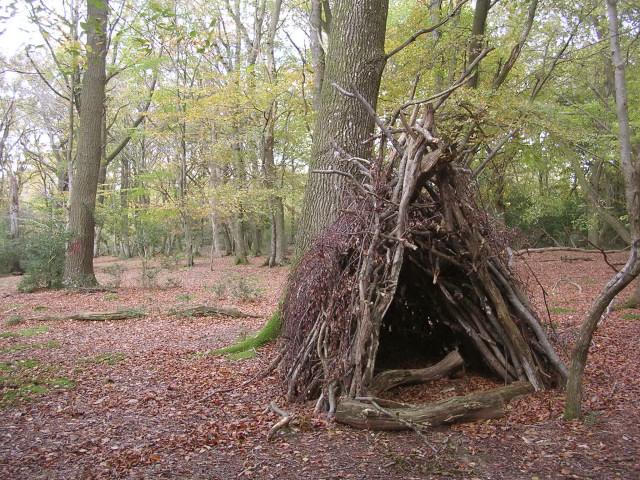
 Ever wondered what you would do if you were stuck without a tent or a tarp to protect yourself from the elements? Should you ever find yourself in the wild without appropriate shelter, here’s some good news: you can build your own. Within just a few short hours, you can build yourself what many refer to as a “debris hut” and have somewhere dry and warm to spend the night. What you first need to consider is…
Location, Location, Location
Before you start constructing your shelter, you have to think about where you’re going to place it. Some considerations that must be made include:
- Avoid building your shelter in any low spots (this is where water and other debris pool and gather)
- Look around and check for any dead standing trees or any other large objects that could potentially fall or roll onto your shelter
- Consider where the shelter is in relation to materials that you’ll need, as well as any food and water sources. You don’t want to build a shelter that’s too far away from the things you’ll need; otherwise you’ll waste too much time and energy gathering those materials every day
Build When The Time’s Right
No one wants to get stuck without a shelter overnight, so you should give yourself ample time to build it. Make sure that you give yourself at least two hours before sundown, though take into consideration the fact that it will get darker in the woods far sooner than before the sun goes down. Add on another two hours if you find yourself in such a situation.
Building The Shelter
When you’re walking through the woods and you know you’re coming close to a time when you’ll need to stop and build a shelter, start looking around for a strong ridgepole. Ideally you want the ridgepole to be double your height, though anything that’s at least a bit taller than when the tallest member of your party has their arms over their head will do. Look for things like a broken tree or a thick tree branch.
Next, it’s time to start hunting around for a ridgepole “rest.” Keep your eyes peeled for something that will allow you to rest your ridgepole against it, such as a boulder, the fork of a sturdy tree, or a stump. One end will be propped up against the “rest,” and the other end will be against the ground. The ridgepole and the “rest” should create a right-triangle shape with the ground.
Now on to the next part: the ribbing. The “ribbing” will act as a support for the materials that you’ll use to build the roof. Sturdy, straight branches make for great ribbing. Place the branches vertically along both sides of the ridgepole. Once complete, crawl inside of your shelter and see how well you fit. While you don’t want your shelter to be so small that you aren’t able to fit, you also don’t want it to be so large that it’ll be difficult for you to retain any heat inside. A good way of thinking about your shelter is to picture making yourself a sleeping bag. If it’s too big, then either break down the ridgepole and start again or look for another. If it’s too small, then it’s time to hunt down a new, longer ridgepole.
When the ridgepole and ribs are back in place, it’s time to start building onto the roof and build what many survivalists refer to as a “lattice.” Twigs and brush are a great “lattice,” acting as a net that will hold debris in place. Add these on top of the ribbing.
Now it’s time to start building the insulation for your shelter. All of the time that you’ve spent building up the shelter will be for naught if you don’t have enough insulation to keep you warm on a cold night. The ideal insulating material is dry, and its fibers will trap heat inside.
Suggested materials for insulating your shelter include:
- Dead pine needles
- Any grass that’s dry
- Broad leaves that are dry
If you can’t find dried-out varieties of these materials, then opt for any green plant material like hay or straw, or even yard clippings. Conifer boughs are also a great choice.
Continue to build up the insulating materials on the roof so that it’s at least two feet deep (or more, if you think that you may get wet). The more you have, the warmer you’ll be. Make sure that you’ll have enough materials to also seal off the door area so that you’ll be warm if the wind begins to blow.
Last but not least, it’s time to build the roof. This may be optional, depending on where you find yourself in this situation, but for the most part having a roof will help keep you warm and protected from the elements. As you have the ribbing in place, you can then begin to add leafy layers to the top of your roof. From time to time, add a layer of sticks on top of the leaves to help hold them in place, and then add another layer of leaves or a layer of the same insulating material that you’re using for the inside of your shelter (this will keep your shelter extremely warm and cozy throughout the night).
Additional Shelter Building Tips
If you have a tarp, garbage bags, or a rain jacket, by all means throw that on top of your shelter to help act as a roof.
It’s also not a bad idea to try and camouflage your shelter to throw off any intruders – both animal and human. Throw some old branches and bushes outside of the walls of your shelter to help make it appear natural and uninhabited.
If you’re carrying weapons, it’s a good idea to dig up a deep hold in your fort that’s next to where you plan on sleeping. Place your weapons inside and cover them with sticks to help conceal them.
Lastly, strongly consider building a ditch a few short feet in front of your fort. This will allow you to be able to run out of your fort and cover yourself should you find yourself in a situation where you need to draw your weapons, hide, or protect yourself.
©2012 Off the Grid News