 Print
Print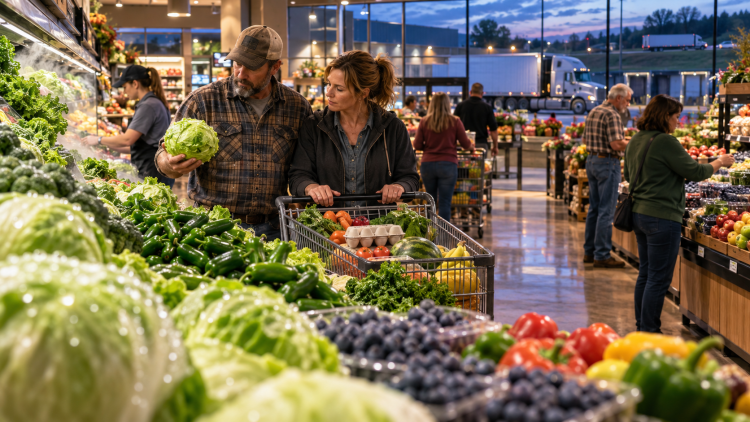
The FDA Is Juggling 16 Active Foodborne-Illness Investigations… And In Several Cases, Officials Still Don’t Know What Food Is Making People Sick
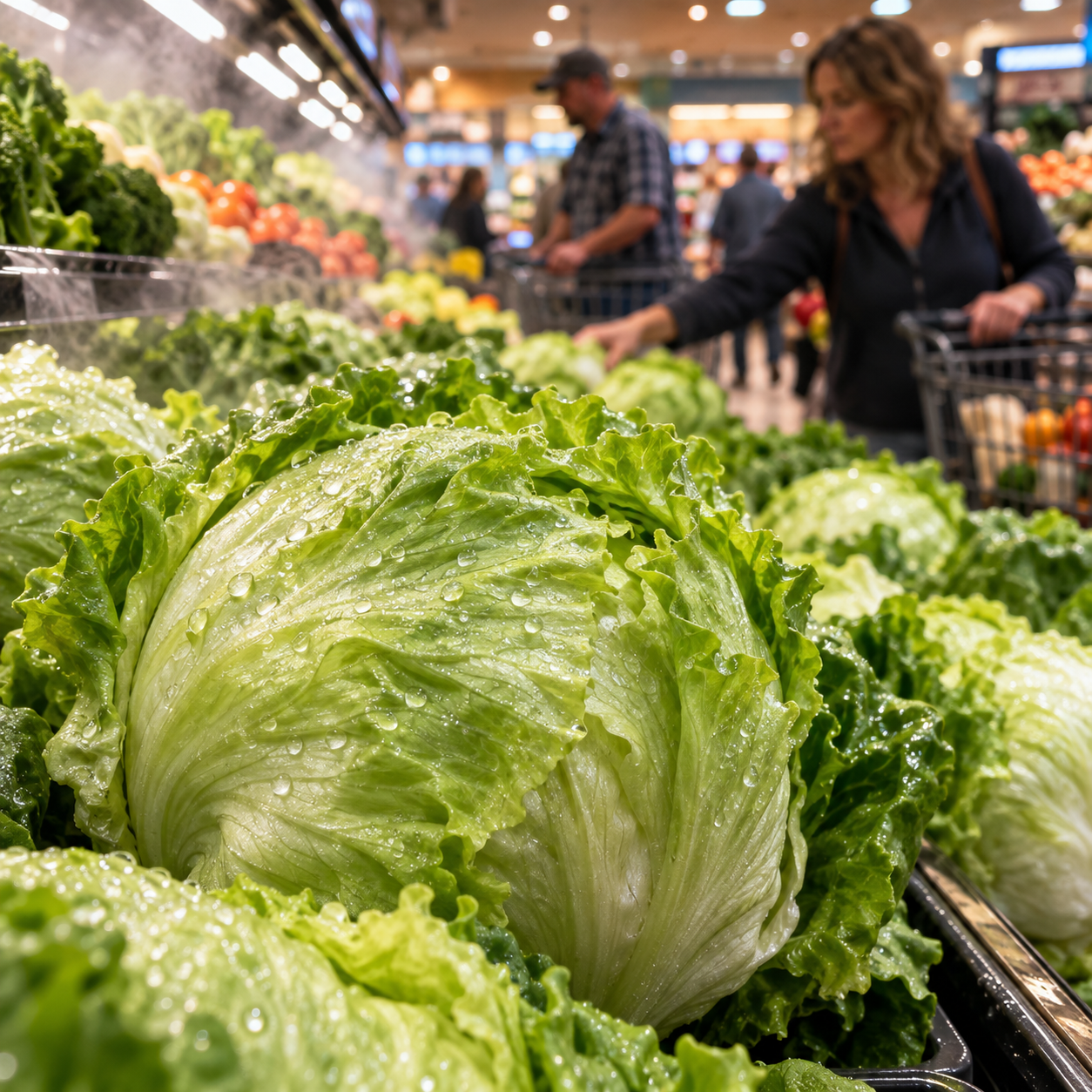
Walk through an American grocery store and everything looks remarkably clean. Lettuce sits beneath little clouds of refrigerated mist, blueberries come in clear plastic boxes, eggs are stacked neatly by the dozen and peppers shine under bright fluorescent lights.
You put everything in the cart, swipe the card and head home. And unless you’ve got a reason to think otherwise, you assume somebody somewhere has made sure all that food is safe.
Most of the time, it is.
But behind that ordinary grocery trip, federal investigators are currently working through an unsettling list of foodborne-illness investigations involving pathogens including Salmonella, E. coli, Listeria, Cyclospora and even botulism.
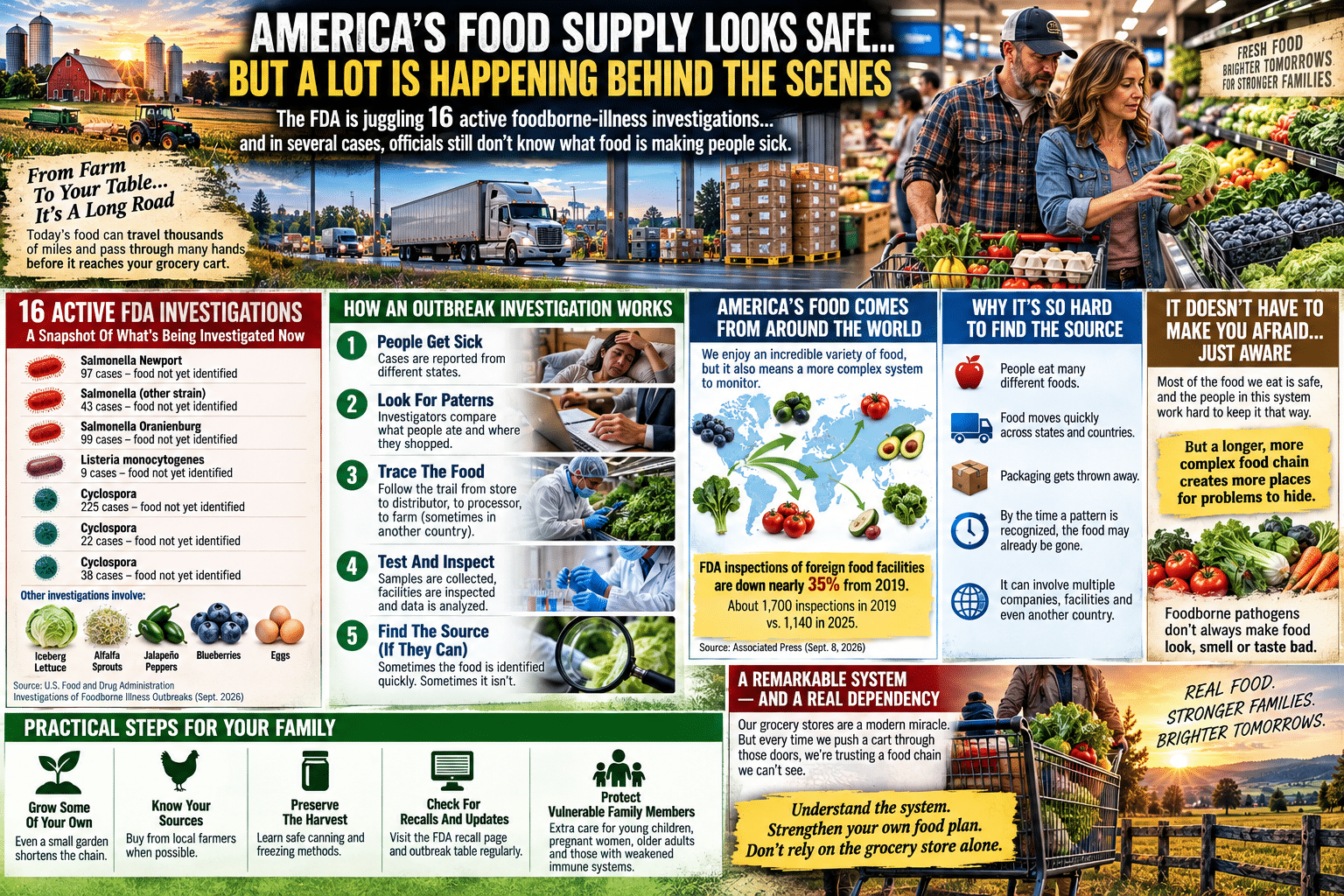
According to the FDA’s current foodborne-illness investigation table, 16 investigations are presently listed as active. A few involve outbreaks the FDA now considers ended but whose investigations remain active, while many others are still ongoing.
And here’s the part that ought to make anybody pushing a grocery cart pay attention: in several of those investigations, officials still haven’t publicly identified the food responsible.
They know people are getting sick. They just don’t always know what food is doing it yet.
Take A Look At What’s On The List
The FDA’s current table isn’t exactly pleasant reading. One active investigation involves Salmonella Newport and has reached 97 cases, yet the food source is still listed as “Not Yet Identified.”
Another Salmonella investigation has reached 43 cases without an identified product. A separate Salmonella Oranienburg investigation lists 99 cases, also without the food source publicly identified.
Then there’s Listeria monocytogenes. The FDA lists an ongoing investigation involving nine cases in which the product has not yet been identified, while other active investigations involve familiar grocery items such as alfalfa sprouts, jalapeño peppers, frozen blueberries and eggs.
And then there’s Cyclospora.
One active Cyclospora investigation has reached 225 cases, with the food source still unidentified. Another lists 22 cases without an identified product, another has reached 38 cases without an identified source, and a separate outbreak has been associated with iceberg lettuce.
Now, none of this means every bag of lettuce, carton of eggs or package of blueberries in America is dangerous. The FDA itself cautions that an investigation doesn’t automatically mean a particular food caused an outbreak; investigators use traceback, inspections and sampling both to identify suspects and to rule them out.
That’s an important distinction — and it’s also why the words appearing repeatedly on the government’s own table are so interesting:
“Not Yet Identified.”
Imagine Trying To Follow Those Breadcrumbs Backward
Think about how difficult one of these investigations can become. Somebody in Illinois gets sick, somebody in Ohio gets sick and then another person hundreds of miles away comes down with what eventually turns out to be the same strain.
At first, nobody necessarily knows they’re connected. Each person may have eaten dozens of different foods during the days before symptoms appeared, bought groceries at different stores and eaten meals at restaurants, church suppers, work or home.
Investigators have to start looking for patterns. What did these people eat? Where did they shop? Did they eat the same vegetable, the same brand or something that passed through the same distributor, packing facility or farm?
Then they start walking backward through the food chain — grocery store to distributor, distributor to processor or packing house, packing house to grower.
Sometimes the trail gets clear quickly. Sometimes investigators are trying to reconstruct dinner from two weeks ago after the packaging has been thrown away and the leftovers disappeared long ago.
Meanwhile, the food doesn’t sit patiently on the shelf waiting for investigators to finish.
People keep eating it.
The Longer The Food Chain, The Harder The Detective Work
Our grandparents often ate from a remarkably short food chain. Potatoes came from the garden, eggs came from the chicken house, tomatoes came from vines outside the kitchen window and beef might have come from a farmer or butcher everybody in the county knew.
Today an American family in northern Illinois can walk into a supermarket in February and buy strawberries, lettuce, blueberries, peppers and tropical fruit. That’s a remarkable achievement, but making it possible requires an enormous web of growers, processors, packing houses, importers, refrigerated trucks, warehouses and distribution centers.
A salad eaten at a kitchen table in Illinois may contain ingredients grown hundreds or even thousands of miles apart. When everything works, it’s one of the quiet miracles of modern logistics.
But when something goes wrong, tracing it backward can become a detective story involving several companies, multiple states and sometimes another country.
The problem is that food keeps moving while the detectives work. Produce spoils, packages get discarded, shipments get divided between distribution centers and consumers often can’t remember exactly which brand of lettuce they ate 10 days earlier.
That’s one reason an outbreak can grow before investigators finally locate the source.
Then There’s The Imported-Food Question
And this week, another uncomfortable piece of the food-safety puzzle surfaced.
A September 8 Associated Press investigation examined the Cyclospora outbreak associated with contaminated iceberg lettuce and the federal system responsible for overseeing foreign food facilities. According to AP’s review of FDA records, inspections of foreign food sites are down nearly 35 percent from 2019, the year before the COVID pandemic disrupted inspections.
The numbers behind that are remarkable. AP reports that FDA conducted about 1,700 foreign food inspections in 2019, but only 1,140 in fiscal 2025 — and even the 2019 high was less than one-tenth of the foreign-inspection target established under federal law.
There are reasons for that decline, including pandemic disruptions, retirements, staffing problems and the sheer scale of the job. FDA officials and former officials also point out that physical inspections aren’t the government’s only defense; regulators use importer inspections, border examinations, sampling and other tools to police a gigantic international food system.
Still, there’s no getting around the basic problem.
America eats food from all over the world, and somebody has to keep an eye on the places producing it.
The Lettuce Story Shows How Complicated This Gets
The current Cyclospora lettuce investigation gives us a pretty good example. Cyclospora is a microscopic parasite that can cause an intestinal illness called cyclosporiasis, with symptoms that can include watery diarrhea, stomach cramps, nausea, fatigue and loss of appetite.
Investigators eventually linked one outbreak to iceberg lettuce and traced the supply chain toward a Mexican growing operation. According to AP, FDA inspectors arrived at the implicated site in Guanajuato in mid-August, roughly a month after a July 17 recall was announced — and it was the FDA’s first visit to that site since 2019.
Mexican authorities have disputed some aspects of the investigation and said they haven’t found positive samples or other red flags at the farm, while FDA says its investigation remains ongoing. That’s important context, because traceback investigations aren’t the same thing as a courtroom verdict.
But the broader lesson remains.
When lettuce travels through an international chain before landing on somebody’s dinner plate in Illinois, figuring out exactly where contamination occurred can be a lot harder than walking out to the garden and inspecting the lettuce patch.
Your Local Grocery Store Isn’t The Enemy
This is where I don’t want this story wandering off into the weeds. Your grocery store isn’t poisoning America, farmers aren’t the enemy and neither are the truck drivers, produce workers, processors or teenager stocking lettuce at midnight.
Considering the staggering quantity of food Americans consume every day, most meals are eaten without anybody becoming sick. Modern agriculture and distribution feed hundreds of millions of people with a variety our great-grandparents couldn’t have imagined.
The lesson isn’t to become afraid of food.
The lesson is to understand the system you’re depending upon.
Because the average American household has outsourced almost every part of food production. Somebody else grows it, somebody else washes it, somebody else processes it, somebody else packages it and somebody else hauls it hundreds or thousands of miles.
Then somebody else tells us when something went wrong.
That’s Why A Garden Means More Than Cheap Tomatoes
This is where the Off-The-Grid crowd understands something that sometimes gets lost in discussions about food security. A backyard garden isn’t going to replace America’s food system, and neither will six laying hens scratching behind the barn.
But they shorten the chain.
Walk into your backyard and pick a tomato you grew yourself and you know where it came from. You know what you sprayed on it, what water touched it, when it was picked and who handled it.
Collect an egg from your own chicken house and there isn’t a 1,500-mile mystery between you and breakfast. Buy a quarter of beef from a farmer you know and suddenly “traceability” can mean having the farmer’s phone number.
That doesn’t make homegrown or local food magically safe. Manure can contaminate vegetables, dirty hands and equipment can spread pathogens, eggs and poultry can carry bacteria, and improperly preserved foods can become downright dangerous.
The CDC’s basic food-safety guidance still matters whether dinner came from a supermarket, farmers market or your own backyard: keep hands and surfaces clean, separate foods to avoid cross-contamination, cook foods properly and refrigerate perishable foods promptly.
Local isn’t magic. But knowing your food chain gives you control over more links in it.
Start With The Foods You Eat Most
Nobody needs to come home from the grocery store tomorrow, bulldoze the lawn and plant 14 acres of wheat. Instead, look at what your family eats every week and ask what portion you could reasonably grow, preserve or buy closer to home.
Maybe it’s tomatoes, potatoes, onions and green beans. Maybe it’s eggs from your own hens, apples from a nearby orchard or beef bought directly from somebody whose cattle you’ve driven past a hundred times.
Then shorten one chain.
Plant the tomatoes. Find the orchard. Freeze some garden produce, learn where your local butcher gets his meat or learn safe home-preservation methods using resources such as the USDA Complete Guide to Home Canning.
None of that means abandoning the grocery store. It simply means the grocery store isn’t responsible for supplying every bite of food your family eats.
That’s a very different kind of security.
Pay Attention Before Dinner
There’s another practical step that doesn’t require a garden, chicken coop or pressure canner: pay attention to food-safety notices.
The FDA maintains its foodborne outbreak investigation page, where consumers can see which outbreaks are being investigated, what foods have been identified and whether recalls, traceback investigations, inspections or sampling have begun.
That’s especially important if you’ve got vulnerable people at your table. According to the CDC, adults 65 and older, children under five, pregnant women and people with weakened immune systems face a greater risk of becoming seriously ill from foodborne infections.
And don’t assume contaminated food will announce itself when you open the refrigerator.
It may look perfectly normal.
Foodborne pathogens don’t necessarily make food smell rotten, look moldy or taste strange, which is why recalls and outbreak notices matter. The CDC says common food-poisoning symptoms include diarrhea, stomach pain or cramps, nausea, vomiting and fever, while severe warning signs can include bloody diarrhea, prolonged diarrhea, high fever, frequent vomiting and dehydration.
The Grocery Store Is A Modern Miracle — And A Modern Dependency
It’s easy to criticize America’s food system. It’s harder to stand inside a supermarket in February in northern Illinois, looking at oranges, strawberries, lettuce, bananas, beef, milk and seafood, and not admit the system accomplishes something extraordinary.
But convenience creates dependency. The farther our food chain stretches, the more farms, workers, facilities, trucks, warehouses, borders and computerized distribution systems can stand between the person eating dinner and the place where dinner began.
That’s why the FDA’s current list matters.
It doesn’t prove America’s food supply is collapsing, and it certainly doesn’t mean you should panic every time you walk through the produce aisle. What it does show is how complicated modern food safety has become when federal investigators can simultaneously be chasing Salmonella, E. coli, Listeria, Cyclospora and other threats through multiple food chains — with some sources still unidentified.
Every time we push a grocery cart through those automatic doors, we’re trusting farmers, processors, packers, inspectors, laboratories, distributors, truckers and retailers scattered across America and sometimes across the world.
Most of the time, that trust works remarkably well.
But every once in a while, the government’s own outbreak table reminds us why our grandparents’ old habit of keeping at least a little food close to home wasn’t such a crazy idea after all.
Grow something. Preserve something. Know a farmer or butcher. And know where at least part of your family’s food actually comes from.
You don’t have to abandon the grocery store.
Just make sure the grocery store isn’t the only food plan you’ve got.