 Print
Print
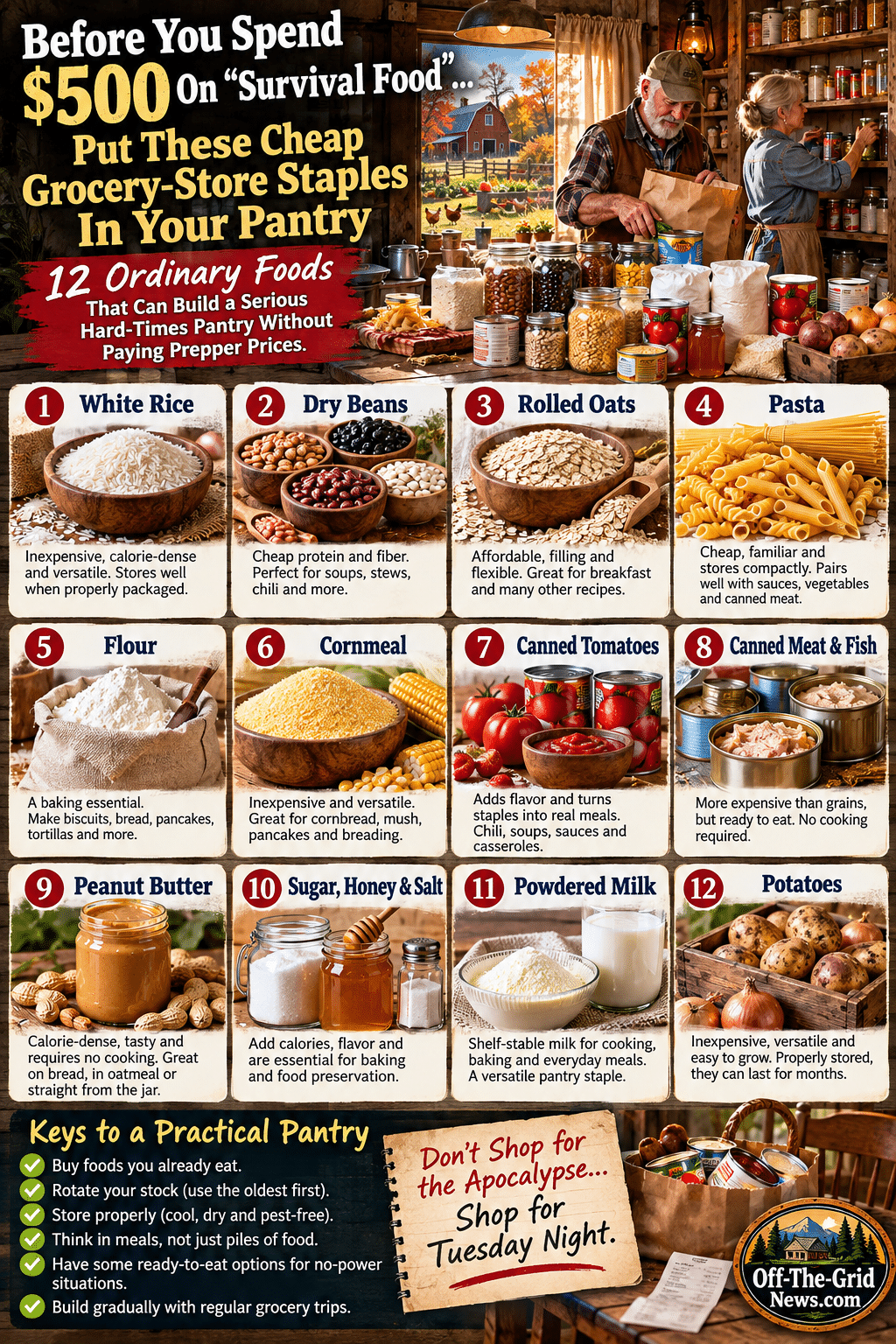
12 Ordinary Foods That Can Build A Serious Hard-Times Pantry Without Paying High Prepper Prices
Walk through the “emergency food” section of the internet and you can get the impression that preparing for hard times requires a second mortgage and a forklift. There are buckets, pouches, giant kits, tactical breakfasts and 25-year dinners with photographs of snow-covered mountains on the package.
Some of that stuff has its place, especially if you’re looking for lightweight meals or very long-term emergency storage. But before you spend $500 filling the basement with food you’ve never eaten, here’s a radical idea:
Walk through the grocery store.
Some of the most useful preparedness foods on earth are sitting quietly on ordinary shelves wearing boring labels and boring prices. Your grandmother would recognize most of them immediately, and that’s not a coincidence.
Cheap Food Was Survival Food Before Somebody Invented The Word “Prepper”
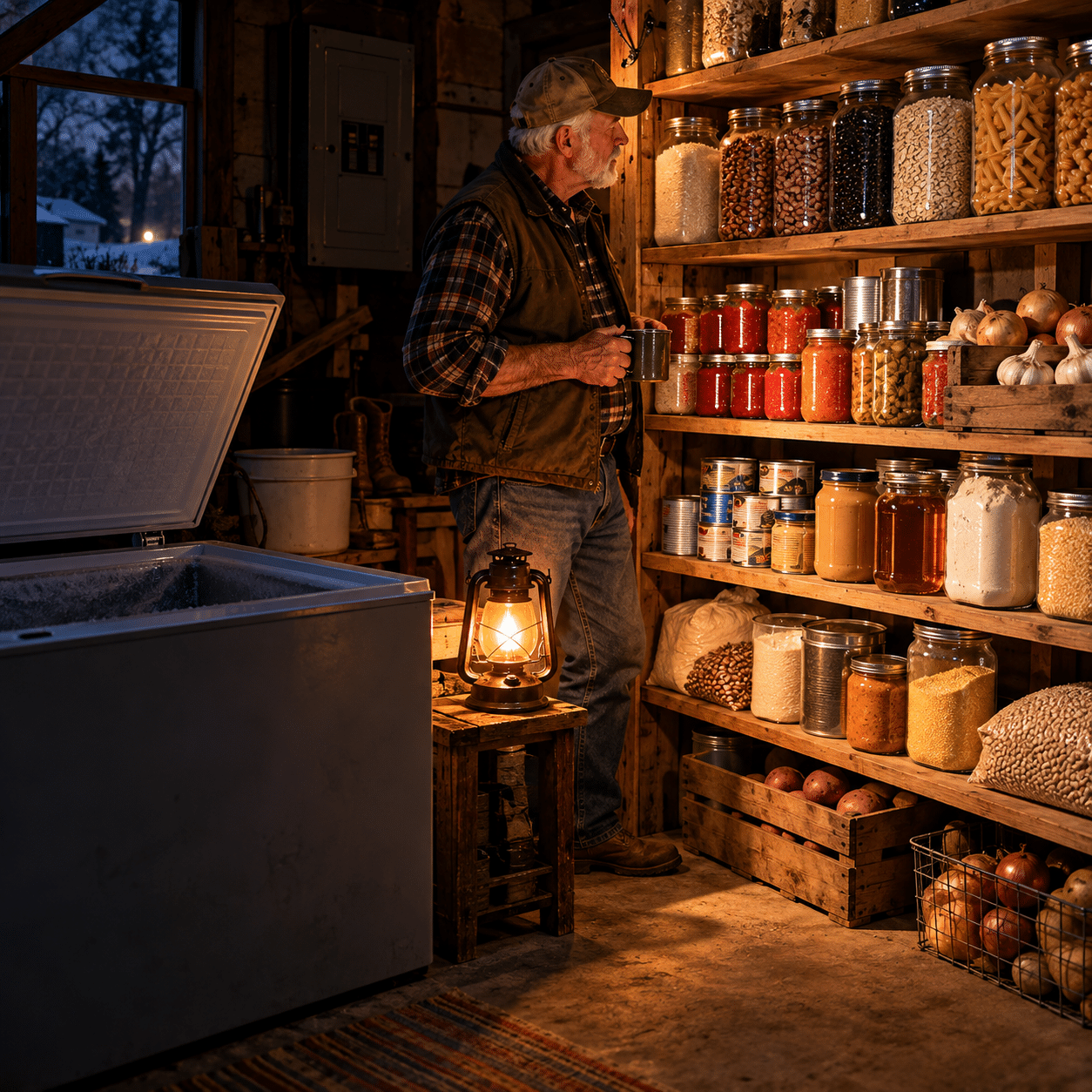
For most of human history, ordinary families couldn’t afford to waste food. They learned which foods stretched supper, which ones stored reasonably well and which ones could help carry a household through winter, crop failure or simply a month when money got tight.
That’s why traditional pantries leaned so heavily on grains, beans, potatoes, salt, sugar and preserved foods. They weren’t survival products; they were food.
Modern preparedness sometimes reverses that logic. We start by asking, “What survival product should I buy?” instead of asking, “What inexpensive food does my family already eat that I could simply keep more of?”
That second question can save you a pile of money.
And it can build a pantry you’ll actually use.
1. White Rice: The Boring King Of The Bucket
Rice isn’t glamorous, but hunger has remarkably little interest in glamour. White rice is inexpensive, calorie-dense, familiar and flexible enough to show up beside beans, underneath meat, inside casseroles or even at breakfast with milk, cinnamon and sugar.
For long-term storage, however, understand the difference between white rice and brown rice. Utah State University Extension notes that polished white rice can be suited to longer storage when properly packaged, while brown rice has a much shorter storage life because of the oils remaining in the grain. Its broader home food-storage guidance also emphasizes the importance of controlling moisture, temperature and pests.
That doesn’t mean you need 400 pounds of rice because somebody on YouTube owns 400 pounds of rice. It means rice can make a very inexpensive foundation when your family already knows how to cook and eat it.
Just remember the lesson from our pantry-fat discussion:
Rice is a foundation. It isn’t the whole house.
2. Dry Beans: Cheap Protein That Waits For You
Beans have been riding shotgun beside grains for centuries for good reason. They’re inexpensive, provide protein and fiber, and a few extra bags don’t require anything resembling a “survival food budget.”
Pinto beans, black beans, navy beans, kidney beans, chickpeas and lentils can become soups, stews, chili, casseroles and side dishes. Pair them with rice, cornbread or tortillas and suddenly “survival food” starts looking suspiciously like supper.
There is a catch. Dry beans require water and cooking energy, and older beans can take considerably longer to soften.
That’s why the smart pantry doesn’t merely ask, “How many pounds of beans do I own?” It asks, “How do these beans become supper when the electricity is off?”
That might mean a propane stove, wood cookstove, outdoor cooker or another safe cooking method appropriate to your household. Whatever the answer, test it before you’re hungry.
3. Rolled Oats: Breakfast Without A Marketing Department
Oatmeal may be one of the least exciting foods ever invented, and that’s part of its charm. Oats are inexpensive, familiar and easy to dress up with brown sugar, honey, cinnamon, dried fruit, peanut butter, nuts or powdered milk.
They’re also generally quick and simple to prepare compared with many whole grains and dry beans. That’s worth considering because every minute of cooking can represent fuel when normal utilities aren’t available.
And don’t mentally lock oats inside the breakfast cabinet. They can go into bread, cookies, granola, meatloaf and other recipes, giving one cheap ingredient several different jobs.
A food that does three jobs deserves shelf space.
4. Pasta: Because Hard Times Don’t Cancel Spaghetti
Pasta is another cheap carbohydrate that stores compactly and turns into something almost everybody recognizes as a meal. That’s more important than it sounds.
During stressful situations, familiar food can matter. A plate of spaghetti with canned tomato sauce may not impress the fellow selling $300 emergency-food tubs, but try serving it to four hungry grandchildren after they’ve spent the afternoon hauling firewood and watch how quickly it disappears.
Dry pasta still requires water and cooking fuel, so account for both. But as part of a rotating pantry, it’s cheap, easy to find and simple to pair with shelf-stable sauces, canned meat, vegetables and seasonings.
The point isn’t that pasta lasts forever.
The point is that you’ll probably eat it long before you have to find out.
5. Flour—But Only If You Actually Know What To Do With It
A fifty-pound bag of flour isn’t preparedness if nobody in the house knows what to do with it. It’s just a very large bag of potential biscuits.
If you bake, however, flour is a workhorse. Biscuits, pancakes, bread, gravy, dumplings, tortillas and dozens of other foods can begin with one relatively inexpensive ingredient.
The trick is rotation and proper storage. Rather than buying a mountain of flour and hoping it remains pristine for decades, keep a working supply, protect it from moisture and pests, and continually use the oldest first.
If you grind grain yourself, storing whole wheat berries can offer another option because you’re storing the intact grain rather than depending entirely upon pre-ground flour. Utah State University’s long-term food-storage guidance discusses wheat storage, packaging and the importance of cool, dry conditions.
But don’t overlook the bigger lesson.
Store ingredients you know how to turn into food.
6. Cornmeal: Your Great-Grandparents Were Onto Something
Cornmeal doesn’t get nearly enough attention in preparedness circles. Cornbread beside beans can turn two dirt-cheap ingredients into a recognizable meal, while cornmeal can also become mush, pancakes, breading and other simple foods.
As with flour and other milled grains, however, storage conditions matter. Whole-grain products generally retain more natural oils than more highly refined products, which can affect how long quality holds.
That leads us back to the same plainspoken rule: buy what you actually cook and cook what you buy. A rotating pantry beats a basement museum almost every time.
7. Canned Tomatoes: The Pantry’s Flavor Department
Rice is cheap and beans are cheap. Rice and beans for the nineteenth time, however, can make a grown man start negotiating with the dog.
That’s where canned tomatoes, tomato paste and tomato sauce earn their keep. They can turn dry staples into chili, soup, pasta sauce, casseroles and dozens of other meals without adding much complexity.
The USDA explains that commercially canned foods can remain safe for long periods when the containers remain intact and properly stored, although quality declines over time. Its shelf-stable food guidance gives general best-quality guidance of roughly 12 to 18 months for high-acid canned foods such as tomatoes and fruit, compared with 2 to 5 years for many low-acid canned foods.
That doesn’t mean you should ignore dates and leave cans underneath the stairs until the grandchildren discover them in 2047. Inspect containers, store them properly and rotate what you buy.
The easiest food to rotate is food you already like eating.
8. Canned Meat And Fish: More Expensive—But They Solve A Different Problem
Tuna, chicken, salmon, sardines and other canned proteins generally cost more than rice and beans, but they solve a problem dry staples don’t.
You can open them and eat.
There’s no overnight soaking, hours of simmering or freezer humming in the garage. That makes ready-to-eat protein particularly useful in a pantry designed around different kinds of emergencies rather than one imaginary doomsday scenario.
Maybe one outage leaves you with plenty of cooking fuel. Another might leave you rationing every ounce of propane.
A resilient pantry gives you options.
9. Peanut Butter: The Jar That Punches Above Its Weight
Peanut butter deserves a special spot because it combines several things preparedness food should do well. It’s calorie-dense, provides fat and protein, tastes familiar and requires exactly zero cooking.
Put it on crackers or bread, stir it into oatmeal or, if the day has gone particularly sideways, eat it straight from the spoon. Utah State University Extension includes peanut butter among foods worth considering for portable emergency food storage, where foods requiring little water, refrigeration or preparation have obvious advantages.
Peanut butter isn’t a 25-year food.
It doesn’t need to be.
Keep several jars if your family uses it, eat the oldest and replace what you use. That’s food storage without requiring a bunker, spreadsheet or Ph.D. in expiration dates.
10. Sugar, Honey And Salt: The Little Things That Make The Big Things Work
Nobody is suggesting a family live on sugar, but pretending sweeteners have no place in a hard-times pantry doesn’t make much sense either. Sugar adds calories, makes plain foods more palatable and has legitimate roles in baking and certain food-preservation methods.
Salt may be even easier to overlook because we take it for granted. Besides seasoning, salt has specific uses in food preparation and preservation; the National Center for Home Food Preservation is an excellent resource when you’re moving beyond ordinary pantry storage into tested home-preservation methods.
And that’s the larger point. Your big buckets aren’t very useful if you’ve forgotten all the little ingredients required to turn what’s inside them into food your family wants to eat.
Try making biscuits without the little stuff.
You’ll understand quickly.
11. Powdered Milk: The Cow That Fits On A Shelf
Powdered milk isn’t going to fool anybody standing beside a Jersey cow, and that’s not the point. For households that regularly use milk in cooking, powdered milk can provide a shelf-stable ingredient for oatmeal, bread, pancakes, sauces and other foods.
Follow the package’s storage instructions and buy quantities you can realistically rotate. Different powdered-milk products and packaging methods can have very different expected storage lives, so this is one category where reading the manufacturer’s directions beats relying on some guy’s survival chart from 1998.
Preparedness doesn’t require pretending food never ages.
It requires staying ahead of it.
12. Potatoes: The Food Storage System With Dirt On It
Now let’s leave the grocery-store shelf for a minute. If you’ve got suitable growing space and storage conditions, potatoes deserve serious attention because they’re familiar, versatile and capable of producing a substantial amount of food.
The University of Minnesota Extension’s potato-growing guidance covers planting, growing and harvesting, while university extension programs generally recommend cool, dark, humid but well-ventilated conditions for longer storage after proper curing. Exact storage conditions matter because warmth, light and damage can shorten storage life or cause undesirable changes.
But potatoes illustrate something bigger than potatoes.
The cheapest survival food may eventually be the food that reproduces itself.
Plant potatoes and harvest more potatoes. Grow suitable dry beans and save seed; grow winter squash, onions and garlic; plant perennial fruit and nut crops where climate and property allow.
Suddenly the pantry isn’t merely a warehouse.
It’s connected to the land.
The Secret Isn’t Finding Food That Lasts Forever
This is where preparedness advice sometimes wanders into the weeds. People become obsessed with finding foods they can buy once, hide downstairs and rediscover 25 years later.
There’s certainly a place for deep storage, but it doesn’t have to describe your entire pantry. A family that continually eats and replaces stored food has something better than a basement time capsule.
It has a working inventory.
Eat the oldest pasta and replace it. Use the peanut butter and replace it; cook the canned tomatoes, open the oatmeal and work through the rice.
Now your pantry has movement.
And food that moves through the pantry doesn’t have much opportunity to become an archaeological artifact.
Build Meals, Not Piles
This may be the most important lesson in the whole article. Don’t store 200 pounds of rice simply because somebody on the internet told you rice lasts a long time; ask what you’re going to put with the rice.
Don’t store 100 pounds of beans without asking where the cooking water and fuel will come from. Don’t stock flour without salt, leavening, fat and the knowledge necessary to turn it into something people actually want to eat.
Think in meals instead: rice, beans, tomatoes and seasoning; oats, powdered milk, peanut butter and honey; pasta, tomato sauce and canned meat; flour, shortening, salt and baking powder; potatoes, onions and canned meat.
Now you’ve stopped collecting ingredients.
You’re storing suppers.
Try The $100 Grocery Cart Test
Here’s something worth trying the next time you shop. Set aside $100—or whatever amount comfortably fits your budget—and walk through an ordinary grocery store looking for foods that meet four simple requirements:
Cheap. Shelf-stable. Familiar. Useful.
Don’t shop for the apocalypse. Shop for Tuesday night, except buy enough that several Tuesday nights could happen without another trip to town.
Choose foods your family already eats and quantities that fit your actual storage space and rotation habits. When you get home, put the new groceries behind the older ones and keep eating from the front.
Do that gradually and something interesting happens. Instead of writing one enormous preparedness check, you’ve quietly built a cushion of food your household knows how to cook.
That’s preparedness hiding inside ordinary grocery shopping.
Now Add The No-Power Test
Before congratulating yourself, run one more test. Imagine the power is off, the refrigerator isn’t helping and you’re trying to conserve both water and cooking fuel.
Which foods can you eat immediately? Which require ten minutes of cooking, and which require hours?
This is where canned meat, peanut butter, crackers and other ready-to-eat foods earn their place beside rice, beans and wheat. Ready.gov’s emergency-food guidance specifically recommends considering nonperishable foods that don’t require refrigeration, cooking, water or special preparation.
You don’t need every food to pass that test.
You need some foods to pass it.
That’s redundancy.
Don’t Let Cheap Become Stupid
One final warning: cheap food isn’t automatically good preparedness food. Fifty pounds of something nobody in your family eats isn’t a bargain, no matter how spectacular the price per pound looked.
Neither is food that requires more water or cooking fuel than your emergency setup can realistically provide. And poor storage conditions—heat, moisture, insects, rodents or damaged packaging—can turn yesterday’s bargain into tomorrow’s chicken feed.
So protect what you store, inspect it and rotate it. Keep enough variety that one missing ingredient doesn’t cripple the entire pantry.
Most importantly, don’t buy someone else’s emergency menu.
Build yours.
Your Grandmother’s Pantry Had The Right Idea
The old pantry wasn’t terribly complicated. There were staples, canned foods, baking ingredients and foods the family actually ate; food came in, food went out and another harvest or trip to town replenished what had been used.
Maybe we’ve made preparedness more complicated than it needs to be. You don’t necessarily need a pallet of freeze-dried stroganoff—you may need another bag of rice, a dozen cans of tomatoes, some beans, oatmeal, peanut butter, pasta and salt.
Add enough ordinary food that a broken-down truck, winter storm, power outage or expensive month doesn’t immediately send you racing to the grocery store. Then add the water, fuel and cooking methods necessary to turn those ingredients into meals.
Because the best survival pantry isn’t the one with the fanciest labels or the biggest stack of buckets.
It’s the one that keeps putting supper on the table when everything else gets difficult.