 Print
Print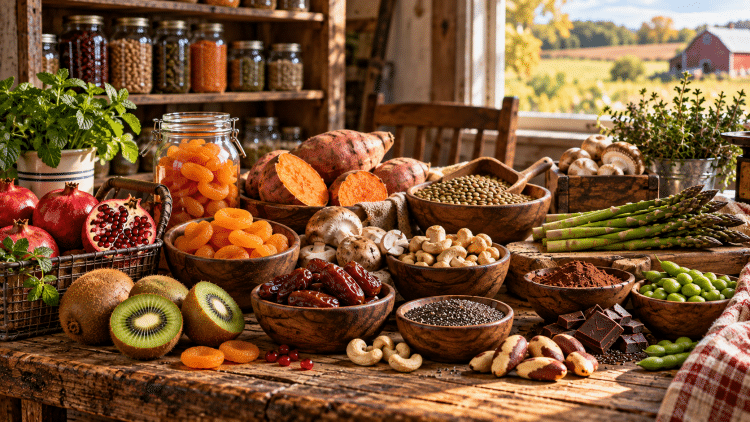
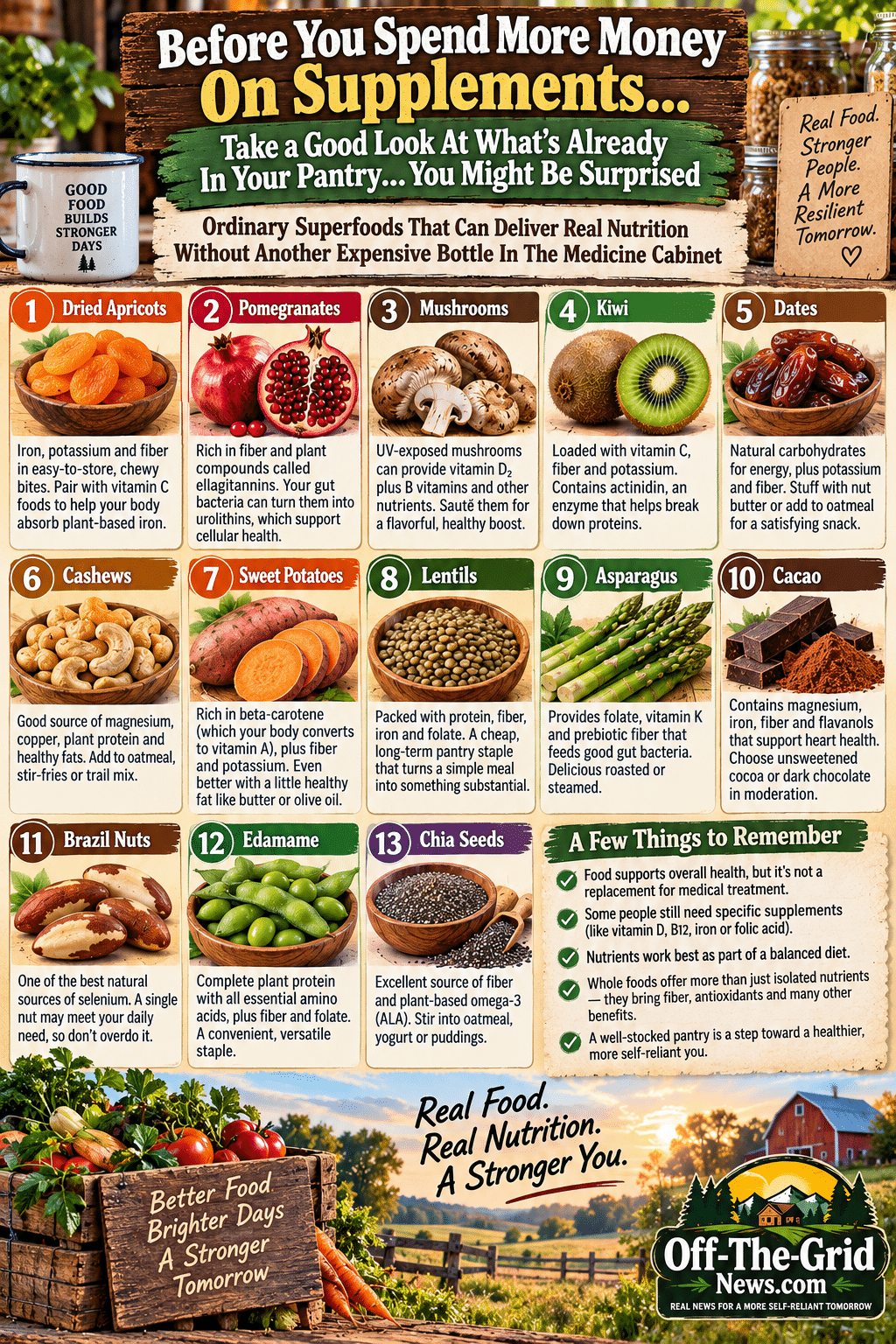
Ordinary Superfoods That Can Deliver Real Nutrition Without Another Expensive Bottle In The Medicine Cabinet
Somewhere between the pharmacy aisle and the supper table, Americans forgot something our grandparents knew without ever reading a nutrition label. Good food does more than fill an empty belly. It helps keep the whole operation running.
And if you’ve ever spent a Saturday splitting firewood, wrestling a stubborn calf, hauling feed, or pulling weeds under a July sun, you know your body isn’t some fancy machine that runs on advertising promises. It needs real fuel, useful nutrients, and a little common sense.
Yet walk into almost any drugstore today, and you’ll find shelf after shelf of plastic bottles promising everything from stronger bones and better digestion to sharper thinking and more energy. There’s a capsule for your joints, a powder for your muscles, and another little bottle that’s supposed to help you get a good night’s sleep.
Before you know it, you’ve got $150 worth of supplements sitting beside the coffee maker.
Now, don’t misunderstand me. Some supplements are genuinely useful, and certain people need them because of medical conditions, medications, dietary restrictions, or diagnosed deficiencies. But somewhere along the way, we’ve started treating ordinary food like an afterthought and expensive capsules like the main event.
That’s a little backward, isn’t it?
Out here in the country, we appreciate things that earn their keep. A good shovel, a reliable tractor, a sharp pocketknife, and a well-stocked pantry are worth more than a barn full of shiny gadgets that don’t accomplish much.
And when it comes to feeding ourselves, the same principle applies. In fact, the NIH Office of Dietary Supplements provides nutrient recommendations that can help you understand what your body actually needs, rather than what the latest advertisement says you need.
So before you reach for another bottle promising better health, let’s take a little walk through the pantry, garden, and produce aisle. You might be surprised by what you find.
The Little Orange Fruit That Works Harder Than It Looks

Ever notice how the simplest things sometimes turn out to be the most useful? Take dried apricots, for example. They’re small, wrinkled, chewy little things that wouldn’t win a beauty contest against a fresh peach.
But those humble orange nuggets bring potassium, fiber, and some iron to the table. They’re easy to store, simple to pack, and handy when you’re halfway across the back forty and your stomach starts complaining.
Keep a jar beside the oatmeal, toss a few into homemade trail mix, or slip a handful into your coat pocket before heading out to check fences. And here’s a useful little trick that makes those apricots even more interesting.
The iron in apricots is plant-based, which means your body doesn’t absorb it as easily as the iron found in meat. But eating them alongside vitamin C-rich foods, such as citrus fruit or peppers, can improve absorption. The
NIH explains this relationship in its iron fact sheet.
Of course, a handful of apricots won’t correct diagnosed iron deficiency. But they’re another small way to put useful nutrients into everyday meals, and that’s exactly what we’re after.
And speaking of fruit, the next one looks like somebody packed a treasure chest inside a baseball.
The Ruby-Red Treasure Hiding Behind a Tough Skin
Cut open a pomegranate, and you’ll understand why people have treasured these things for centuries. Inside that tough, leathery shell are hundreds of brilliant red kernels that look like tiny rubies scattered across a cutting board.
But their real value isn’t their appearance. Pomegranates contain fiber and natural plant compounds called ellagitannins, which can undergo some interesting changes once they reach your digestive tract.
Certain gut bacteria can transform those compounds into substances called urolithins. One of those, urolithin A, has attracted scientific attention for its possible role in cellular health, including how cells maintain and recycle damaged components.
In fact, research published in scientific journals has examined urolithin A and its effects on mitochondrial function. That’s the machinery inside our cells that helps produce usable energy.
But here’s where the advertising can get ahead of the evidence. Not everybody’s gut bacteria make the same amount of urolithin A. Some people produce more, others produce very little, and eating a pomegranate isn’t equivalent to swallowing a measured supplement dose.
Still, there’s plenty to appreciate about the fruit itself. Try removing the kernels in a bowl of water to keep the red juice from decorating your kitchen walls, then sprinkle them over a salad, stir them into yogurt, or eat them by the spoonful.
And while we’re talking about unusual natural chemistry, there’s another food that can do something rather remarkable when sunlight hits it.
The Mushroom Trick Most Folks Never Learned
Here’s something you probably didn’t learn while gathering mushrooms along the edge of a woodlot. Certain mushrooms can actually produce vitamin D when exposed to ultraviolet light, thanks to a substance called ergosterol.
When ultraviolet light reaches ergosterol, some of it can be converted into vitamin D₂. It’s a fascinating little piece of natural chemistry, especially when you consider that most of us associate vitamin D production with sunlight hitting human skin.
But before you start treating every mushroom in the grocery store like a vitamin D supplement, there’s a catch. Most ordinary commercially grown mushrooms haven’t received enough ultraviolet exposure to contain substantial amounts of vitamin D.
If that’s what you’re looking for, check the package for mushrooms specifically labeled UV-exposed or vitamin D-enhanced. And remember, vitamin D₂ isn’t identical to vitamin D₃, the form commonly found in many supplements.
The NIH vitamin D fact sheet explains the different forms of vitamin D and their dietary sources. It’s worth understanding those differences before assuming every mushroom delivers the same nutritional benefits.
Still, mushrooms have plenty going for them without pretending they’re miracle medicine. Sauté them in a little butter, toss them into scrambled eggs, or add them to a skillet of onions and leftover roast beef.
They bring flavor, B vitamins, and other nutrients to meals that might otherwise be pretty ordinary. And that’s a good enough reason to keep them in the kitchen.
Now, let’s move from the skillet to a little green fruit that carries more nutritional punch than its size suggests.
The Fuzzy Little Fruit That Helps Your Body Use Iron
A kiwi doesn’t look like much from the outside. It’s brown, fuzzy, and about as exciting as a small potato. But slice one open, and suddenly you’ve got a bright green fruit loaded with vitamin C, along with fiber and potassium.
And that vitamin C does something especially useful. It helps your body absorb non-heme iron, the kind found in beans, lentils, nuts, seeds, and many vegetables.
So if you’re eating more food from the garden and fewer expensive convenience products, kiwi can be a handy addition to the menu. There’s another interesting feature, too.
Kiwi contains an enzyme called actinidin, which helps break down certain proteins.
Researchers have studied actinidin’s effects on protein digestion, although that doesn’t mean eating kiwi will cure digestive disorders.
The easiest way to enjoy one is to slice it in half and scoop out the flesh with a spoon. Some folks even eat the washed skin for additional fiber, although personally, I’d rather save the fuzzy texture for the outside of a peach.
But when you’re headed out to work and need something that travels better than a ripe kiwi, there’s another fruit worth remembering.
Nature’s Little Energy Bars Don’t Come in Plastic Wrappers
Ever find yourself halfway through a long morning of chores with your stomach growling louder than the tractor? That’s when a few dates can come in mighty handy.
Dates are naturally rich in carbohydrates, which provide energy your body can use. They also contribute potassium, fiber, and smaller amounts of other minerals.
And unlike some expensive energy bars, you don’t need a chemistry degree to understand what’s inside them.
A date is a date.
Stuff a couple with peanut butter or almond butter, and you’ve got a satisfying snack that combines carbohydrates with fat and protein. Or chop them into oatmeal when you want a little sweetness without dumping another spoonful of refined sugar into the bowl.
Now, dates are still concentrated sources of sugar and calories, so portion size matters. And if you’ve been sweating heavily while stacking hay in August, dates alone won’t replace the fluids and sodium you’ve lost.
The CDC’s guidance on heat and hydration is a useful reminder that heavy physical work in hot weather requires attention to fluids and, under some circumstances, electrolyte replacement.
But as ordinary food for an active day, dates are pretty useful. And they’re even better when paired with a handful of nuts.
The Humble Cashew Has More Going for It Than Salt and Crunch
Cashews usually show up at Christmas parties, ballgames, or in those little mixed-nut cans where everybody picks out the good stuff first. But they’re worth keeping around the rest of the year.
Cashews provide magnesium, copper, unsaturated fats, and plant protein. Those nutrients help support ordinary functions throughout the body, from energy metabolism to maintaining healthy tissues.
And here’s the nice part. You don’t have to turn them into some elaborate health-food recipe or spend an afternoon watching somebody on the internet explain how to prepare them.
Throw a handful into homemade trail mix, stir them into oatmeal, or add them to a skillet of vegetables and chicken. They’re easy, filling, and useful.
The NIH magnesium fact sheet explains why magnesium matters for muscle and nerve function, blood sugar regulation, and other normal body processes.
Of course, don’t expect a handful of cashews to magically cure insomnia, stop every muscle cramp, or fix a poor diet. That’s the sort of exaggerated promise we’re trying to get away from.
Their real advantage is that they deliver nutrition without much fuss. But if you’d rather grow some of your own food than buy another bag from the store, the next one belongs in the garden.
Orange Gold: The Crop That Earns Its Place in the Root Cellar
There’s something mighty satisfying about digging a sweet potato out of the soil. It doesn’t look like much covered in dirt, but roast that thing until the skin wrinkles, split it open, and watch the steam rise from that bright orange flesh.
Now that’s supper.
Orange-fleshed sweet potatoes are rich in beta-carotene, a plant pigment your body can convert into vitamin A. And vitamin A matters for normal vision, immune function, and maintaining healthy tissues.
The NIH vitamin A fact sheet explains how the body uses carotenoids from foods and why vitamin A is essential to several important functions.
Sweet potatoes also provide fiber and potassium, making them more than just a tasty side dish. And here’s another little kitchen trick worth knowing.
Because beta-carotene is fat-soluble, eating sweet potatoes with a modest amount of butter, olive oil, or another fat can help your body absorb their carotenoids.
Roast them in wedges, mash them beside a pork chop, or cut them into chunks for a hearty fall stew. And if you’re a homesteader looking for crops that can contribute to winter meals, properly cured and stored sweet potatoes deserve serious consideration.
But a good pantry needs more than roots and vegetables. It needs something that can turn a pot of water into a satisfying supper.
The Cheap Little Pantry Staple That Can Rescue Supper
If you’ve ever stared into a nearly empty pantry wondering what to cook, you already know the value of dried beans and lentils. They’re the kind of humble staples that can make the difference between a thin supper and a meal that keeps everybody satisfied.
Lentils are especially handy because they cook relatively quickly, don’t ordinarily require soaking, and can turn a thin soup into something that’ll stick to your ribs.
They provide plant protein, fiber, iron, and folate. And unlike that expensive supplement bottle, a bag of lentils can actually feed the family.
Simmer them with onions, garlic, cumin, and a little broth. Add diced tomatoes or peppers, and you’ve got a hearty meal that also includes vitamin C to help your body absorb some of the lentils’ plant-based iron.
There’s an important distinction worth mentioning here, though. Lentils naturally contain folate, but that doesn’t make them a replacement for folic acid supplementation when it’s specifically recommended.
The CDC recommends 400 micrograms of folic acid daily
for people capable of becoming pregnant because adequate folic acid helps prevent certain serious birth defects.
And the U.S. Preventive Services Task Force independently recommends daily folic acid supplementation for people planning or capable of pregnancy.
Food and supplements sometimes serve different purposes. That’s precisely why understanding what you’re eating matters more than blindly replacing one product with another.
Now, let’s head back out to the garden for a spring crop that’s worth waiting through winter to harvest.
The First Green Spears of Spring Bring More Than Good Flavor
After a long northern winter, there’s something almost magical about seeing asparagus poke through the soil. One week the garden looks half asleep, and the next, those green spears are pushing upward like they’re determined to announce that spring has finally arrived.
And asparagus earns its place on the supper table. It provides folate, vitamin K, and fiber, including certain fermentable carbohydrates that bacteria in your digestive system can use.
That’s one reason asparagus is often described as a prebiotic food. Prebiotics are substances that certain beneficial microorganisms can use, and researchers continue studying how these dietary compounds influence the gut.
The NIH’s National Center for Complementary and Integrative Health provides useful background on the gut microbiome and the microorganisms involved in digestive health.
But here’s a detail the advertisements sometimes skip. Those same fermentable fibers can cause bloating or gas in people with sensitive digestive systems, so more isn’t automatically better.
Still, roasted asparagus with olive oil, a little salt, and a squeeze of lemon is hard to beat. Serve it beside eggs, chicken, or a bowl of beans, and you’ve got another ordinary food earning its place at the table.
And when you’re ready for something a little richer, there’s another familiar ingredient that deserves a second look.
Yes, Even the Chocolate Cupboard Has Something Useful
Now here’s a pantry discovery that shouldn’t require much convincing. Cacao, the bean behind chocolate, naturally contains magnesium, iron, fiber, and plant compounds called flavanols.
Those flavanols have attracted research interest because of their effects on blood vessels and other aspects of cardiovascular function. Scientists have investigated cocoa flavanols in clinical studies, although the findings don’t justify treating ordinary chocolate like medicine.
You can explore some of that published research on cocoa flavanols and cardiovascular health.
But before you decide a candy bar counts as health food, there’s something you ought to know. The amount of flavanols in cocoa products varies considerably depending on how they’re processed.
A package labeled “raw” doesn’t automatically contain more beneficial compounds than another product. And a chocolate bar loaded with sugar and added fat isn’t the same thing as unsweetened cocoa powder.
So keep things simple. Stir unsweetened cocoa into oatmeal, add a little to a smoothie, or sprinkle cacao nibs over plain yogurt.
You get some flavor and useful nutrients without pretending dessert is a prescription. And if you’re watching your grocery budget, that kind of practical thinking goes a long way.
But the next food comes with a warning, because sometimes a little nutrition really does go a very long way.
The Nut You Shouldn’t Eat by the Handful
Brazil nuts are one of those foods that prove an important point. More isn’t always better, especially when you’re dealing with nutrients the body needs in very small amounts.
These large nuts contain selenium, a mineral your body needs for normal thyroid function, reproduction, and antioxidant defenses. But Brazil nuts can contain extraordinarily high amounts of it.
According to the National Institutes of Health, selenium concentrations vary depending on where the nuts were grown, and even a single Brazil nut may provide more than an adult’s recommended daily intake.
That means Brazil nuts aren’t something to mindlessly eat by the fistful while watching television. Too much selenium over time can cause serious problems, including brittle nails, hair loss, digestive complaints, and even nerve damage.
The NIH consumer guide to selenium explains the risks of excessive intake, particularly when people combine selenium-rich foods with supplements.
So if you’re already taking a supplement containing selenium, pay attention before adding Brazil nuts to your daily routine. Store them somewhere cool to help keep their natural oils from turning rancid.
And if you’re looking for a food you can enjoy in more generous portions while adding protein to supper, there’s a much simpler option.
The Little Green Bean That Can Replace a Scoop of Protein Powder
Edamame sounds like something you’d order in a fancy restaurant. But it’s really just young soybeans, and soybeans have been feeding people for a mighty long time.
Edamame provides complete plant protein, meaning it contains all nine essential amino acids. It also contributes fiber, folate, and other nutrients.
That’s a useful combination, particularly when you’re trying to build meals around ordinary food instead of depending on expensive powders and shakes. Of course, the amount of protein in a serving of edamame isn’t necessarily the same as a full scoop of concentrated protein powder.
Buy frozen edamame, cook it according to package directions, and toss the shelled beans into soup, salads, or stir-fries. You can even season them with a little salt and eat them as a snack.
Now, soy contains natural compounds called isoflavones, which researchers continue to study for their potential health effects. The
NIH has reviewed research on soy and its possible health benefits, including what scientists know and what remains uncertain.
But eating edamame isn’t a substitute for prescribed hormone treatment, and there’s no reason to pretend it is. The real attraction is simpler: it’s a convenient way to put protein and fiber on the table.
And that brings us to one final pantry staple that seems to have developed quite a reputation in the supplement world.
The Tiny Seed With One Important Catch
Chia seeds are little things.
You could spill a spoonful on the kitchen counter and spend the next ten minutes chasing them around with a damp rag.
But they pack considerable fiber and a plant-based omega-3 fat called alpha-linolenic acid, or ALA.
And ALA is an essential fatty acid, meaning your body needs it but can’t manufacture it on its own.
Sounds pretty good, doesn’t it?
It is. But there’s a distinction worth understanding before somebody convinces you that chia seeds can replace every fish-oil capsule on the market.
The omega-3 fats found in fish oil are primarily EPA and DHA. Your body can convert some ALA into those forms, but the conversion is limited, particularly for DHA.
That’s why the NIH’s omega-3 fact sheet distinguishes plant-based ALA from marine sources of EPA and DHA.
So chia seeds can contribute valuable nutrition, but they aren’t a direct substitute for every omega-3 supplement or medically recommended treatment.
Still, they’re easy to work into ordinary meals.
Stir them into moist oatmeal, soak them in milk for pudding, or add them to yogurt. Because dry chia seeds swell considerably when exposed to liquid, don’t swallow spoonfuls of them dry.
And there you have it.
Thirteen ordinary foods, each bringing something useful to the table without requiring a fancy label or a celebrity endorsement.
Your Pantry Should Feed Your Family… Not Just Impress Your Neighbors
Here’s something I’ve noticed over the years.
People will spend hundreds of dollars on fancy health products while overlooking the ordinary foods sitting right under their noses.
They’ll buy a supplement advertised for energy while skipping breakfast. They’ll spend good money on fiber powders while forgetting about beans, lentils, and vegetables.
And sometimes they’ll collect so many bottles that the kitchen cupboard starts looking like a miniature pharmacy.
Meanwhile, the old-fashioned pantry gets treated like an emergency backup plan.
But what if we’ve got that backward?
What if the first step toward better everyday nutrition isn’t another online order, another plastic bottle, or another monthly subscription?
What if it’s learning to make better use of the food we’ve already got?
Think about what a well-stocked pantry can do.
Dried fruit adds flavor and nutrients to breakfast. Nuts and seeds make convenient snacks. Lentils and soybeans bring protein to the supper table. Sweet potatoes, mushrooms, and asparagus help turn ordinary meals into something worth sitting down for.
And unlike a bottle of capsules, those foods can help feed everybody gathered around the table.
Of course, no single food contains everything your body needs. And a healthy diet isn’t guaranteed to prevent illness, correct a deficiency, or replace a treatment prescribed by your doctor.
Sometimes supplements are necessary. Vitamin B12, vitamin D, iron, folic acid, and other nutrients may require special attention depending on a person’s circumstances.
That’s not a failure of self-reliance.
It’s simply knowing which tool belongs in which job.
After all, a good homesteader wouldn’t use a chainsaw to tighten a fence staple, or a pocketknife to cut a winter’s worth of firewood.
The trick is knowing what each tool can actually accomplish.
And real food deserves that same practical understanding.