 Print
What A Hungry Colony Discovered About Work, Property, And God’s Design
Before You Pass The Turkey… Here’s The Pilgrim Lesson You May Never Hear In Church
Step outside on a raw November morning. Feel that wind rip across the field and cut straight through your jacket. Then imagine facing a New England winter with no snug farmhouse, no stocked cellar, and no seasoned wood stacked behind the shed.
Now add sickness, hungry children, and investors across the ocean expecting a return on their money. Welcome to Plymouth, where the Thanksgiving story was a life-and-death struggle long before anybody passed the gravy.
We usually get one of two versions. In Sunday school, it’s brave Pilgrims, helpful Indians, and a happy dinner. On talk radio, it’s a failed socialist experiment wrapped up before the next commercial.
But here’s what those quick versions overlook: there’s a deeper lesson buried in the cornfield. It’s about work, responsibility, envy, and the trouble we invite when we try to improve on the way God made people.
That’s off-the-grid theology with dirt under its fingernails.
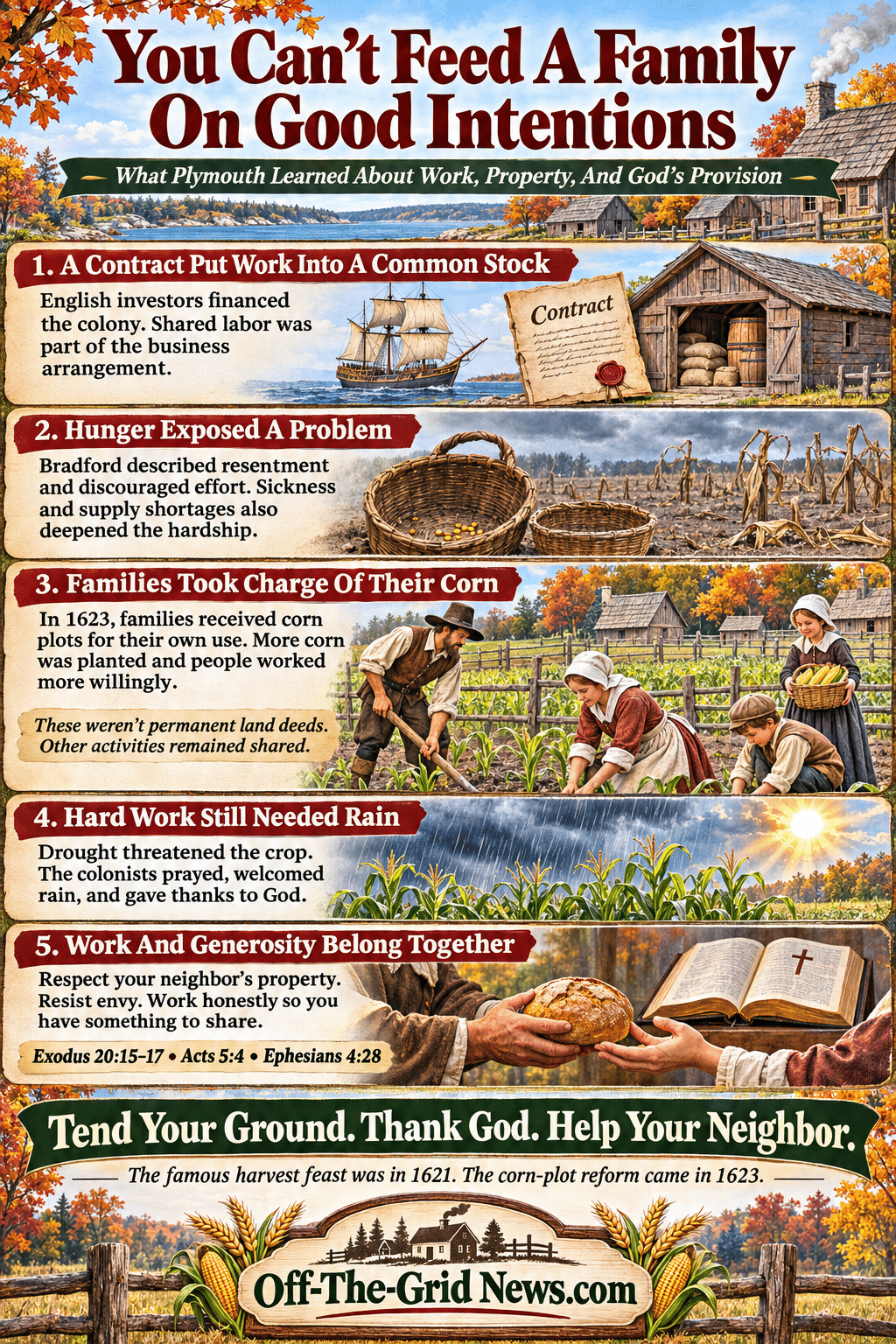
Before the Turkey Came the Contract
For the Pilgrims, crossing the ocean wasn’t a plan to build a commune. Bradford described their hope of advancing Christ’s kingdom in a distant land. However, passage, tools, provisions, and a settlement all cost money they didn’t have.
So they turned to English backers commonly called the Merchant Adventurers. The arrangement joined settlers and investors in a commercial venture, with labor and capital contributing to a common stock. After seven years, the partners were supposed to divide the accumulated assets.
Then the deal hit a nasty snag. As Bradford’s history explains, the settlers objected when provisions protecting time for their own work and their claim to houses and gardens were removed. Thomas Weston refused further help when they wouldn’t accept the revised agreement, and they sold provisions to meet expenses before sailing.
In other words, the common arrangement grew out of financing a colony. It wasn’t a church doctrine declaring that a Christian couldn’t have his own garden. Calling it modern socialism skips the contract, the investors, and the world these people actually lived in.
Here’s the catch: a commercial contract can reach far beyond the men who wrote it. The backers were an ocean away. The hungry mouths were right there.
A Common Store Could Still Be an Empty Store
During that first brutal winter, roughly half the Mayflower’s 102 passengers died. At times, Bradford recalled, only six or seven remained well enough to care for the sick. They fetched wood, prepared food, and washed clothing for people too weak to help themselves.
Those acts deserve remembering. Whatever went wrong with the colony’s working arrangements, its survival also depended on ordinary people serving neighbors who couldn’t repay them.
Next, in the autumn of 1621, the Fortune arrived with about three dozen additional settlers and little to replenish the food supply. More people needed supper, but the pantry hadn’t grown to match. Rations tightened, and the colony endured another bleak stretch of grinding want.
Disease, inadequate supplies, and the difficulties of building a settlement all mattered. Nobody should pretend a single change in farm management could have prevented every burial. Even so, Bradford came to believe their system of organizing work was making a desperate situation worse.
By then, the crucial question was painfully practical. How could they get more corn planted when their lives depended on the next crop?
The Major Flaw That Wore Good People Down
In his account of 1623, Bradford described the discontent spreading through the settlement. Strong young men disliked spending their strength supporting other men’s households without a corresponding reward. Men who accomplished more saw no greater return than men who accomplished much less. That glaring disconnect wore people down.
Meanwhile, older men resented being placed on the same footing as younger men. Women objected to being required to cook and wash for other households. Bradford recorded their feeling that the arrangement amounted to servitude.
Now, grasp why that matters: these weren’t people he dismissed as godless troublemakers. He called them “godly and sober men.” Their faith was real, yet their working arrangements still bred conflict and discouraged effort.
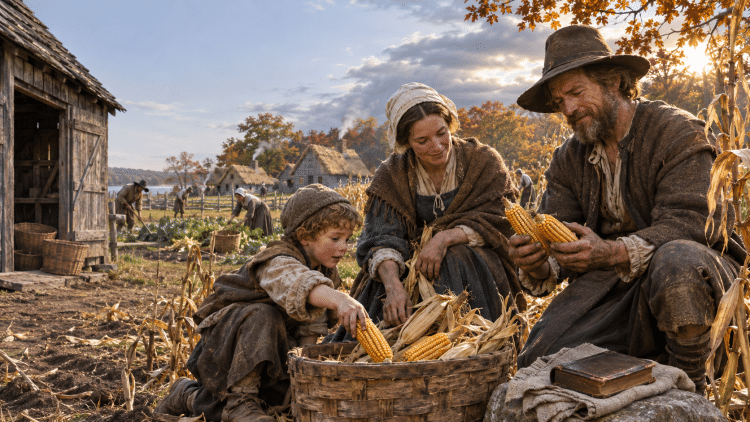
Then, after debate, the governor and leading men changed the corn planting. Each family received a plot proportioned to its size and responsibility for producing its own crop. Boys and young people were assigned within family groups.
Before we get carried away, let’s keep our boots on the historical ground. As Plimoth Patuxet Museums explains, these were plots for present use, not an immediate division into permanent hereditary estates. Other parts of the colony’s business continued under the common arrangement. And here’s the breakthrough: the change gave families a direct stake in the harvest. Families could see a direct connection between their work and the corn they’d have to eat. Bradford reported that more corn went into the ground, people worked more willingly, and the governor had less trouble persuading them to do it. The seed hadn’t changed. Their responsibility for it had.
Their Own Corn Still Needed God’s Rain
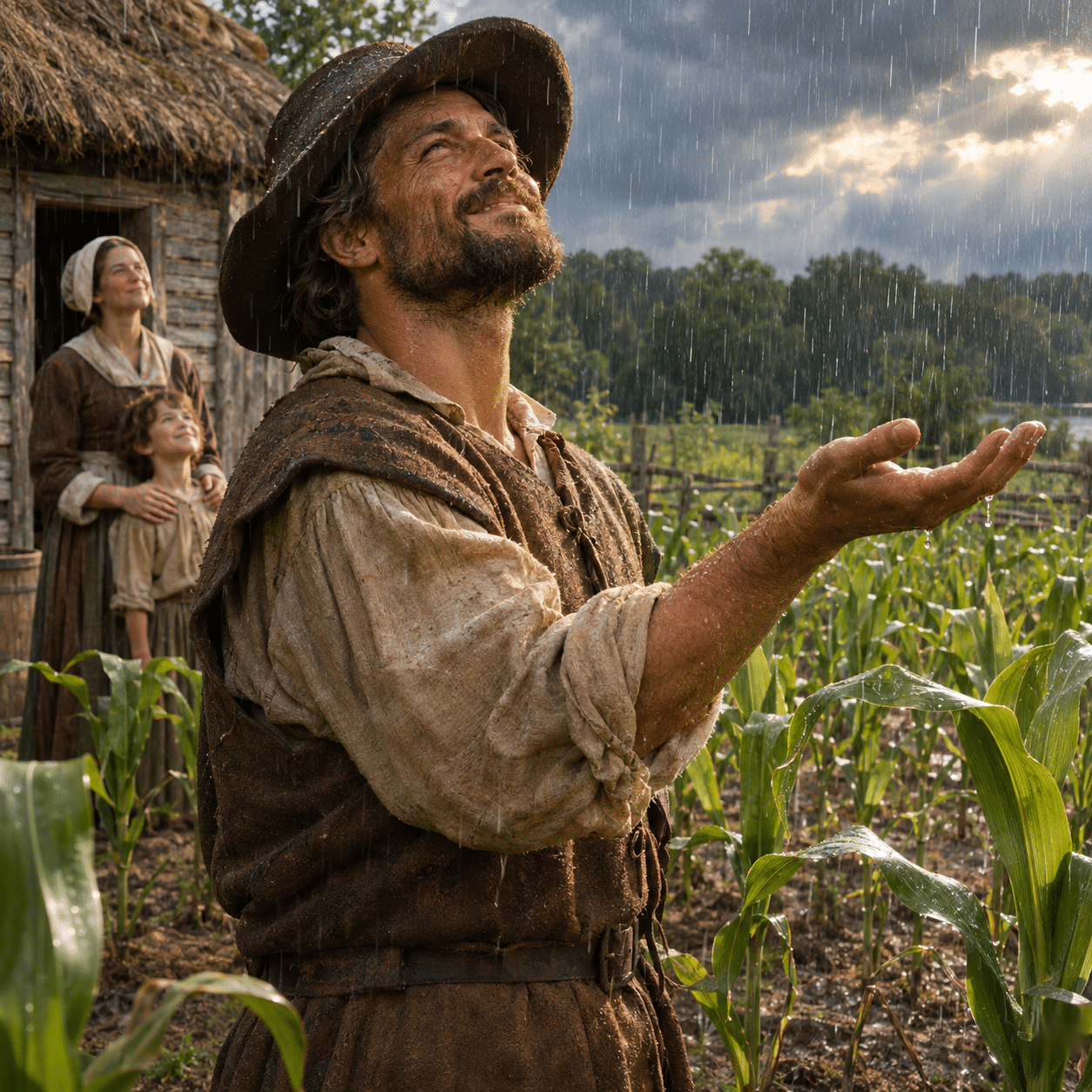
Now, don’t picture everybody receiving a garden plot on Monday and sitting down to abundance on Tuesday. Food remained desperately short while the corn grew. Then a severe drought threatened the crop they’d worked so hard to plant.
Don’t skip that chilling detail. It belongs in the story because it keeps self-reliance from swelling into self-worship. A family can hoe every row faithfully and still be unable to squeeze one drop of rain out of the sky.
According to Edward Winslow’s account of the summer of 1623, the colonists set aside a day for humiliation and prayer. When rain followed and the crop recovered, they appointed a day of thanksgiving. They understood their labor and God’s provision as belonging in the same story.
By harvest, Bradford described a welcome change from scarcity to plenty. Some industrious households had corn to spare, and he reported that the colony suffered no general famine afterward.
Also, let’s keep the dates straight. The famous 1621 harvest celebration with Massasoit and about ninety of his men happened before the 1623 planting reform. We don’t need to move Thanksgiving around on the calendar to make Bradford’s later lesson worth hearing.
The Line That Takes This Beyond Economics
Looking back, Bradford connected the experience to an old theory: abolish private property, put everything into common ownership, and people will become happy and prosperous. He associated that notion with Plato and other ancient writers.
Then he put the problem on the table in seven blunt words: “as if they were wiser than God.”
In plain English, Bradford was talking about more than crop yields. Bradford believed the arrangement had collided with something true about human beings. Good intentions hadn’t erased their weaknesses, their household loyalties, or their sense of justice.
Of course, his conclusion doesn’t settle every modern question about taxes, public property, or business ownership. But it does put a sharp question on the kitchen table: are we willing to recognize limits God has built into human life, even when our favorite theory says otherwise?
That’s a sermon with some splinters in it.
Hands Off Your Neighbor’s Ox
Start with Exodus 20. God’s commands against stealing and coveting recognize that our neighbor has possessions we must respect. His house, his livestock, and his goods aren’t ours simply because we’d like a share.
Likewise, Micah 4:4 pictures peace with people sitting beneath their own vines and fig trees, unafraid. It’s a wonderfully earthy picture. A household can enjoy the fruit of its work without waiting for somebody to confiscate the harvest.
At the same time, Scripture also tells owners what they owe God and their neighbors. Property isn’t permission to cheat a hired hand, grind down the poor, or shut the barn door on every person in need. Ownership brings responsibility along with protection.
Then there’s the early church. People sometimes point to the sharing in Acts as proof that Christian faith requires the abolition of private property. Yet Peter’s words to Ananias in Acts 5:4 recognize his authority over both the unsold land and its sale proceeds.
You Can’t Give Freely What You’re Forbidden to Own
Ananias was condemned for lying to God. The passage doesn’t condemn him for having owned land. The believers’ generosity was real, and so was the distinction between willing giving and a compulsory surrender of possessions.
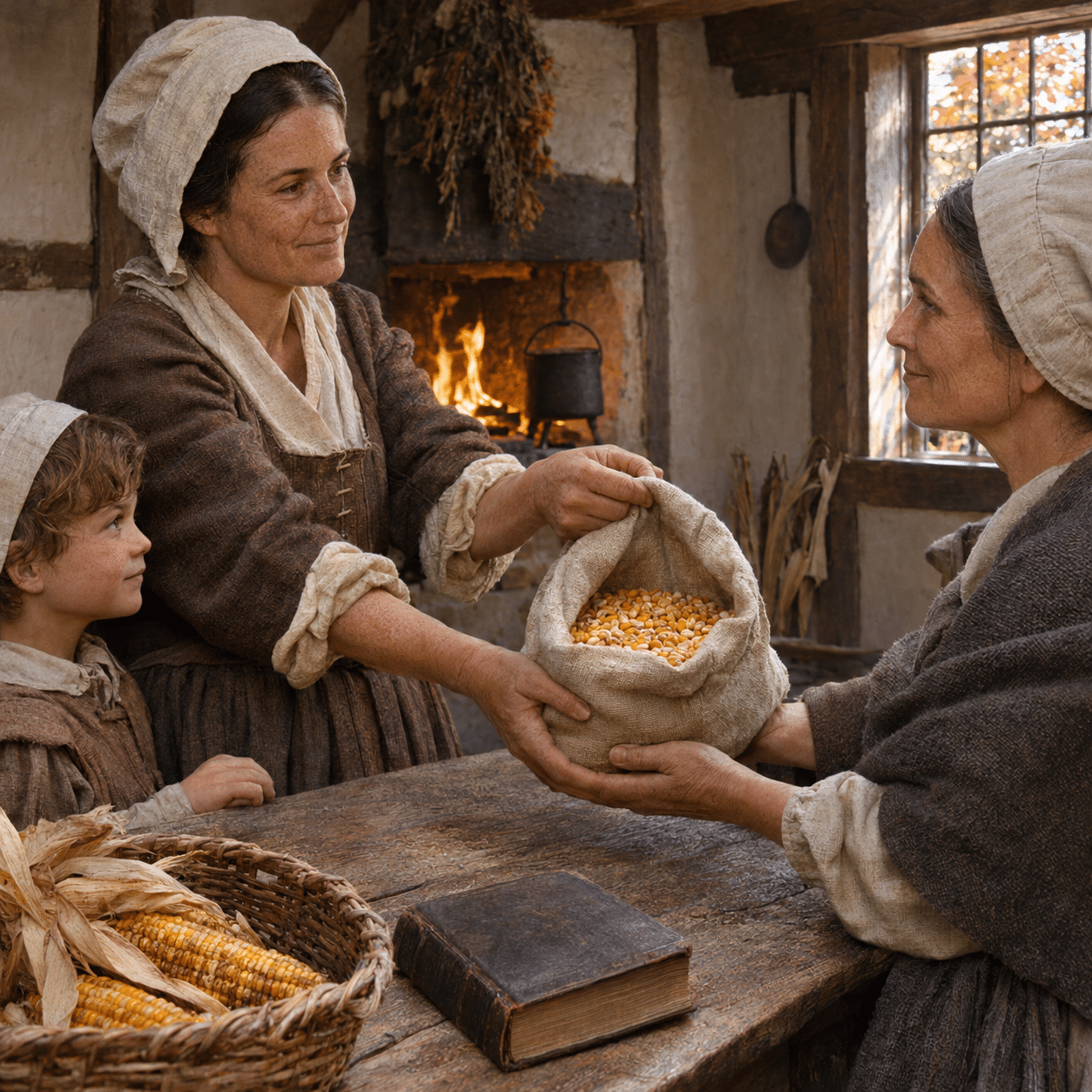
To see how work and generosity fit together, read Ephesians 4:28. Paul joins honest work to having something to share with someone in need. The hands that stop stealing become hands that work, and the fruit of that work becomes a gift.
Now bring that home to your own kitchen table. The freezer you fill through honest work can feed your household and help a neighbor through a rough month. You don’t have to apologize for owning it to recognize that God expects you to use it well.
That’s a pattern worth carrying from church into the garden.
The Puritans Brought Some Old Baggage Too
Meanwhile, Massachusetts Bay’s Puritans faced their own questions about property, work, and authority. These were related communities, but Plymouth and Massachusetts Bay weren’t the same colony. John Winthrop’s problems deserve their own place in the story. In his study of Puritan price controls, Gary North argued that the settlers carried inherited medieval economic assumptions into New England. That’s North’s interpretation, rather than a reason to blame every colonial mistake on Aquinas or Aristotle.
Even so, the policies he describes reveal a thorny problem. Massachusetts authorities tried ceilings on artisans’ wages and restrictions on profits from imported goods. Rules were imposed, repealed, and tried again as officials struggled with their effects.
Winthrop himself recorded the difficulty of compelling workers to accept prescribed rates. Some could move elsewhere; others could support themselves through planting rather than hire out. The authorities could announce a wage, but they couldn’t make every carpenter want the job.
Elsewhere, North’s account of common land describes friction over access, use, and management. Across later decades, many towns increasingly divided common resources into individual holdings, although the timing and arrangements varied.
To be clear, none of that means every shared pasture was foolish or every private owner was wise. It means that wishing for harmony didn’t answer the everyday questions. Who repairs the fence, who gets the hay, and who bears the loss when somebody neglects the job? Those questions have a way of surviving the town meeting.
Envy Can Spoil More Than a Harvest
Now we come face-to-face with a sin that belongs in this discussion even when nobody wants it in the sermon. Envy can make a man miserable while he’s standing beside a full pantry. His trouble is that the neighbor’s pantry looks fuller.
As North recounts in his discussion of Puritan teaching, Samuel Willard urged people to rejoice in their neighbors’ prosperity. Cotton Mather likewise warned against a spirit that treated another person’s rise as grounds for resentment.
That’s useful preaching for a farming community. When your neighbor improves his soil or builds a better business, you can learn from him, congratulate him, or ask how he did it. Envy would rather see his roof leak than figure out how he paid for the shingles.
However, let’s be fair to Bradford’s settlers. Resenting an arrangement that seems unjust isn’t automatically envy. His account describes real grievances, and we shouldn’t claim to know every hungry person’s heart.
Still, don’t underestimate the danger. Once resentment becomes a habit, another family’s success begins to feel like a personal injury. Before long, keeping somebody else down seems more satisfying than getting your own work done. Meanwhile, the weeds keep growing.
Gratitude Belongs Beside Responsibility
So what comes home with us this Thanksgiving? Start with the guts to face the evidence and change course. Bradford and his neighbors didn’t have to defend a failing arrangement forever merely because respectable men had put it into a contract.
Then remember that gaining greater control over their work didn’t erase their obligations. The settlers arranged to buy out the English investors’ interests in the 1620s, and the resulting financial business stretched into the early 1640s. North’s account places the final repayment in 1642, after years of grinding debt. They couldn’t make those obligations magically disappear.
Freedom came with bills attached. Anybody who’s bought a piece of ground understands that part of the story.
Next, give community its proper place. Plymouth’s people nursed the sick, depended on one another, and benefited from Native knowledge and assistance. Tisquantum, often called Squanto, helped them understand local planting and served as an interpreter. These were already Native homelands, not an empty stage waiting for an English story.
Remembering those debts doesn’t weaken the lesson about household responsibility. It helps us tell the truth about survival. A person can tend his own ground and still owe his neighbors thanks.
Fill Your Pantry and Keep Your Heart Generous
If you’ve split your own firewood, put up your own beans, or checked a restless goat at two in the morning, you know how responsibility sharpens attention. You notice the loose latch because the animal behind it depends on you. You get out of bed because tomorrow’s trouble won’t wait for a convenient hour.
Yet the Christian lesson goes further than working hard for your own supper. When there’s extra in the freezer and a struggling family down the road, responsibility has another job to do. Work and generosity belong together.
So this Thanksgiving, thank God for the meal and the hands that prepared it. Thank Him for the ground, the rain, the strength to work, and the neighbors who helped when your own strength ran short.
Then remember a governor who was willing to look at the cornfield and learn. More than four hundred years later, Bradford’s warning still belongs beside our full plates: don’t get so fond of your own ideas that you start acting wiser than God.