 Print
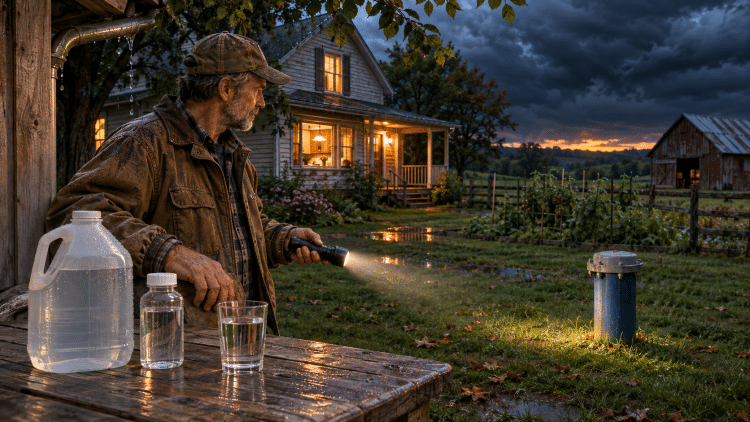
Critical Checks And Tests Before Your Family Drinks Any Well Water After A Blackout
What Lost Pressure Can Mean For Your Family’s Drinking Water
Think back to the day your well passed its first test. The driller finished up, clear water splashed into a bucket, and somebody handed over a lab report with the good news. Then that paper disappeared into a drawer with the deed, the furnace manual, and three keys nobody can identify.
Meanwhile, the years rolled by. The water stayed clear, the coffee tasted fine, and the pump kept humming along. Around a busy homestead, a well that minds its own business is easy to overlook.
Then, without much warning, a storm knocks out the lights for three days. Or the creek climbs out of its banks and muddy water starts nosing toward the wellhead. Suddenly, having water and having safe water become two very different concerns.
That’s crunch time—and a little preparation earns its keep.
Here’s the good news. You don’t have to muddle through it. Annual testing gives you a baseline, and certain changes call for another check before the calendar comes around again. After an outage, the big questions are whether your system lost pressure, whether anything was damaged, and whether floodwater could have gotten in.
Your Well Comes With a Job Nobody Else Will Do
Of course, a private well gives you a satisfying measure of independence. But it also puts you in charge of the maintenance file, the sampling bottle, and the phone call when something seems wrong. There’s no municipal crew making the rounds on your behalf.
As the CDC explains about private drinking water, private wells aren’t covered by the federal Safe Drinking Water Act. State and local requirements may still apply, so independence doesn’t mean there are no rules. It means you need to know what applies where you live.
So think of testing the way you think of checking the chimney or looking over the tractor before hay season. A good result from years ago tells you what that sample showed back then. It doesn’t tell you what’s coming out of the kitchen faucet this morning.
Better yet, make the next test an actual appointment. Put the lab’s number beside the pump contractor’s number, and mark a month on the calendar. A chore with a date has a better chance of getting done than one filed under ‘one of these days.’
Give Your Water Its Yearly Checkup
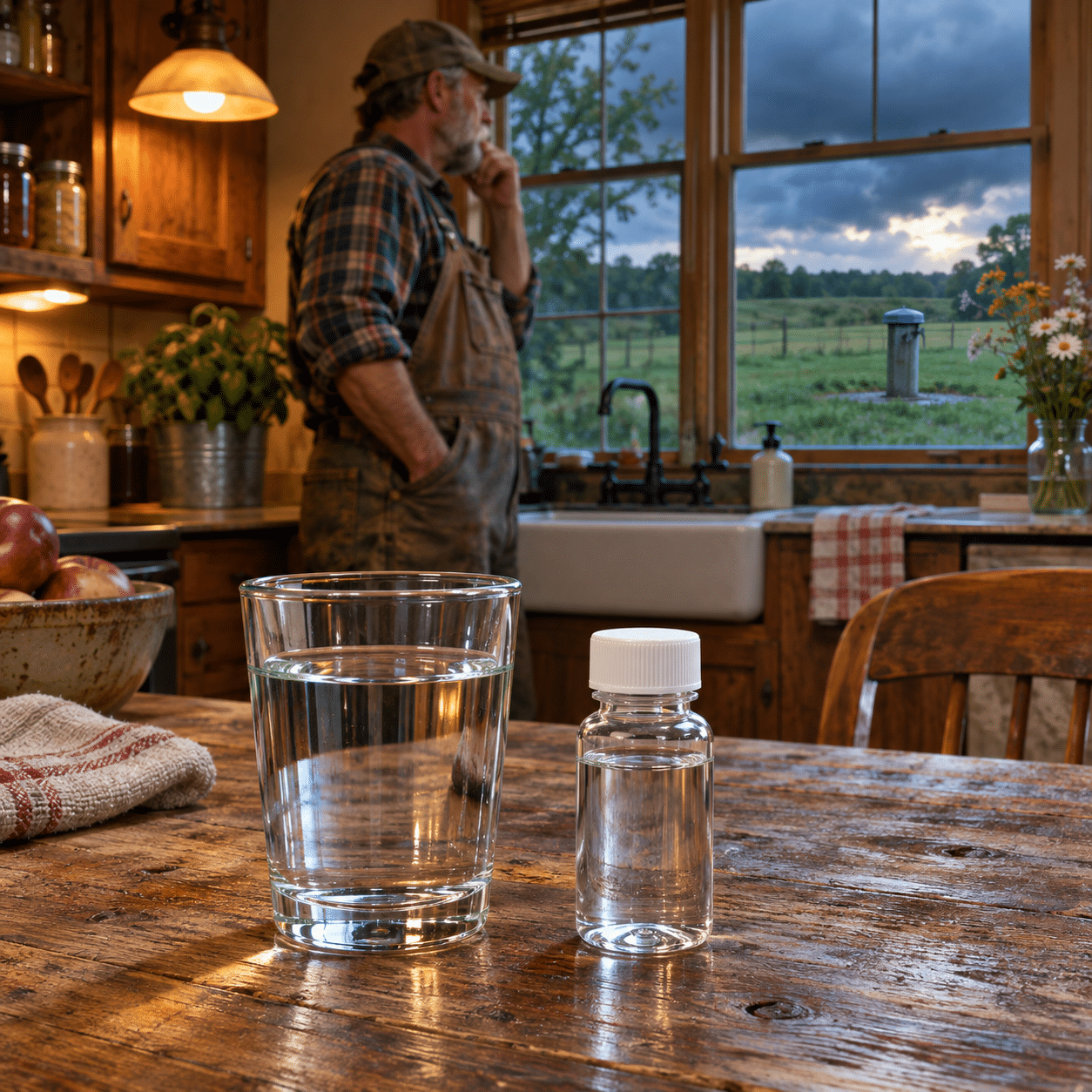
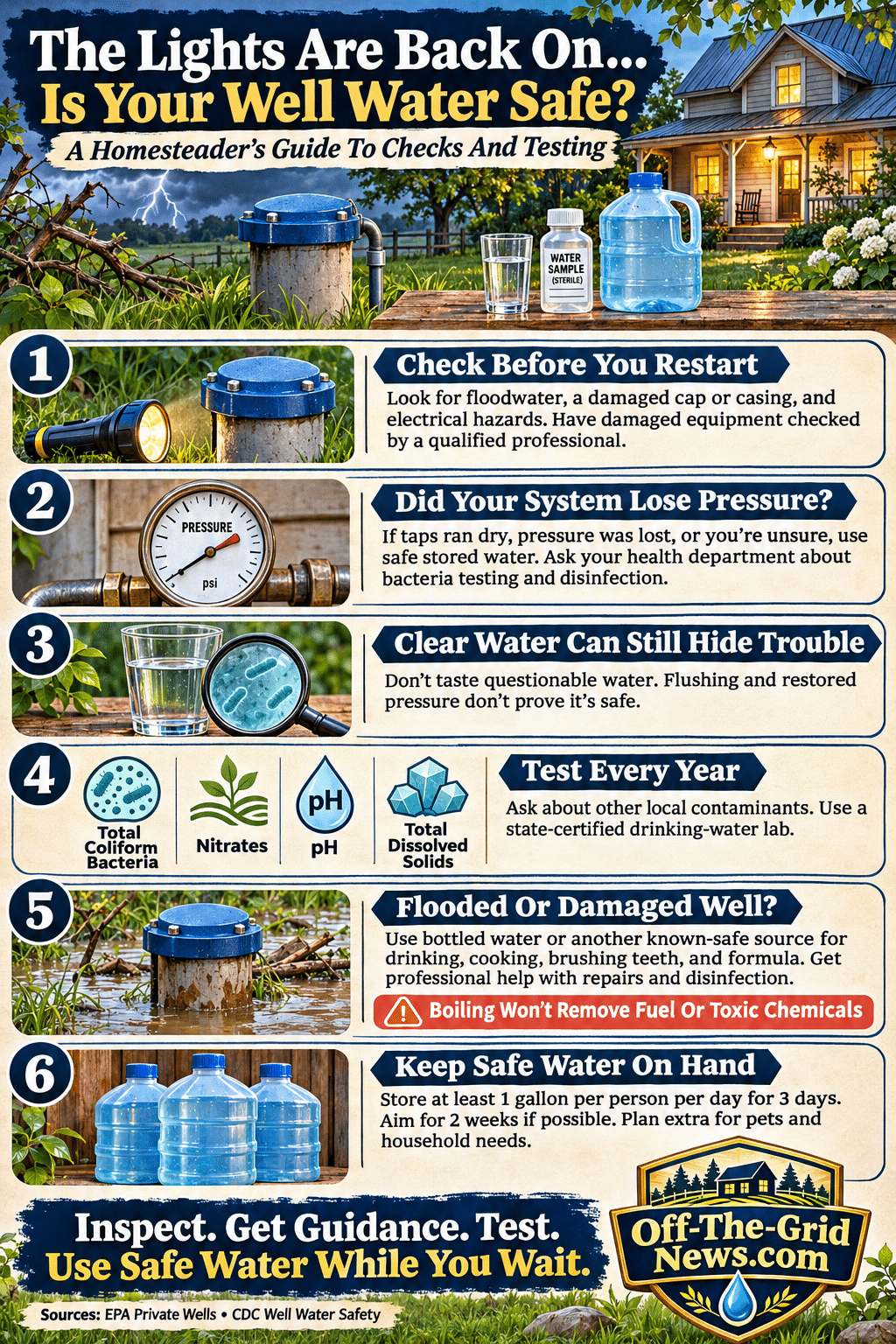
Start with the annual testing panel recommended by the CDC: total coliform bacteria, nitrates, total dissolved solids, and pH. Ask your local health department what additional tests make sense for your groundwater and your property.
First, total coliform bacteria serve as a warning flag. Many aren’t harmful themselves, but their presence can point to a route that disease-causing germs could use, too. Ask the lab whether its bacteria panel includes E. coli testing and how it handles a positive coliform result.
Next come nitrates, which can reach groundwater from sources such as fertilizer, septic systems, and animal waste. Infants are especially vulnerable to high nitrate levels. If you use well water to prepare formula, make sure you have current results and ask your health department about any additional testing you need.
Then there’s pH, which tells you how acidic or alkaline the water is, and total dissolved solids, which measures dissolved material in the water. These help track changes in water quality and plumbing conditions. Neither one, by itself, tells you the water is safe to drink.
Now, here’s an easily overlooked detail. Your local geology and nearby land use matter, too. A well near intensive farming may need different testing from one near a fuel spill, an old industrial property, or naturally occurring arsenic. Ask about local concerns before spending money on a broad package that may miss the question you actually need answered. According to EPA guidance for well owners, households with small children, older adults, or someone pregnant or nursing may want more frequent testing. Talk through the schedule with your health department rather than picking a date out of thin air.
These Warning Signs Can’t Wait Until Spring
Sure, an annual reminder is handy. But a flood doesn’t check your calendar before it comes through the gate. Significant changes near your well, repairs to the system, local groundwater warnings, and changes in the water’s appearance or odor all deserve prompt attention.
For example, call if a well cap gets damaged, excavation happens near the well, or a repair opens the system. Describe what happened and ask which tests are appropriate and when to collect them. Testing before needed repairs or disinfection may answer a different question from testing afterward.
Meanwhile, investigate if the water suddenly looks cloudy, smells different, or leaves unfamiliar stains. Those changes don’t tell you which contaminant is present, but they give you a reason to investigate. Don’t take a sip of questionable water to see whether it passes inspection.
Your taste buds can’t deliver the cold, hard facts.
Just as important, clear water can still contain contaminants you can’t see or smell. A sparkling glass can give you false confidence. Only the right tests can reveal what your eyes miss.
When Floodwater Moves In Keep Your Distance
Unfortunately, floodwater can drag sewage, manure, fuel, and other nasty trouble across a property. If it reaches or submerges your well, treat the water as potentially contaminated even after the yard dries out and the faucet runs clear again.
First, stay away from submerged pumps, damaged wiring, and standing water around electrical equipment. The EPA’s guidance on what to do after a flood calls for safe drinking water and professional help with the well. Don’t start working around the pump just because the porch light came back on.
Until you have proper guidance and acceptable test results, use bottled water or another known-safe source for drinking, cooking, brushing teeth, making ice, and preparing formula. Don’t use a flood-contaminated supply for bathing or washing dishes while you’re sorting out its condition. Ask your health department about safe household use at your particular site.
A qualified well contractor can check the cap, casing, seals, pump, and electrical components, then handle repairs, cleaning, and disinfection as needed. Have flood damage assessed before restarting equipment. Otherwise, you could clean up the water and leave contamination a back door into the system.
The Power Is Back but Your Water Still Needs Attention
Most modern wells depend on an electric pump. When the power quits, the pressure tank provides only a limited amount of usable water. Keep drawing from it, and eventually the pressure can drop away.
Here’s why that loss is crucial. Low or absent pressure can allow contamination to enter through defects or backflow pathways. It doesn’t prove your water is contaminated. It does give you a reason to stop and assess the system before returning to normal use. The CDC’s post-wildfire well guidance specifically addresses lost power and pressure. In that disaster setting, it advises withholding drinking water and testing for bacteria at a minimum when the well loses pressure. For a storm outage, ask your local health department how to apply that precaution to your well and the conditions on your property.
Next, once it’s safe to approach, look for a damaged cap or casing, washed-out soil, debris, and signs that water pooled around the well. Leave electrical inspection and repairs to qualified hands. If the pump won’t build pressure, keeps tripping the breaker, or sounds wrong, shut it down and call for help.
If the taps ran dry or you can’t establish whether pressure held, use your stored drinking water while you get advice about testing and any needed disinfection. A short outage with maintained pressure, no damage, and no flooding presents a different situation. A blackout alone doesn’t automatically mean every well needs shock chlorination.
When flushing is appropriate, follow the contractor’s or health department’s instructions for your system. A few minutes of clear, steady flow may clear air or sediment, but it doesn’t prove that bacteria or chemicals are gone. The pump may be humming again, but you still need answers about the water.
Get the Sample Right and Skip the Guesswork
For reliable answers, order the kit from a state-certified drinking-water laboratory or through your health department. A home screening kit can have a purpose, but it shouldn’t replace certified testing when you need to decide whether potentially contaminated water is safe.
Before collecting anything, read the lab’s instructions. The bottle, sampling tap, preparation, storage temperature, and delivery deadline can all matter. Don’t rinse a prepared bottle, touch its inside, or collect a sample in a handy canning jar unless the lab specifically tells you to.
Also, tell the lab about recent flooding, repairs, treatment equipment, or disinfection. Ask whether the sample should represent untreated well water, water at the kitchen tap, or both. The right collection point depends on what you’re trying to find out.
Finally, arrange delivery before you fill the bottle. Sampling late Friday afternoon can create a problem if the lab won’t receive it until Monday. A quick phone call beats discovering that your carefully collected sample arrived too late to use.
Find the Trouble and Make the Fix Count
If bacteria turn up, switch to safe water and ask your health department to explain the report in plain English. Disinfection may be part of the solution, along with repairing defects that allowed contamination into the system. Don’t gamble on a splash of bleach and a hopeful shrug. You need to figure out how the contamination got in.
The CDC’s emergency well-disinfection guidance recommends using a well or pump contractor because the work can be hazardous. Its procedure calls for waiting at least 7 to 10 days after disinfection before sampling, with all chlorine flushed out first. Follow the specific sampling schedule your local authorities and lab provide.
Meanwhile, don’t assume a bacteria result answers every question. If flooding carried chemicals onto the property, or the water smells like fuel, tell the health department. Boiling and disinfection won’t make water contaminated with fuel or toxic chemicals safe.
Other chemical problems may require treatment designed for the particular contaminant, well repairs, or a different water source. After corrective work, use the recommended follow-up tests to confirm the result. Keep every report alongside a simple record of repairs, floods, and treatment changes.
Year after year, that folder becomes a valuable history of your water. It also saves you from trying to remember whether the last test happened before the big storm or sometime around the year you rebuilt the chicken coop.
Stockpile Water Before You Need It
A working outage plan includes water you can use while the well is being checked. The CDC recommends at least one gallon per person per day for three days, with a two-week supply if possible. Allow more for individual needs, pets, hot weather, and the practical demands of your household; livestock need their own plan.
Here’s the catch. That reserve may need to cover more than the blackout itself. Repairs, disinfection, the wait before sampling, and lab turnaround can stretch beyond the moment power returns. Ask the lab about timing before your last jug starts looking lonely.
For backup pumping, have a qualified professional match the equipment to your well. A generator needs adequate starting capacity and a safe electrical connection; a manual pump has to suit the well’s depth and construction. If you use a generator, follow the CDC’s guidance to operate it outdoors at least 20 feet from doors, windows, and vents.
Before storm season, keep the cap secure, direct runoff away from the casing, and keep chemicals and waste away from the well. Put the contractor’s number, lab contact, well record, and old results somewhere you can find them without electricity. If you’re reopening a cabin after a long shutdown, ask about inspection, flushing, and testing before drinking from the tap.
Make Your Next Move With Confidence
Then, when trouble comes, work through the recovery in the right order for your situation: assess the damage, make repairs, flush or disinfect when advised, and sample at the proper time. Keep using safe stored water until the results and local guidance support putting the well back into service.
And here’s the best part. Once you’ve sorted out the contacts, the testing schedule, and the backup water, you won’t have to invent a plan in a dark kitchen. You can pull out the folder, make the call, and get moving.
After all, your well can give your homestead years of dependable service. Give it regular attention, and know when an extra check belongs at the top of the chore list. When the lights come back on, you’ll have something better than a hopeful look at a clear glass.
You’ll have a plan, a safe supply while you wait, and test results to back up your next move.