Print
“Free Fixes” for a Drafty Old House This Winter
The Wind Found Your House’s Weak Spots… Now It’s Your Turn
You can hear the furnace running. You can feel the brutal cold crawling across the kitchen floor. And somewhere between the thermostat and the mailbox, you already know what’s coming: another heating bill big enough to spoil breakfast.
Meanwhile, replacement windows and a truckload of insulation may be sitting firmly in the “not this year” column. That’s a familiar spot for folks keeping an old farmhouse going, especially when every repair seems to arrive wearing a brand-new price tag.
But you don’t have to leave the wind in charge while it drains your wallet.
If your house has single-pane windows, thin walls, and a draft that slips under the back door like a stray cat hunting a warm spot, start with the leaks you can stop and the help you may already qualify for. There are free steps, low-cost materials, and assistance programs that can make a real difference without a five-figure renovation.
For a homesteader, wasted heat reaches beyond the utility bill. That’s money you could’ve put toward firewood, propane, batteries, or another shelf of pantry supplies. And when the grid goes down, a leaky house keeps devouring your backup fuel just as eagerly as it did yesterday.
Before You Shell Out for Windows Check These Overlooked Resources
 First, take a breath before signing anything. Here’s the plain English version: Full window replacement isn’t the only way to make an old house more comfortable, and it may not be the best first use of a tight budget.
Old houses tend to have more opinions about the repair budget than the people living in them.
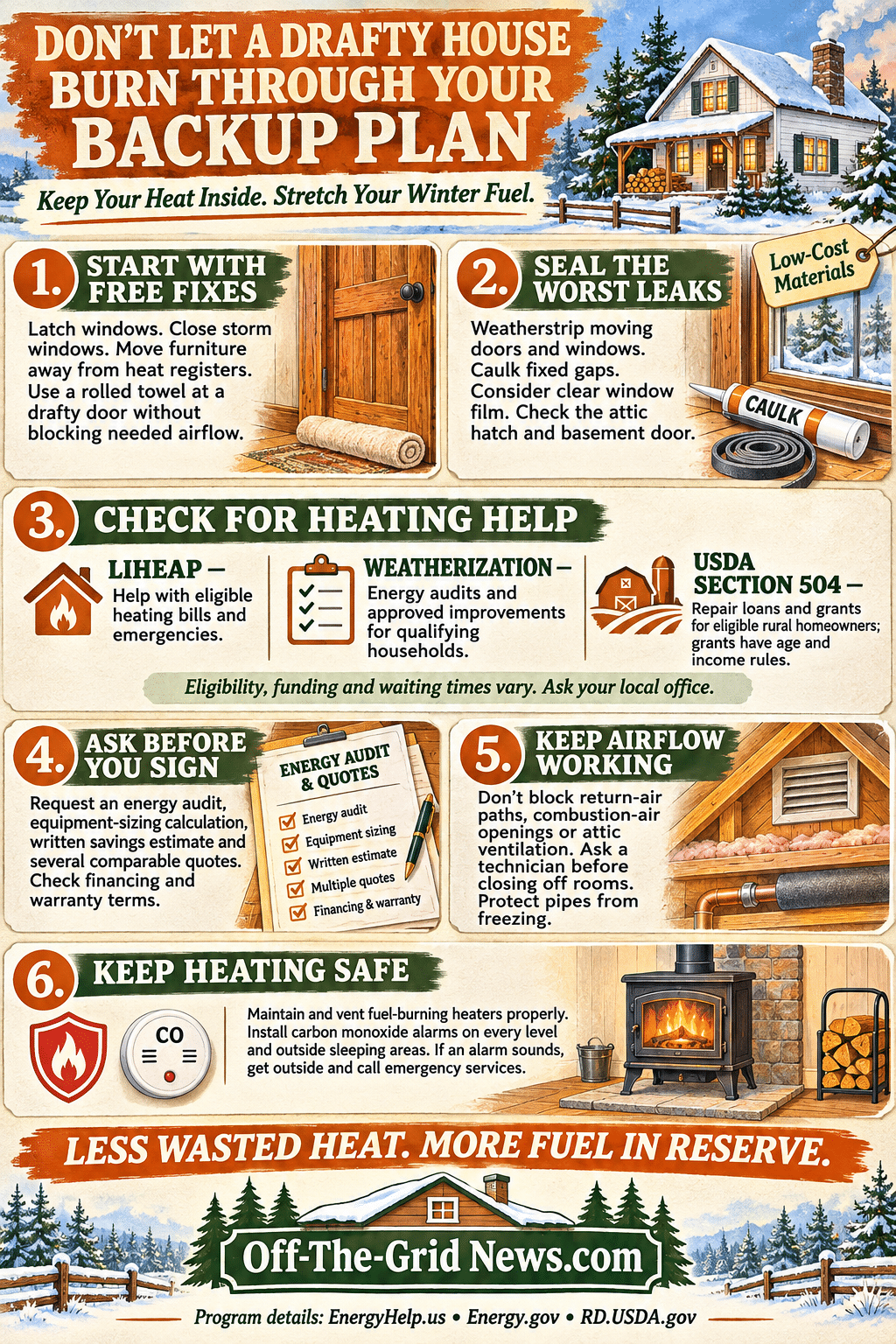
Three long-running programs offer an opportunity worth checking: LIHEAP for heating costs, weatherization assistance for eligible energy-saving work, and USDA repair assistance for qualifying rural homeowners. They do different jobs, and the USDA loan option must be repaid. Don’t let the word “assistance” blur those differences.
Also, eligibility doesn’t promise immediate service. Funding, local rules, application periods, and waiting lists all matter, so call the office that actually serves your county.
A few questions now can uncover help you’d otherwise miss out on. Don’t assume you’re out of luck before you’ve checked.
Get Help With the Bill Before the Tank Runs Dry
Start with the Low Income Home Energy Assistance Program, or LIHEAP. It helps eligible households with home energy costs, including heating bills and certain heating emergencies; payments commonly go directly to the utility or fuel supplier.
Depending on where you live, assistance may also include limited weatherization or heating repairs. Ask specifically about crisis help if your furnace has quit, your service is being disconnected, or the fuel tank is running low. Apply before the situation becomes an emergency.
For a current example, Pennsylvania opened its 2026–27 LIHEAP season on November 2, 2026, with applications scheduled through April 23, 2027. Its cash grants range from $200 to $1,000, and separate crisis assistance is available under state rules. Those are Pennsylvania’s dates and amounts, so check your own state’s program before making plans.
Now, here’s where the paperwork can get confusing. Generally, LIHEAP income limits follow federal boundaries: states set their standards no lower than 110 percent of the federal poverty guidelines and no higher than the greater of 150 percent of those guidelines or 60 percent of state median income.
Rather than muddle along through the mumbo-jumbo, ask the useful question: “What’s the income limit for a household our size?”
Homeowners and renters can apply, and you don’t have to be receiving other public benefits to ask for help. Start at Energyhelp.us, call 211 for a local referral, or contact your community action agency.
Have your heating bill, household information, and income records handy, then ask which documents your local office needs. Keep the papers together; they’re inclined to wander off about the time somebody asks for them, much like a socket wrench during planting.
Weatherization Sends Help to the House Itself
Next, look into the Department of Energy’s Weatherization Assistance Program. Instead of paying a fuel bill, this program arranges an energy audit and approved improvements, such as air sealing, insulation, or duct work, at no cost to eligible households.
Under DOE guidelines, households at or below 200 percent of the poverty income guidelines, or receiving Supplemental Security Income, are considered income eligible. States may also use an allowed state-median-income standard. Priority goes to certain households, including older adults, people with disabilities, and families with children.
Start with the state contacts on DOE’s application page. Your local provider checks income, manages the waiting list, and arranges the audit; renters need landlord permission before work begins. Gather income records, but confirm the required reporting period with that office.
Then the audit determines which measures make sense for your house. Don’t assume you’ll get new windows or every repair on your wish list. Ask about waiting times and whether roof leaks, unsafe wiring, or other problems must be addressed first.
Of course, getting your name on the list won’t stop tonight’s draft. Still, applying now gets the process started before another heating season arrives.
Rural Homeowners Have Another Door to Knock On
Meanwhile, country homeowners should check USDA’s Section 504 Home Repair program. Its published maximums are $40,000 for loans and $10,000 for grants, with qualifying combinations up to $50,000. Loans carry a fixed 1 percent rate over 20 years.
You must own and occupy the home, meet the applicable county income requirements, and be unable to obtain affordable credit elsewhere. Grants are for qualifying very-low-income homeowners age 62 or older and must remove health or safety hazards; loans can cover approved repairs and improvements.
For an older rural house, ask about a failing heating system, dangerous electrical problems, plumbing trouble, or a leaking roof. USDA determines which work qualifies. The grant has a $10,000 lifetime limit and must be repaid if you sell within three years.
Rather than guessing from your town’s population, check your address on the USDA eligibility map. Applications are accepted year-round through local Rural Development offices, and approval timing depends on available funding.
Before hiring anyone or starting work you hope USDA will cover, speak with the office. Get the approval process straight while the money is still in your pocket.
Stop the Drafts You Can Reach This Weekend
While those applications move along, give the house a slow walk on a windy day. Use your hand or a piece of tissue to hunt for moving air around door edges, window frames, and the attic hatch. Don’t use an open flame to check for drafts.
Give that “temporary” repair by the back door a look, too. It’s probably been there long enough to know the neighbors.
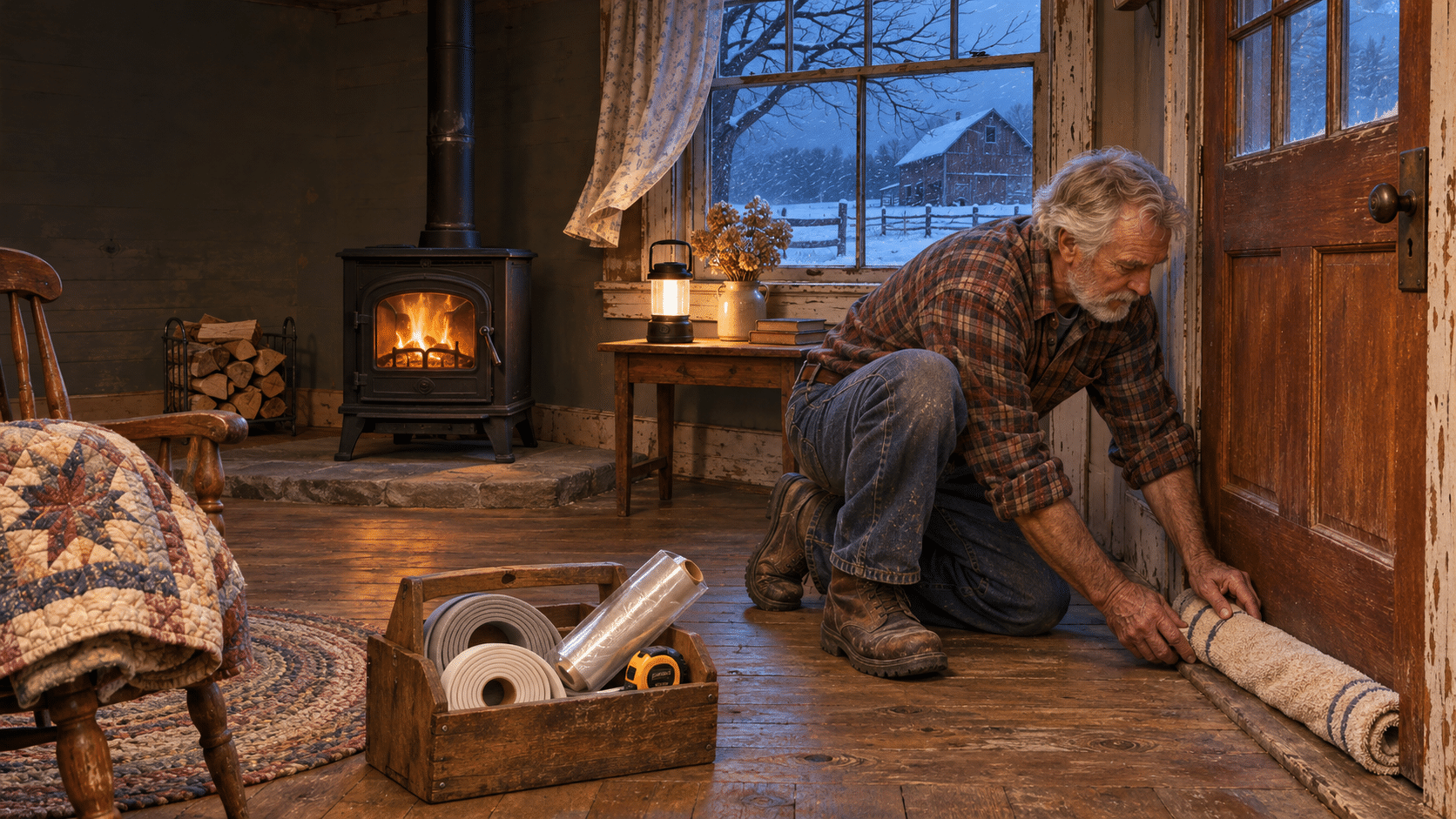
First, latch the windows fully and check that storm windows are closed. Move furniture away from heat registers and radiators, and use rolled towels against obvious door-bottom drafts where they won’t create a trip hazard or block needed airflow. These steps cost nothing if you’re using what you already have.
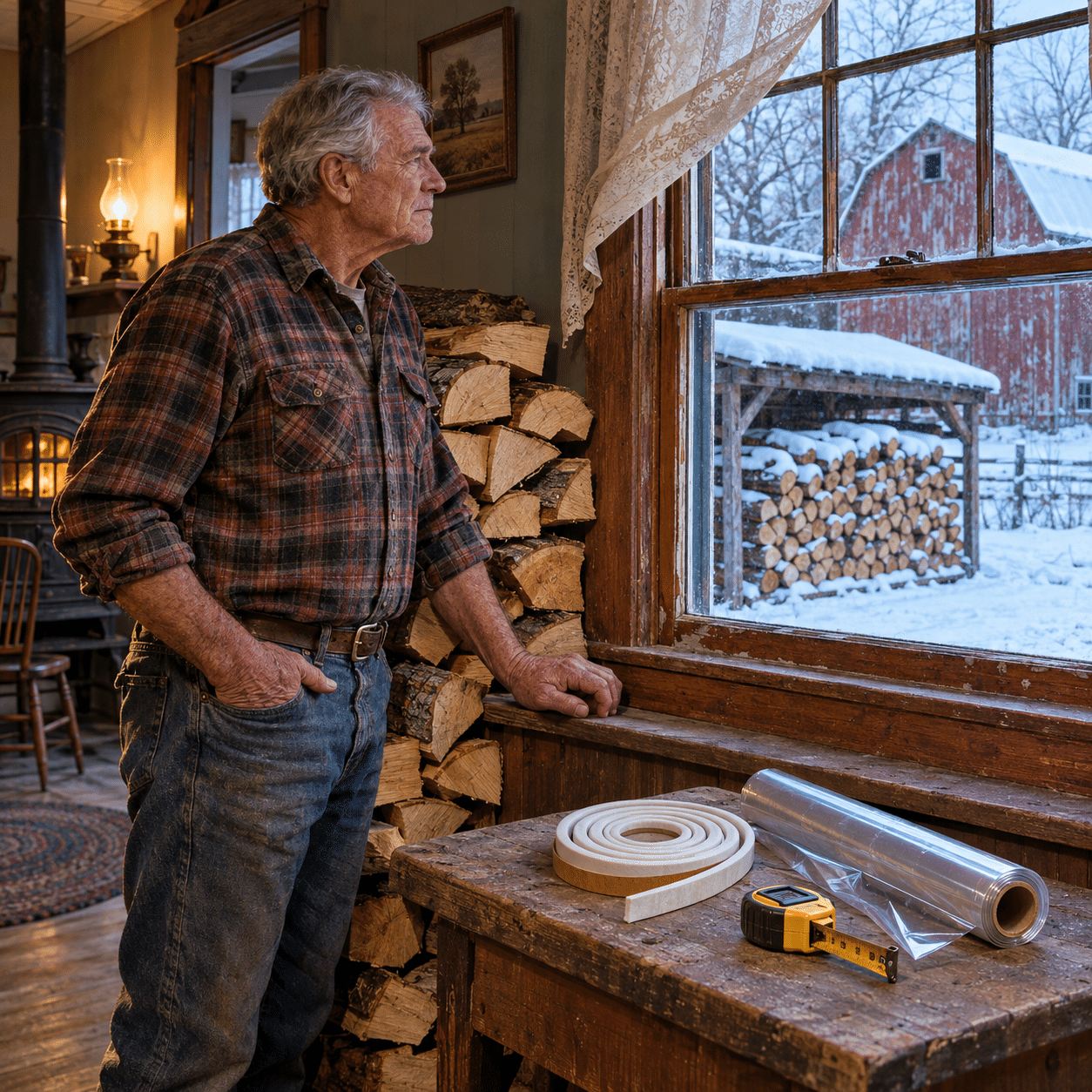
Next, spend a little where it counts. DOE recommends caulking and weatherstripping to reduce air leaks: caulk fixed gaps and use weatherstripping where doors or windows move. A door sweep can help with that cold stripe running across the mudroom floor.
For troublesome windows, properly installed clear interior window film can add another barrier against drafts. Follow the kit’s directions, keep emergency-exit windows usable, and watch for trapped moisture. Heavy curtains can improve comfort at night, but keep them clear of heaters and open them for useful sunshine during the day.
Also, check the attic hatch and the door to an unheated basement. Weatherstripping those openings may be a sensible small job; sealing around chimneys, flues, or hot equipment calls for proper materials and clearances. Keep combustion-air openings and attic ventilation unobstructed.
If you’re fitting purpose-made foam gaskets behind outlet or switch covers on exterior walls, shut off the circuit and verify the power is off before removing covers. Don’t poke insulation or ordinary spray foam into electrical boxes. If anything looks scorched, loose, or damaged, stop and get qualified help.
Finally, be careful with the advice to shut off unused rooms. With central forced-air heat, closing registers or blocking return-air paths can upset airflow and system performance, as DOE’s building-science resource explains. Keep rooms containing water pipes warm enough to prevent freezing, and ask your heating technician before changing how the house circulates air.
A rolled towel is free. A whole-house basket of weatherstripping, film, and supplies isn’t.
Attack the worst leaks first, price the materials, and work outward as your budget allows. Every penny matters when you’re trying to stretch the winter fuel supply.
Make the Contractor Show You the Numbers
Even if you later decide you need a furnace, insulation, or major window work, slow the sales pitch down. Ask whether the quote follows an energy audit or blower-door test, which helps locate air leaks. Otherwise, you may be buying expensive equipment to compensate for overlooked holes nobody bothered to find.
Then ask how the contractor calculated the heating load and selected the equipment size. Sealing and insulating can change that load, so the replacement should fit the improved house. Bigger equipment isn’t automatically a better bargain.
Next, demand the cold, hard facts behind the estimated annual fuel savings. What fuel price did they use? How much energy does your house use now, and what changes are actually included in the proposal?
Then, before signing, get the total installed price, financing rate, dealer fees, and payment terms in writing. Scour the proposal for extra expenses that turn a tempting monthly payment into a nasty surprise.
Ask who handles warranty work, whether labor is covered, and what happens if a special-order part arrives late. Compare several written quotes with the same scope so you can see what you’re buying. If the numbers don’t add up, you can walk away.
Treat a verbal promise like a gate held shut with baling twine: worth checking before you depend on it.
A contractor who welcomes clear questions makes your decision easier. If one objects to explaining the price or putting the work in writing, keep looking.
Seal the House Without Gambling With the Air
Above all, don’t let a tighter house give you false confidence about a heating system that hasn’t been checked. Wood stoves, furnaces, and fuel-burning backup heaters need proper installation, venting, maintenance, and any required combustion air. Weatherization should account for those needs and for adequate household ventilation.
Follow Consumer Product Safety Commission guidance on carbon monoxide alarms: install alarms on every level and outside sleeping areas, following the manufacturer’s placement instructions. Use battery-operated units or units with battery backup, test them as directed, and replace them on schedule. An alarm helps warn you of deadly trouble; it doesn’t repair a bad flue.
If a carbon monoxide alarm sounds, get everyone outside immediately and call emergency services from outdoors. Don’t stay inside hunting for the source. And never use a generator, charcoal grill, or outdoor heater inside the house or garage.
Keep Your Heat Where Your Family Lives
So make the calls, gather the paperwork, and check LIHEAP, weatherization, and USDA repair assistance where they fit your situation. Then spend part of Saturday stopping the drafts you can safely reach. You don’t need to finish every job before the first small improvement starts helping.
After all, preparedness includes making the fuel you already own last longer, year after year. Every leak you stop is one less place for hard-earned heat to escape while your family sits under another blanket.
That’s money that can stay in your pocket and fuel you may need when the next storm knocks the lights out.
Start with the back door. Then keep going.