 Print
The Homesteader’s Plan for Those Long Minutes Before Help Arrives
You’ve Stocked The Pantry… But What Happens When Your Animals Need Help In An Emergency?
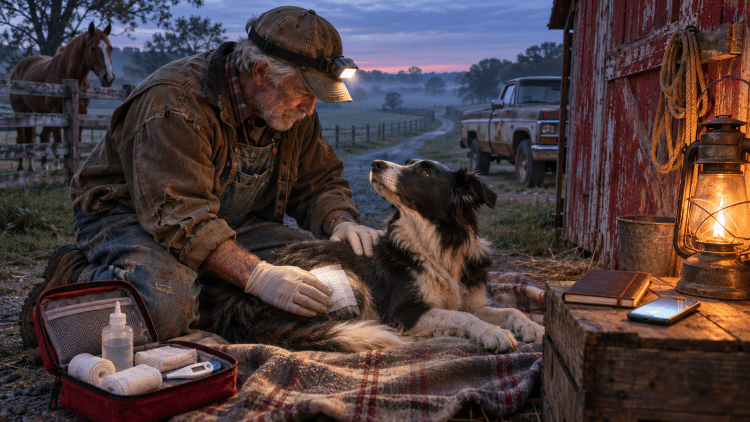
It’s two in the morning. Somewhere beyond the barn, your dog lets out a yelp that jolts you out of bed. By the time your flashlight finds him, he’s favoring one leg, and a dark patch of blood is spreading across his flank.
Or maybe it’s your mare. She’s pawing, looking at her belly, and getting down to roll while you scramble to the paddock gate with a sinking feeling in your stomach.
So you grab the phone. The nearest clinic is fifty miles away, the first number goes to voicemail, and the backup hospital is another county over. Suddenly, that tidy little first-aid kit on the mudroom shelf looks mighty small. This is crunch time.
You’re the first person on the scene. What you do next can buy your animal precious time. A little preparation can help you get a grip when everything feels upside down.
Now, that doesn’t turn you into a veterinarian. It means your job is to recognize trouble, give sensible first aid, and get professional help moving while you keep the situation from getting worse. Around a homestead, that’s a skill worth having before the flashlight batteries start to fade.
The Long Drive to the Vet Is Getting Longer
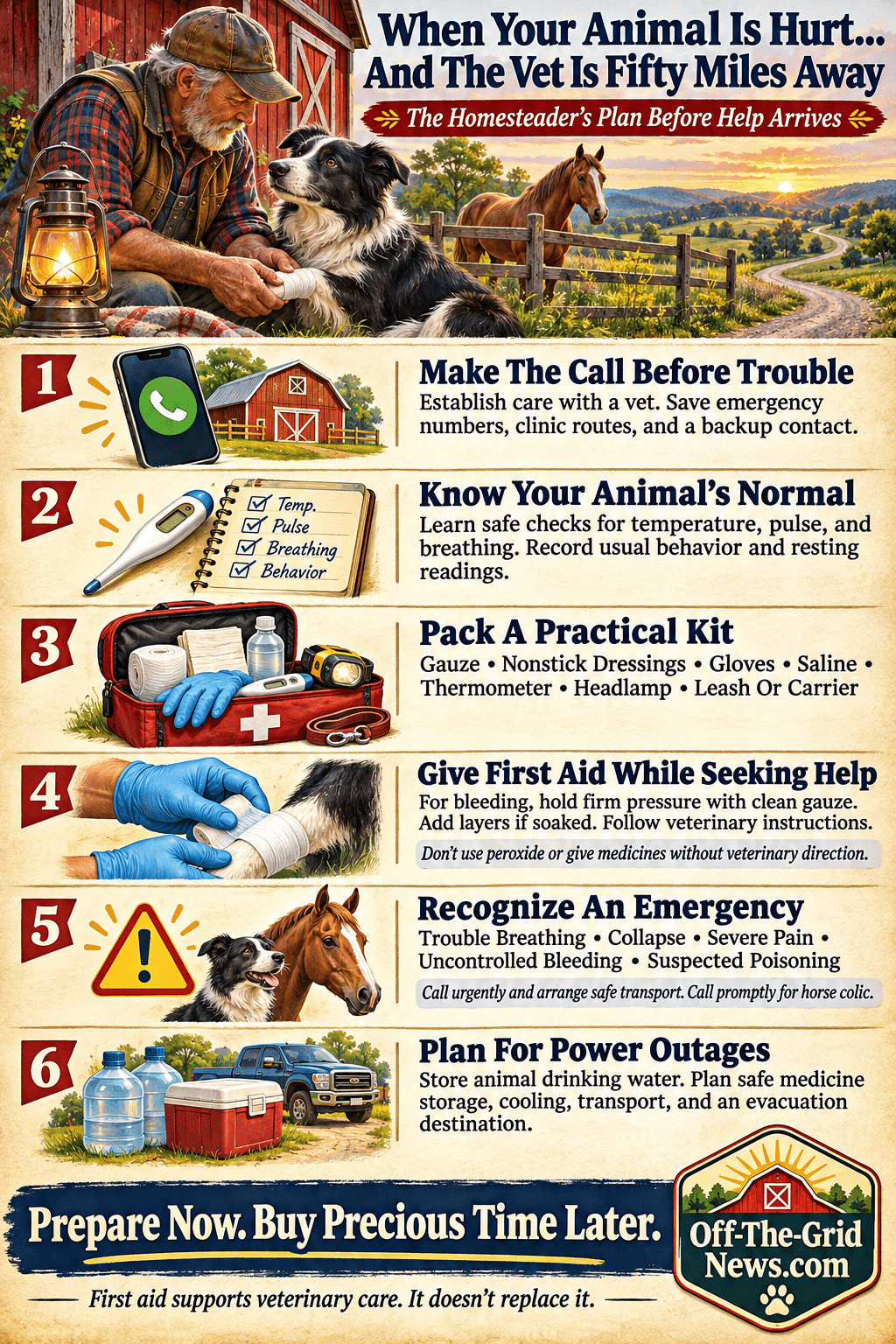
If getting a farm call feels harder than it used to, there’s a reason. In 2025, USDA designated 243 rural veterinary shortage areas across 46 states, a record reported by the American Veterinary Medical Association. Those designations concern particular veterinary service needs; they don’t mean every animal in those areas has no care available.
Still, for the family standing beside a sick goat or a bleeding dog, the practical problem is plain enough. Distance devours time, and a small practice can only stretch its people so far. USDA’s veterinary shortage map shows how widely those gaps reach across farm country.
Then throw in an ice storm. A flooded creek crossing. A power failure that shuts down the well and leaves the barn pitch black.
That’s why animal preparedness belongs right beside your firewood, drinking water, and pantry shelves. The first pair of hands available will probably be yours, even when a good veterinarian is doing everything possible to reach you.
Your Most Overlooked Supply Is a Vet Who Knows Your Place
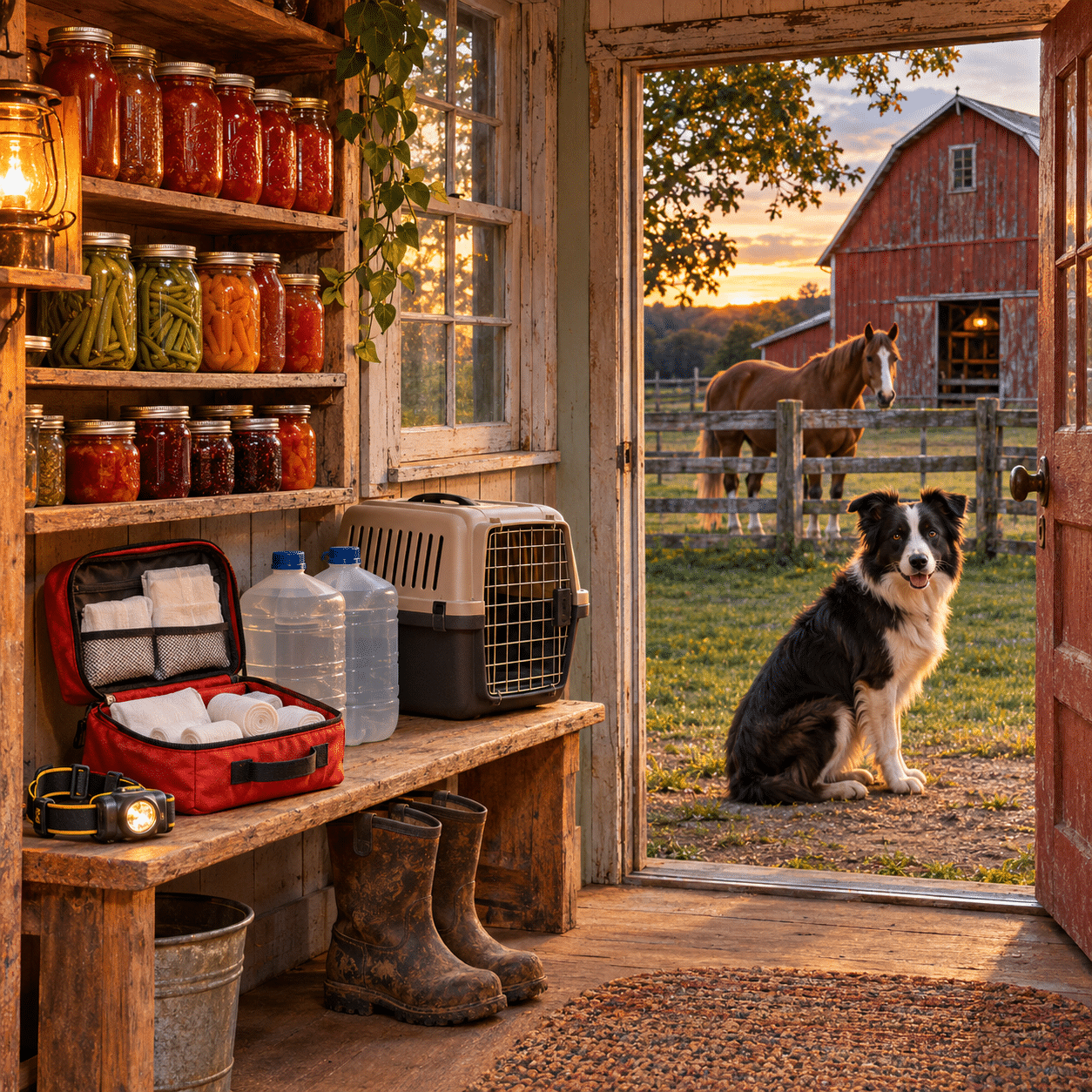
First, here’s an overlooked resource you won’t find in a feed-store aisle: a vet who knows your place. Before you buy another bottle for the medicine cabinet, make a phone call. Ask a local practice how to establish care, which animals it treats, who covers nights and weekends, and where you should go when that practice can’t help.
Next, ask what an emergency farm call or hospital visit may cost, how payment works, and what information the clinic needs when you call. Then put the answers on paper, in plain English. A phone full of contacts is handy until the battery dies in your coat pocket.
There’s another reason to start now. Under the FDA’s Guidance for Industry 263 transition, new supplies of affected medically important animal antibiotics entering distribution after June 11, 2023, moved to prescription labeling. Existing over-the-counter inventory could sell through, so this wasn’t an overnight recall of every bottle on every shelf.
The practical lesson is simple: plan for veterinary oversight instead of assuming you can pick up the same antibiotic at the feed store when trouble starts. FDA’s farmer and rancher questions and answers explain that owners can obtain and administer prescribed medicines under an established veterinary relationship, subject to applicable requirements. A vet doesn’t necessarily have to examine every individual animal before prescribing within that relationship.
Ask for a written plan covering medicines you may keep, when to call before using them, and the exact directions. For animals that produce meat, milk, or eggs, have the veterinarian spell out withdrawal times, too.
Don’t gamble on a dusty bottle and a neighbor’s best guess. That shortcut can leave you with a bigger problem than the one you started with. A vet who knows your animals, your setup, and your distance from town is a far better investment.
Learn What Normal Looks Like Before Trouble Shows Up
The best part? You can start with a notebook, a digital thermometer, and a quiet afternoon. Have your veterinarian show you how to safely check temperature, pulse, and breathing for the species you keep, then record each animal’s usual readings at rest.
For perspective, Extension Horses gives a normal adult horse’s rectal temperature as roughly 99.5 to 101.5 degrees Fahrenheit. Age, activity, weather, and the individual animal matter, so one number doesn’t tell the whole story. Ask your vet to write down the ranges and warning signs appropriate for your own barnyard.
Meanwhile, pay attention at chore time. Does the mare normally holler for breakfast? Does the old dog meet you at the gate? Is that goat usually the first one trying to climb into the feed bucket?
Here’s why those little habits matter: unexpected behavior can be your first clue that something’s wrong. Penn State Extension’s guidance on recognizing a healthy horse emphasizes noticing changes from normal, and that habit serves a homesteader well beyond the horse stall.
Next, when something changes, write down when it started, what the animal last ate, any medicine already given, and what you can safely observe. A short video may help the clinic understand what you’re seeing. Don’t wrestle an injured animal for a temperature reading or delay departure just to fill every line in the notebook.
Stop the Bleeding Before You Hunt for Answers
Above all, protect yourself. Pain can make the sweetest dog lash out, and a frightened horse can hurt you without meaning to. Keep children and curious animals away while you arrange help.
For an accessible bleeding wound, press clean gauze or a clean cloth firmly against it. If blood soaks through, add material on top and keep pressure steady rather than peeling everything away to inspect your handiwork. The Merck Veterinary Manual’s emergency guidance explains this approach and the importance of calling ahead for care.
Once bleeding is controlled, minor surface wounds may be gently rinsed with saline or clean water while you get advice. Skip the peroxide, rubbing alcohol, and homemade herbal concoctions; VCA’s wound-care guidance warns that these can delay healing. Use antiseptics only as your vet directs, including the proper dilution.
Here’s a dangerous blind spot: a little puncture doesn’t always mean a little injury. Bite wounds can hide serious damage beneath the skin, and a deep wound near a joint needs prompt veterinary attention. Don’t dig around, stitch a wound shut, or pull out an embedded object.
Your goal is to get the animal safely to treatment. The kitchen table doesn’t need to become an operating room.
Know When the Barnyard Fix Has Run Out
Some problems can turn life-threatening in a hurry. Trouble breathing, collapse, uncontrolled bleeding, suspected poisoning, severe pain, and major injuries call for immediate professional help. Contact the clinic as you arrange transport, and follow its instructions for what to do on the way.
With a horse showing colic signs, call promptly rather than waiting to see whether a long walk fixes things. Remove feed while you seek instructions, and keep yourself clear of a horse that’s throwing itself around. As Penn Vet explains, endless walking can exhaust the horse; walking is no substitute for an assessment.
Likewise, a difficult birth is the wrong time to improvise a pulling technique. Before lambing, kidding, or calving season, have your vet explain the warning signs, when to call, and what assistance you’re trained to give. Keep the emergency number where anyone doing chores can find it.
If poisoning is possible, save the package or photograph the suspected substance. Don’t give a home remedy or make the animal vomit unless a veterinary professional specifically directs you. With suspected rabies exposure, avoid saliva and bites, safely separate the animal if possible, and contact your veterinarian and public-health authorities.
Pack a Kit for Your Animals and Your Kind of Trouble
Fortunately, a useful kit starts with plain things: gauze pads and rolls, nonstick dressings, medical tape, gloves, saline, blunt-tipped scissors, a thermometer, and a flashlight or headlamp. Add towels, a spare leash, and a carrier or other safe way to move the animals you own.
From there, have your vet tailor the rest to your animals and your skills. A stethoscope is useful when you know what you’re listening for; syringes and electrolyte products need species-appropriate instructions. The AVMA’s pet first-aid brochure is a useful printed reference to keep with the supplies.
A muzzle may help prevent bites in some situations, but it isn’t an automatic first step. Don’t muzzle an animal that’s vomiting, struggling to breathe, or overheating, and ask your vet about other restrictions. Never leave a muzzled animal unattended.
Keep medicine directions, vaccination records, identification details, and emergency contacts in a waterproof pouch. Those records help a strange clinic get oriented quickly; missing paperwork should never stop you from seeking emergency care.
Finally, give your setup a trial run. Can you grab the box and find what you need in the dark? A first-aid kit buried under three bags of feed is really a scavenger hunt with bandages.
When the Well Quits Your Animals Still Need Water
Now give your routine a test drive. Walk through a full day of animal chores and ask one crucial question: what stops working when the power stops? The well pump, stock-tank heater, refrigerator, electric fence, and barn lights may all belong on that list.
Store drinking water for the animals as well as the family, using their actual consumption and your vet’s advice to plan the amount. Heat, nursing, size, and species can change demand considerably. A few jugs beside the pantry won’t carry a barn full of thirsty mouths very far.
Meanwhile, don’t overlook the medicine shelf. For refrigerated medicines, get product-specific instructions before an outage. If your dog or cat uses insulin, ask how to monitor storage temperature, prevent freezing, handle a missed meal, and respond if a dose is delayed. Storage rules vary, and a bottle’s appearance alone can’t prove that it still works.
The FDA advises making a plan for temperature-sensitive medicines during power failures. Have your veterinarian apply that planning to the exact animal medicine you use, rather than borrowing another pet’s dosing or storage instructions.
Don’t Underestimate the Heat Behind Those Closed Windows
During a summer outage, shade and an open window can give you false confidence. They may not keep an animal safe. Plan somewhere cooler to go, especially for flat-faced dogs, older animals, and those with health problems. Don’t wait for the house to feel like a tin shed at noon before loading the carrier.
Heavy panting, unusual drooling, weakness, confusion, or collapse can signal heatstroke. Move the animal out of the heat, begin cooling with water and moving air, and contact an emergency veterinarian immediately; the AVMA’s first-aid guidance describes warning signs and immediate steps. Don’t force water into an animal that can’t swallow normally.
Of course, don’t forget the barn. Check water supplies, shade, and ventilation there, too, and arrange backup care if you must leave. An outage doesn’t cancel evening chores.
Practice the Plan While the Porch Light Still Works
The American Red Cross offers online cat and dog first-aid training. It’s a practical place to start, followed by species-specific instruction from your veterinarian or local Extension office for livestock and horses.
On a healthy animal, practice only gentle handling, carrier loading, and the observations your vet has shown you. Practice CPR compressions and rescue breathing on a training model, never on a healthy pet. The first emergency is a poor time to discover that the dog won’t enter the crate or the trailer lights don’t work.
Then take the plan beyond the kitchen table and run an evacuation rehearsal. Find a place that will accept your animals, arrange a backup driver or trailer, and know which route stays passable when the creek rises. The AVMA’s disaster-planning advice recommends arranging an evacuation destination ahead of time; don’t assume every shelter takes pets or livestock.
You don’t need a veterinary diploma hanging beside the barn calendar. You need practiced hands, useful supplies, a workable route, and a professional who knows your name before you call in the middle of the night. That’s how you build confidence you can rely on when the unexpected shows up.
So make that call while the coffee’s hot and the roads are clear. The dog at the gate and the mare waiting for her hay can’t pack their own emergency kits.
They’re counting on you to think ahead.