Print
Three Amish Schoolhouses Face A Fight Over Faith And Freedom
A Quiet Little Schoolhouse… A Huge Fine… A Fight The Rest Of Us Need To Watch Closely
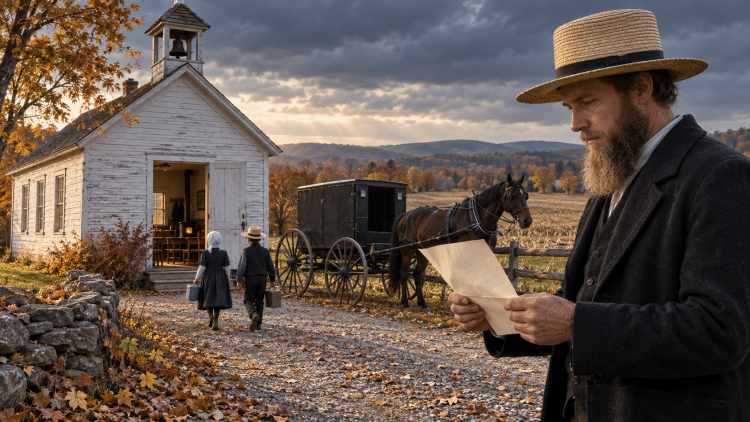
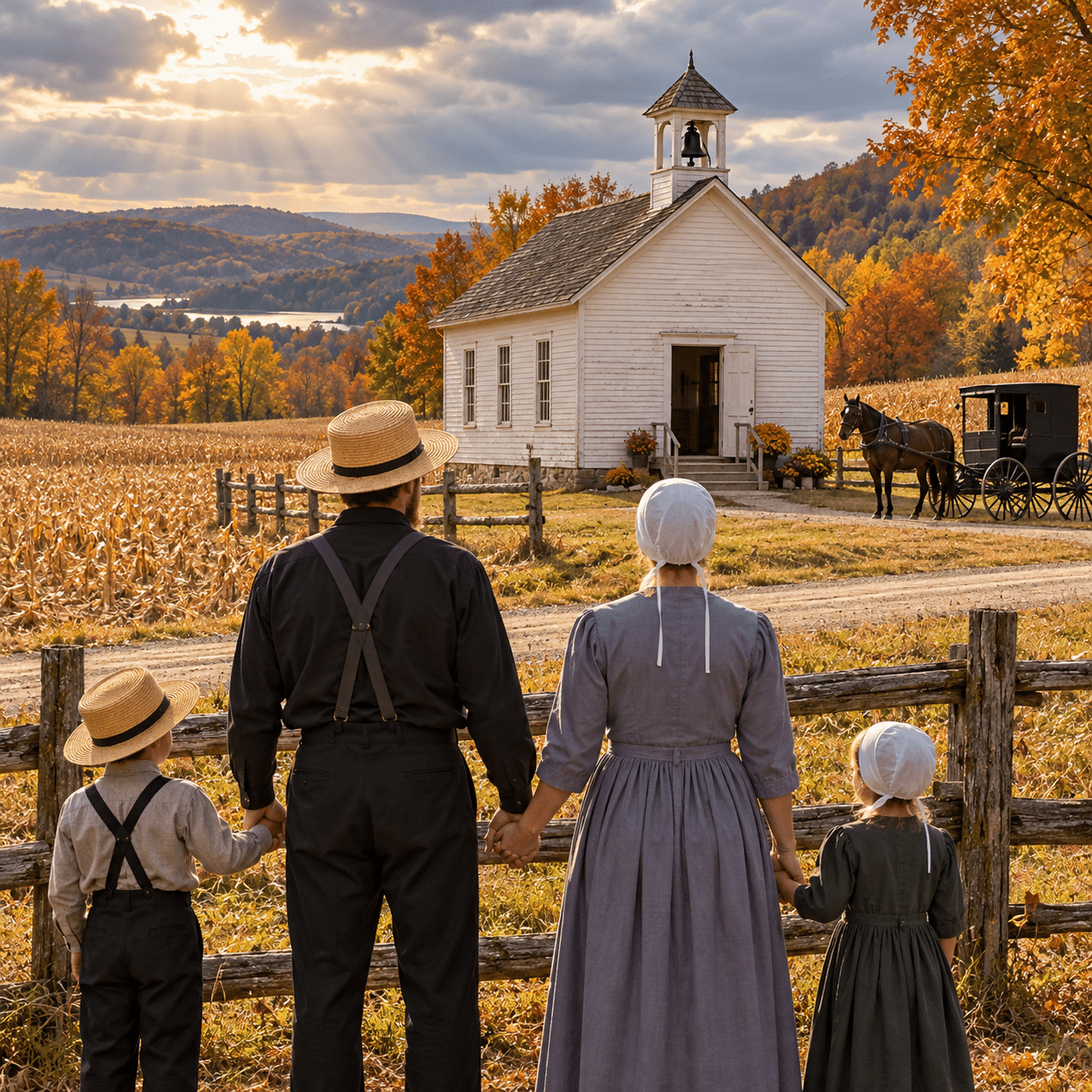
Picture a gravel lane winding past a hayfield in rural New York. At the end sits a little Amish schoolhouse, the kind of place where you can imagine a woodstove ticking, lunch pails lined up on a shelf, and horses stamping outside while children work through their lessons.
Now picture an envelope arriving from Albany. Inside is an unexpected bill with the power to turn that quiet school day into a fight for the community’s future.
That part takes no imagination.
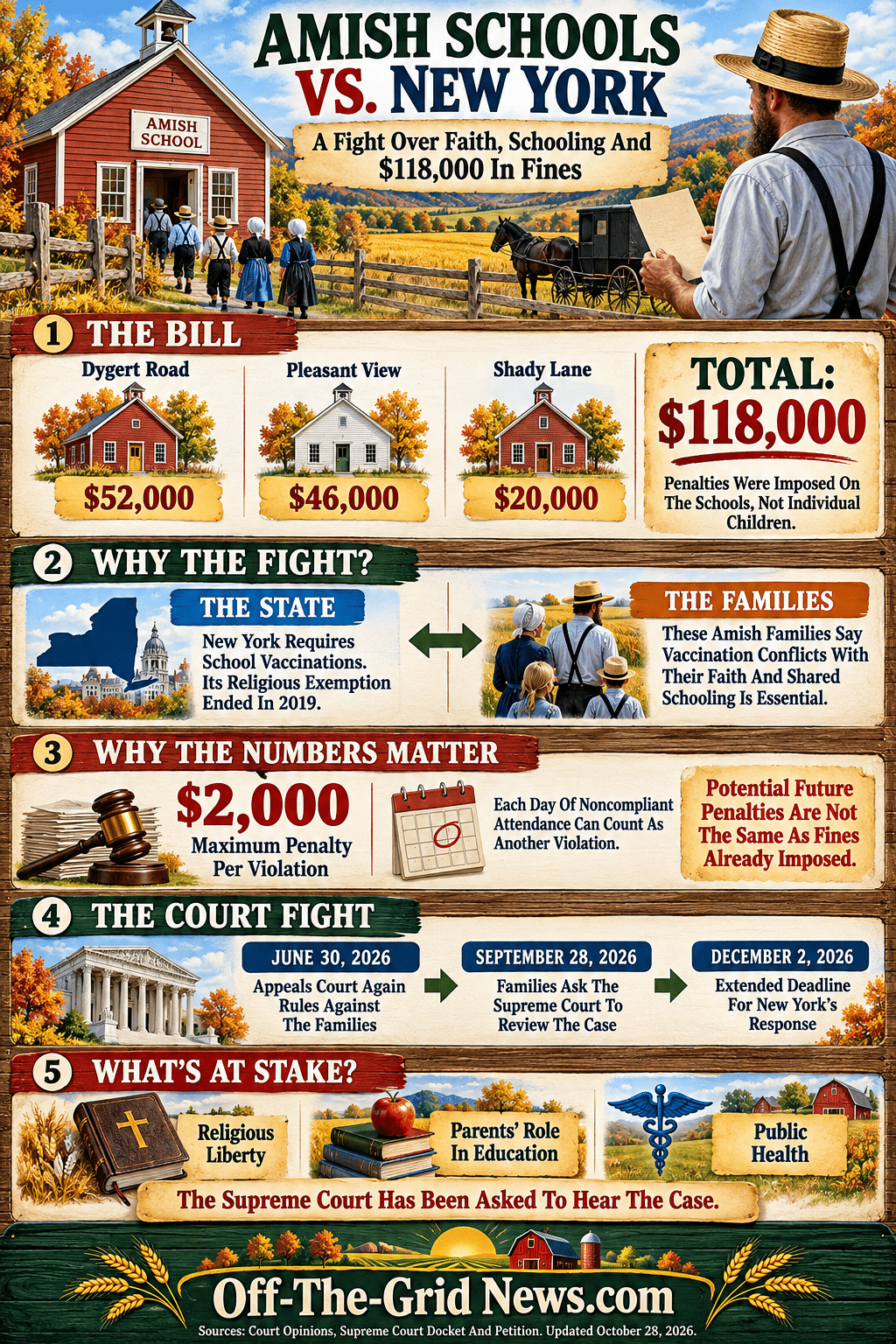
New York has imposed $118,000 in penalties on three Amish schools over its vaccination requirements. And under the state’s enforcement approach, additional school days can mean additional violations, carrying penalties of up to $2,000 apiece. That’s a financial threat with teeth.
For anyone who has ever scraped together money for a barn roof, a feed bill, or another acre of ground, this story lands close to home. Because once government brings out a financial hammer this heavy, a small schoolhouse doesn’t have much room to duck.
The Cold Hard Facts Behind a Brutal Bill
First, let’s clear away the fog and get the numbers straight. The court record describes penalties of $52,000 against Dygert Road School, $46,000 against Pleasant View, also called Twin Mountain, and $20,000 against Shady Lane.
The first two amounts represented 26 children and 23 children, respectively, counted for one day each. Shady Lane’s penalty used a different calculation: one child attending out of compliance for ten days, rather than ten children for one day.
Also, those bills were assessed against the schools. They weren’t individual tickets handed to children at their desks.
That distinction matters. So does this one: the $118,000 is an imposed penalty, while the much larger figures circulating online describe what repeated maximum penalties could produce.
Now here’s the chilling detail: the daily exposure is enough to make a farmer set down his coffee. At $2,000 per violation, even a modest classroom can face numbers that belong on a factory balance sheet rather than beside a spelling book.
For illustration, 59 children counted at that maximum for 180 days would produce $21.24 million. That’s hypothetical arithmetic, not a bill the state has imposed, and the original fines don’t establish a head count of 59 children.
Frankly, the actual bill packs plenty of wallop without dressing it up.
They Built the School and Paid the Bill
Meanwhile, consider the schools on the receiving end. These are private Amish schoolhouses supported by their own communities, receiving no state or federal funding, as reporting on the dispute describes.
To a homesteader, that arrangement feels familiar. You build from scratch, shoulder the expense, and grind it out through good years and lean ones. Along the way, you try to keep your family’s life rooted in something sturdier than the next government program.
But paying your own way doesn’t automatically put a school beyond state law. New York’s vaccination requirement covers public, private, and religious schools, which is why this fight has moved from the schoolyard to the federal courts.
But hold on. Before anyone says, “Just homeschool,” there’s a crucial wrinkle. The families say learning together is part of their children’s religious upbringing; scattering the children into separate homes would change something they consider essential.
You can see why a one-room schoolhouse might look like homeschooling to an outsider. To these families, though, the shared classroom is part of the point, as their arguments in the court proceedings explain.
Albany Yanked Out a Longstanding Fence Post
So how did an arrangement that lasted for decades explode into a legal showdown? New York once allowed both medical and religious exemptions from school vaccination requirements.
Then came the measles outbreaks of 2018 and 2019. On June 13, 2019, the state repealed the religious exemption while keeping the medical one, a history laid out in the Second Circuit’s ruling.
From Albany’s side of the fence, the change was meant to prevent disease outbreaks. From the families’ side, it ripped away an accommodation that had allowed them to educate their children without violating their faith.
And there’s the knot in the fence wire. The state says it is enforcing a health rule that applies broadly; the Amish plaintiffs say that rule leaves no workable room for their religious life.
That deserves a serious hearing. A community shouldn’t have to win a popularity contest before anyone listens to its claim of conscience. Being outnumbered shouldn’t mean being ignored.
Faith Isn’t Albany’s Crop to Grade
Along the way, some of the political language has made a hard dispute even harder. The families’ Supreme Court petition points to lawmakers dismissing religious objections as fake or garbage.
You don’t have to agree with an Amish parent’s beliefs to understand why that sticks in his craw. Imagine explaining a conviction that shapes your family’s whole life, then hearing someone in a suit belittle it, then brush it aside like chaff off a threshing floor.
Of course, sincerity alone doesn’t settle every constitutional question. Courts still have to decide what government may require, which exemptions matter, and when a law crosses the line.
But elected officials ought to approach that work with a little humility. A legislative seat doesn’t come with a license to inspect another man’s soul.
And for those of us raising children outside the usual mold, that principle travels well. Your family’s faith doesn’t have to look like mine for me to care whether government treats it with respect.
When the Threat Gets Up Close and Personal
Next, it gets up close and personal. Here’s the part a spreadsheet can’t capture. Reporting on the families’ plight says attorney Aaron Siri warned that paying the fines could require the loss of land, and some Amish have discussed whether they’ll have to pack up and leave New York, according to this account of the dispute.
That’s a warning about the pressure these penalties create, not proof that New York has seized a farm. Even so, anyone who works the ground understands what’s at stake when land enters the conversation.
A farm’s rarely just acreage. It’s the gate your father hung, the orchard you’ve pruned through a dozen winters, and the kitchen window where somebody watches for your lantern after dark.
Besides, don’t underestimate what it takes to move a rooted community. This isn’t like changing apartments. You can load a wagon with furniture; hauling away the neighbor who helps at harvest is another matter.
Ezra Wengerd’s letter, described in Todayville’s reporting, expressed regret over the conflict and gratitude for the freedoms and protections New York had provided. That hardly sounds like a man itching for a showdown.
It sounds like a man hoping there’s still room for his family.
Put the Enforcement Rules on the Table
Now, the families also argue that New York permits large numbers of other students to attend school without full vaccination compliance. Their petition raises that comparison as part of the case against the state’s approach.
That’s an argument to examine. It doesn’t establish that every unvaccinated student’s in the same legal position. Enrollment rules, documentation, and permitted exceptions can matter, so a raw head count won’t answer the whole question.
Even so, let’s put the enforcement question on the table. How does the state decide when to exclude a student, when to fine a school, and how steep a penalty to impose?
If officials have a consistent explanation, let them spell it out in plain English where ordinary parents can read it. Rules carry more weight when people can see how they’re applied.
After all, a fence line ought to run straight. Folks notice when it seems to bend around one neighbor and cut through another’s garden.
Face Up to Measles and Keep Asking Hard Questions
Meanwhile, let’s face up to the health problem. It deserves plain talk, too. On October 5, Governor Kathy Hochul declared a statewide disaster emergency over the ongoing measles outbreak.
Her executive order cited 108 New York cases as of October 3, including 92 since July 15 in under-immunized rural communities. It also cited 977 Pennsylvania cases and five deaths as of October 2.
Those are dated figures, not a running tally for today. And measles can bring serious complications; the order identifies vaccination as the reliable way to prevent it.
So nobody needs to pretend an outbreak is a sniffle that can be waved away from the porch. Protecting children and limiting disease spread are real responsibilities.
At the same time, that doesn’t put every enforcement decision beyond question. The size of a fine, the availability of accommodation, and the effect on a small religious community still deserve scrutiny.
Also, a survey of a small group of Amish children shouldn’t be treated as proof that avoiding vaccines prevents chronic illness. A claim filed in court doesn’t become an established medical fact simply because it has a docket number.
The religious-liberty argument can stand on its own feet, with the evidence out in the open. It doesn’t need a shaky medical claim holding up the other end of the barn.
Crunch Time at the Supreme Court
That brings us to the next crucial step in Miller v. McDonald. The families and schools are again asking the Supreme Court to review their case, with First Liberty describing the request as an effort to protect their ability to live out their faith.
After the Supreme Court returned the case for reconsideration in light of Mahmoud v. Taylor, the Second Circuit again ruled against the plaintiffs on June 30, 2026. It concluded that the vaccination law was neutral and generally applicable and rejected their constitutional claims.
In other words, the appeals court accepted the state’s legal position. The families are asking the high court to take another look at what that position means for their schools and religious upbringing.
Their new petition was filed September 28. And here’s an update worth marking on the kitchen calendar: the Supreme Court docket shows that New York received an extension on October 27, moving its response deadline to December 2, 2026.
That deadline isn’t a promise that the Court will hear the case. For now, they’re still waiting at the next gate in a long legal lane.
Keep an Eye on the Quiet Schoolhouse
Finally, don’t let the horse and straw hat fool you into thinking this can’t directly affect you. If your life includes raising your own food, teaching your own children, or making room for convictions the crowd doesn’t share, you already understand the desire for a little breathing room.
This case won’t automatically decide the rules for your well, your raw milk, or your homeschool. But it does raise a familiar question: how much room will government leave for people whose lives don’t fit the standard form?
A state can have a real public-health concern and still owe its citizens an honest explanation for penalties that threaten their institutions. Asking for that explanation is part of holding government to its work.
So read the filings, follow the case, and share the story with the neighbor who thinks religious liberty is somebody else’s problem. Check it out for yourself, keep the facts straight, and don’t pull your punch when you ask the hard questions.
The quietest schoolhouse on the gravel road still deserves to be heard.