Print
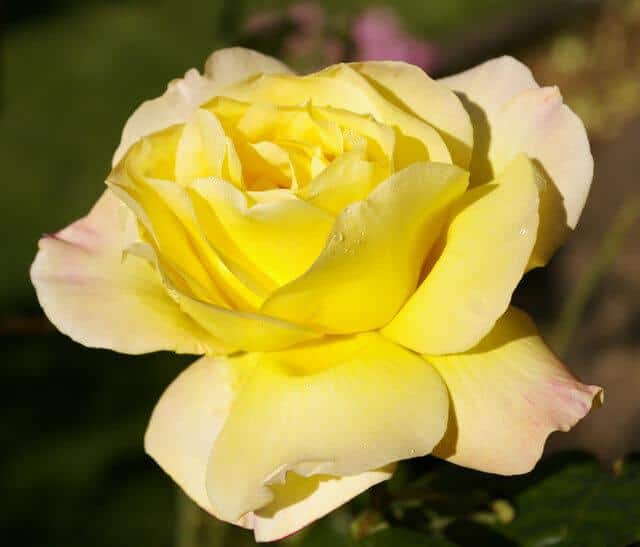
 In earlier articles, we have mentioned how you can actually use roses to create not only beautiful but delicious dishes and arrangements. However, in order to have food-grade roses, you must grow them without chemical fertilizers and pesticides. Growing organically is the answer. Growing organic roses is no harder than growing organic fruit and veggies in your backyard garden.
To grow any plant organically, you need to know what the plant requires to be healthy and withstand pests.
- Choose roses for your climate zone—tea roses love hot climates, but don’t do well in frigid winters. The Explorer series and old-fashioned rugosas are much hardier.
- Choose roses resistant to diseases in your area.
- Research likes and dislikes for the roses you have chosen.
- Add lots of organic matter to soil to improve its quality; keep it slightly acidic – 6.0 to 6.5.
- Plant roses in areas with full sun six to eight hours daily. In hot climates provide afternoon shade.
- Provide space between bushes for air circulation.
- Use plant diversity to help control pests. Under plant roses with companions – feverfew, catmint, African daisy, Mexican daisy, or geranium varieties.
- Ground water – do not water with sprinklers or other above-ground methods.
- Water deeply – especially during dry spells.
- Watch lower leaves for splashing fungus spores.
- Mulch with organic matter to keep roots cool.
- Feed regularly – in the spring after pruning, while they are in bud, and in summer – at least six weeks prior to the first frost.
- Prune in fall and spring.
- Remove diseased or damaged wood promptly.
- Clean up all fallen leaves and debris quickly.
Rose Food
Organic Rose Food
- 1 cup alfalfa pellets (rabbit food)
- 2 tablespoons Epsom salts
- ¼ cup rock phosphate
Just before flowering gently work mixture into soil. When plants start to leaf out in spring, spray with liquid seaweed – improves disease resistance.
Alfalfa Tea
- 1 cup alfalfa pellets (rabbit food)
- 2 tablespoons Epsom salts
- 2 gallons water
Mix together and steep 24 hours. Water around each rose bush. Stop feeding in August to prevent injuries to new growth.
Manures
Know where your manure comes from. In this way you will know if animals are fed hormones or regularly given antibiotics and if the farmer uses organic practices regularly.
Avoid chicken manure as it may burn plants. This includes mushroom manures, as they contain chicken manure. The safest manures are horse and llama. They are easily available and are more pharmaceutically pure, thus reducing potential for unwanted chemicals being added to soil. Be watchful for hayseed in horse manure, as they may sprout in your garden. Wood ash, from untreated woods, is a good addition to horse manure; this adds carbon to help breakdown manure quickly and will make a good nitrogen/carbon ratio.
Pruning Basics
- Use clean, sharp tools.
- Begin pruning at the base.
- Prune to allow more light and air circulation into center of the bush.
- Cut at a 45° angle ¼ inch above an outward facing bud.
- Make clean cuts (not ragged or crushing stems).
- Remove dead, broken, dying, diseased wood and any weak or twiggy branches (smaller than a pencil).
- If cane borers are a problem, seal with white glue (like Elmer’s).
- Remove suckers below the graft.
- Remove any remaining foliage.
Pruning time depends on climate and hardiness zone. Most pruning is done in spring, when the leaf buds begin to swell and turn reddish. Hybrid tea roses are pickiest when it comes to pruning. If you don’t know what type of roses you have, watch them for a season. If it blooms on new growth, prune while dormant or just before dormant season ends. If it blooms on last year’s growth, prune after flowering.
Blooms Once – New Growth:
Modern ever-blooming and Floribunda – The best blooms are on the current season’s growth. Prune hard, removing ½ to 2/3 of the bush’s height in spring. Remove old, woody stems. Leave three to five healthy canes spaced evenly around bush. Cut the canes at various lengths, between eighteen to twenty-four inches, to encourage blooming.
Hybrid tea roses and Grandiflora – These bloom on new wood and should be pruned in early spring. Create an open vase with remaining canes by clearing out center stems and branches that cross inwards. Reduce length of remaining stems by half, leaving them at eighteen to twenty-four inches. You may allow older stems to be a bit longer.
Blooms Once – Old Wood:
Ramblers – Prune right after flowers are spent to remove winter damage, dead wood, and to retain size and shape. You can cut back to three to four inches if desired.
Repeat Bloomers:
Modern shrub roses – These bloom on mature stems—not old, woody stems. Leave unpruned to increase vigor for the first two years. During the third year and following, use the 1/3 rule – remove 1/3 of the oldest canes and any dead, dying, diseased, or damaged wood.
Climbers – These may repeat bloom. Prune early to remove winter damage and dead wood. Prune after blooming to keep size and shape in check.
Bourbons and Portlands – These repeat bloom on old and new wood. Prune to remove dead and damaged wood before blooming. A heavier pruning and shaping can be done after first flowering.
Minimal Pruning Required:
Alba, Centifolia, Damasks, Gallica, and Mosses – These only bloom once on old wood. They don’t require much pruning. Prune after flowering to remove dead, damaged, or thin wood and to shape bushes.
Miniatures – Prune only to maintain shape. Cut back to outward facing bud after blooming.
©2011 Off the Grid News