 Print
Print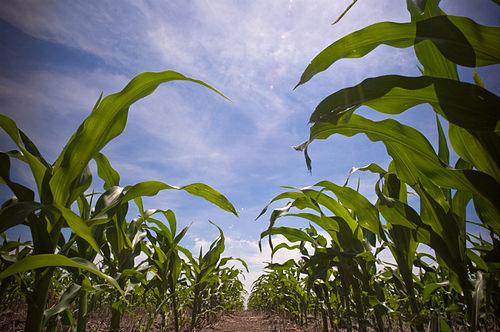
 With one of the worst droughts in decades causing corn prices to escalate, Americans may be forced to choose between putting meat on the dinner table and filling their gas tanks. At the heart of the problem is a battle between meat and ethanol producers over how best to use this year’s shrinking corn crop.
The debate over using America’s food crops to produce fuel has been brewing since 2008 when a boom in commodities and surging food prices brought into question the ethics of diverting corn to the production of ethanol, which Washington promotes as a viable and environmentally friendly alternative to imported oil.
Arid conditions in the Midwest this year have prompted the Department of Agriculture to cut its corn-harvest forecast 17%, sending corn prices to a record of $8.49 a bushel on Aug. 10. Corn and corn by-products are used in nearly 70% of all grocery items and is a major source of feed for cattle and chicken.
The pressure on corn production has risen sharply since the implementation of the 2005 U.S. Renewable Fuel Standard. A certain volume of the nation’s transportation fuel must be blended with non-fossil fuels such as ethanol, distilled primarily from corn. This year’s ethanol requirement is 13.2 billion gallons, up from 12.6 billion gallons in 2011. That figure is set to grow to 13.8 billion gallons in 2013. That is projected to rise to 36 billion gallons in 2022 according to the Renewable Fuels Association.
This year’s poor corn crop and high prices are partly to blame for the high price of gasoline. At last check, the average retail price for a gallon of gasoline had ticked up to $3.72, a 7% jump from the $3.47 nationwide average just a month ago, according to the AAA Daily Fuel Gauge Report.
Meat producers argue a waiver on EPA requirements for renewable fuels would make more corn available to livestock, and stem the rise in feed costs. Several governors and a growing number of Capitol Hill lawmakers are calling for such a waiver.
Governor Nathan Deal of Georgia complained Tuesday that rising corn prices cost chicken farmers in his state an added $1.4 million a day. “This translates to $516 million per year if these market conditions continue,” Deal said in a letter to EPA administrator Lisa Jackson. “These additional input costs are not sustainable.”
The North American Meat Association says 156 of the 435 members of the House of Representatives support a request to waive the mandate for corn-based ethanol. “We’re seeking a waiver to ensure an adequate supply of corn for America’s livestock producers and others who put food on the tables of American consumers,” said Barry Carpenter, chief executive of the industry group.
An Iowa State University study concludes that a waiver of the corn-ethanol mandate could lower corn prices, on average, by about $1.13 a bushel. While that would represent a 14% reduction in corn prices on the futures market, it isn’t enough savings to make a significant difference to livestock farmers, according to investment banker Cannon.
Cannon said the EPA probably won’t grant a waiver in the near future because of the Obama administration’s support for corn-based ethanol as a means of reducing U.S. dependence on imported oil and because of the fuel’s role in cutting emissions.
“Even with a relaxation of the standard, given that ethanol plants represent sunk costs, as long as it is more profitable to produce a gallon of ethanol versus selling for animal feed, not much will change,” Cannon said.
Jefferies analyst Laurence Alexander took a similar tone in a Wednesday note to clients: “While popular sentiment could spur congressional action, time is running out to enact legislation before the November election, and, absent a worse-than-expected harvest and higher prices, the political will may not exist.”
Instead of waiving the EPA mandate, President Obama has chosen to use Federal dollars to buy meat and thus inflate meat prices. Campaigning in Iowa he announced, “Today the Department of Agriculture announced that it will buy up to $100 million worth of pork products, $50 million worth of chicken, and $20 million worth of lamb and farm-raised catfish.”
“Prices are low, farmers and ranchers need help, so it makes sense,” Obama explained. “It makes sense for farmers who get to sell more of their product, and it makes sense for taxpayers who will save money because we’re getting food we would have bought anyway at a better price.”
A far simpler and more common sense solution to the current corn feed price problem would be to suspend the federal ethanol mandate. “It doesn’t solve the problem of having enough affordable corn next summer,” industry analyst Steve Meyer told Reuters. “Without changing the ethanol program, nothing can be done,” he said.
The higher corn prices caused by the mandate and the drought have also driven up the price of ethanol by 33 percent since May, which means — again, thanks to the mandate — higher gas prices at the pump. Nationally, the average price of a gallon of gas rose 16 cents in July, an all-time record hike for that month. Prices rose an additional eight cents just last week. Gas is already more than four dollars a gallon in California and is expected to go higher.