 Print
Print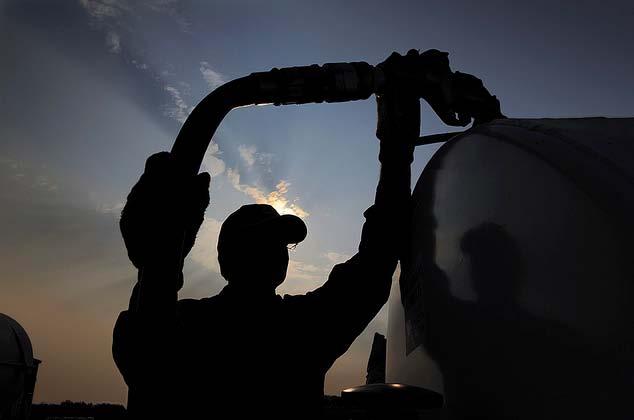
 When fuel such as diesel or gasoline is readily available, most people don’t think of the ramifications of storing it. After all, if you need more, just go to the pump and get it!
But in a survival situation, especially a prolonged one, fuel will be a prime consideration, mainly for two reasons – firstly, it will not be plentiful or available, and secondly, what fuel is left will be degrading. Most people don’t realize that fuel, being a refined product, has a finite lifespan. In fact, keep fuel too long, and at some point, the fuel will degrade to the point that it is no longer able to produce the combustion needed to power our cars, trucks, generators and other such equipment.
Fuel is broken down into two main categories for our purposes. Although there are many types of fuel oils, we care mainly about gasoline and diesel. These are far and away the most common fuels, fuels that we will desperately need during survival situations to power most anything. Let’s look at them both separately:
Number two diesel is a fuel oil that undergoes a relatively low level of refinement. To understand how the refinement process works, imagine a fractional distillation tower such as the kind seen at most refineries – a tall, thin spire. At the base of this spire, crude oil and tar products are added, and then heat is applied. The heat works to unbind the molecules found in the oil. As these molecules unbind, they rise up in the tower until their weight will not permit them to rise any higher – kind of like a helium balloon with a weight attached. Collectors placed at strategic elevations within this tower then collect these molecules, and they are condensed to form the fuels we know. Diesel fuel is harvested at a relatively low elevation in this tower, meaning it is one of the earliest byproducts of burning crude. As such, it is very stable, and its stability means that it will last the longest.
Understand solar, wind, water, and biofuel energy as you make your home ready for renewables.
Even without treating it, diesel fuel will last for a year with no problems at all. It’s just an inherently stable product. When treated with fuel stabilizer, the life of diesel fuel can be extended beyond five years. The main enemies of diesel fuel storage are algae and water. All fuels are somewhat hygroscopic, meaning they attract water molecules. This water not only waters the fuel down, it also provides a home for algae, which lives quite nicely inside of a diesel tank. Consider that both water and algae wreak havoc in diesel fuel filters and regulators, plugging them up to the point where the engine will die. Your main defense against water and algae is two fold:
- Treat all fuel required for long-term storage with algaecide. Commercially available diesel fuel stabilizer is essentially algaecide which creates a hostile environment for supporting life. Lack of living organisms (like algae) means clean fuel.
- Keep diesel tanks full. Keeping your diesel tanks full means no airspace to promote condensation within the tank, which adds water to the fuel. Water in turn provides a habitat for algae. Keep your tanks full!
Gasoline
Getting back to our fractional distillation tower example, gasoline is a very refined fuel that exits the collectors towards the top of the tower, and then must be further refined to create what we know as gasoline. Unlike diesel, gasoline is a highly refined substance with complex molecular bonds, which means that over time, these bonds break and the fuel reverts back to an earlier, unusable state. Gasoline comes in three main grades at the gas pump categorized by the octane rating. Octane is the “punch” that provides the energy for internal combustion. The higher the octane rating, the hotter the fuel burns, meaning the more power generated to drive the engine. In the United States, octane generally starts at 87 which is regular, then 89 which is mid grade, and finally 91 which is super or premium. Some individual states may have higher or lower octane ratings available for sale, but those are the averages.
Generally speaking, the problem with gasoline over time is that as the molecular bonds break, the octane rating falls to the point where the gasoline is no longer able to produce the energy required for effective internal combustion. Some devices, like two-stroke generators, don’t need octane rich fuel. Others, like modern car engines, will knock badly with even a slight reduction in fuel quality. What this means to you is that the clock is ticking on gasoline – it’s degrading right now in the fuel tank of your car. It’s not unusual for highly refined premium gasoline to lose significant amounts of octane within even 90 days, and low grade gasoline to lose octane within 6 months. If you are intent on preserving fuel, then use gasoline stabilizer such as Sta-Bil, which slows the rate of chemical bond breakdown, giving you up to a couple of years of life increase on your gasoline.
Both fuels should be stored in a cool, dark place, and should be in topped-up containers with as little airspace as possible. Lastly, treat your fuel before you store it – fuel additives are rarely capable of bringing dead fuel back to life, but they will extend the life of new fuel significantly.
Sign up for Off The Grid News’ weekly email and stay informed about the issues important to you