 Print
Print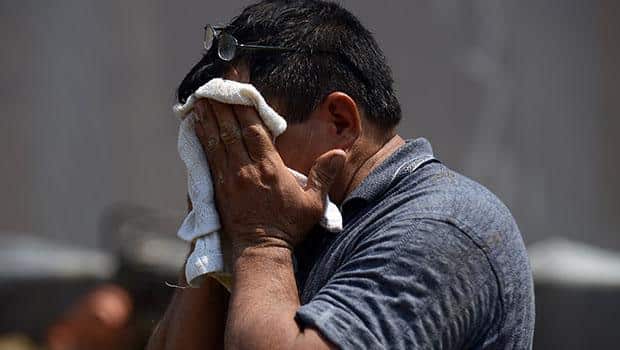
I don’t know how it is where you live, but where I live, it’s over 100 degrees Fahrenheit half the days of the year. We only end up using our home’s furnace a couple of weeks in January and February and then, it’s usually just at night. With that kind of climate when it comes to survival, I’m not as concerned about heating my home as I am cooling it. Considering that we run the air conditioning over 300 days per year, if the grid goes down, we’re in trouble.
Let me just add a little more confusion to the high heat here. My wife’s body really can’t stand the heat. She’s one of those rare people who don’t perspire. So, the natural cooling that you and I experience isn’t available to her. She overheats way too easily. Not exactly the right kind of person to live in the climate where we live.
Nevertheless, we’ve had to figure out how to survive extreme heat without air conditioning. While we have excellent air conditioning systems in our home and cars, we also spend a fair amount of time in Mexico, where we are much less likely to have those luxuries. Even if we were able to take an air conditioner with us, electrical power outages are extremely common south of the border.
Get in the Shade
The first thing you need to do to keep your cool when you don’t have air conditioning is stay out of the sun. Shade is wonderful. Shade can save you as much as 10 degrees of temperature. If you have to be somewhere that doesn’t have air conditioning, then make sure that you’re not standing in the sun.
Dependable, Solar Energy, Backup Power System, Ready For You In Any Crisis
You can do the same thing to help keep buildings cool. If a building is in the shade, it isn’t as likely to get hot as one standing in the sun. So, arrange for your home to be in the shade. If you don’t have a convenient skyscraper to provide you with shade, plant trees. Make sure you put them on the south and west sides of the house, as those are the sides where the sun strikes the strongest. Maybe those trees will take a while to grow, but they’ll eventually shade your house.
When we were living on the road in a motorhome, I built a sun shade the length of the vehicle. It was held off the roof and side of the motorhome and stretched out with fiberglass poles. That kept the sun off of our RV, making it about 15 degrees cooler on the inside.
How About Some Wind?
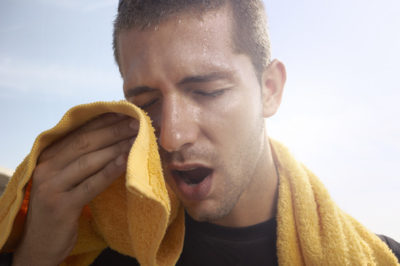
Wind is a great help in surviving extreme heat. Even though we live in a hot climate, it’s windy here. That wind makes all the difference. On a day when the wind is blowing, I can count on it being much cooler than on other days. I can also count on the wind helping my perspiration to evaporate faster, providing me with more cooling.
In order for water to evaporate, it has to absorb a lot of heat. If that water is your perspiration, the water draws that heat out of your body. If you don’t have any perspiration, you can spray yourself with water from a spray bottle, providing water to evaporate and cool you.
Take Evaporative Cooling Further
You can receive a lot of cooling from evaporation, especially if you have some wind to go with it. A simple evaporative cooler can be made by hanging burlap over an open window or doorway. As the air passes through the burlap, it will cause the water in the burlap to evaporate, drawing the heat out of the air passing through. This can lower the temperature of the air passing through the window or doorway by 10 to 15 degrees.
For this to work, you will need to keep a fresh supply of water to the burlap. That can either be done with a pump or by spraying water on the burlap from time to time. Regardless of how you do it, make sure that burlap stays wet.
Evaporative Cooling on Your Body
I’ve already mentioned how perspiration provides evaporative cooling for your body and how you can spray yourself with water to help overcome any problem with lack of sweating. However, there’s another way to use evaporative cooling on your body; that’s with a “Cool Collar.”
I don’t know if you can buy these anymore, but they’re not hard to make. A cool collar consists of a fabric tube about one and a half inches in diameter and 28 inches long. Before closing the tube, put a tablespoon of the kind of moisture retainer gel in it that you can buy in home and garden centers. You will need to block off both ends of the tube from the crystals by sewing, leaving all the crystals in the center part.
Once the cool collar is made and the end is sealed, soak it in water. The crystals will absorb water, making the collar swell up to the point that it looks like it is going to burst. Don’t worry, it won’t.
Place the cool collar around your neck, tying the ends together. The crystals inside will gradually release the water, allowing it to evaporate and cool. Being at your neck means that the collars are located at the point of greatest blood flow. As the water evaporates from the collars, the collars will cool, drawing heat out from your body.
The same idea as this collar can be expanded and turned into a vest. Some highway workers use these vests to keep cooler while they are working. The larger surface area of the vest provides more cooling than the collars does.
Get Underground To Survive Extreme Heat
If you have any way of getting underground, it’s going to be cooler. This could include going down in your basement, getting in the root cellar (if you have one) or going into a conveniently located cave. This is so effective, that if you have a cave on your property, you might want to consider turning it into a hot weather survival shelter.
If you decide to build a root cellar at some time, as part of your survival strategy, then be sure to make it big enough that you can use it for an emergency shelter from the heat. That will provide you with about the best natural cooling you can find.
When I was in the Yucatan peninsula a few years ago, I discovered the Mexican “cenotes.” These are underground caves with lakes in them. They may only be a few feet under the ground (10 to 20), but the temperature inside the caves is about 20 degrees cooler. The water was chilly enough that after a while you would actually have to get out and warm up; and this was on days where it was over 100 degrees Fahrenheit on the surface.
Go For a Swim
Speaking of the cenotes, never forget every child’s emergency summertime cool-off method; getting in the water. No matter how hot it is, the water will always be cooler. Going for a swim, running through the sprinklers or having a water fight are all great summertime ways of cooling off. Don’t tell me you are too old for that; if you are still breathing, you’re not too old.
The water which comes to our homes comes through underground pipes; that makes it cooler than the air temperature. Just getting wet with that water will help to cool you off and then as the water evaporates, it will cool you even more.