Print
Imagine leaving home to hunt ducks in shirtsleeves. The morning feels mild, the river beckons, and the heavy coat stays behind because, well, look at that beautiful day.
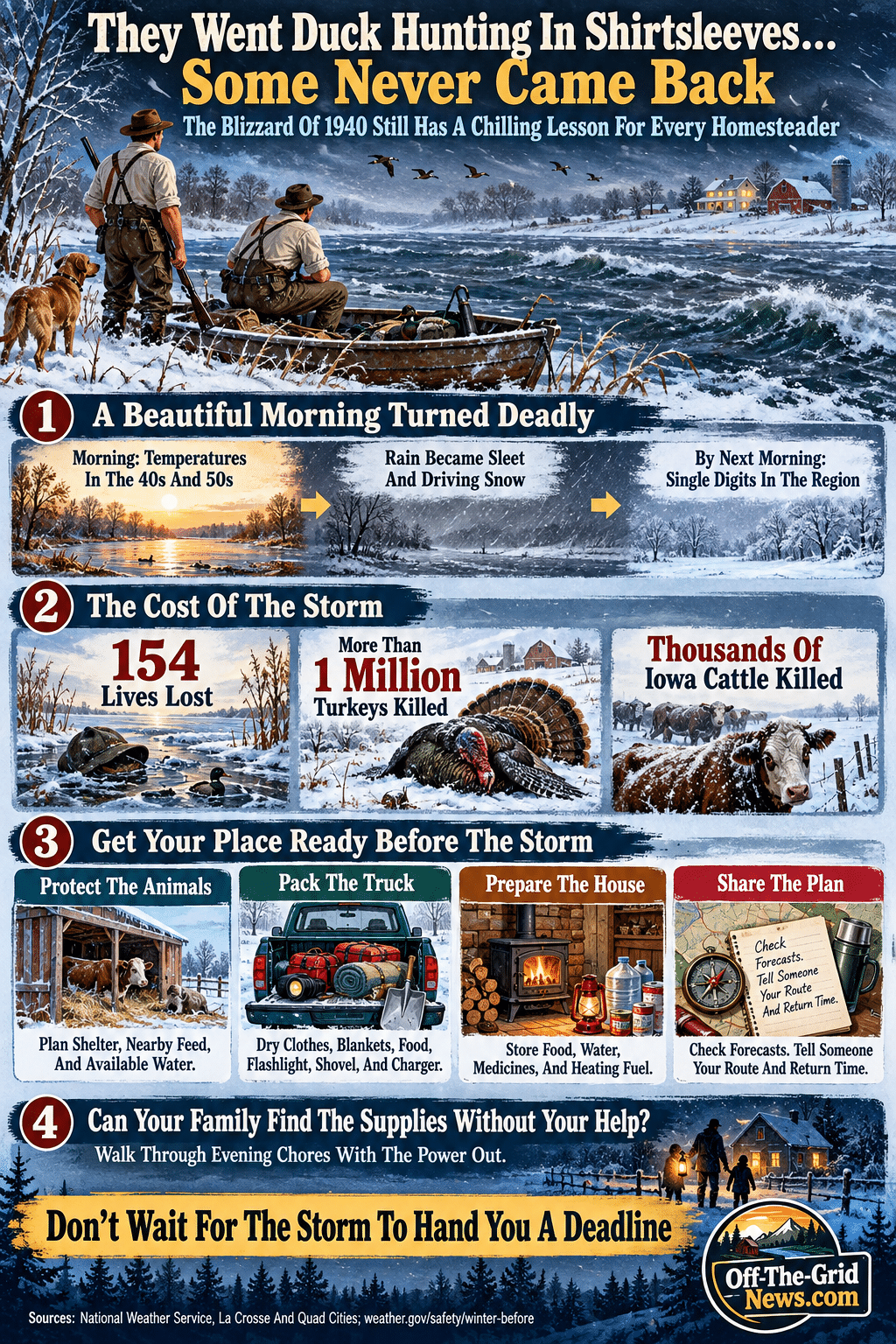
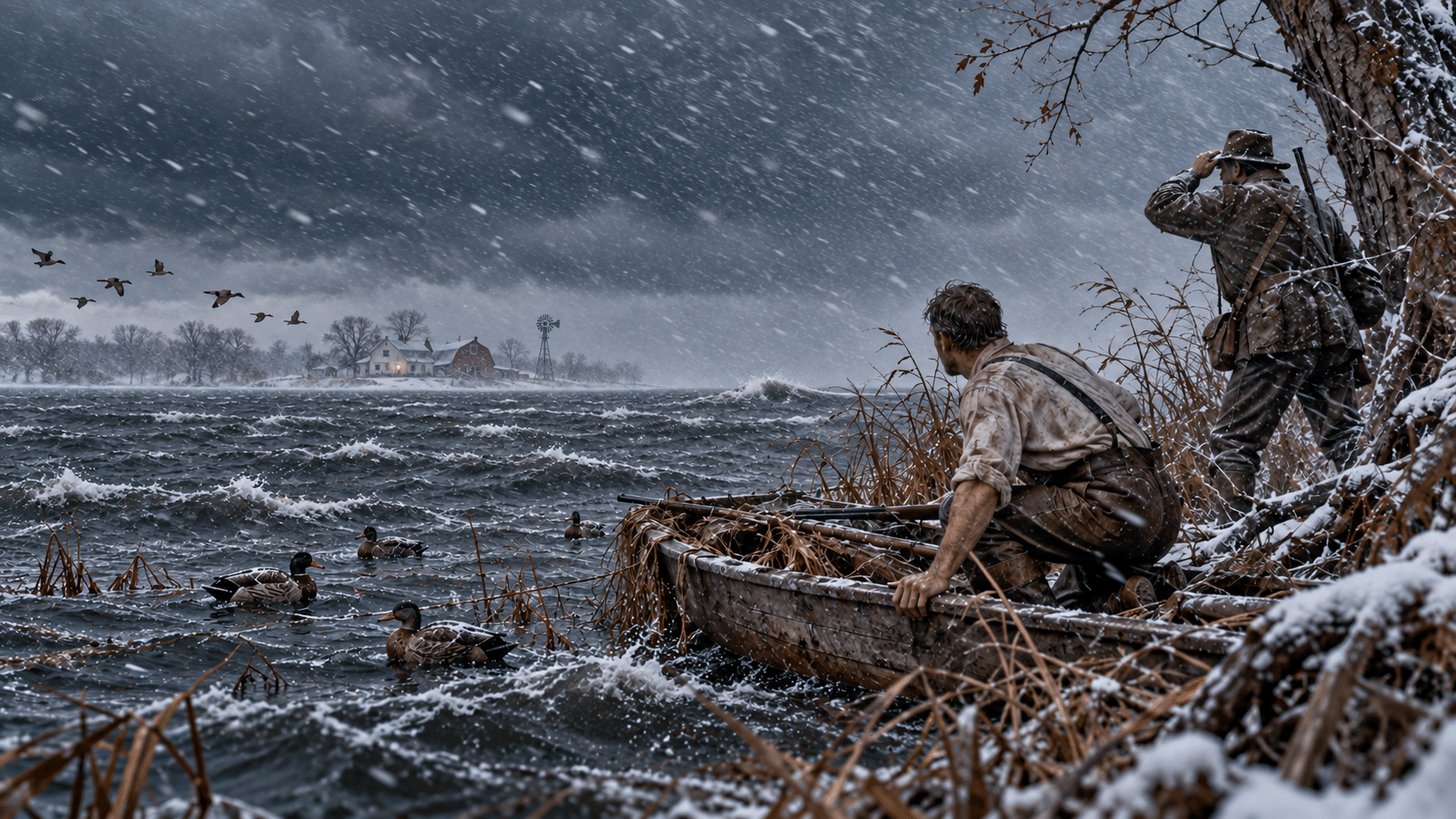
Now imagine spending the night on a Mississippi River island, soaked and shivering, with waves cutting off your escape and snow swallowing the shore. That was the deadly turn November 11, 1940, took during the Armistice Day Blizzard.
By the time the storm had finished its work, 154 people were dead. Thousands of Iowa cattle had perished, and more than a million turkeys across Wisconsin, Minnesota, and other states were gone, according to the National Weather Service. The damage reached far beyond a ruined hunting trip or a missed holiday supper.
For anybody with a woodpile, a flock, a barn, or a family depending on them, the uncomfortable question is simple: What on your place would be ready if winter arrived before you finished getting ready for it?
Not next month. Not after another trip to town. Before supper.
That Beautiful Morning Had A Nasty Surprise Up Its Sleeve
 At first, the holiday looked like a gift. Temperatures across the region were in the 40s and 50s, and the morning forecast called for colder weather and a few flurries, according to the Weather Service’s La Crosse account.
Over in Davenport, Iowa, it was 54 degrees at 7:30 a.m. Chicago registered 55, the Quad Cities Weather Service account records. You can almost hear somebody saying, “Might as well get out there while it’s nice.”
And who could blame them? A mild November morning can make winter feel like a problem belonging to somebody else, somewhere up north. There’s a gate to fix, birds on the river, and plenty of daylight left.
Meanwhile, a rapidly deepening low-pressure system was moving through the Upper Mississippi Valley. A strong cold front swept through during the late morning and early afternoon, turning rain to sleet and then driving snow; by the next morning, temperatures had plunged into the single digits in the region, as the Weather Service describes.
The pleasant morning hadn’t bought anybody extra time. It had simply made the time they had feel less urgent.
So enjoy that sunny afternoon. Just don’t let it talk you out of putting the winter gear in the truck.
One More Flock Can Be One Flock Too Many
Out on the water, the hunting was extraordinary. The Quad Cities historical account describes enormous flights of waterfowl and hunters so absorbed in the birds that they failed to recognize the danger closing around them.
Then visibility collapsed in rain, sleet, and snow. By the time some hunters understood what was happening, their chance to return safely to shore had slipped away.
Some drowned. Others froze, and some survivors suffered frostbite severe enough to lose hands or feet, according to the Weather Service. The La Crosse account records twelve hunters trapped between St. Paul and Prairie du Chien who sought shelter on small islands and froze to death.
It’s easy to read history from a warm chair and wonder why people didn’t leave sooner. But anybody who has stayed outside to finish one more job knows how that bargain works.
One more flock. One more fence post. One more load before heading home.
After all, quitting feels wasteful when things are going well. The trouble is that worsening weather doesn’t care how close you are to finishing, and the easy way home can disappear while you’re still negotiating with yourself.
Before you head out, decide what would make you turn around. Then give that decision more weight than the birds, the unfinished chore, or your dislike of admitting the day is over.
The time to leave is while leaving is still easy.
A Million Dead Turkeys Put A Price On Being Unready
Back on the farms, the storm tore through more than livestock. The historical accounts describe damaged barns and outbuildings, stranded passenger trains, roads closed for days, and damaged telephone and power lines (La Crosse; Quad Cities).
Now carry that picture out to your own barnyard. The animals need care, the road is blocked, and the power is out just when you were counting on electricity to solve the water problem.
That’s where a vague promise to “handle it if it happens” starts looking mighty thin. A homestead has several moving parts, and bad weather can stop more than one at a time.
For starters, walk the place as if you couldn’t drive anywhere tomorrow. Which animals need protection from the wind, where is their feed, and how will you get water to them?
Next, look at the route between those things. A feed sack on the far side of a drifted lane might as well be in the next county if you can’t reach it safely.
The Weather Service’s farm preparedness guidance recommends moving animals to sheltered areas, hauling extra feed near feeding areas, and making sure water is available. Choose protection suited to your animals and your place, then get the work done before the storm arrives.
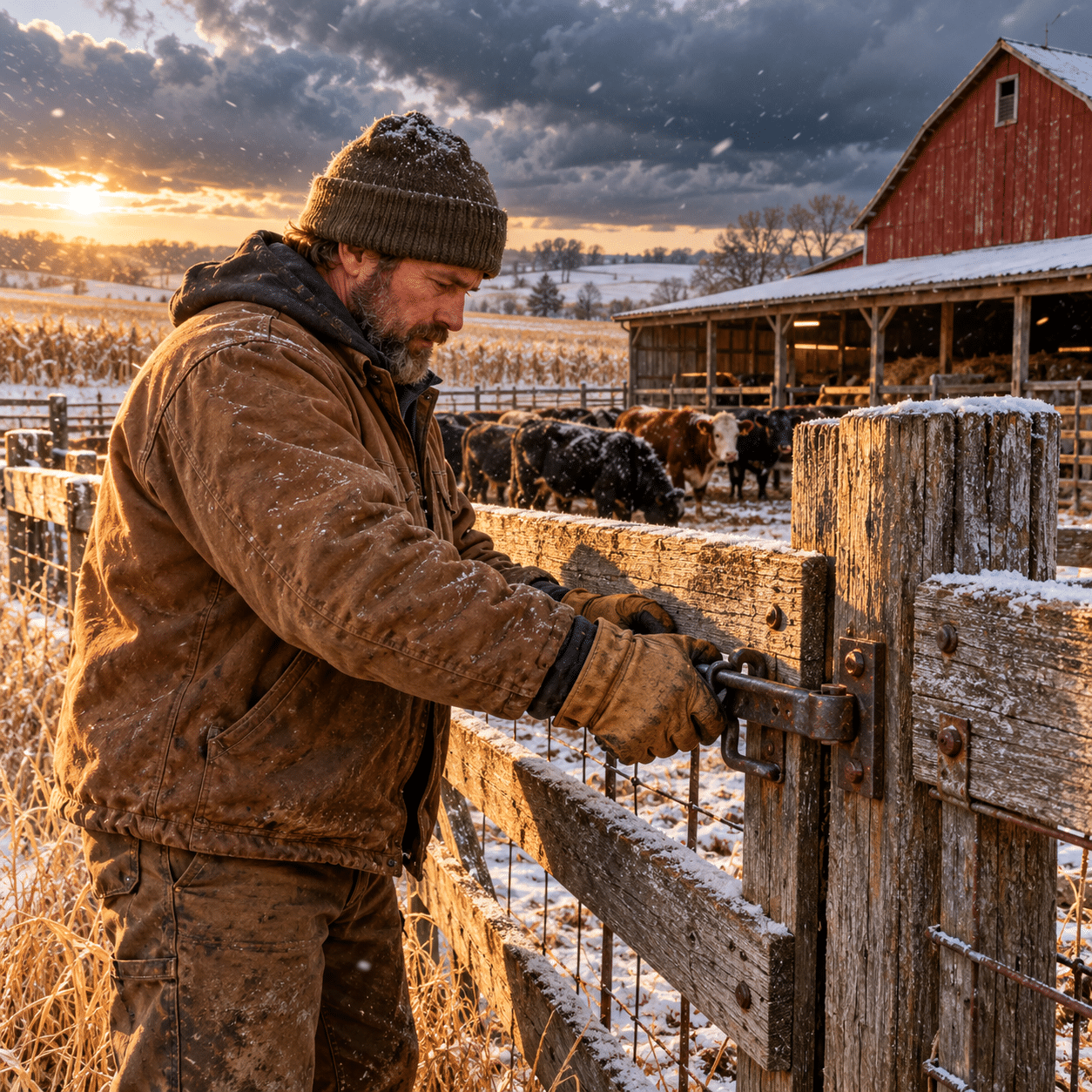
While you’re at it, check the gate you’ve been meaning to repair and the latch that only works if you lift it just right. Those little barnyard aggravations have a way of getting bigger when your gloves are wet and you can’t feel your fingers.
The Forecast Improved Because The Old System Failed People
Of course, people in 1940 weren’t carrying detailed radar maps in their pockets. Forecasters had no satellite imagery and few upper-air observations, while the Chicago district issued forecasts for eight Midwestern states, according to the Quad Cities Weather Service history.
Information traveled through newspapers, radio, telegraph, and public notices. In rural communities, telephone operators and mail carriers sometimes helped distribute it, too.
After this storm and another Minnesota blizzard in March 1941, forecasting duties were spread among regional centers to improve speed and accuracy, the La Crosse account explains. The disaster also strengthened support for keeping weather offices open around the clock, according to the Quad Cities account.
That history gives us a good reason to pay attention to forecasts and warnings. The improvements were earned through painful experience.
Still, a forecast can’t put dry gloves in your cab or move feed closer to the barn. Use the information, keep checking it as conditions change, and leave yourself enough room to act before a warning turns into trouble at your doorstep.
Put The Winter Kit In The Truck You Actually Drive
Start with the pickup sitting in the driveway. The imaginary truck you plan to organize someday won’t do you much good in a ditch.
The Weather Service’s winter vehicle checklist includes blankets or sleeping bags, dry clothing, food, a flashlight, first-aid supplies, a shovel, a phone charger, and other emergency equipment. Read through it, then put together a kit that fits your trips and the people riding with you.
And please, check what’s already there. A flashlight with dead batteries is just another object rattling around under the seat.
For rural families, another useful habit costs nothing: Tell somebody where you’re going and when you expect to return. The Weather Service recommends sharing your timetable and travel routes before winter travel; apply that same common sense when you’re checking a distant property or working somewhere out of sight.
Then set a stopping point before the day gets away from you. Which trip can wait, which chore can be left unfinished, and what change in conditions means you head home?
There’s no prize for finishing a job that puts your family in a search party.
Give Your Homestead The Lights Out Test
At home, begin with the Weather Service’s winter supply recommendations: extra food and water, prescription medicines, battery-powered weather information, and heating fuel secured before deliveries get interrupted. Then think through an ordinary evening with the power gone.
For instance, how would you get water if the pump stopped? Who would handle the animals if you were stuck away from home, and which nearby neighbor might need a check-in?
Now make the exercise practical. Ask somebody else in the household to find the flashlight, spare batteries, dry gloves, and emergency numbers without your coaching.
If the answer involves rummaging through three drawers while you shout directions from the kitchen, you’ve found something worth fixing. Better to discover the weak spot with the lights on and supper cooking.
Likewise, owning supplies doesn’t mean the household knows how to use them. Walk through the evening chores together, show where things belong, and leave clear instructions for anything that usually depends on your memory.
A plan ought to work when the person who organized it isn’t standing there.
Get Ready While The Sun Is Still On Your Back
Before November 11 rolls around again, take an afternoon and close the gaps you already know about. Load the truck, check the animal shelter, move the feed, and talk through the plan with the people who will actually carry it out.
Then tackle the small things you keep stepping around. Put the gloves where they belong, replace the weak batteries, and stop trusting that troublesome latch to behave better when the weather gets worse.
The Armistice Day Blizzard deserves to be remembered for the people who never came home. It also deserves to be remembered by people who still have time to prepare their own homes, barns, and families.
You don’t need to fear every cloud over the cornfield. You do need to quit treating a pleasant day as permission to put everything off.
Let the sunny afternoon be your workday. Don’t wait for the storm to hand you a deadline.