Print
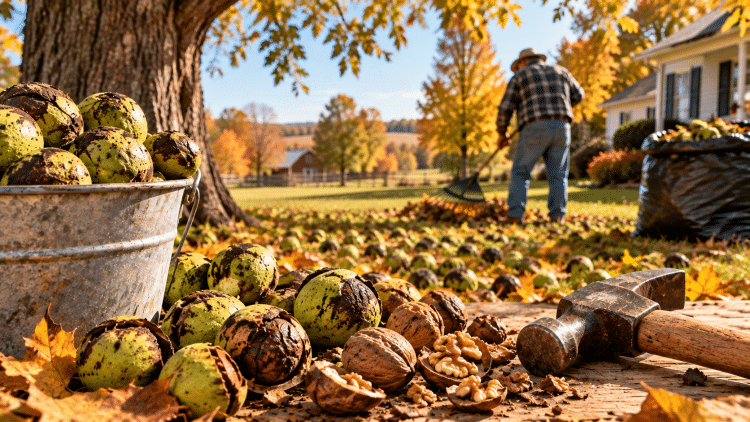
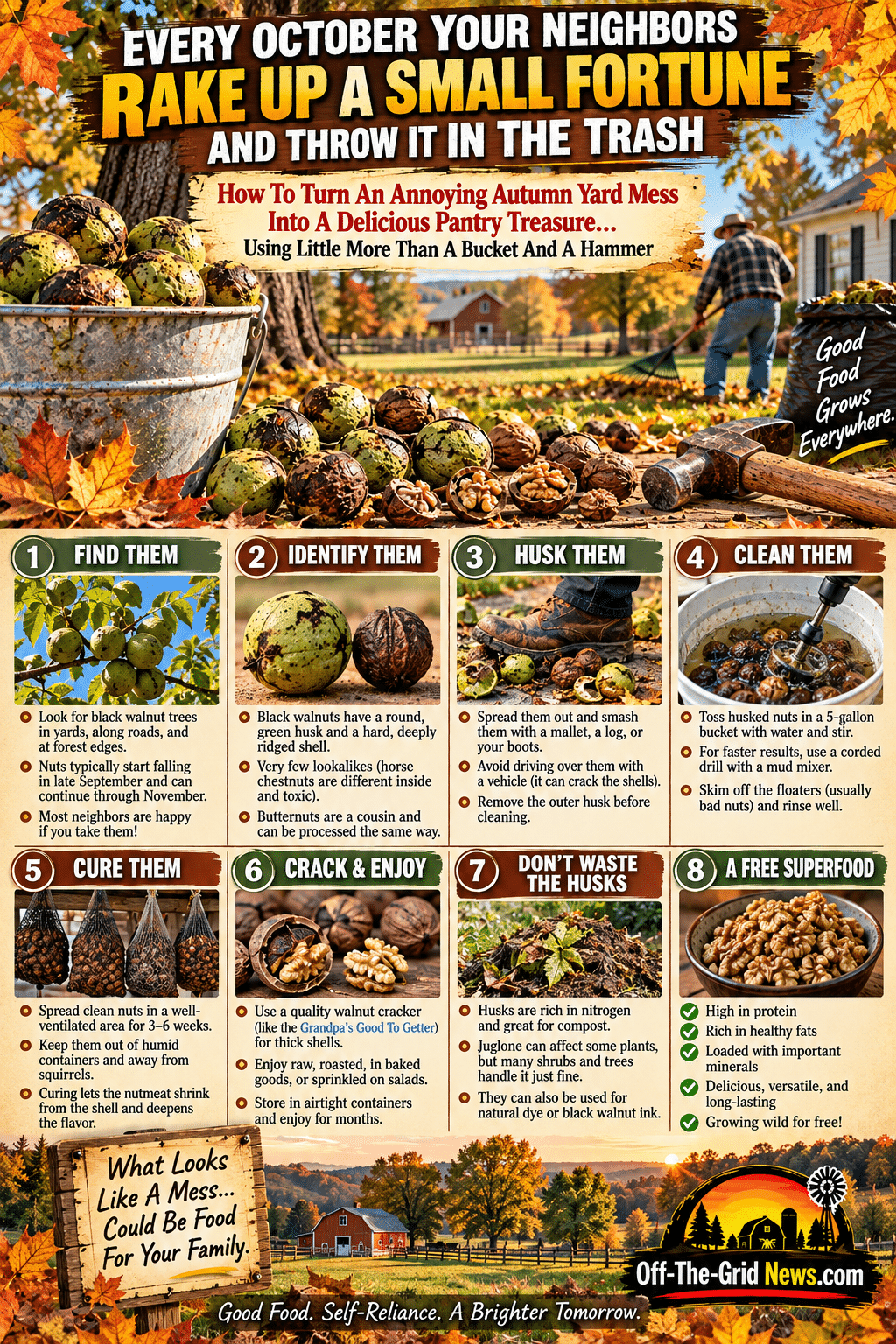
How To Turn An Annoying Autumn Yard Mess Into A Delicious Pantry Treasure… Using Little More Than A Bucket And A Hammer
What Looks Like A Yard Full Of Rotten Green Tennis Balls Could Actually Be The Beginning Of Your Next Great Pantry Harvest
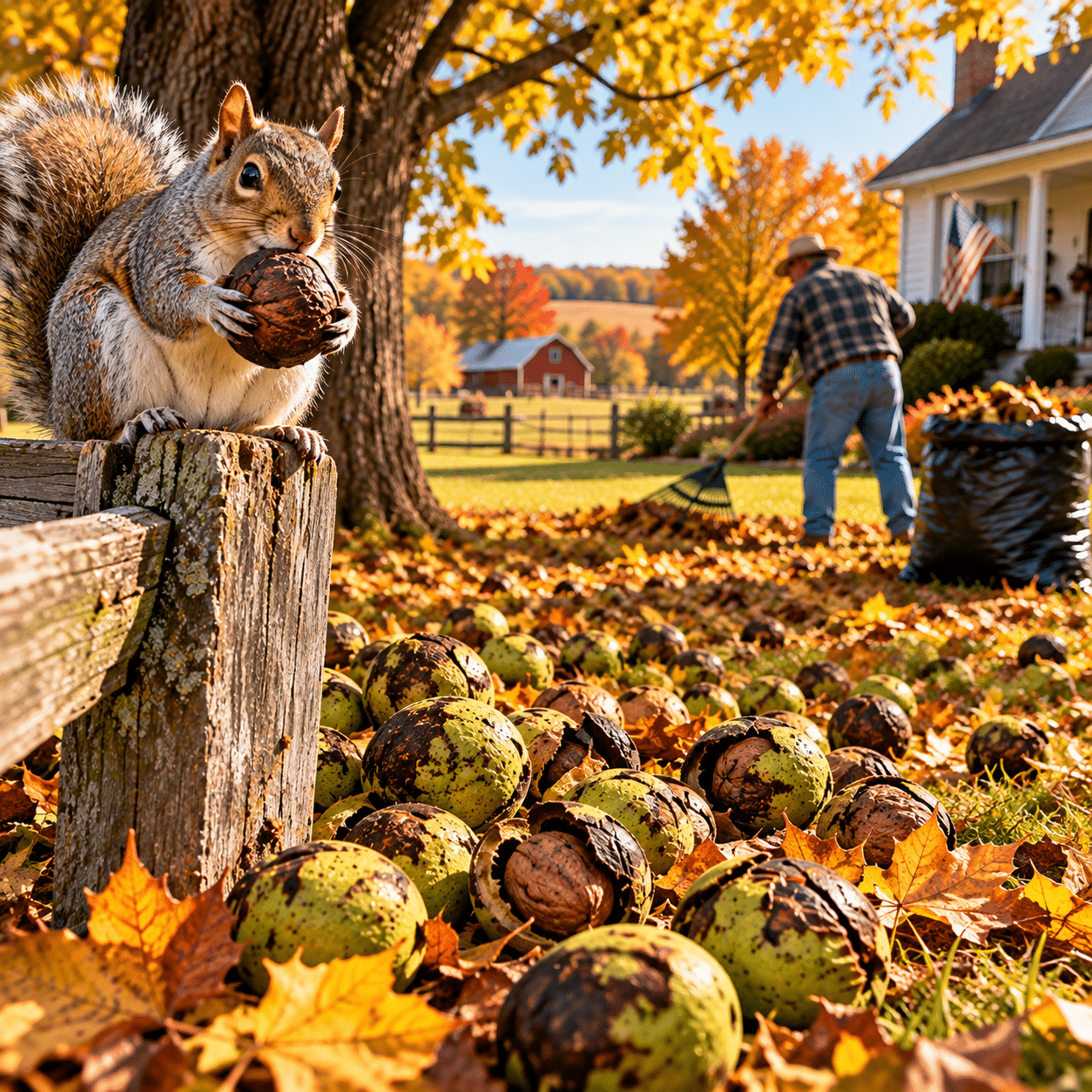
There’s a free harvest lying under shade trees all across the countryside. It rolls into driveways, stains sidewalks, clunks off lawnmower blades, and gets cursed by homeowners from September clear into November. Meanwhile, the squirrels are having the feast of their lives.
I’m talking about black walnuts. These rugged little treasures pack protein, healthy fats, and useful minerals into a shell tough enough to make a hammer beg for mercy. They have a rich, bold flavor you won’t mistake for the mild English walnuts sitting in the grocery store.
And here’s the funny part: plenty of folks would gladly let you haul away every last one. The catch? Between the messy husks, stubborn shells, and stained fingers, gathering them can feel like signing up for a Saturday of unpaid hard labor. But a few simple tricks make the job a whole lot easier.
First, Make Sure You’re Picking the Right Nut
A black walnut comes wrapped like a present nobody bothered to make easy to open. First comes the round green outer husk. Under that sits a deeply ridged, rock-hard shell. And buried inside is the prize: the edible kernel.
Look for compound leaves with many narrow leaflets, a round fruit, and that unmistakable sharp, citrusy smell when the husk is scratched. The native eastern black walnut, Juglans nigra, is especially common across the central and eastern United States. For a dependable identification guide, check the USDA PLANTS database.
Don’t assume every round green tree fruit is dinner. Buckeyes and horse chestnuts can fool a hurried beginner, and their seeds are not edible. Butternut, a walnut relative, produces a more elongated, sticky-husked nut that is edible when properly identified. If you’re uncertain, leave it on the ground until you’ve confirmed the tree.
One more warning from the school of hard knocks: old walnut husks stain like a leaking ink bottle. Wear gloves you don’t love, and keep the mess off your good clothes.
Forget the Deep Woods. Look Where the Sun Hits the Ground.
You might picture yourself trekking a mile into a dark forest with a burlap sack. Save your boots. Walnut trees growing along field edges, farm lanes, pastures, and open yards often have room and sunlight to build bigger crowns and better crops. And a short lawn is a whole lot easier to harvest than a jungle of leaves and briars.
Start by asking the neighbor who spends every October grumbling about those green cannonballs under his mower. Get permission before gathering on private property, and stay clear of roadsides where contamination or traffic could be a concern. A good crop can begin dropping in early fall, though timing varies by region and weather.
And don’t judge the whole tree by one season. Black walnut crops fluctuate, sometimes dramatically. When you find a productive tree with nuts that crack reasonably well, remember exactly where it stands.
The Thirty-Second Test That Can Save Your Whole Saturday
Before you fill the truck bed, test a few nuts from that tree. Knock off the husk, rinse the shell, and crack a sample with your usual tool. Some shells surrender their meat in handsome pieces. Others cling to it like a miser guarding his last dollar.
If all you own is a household hammer, that difference matters. A heavy-duty black-walnut cracker can be a worthwhile investment for a big harvest. The Grandpa’s Goodie Getter website is one place to explore purpose-built crackers, but there are other sturdy models too.
For gathering, a rolling nut picker can spare your back. Otherwise, a bucket and two willing hands work fine. Choose sound nuts, and avoid those that are badly moldy, rotten, or obviously damaged. Process them promptly rather than letting a wet pile heat up and decay.
The Best Husking Machine Might Be Your Boot
Now comes the part that scares off the casual forager: the husks. You’ll find videos of homemade contraptions, tire tricks, and machinery that looks like it escaped from a feed mill. Some work. Some take longer to set up than the actual job.
For a modest batch, try the simplest method first. Set a walnut on firm ground and press or roll it under a sturdy boot to loosen the husk. Or give it a controlled whack with a wooden mallet. The goal is to split the soft outer covering without cracking the hard shell underneath.
Don’t use the family car as a walnut press. Besides the mess, you can crush or fracture shells, and damaged nuts are more vulnerable to spoilage. A driveway full of walnut ink is a lousy souvenir.
The Five-Gallon Bucket Trick That Washes Away the Mess
Once the big husk pieces are off, drop the nuts into a bucket of water and agitate them with a stout stick. Rubbing against one another helps loosen the stubborn bits. Change the water and repeat until the shells are reasonably clean.
If you have a mountain of nuts to process, some foragers use a drill-driven mixing paddle in a sturdy container to speed the scrubbing. That’s an optional convenience, not a requirement. Use a suitable tool and splash protection, keep hands well away from the spinning paddle, and follow electrical safety precautions around water. Never reach into the container while the drill is running.
You may have heard the old rule that floating walnuts are bad. Float tests can help sort suspicious nuts, but they are not foolproof; husk remnants and trapped air can affect the result. Inspect your harvest, and throw out any kernels that later smell rancid, look moldy, or seem spoiled. For general food-handling guidance, see the National Center for Home Food Preservation.
Those Black Husks Aren’t Just Garbage
By now your work area may look like somebody spilled a barrel of green-black paint. That mess has a name behind it: juglone, a natural compound associated with walnut trees. Some plants are sensitive to walnut material, so don’t casually heap fresh husks around your tomatoes, potatoes, or other prized garden crops.
Instead, keep the husks in a designated compost pile and give them ample time to break down before using the finished material. Research and extension advice on juglone sensitivity have evolved, so it pays to be cautious rather than promise that a quick hot compost fixes everything. Penn State Extension has useful information on black walnuts and gardening around them.
There’s another old-fashioned use worth remembering: dye. Walnut husks have colored cloth, baskets, and homemade ink for generations. Just use dedicated pots and tools, because that beautiful brown-black stain does not know when to quit. As for medicinal claims about walnut hulls, don’t treat folk use as proof of safety or effectiveness, and never improvise an internal remedy from foraged husks.
Don’t Crack Them Yet—Let Time Do Some of the Work
Here’s where impatient people lose a perfectly good harvest. After washing, spread the nuts in a single layer on screens or racks where air can move around them. Keep them protected from rain, rodents, and damp corners. A fan can help if the air is still.
Then let them cure in a cool, dry, well-ventilated place for several weeks. Exact drying time depends on humidity, temperature, and how the nuts are arranged. Proper drying makes storage safer and usually helps the kernels separate more cleanly from their stubborn shells.
Don’t seal freshly washed nuts in a bucket or plastic bag and forget about them. That traps moisture—the very thing you’re trying to remove. Once fully dry, store in-shell nuts somewhere cool, dry, and pest-proof, and check periodically for spoilage. For longer keeping, shelled kernels belong in airtight containers in the refrigerator or freezer because their oils can turn rancid.
Now for the Payoff: A Pantry Shelf You Didn’t Have to Buy
When the nuts are cured, settle in with a proper cracker, a small pick, and a bowl for the good pieces. Crack carefully, remove every bit of shell, and take your time. Black walnuts have a strong, earthy flavor that shines in cookies, quick breads, cakes, and even savory dishes.
And if the work simply isn’t in the cards this fall? You can still support the American wild-walnut trade. Hammons Black Walnuts sells black walnut products gathered through a network of harvesters.
But I’d encourage you to try one bucket yourself. Not twenty buckets. Not a trailer full. Just one. Because there’s something mighty satisfying about turning a nuisance on the neighbor’s lawn into a jar of good food on your own pantry shelf.
Come next autumn, when you hear those green walnuts thumping onto the grass, you might not hear a chore anymore.
You might hear supper.