 Print
Print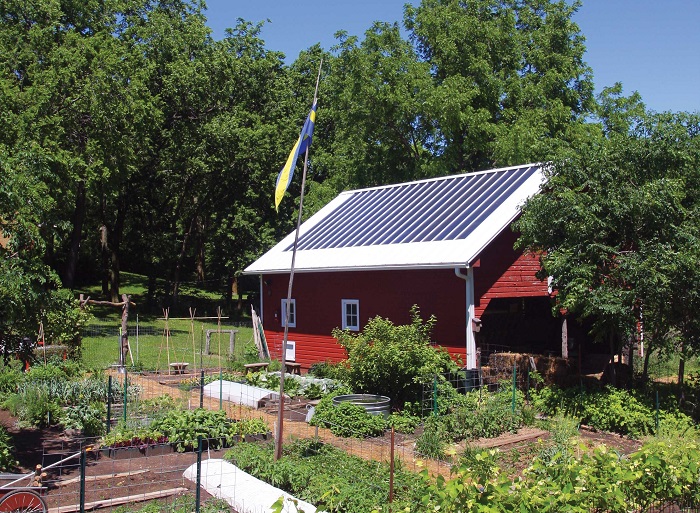
Our society has grown increasingly dependent on the grid, and many people have taken to creating their own homestead to counter this. It can be daunting physically and financially, though.
Some homesteads use anywhere from five to 10 acres of land, which can be a lot of work. But you can create your very own homestead on just one acre of land. Not sold? Read one and see for yourself.
First, you need to focus on how much food you are going to need. The bigger the family, the more food. The more farm you have, the more hands you will need to work it. Creating the appropriate size is critical. There are two major factors to food production: livestock and farming. For a one-acre farm, you should consider keeping your livestock to a minimum, because they also will require part of your farm to keep going.
Now depending on your family and needs, one recommendation is to keep at least one cow, and chickens. Alternatives, or supplements, would be a goat and a few pigs. Each animal provides a variety of uses. The cow provides fresh milk for cheese, butter and cream, while also giving off great fertilizer. Fertilizer will increase your crop yield and is vastly important to be self-sustainable. The chickens will provide you with a good source of meat and eggs.
Here comes the first necessity when it comes to land management. A cow will need approximately a half acre of grass to be kept well-fed. The other half acre will be used for your farming. Hundreds of years ago, we discovered crop rotation, something that is not a huge common practice on big farms. You will want to divide your farming plot into four groups and rotate different vegetable groups. The other parts you need to consider for land management: power production and housing.
Before you design your house, though, look at what you need for your garden. Those four plots should focus on food that will produce enough food during the season to feed you and your family through the winter. You may have winter crops like kale available, but your primary growing season will be through the summer months. You need one plot for potatoes, another for peas and beans, one for cabbages and lettuces, and the last for root vegetables. Fortunately, there are enough varieties among those groups to satisfy even picky eaters.
The primary principle in this intensive farming method is that you rotate your land every four years or so. This will allow nutrients and fresh fertilized land to be continuously utilized. When you go to pick out your crops, remember to group them up and rotate them. However, make sure that you are growing crops that you will eat.
The home, and really everything about a one-acre homestead, should be condensed to just necessities. Do you really need a six-top stove with double ovens? Can you get by without an Olympic-sized bath tub? With the rise of tiny homes, we are starting to realize you can utilize space effectively without sacrificing comfort. Your home should be designed to be effective, but allow you to live the way you want.
The Latest Breakthrough Advancement In Solar Backup Generators Is Here!
The last major component you need to consider before starting your adventure is power production. Photovoltaics and wind turbines have come a long way. Using the rooftop to your home or barn is an ideal location for power production. Keep in mind: You will need to dedicate a space for a power inverter and battery bank. Before deciding which way to go with power, use an energy calculator and guestimate how much energy you will need. Air conditioning and refrigeration are two of your highest contributions to your power consumption.
Now you have all of the components, it’s time to start designing to your personal preferences. Perhaps you want a small pond or an herb garden. One acre is a lot of land for four people, and properly utilized can be self-sustaining. As you lay out your homestead and design your home, do your homework. Know your crops, learn your routine, find a habit that will get you in the swing of self-sustaining.
In order to be completely off grid, you will need to invest the time and know what you are doing before you ever purchase the land. After you have a design, it is time to pick your spot. Find an area that you enjoy. Research your water table, your soil content, and take core samples. Determine what energy production methods will work best for the area.
Once you are done with your research and design, congratulations! You are one step closer to being less dependent on the grid. Now, the easy part is done. You know what you need to do. The next step is to start your adventure. Get out there, purchase your land and get to work. Remember, Rome was not built in a day, and it will take hard work and effort. However, with perseverance, you can have your own homestead.
What advice would you give someone living on a one-acre homestead? Share your advice in the section below:
Harness The Power Of Nature’s Most Remarkable Healer: Vinegar